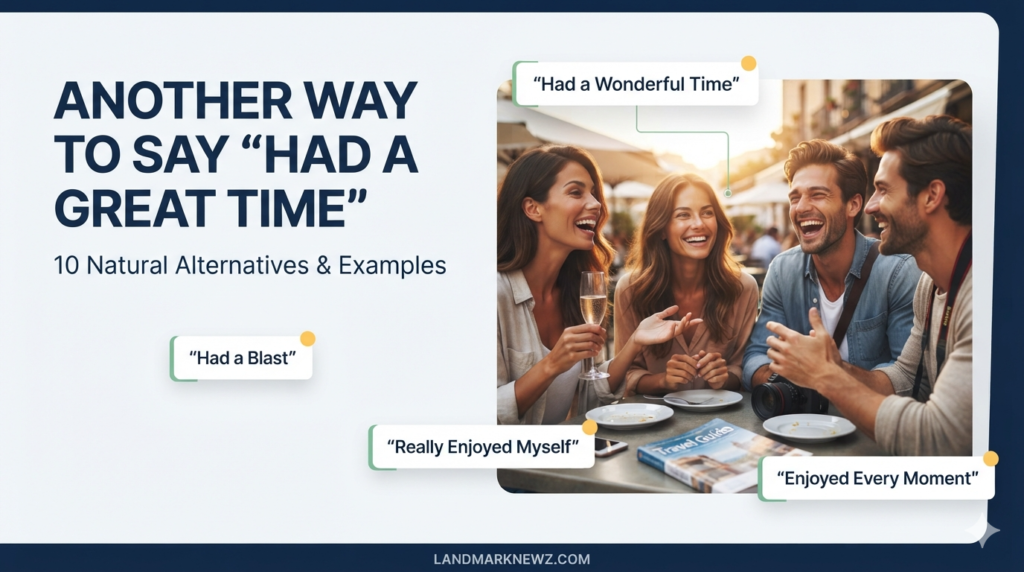
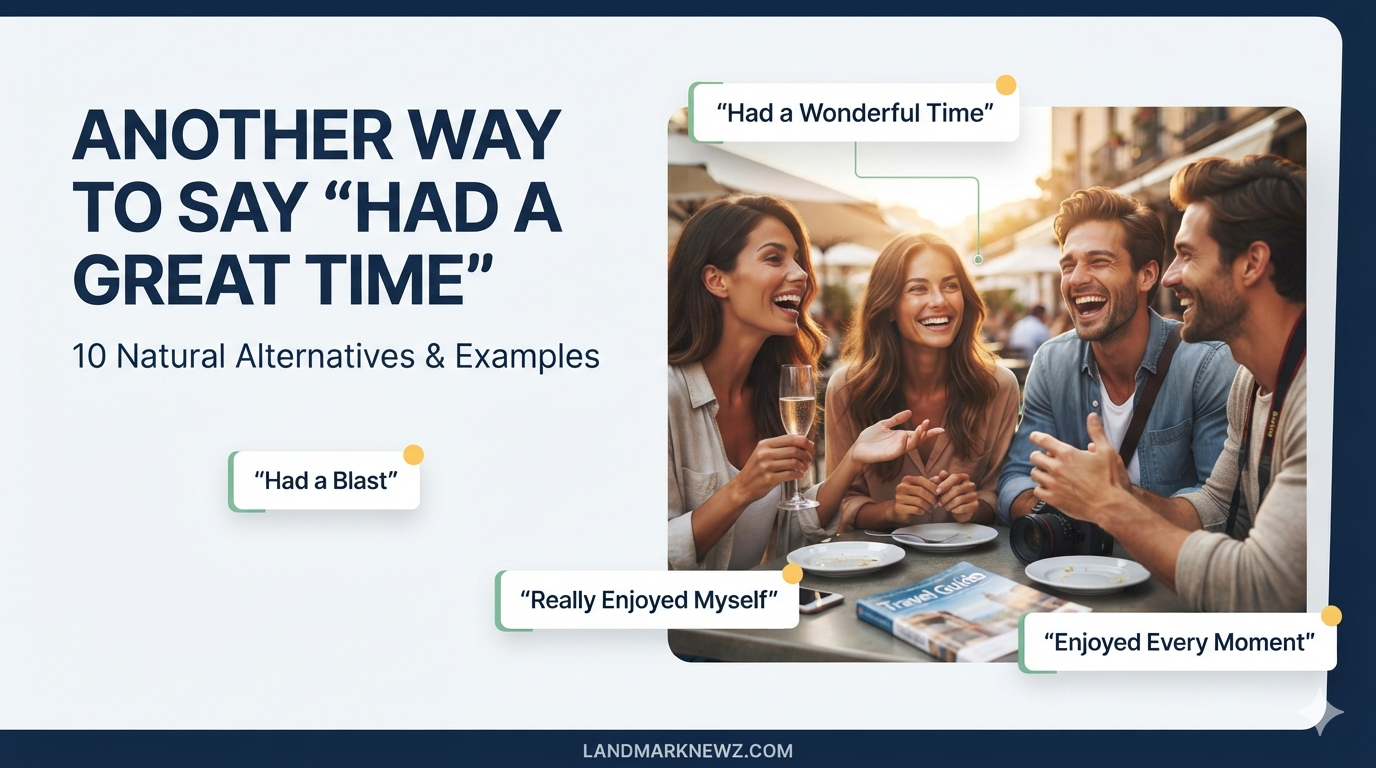
Saying “had a great time” is a simple way to tell someone that you enjoyed an experience. However, repeating the same phrase can make your messages sound predictable.
The good news is that English offers many natural alternatives. You can choose a phrase that sounds more enthusiastic, friendly, warm, professional, or casual depending on the situation.
What Does “Another Way to Say Had a Great Time” Mean?

“Another way to say had a great time” refers to alternative expressions that communicate that you enjoyed yourself during an event, trip, gathering, activity, or experience.
For example, instead of saying, “I had a great time at the party,” you could say, “I had a blast at the party” or “I really enjoyed myself at the party.”
People commonly use these alternatives in texts, emails, social media posts, thank-you messages, conversations, and follow-up notes after an event.
Why Use Other Ways to Say “Had a Great Time”?
Using different expressions can help you make your writing and conversations more natural. The right phrase can also show exactly how much you enjoyed an experience.
Other alternatives can help you:
- Avoid repeating the same expression.
- Sound more natural and conversational.
- Show stronger excitement or enthusiasm.
- Match formal and informal situations.
- Make thank-you messages feel warmer.
- Add personality to texts and social media posts.
The key is to choose a phrase that fits the situation instead of treating every synonym as interchangeable.
10 Best Other Ways to Say “Had a Great Time”
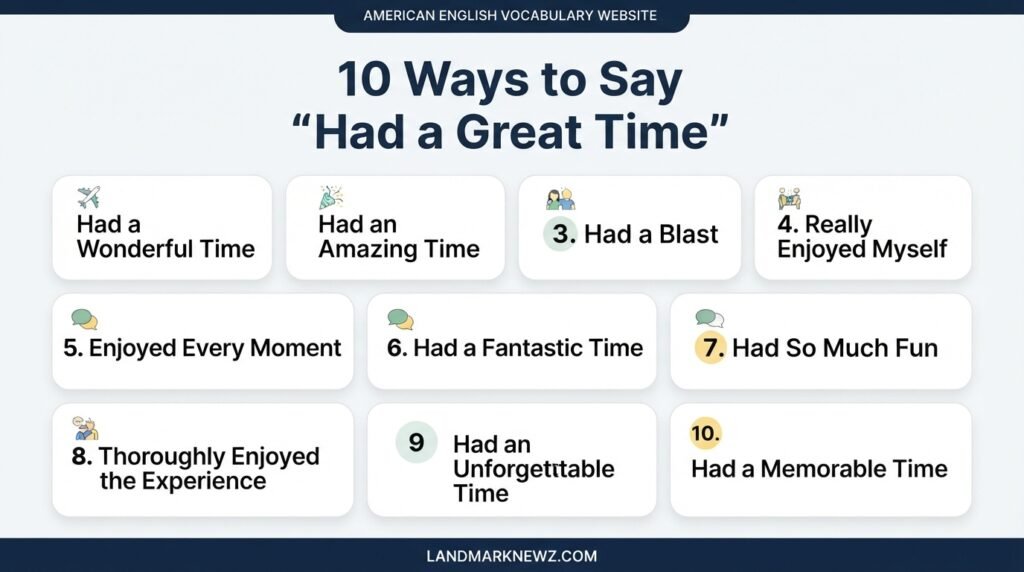
1. Had a Wonderful Time
Meaning
“Had a wonderful time” is a warm and positive way to say that you thoroughly enjoyed an experience. It sounds slightly more expressive than “had a great time” without becoming overly formal.
Best For
- Friendly
- Warm
- Polite
- Formal
Example 1
We had a wonderful time visiting your family over the weekend.
Example 2
I had a wonderful time at the dinner and really appreciated your hospitality.
Quick Tip
Use this phrase when you want to sound appreciative and sincere, especially after visiting someone or attending an event.
2. Had an Amazing Time
Meaning
“Had an amazing time” expresses a high level of enjoyment. It works especially well when an experience was memorable, exciting, or better than expected.
Best For
- Casual
- Friendly
- Warm
Example 1
We had an amazing time exploring the city together.
Example 2
I had an amazing time at the concert last night.
Quick Tip
Choose this option when “great” does not feel enthusiastic enough to describe your experience.
3. Had a Blast
Meaning
“Had a blast” is a lively and informal expression that means you had a lot of fun. It is common in everyday American English and often sounds more energetic than “had a great time.”
Best For
- Casual
- Friendly
Example 1
We had a blast at the beach yesterday.
Example 2
Everyone had a blast playing games at the reunion.
Quick Tip
Keep this phrase for relaxed conversations, texts, and social posts rather than formal workplace emails.
4. Really Enjoyed Myself
Meaning
“Really enjoyed myself” is a natural and flexible way to explain that you enjoyed an event or activity. It can sound friendly while remaining polite enough for many professional or semi-formal situations.
Best For
- Professional
- Friendly
- Polite
- Warm
Example 1
I really enjoyed myself at the company dinner last Friday.
Example 2
Thank you for inviting me; I really enjoyed myself at the reception.
Quick Tip
This is a strong choice when you want to express enjoyment without sounding overly excited.
5. Enjoyed Every Moment
Meaning
“Enjoyed every moment” suggests that you liked the experience from beginning to end. It adds a stronger emotional touch and can make your message sound thoughtful and sincere.
Best For
- Warm
- Friendly
- Polite
- Formal
Example 1
I enjoyed every moment of our weekend trip to Chicago.
Example 2
We enjoyed every moment of the wedding celebration.
Quick Tip
Use this phrase when you want to emphasize that the entire experience was memorable.
6. Had a Fantastic Time
Meaning
“Had a fantastic time” is an enthusiastic alternative that shows you enjoyed yourself a lot. It is positive without being as casual as some slang-based expressions.
Best For
- Friendly
- Warm
- Polite
Example 1
We had a fantastic time at your barbecue on Saturday.
Example 2
I had a fantastic time catching up with everyone at the reunion.
Quick Tip
This phrase works well when you want more enthusiasm than “had a great time” but still want natural everyday wording.
7. Had So Much Fun
Meaning
“Had so much fun” is a casual and cheerful expression that focuses directly on the fun you experienced. It is especially common in conversations, texts, and social media captions.
Best For
- Casual
- Friendly
Example 1
We had so much fun trying all the rides at the amusement park.
Example 2
I had so much fun hanging out with you yesterday.
Quick Tip
Use this expression with friends and family when you want your message to sound relaxed and enthusiastic.
8. Thoroughly Enjoyed the Experience
Meaning
“Thoroughly enjoyed the experience” is a more polished expression that emphasizes genuine satisfaction. It fits situations where you want to sound thoughtful, professional, or appreciative.
Best For
- Professional
- Formal
- Polite
Example 1
I thoroughly enjoyed the experience and appreciated the opportunity to meet the team.
Example 2
Our students thoroughly enjoyed the museum tour and the interactive exhibits.
Quick Tip
This is a useful choice for professional emails, feedback, reviews, and formal follow-up messages.
9. Had an Unforgettable Time
Meaning
“Had an unforgettable time” means the experience was so special or memorable that you expect to remember it for a long time. It carries more emotional weight than a simple statement of enjoyment.
Best For
- Warm
- Friendly
- Formal
Example 1
We had an unforgettable time celebrating your birthday together.
Example 2
I had an unforgettable time during my first trip to New York.
Quick Tip
Use this phrase when the experience was especially meaningful rather than for an ordinary outing.
10. Had a Memorable Time
Meaning
“Had a memorable time” emphasizes that an experience stood out in your memory. It is a balanced choice that can work in personal, social, and some professional contexts.
Best For
- Formal
- Polite
- Warm
- Friendly
Example 1
I had a memorable time attending the conference and meeting other professionals.
Example 2
We had a memorable time celebrating our anniversary by the lake.
Quick Tip
Choose this option when you want to highlight the lasting impression an event made on you.
Comparison Table

| Alternative | Best Used In | Tone |
| Had a wonderful time | Personal messages, thank-you notes | Warm |
| Had an amazing time | Trips, events, conversations | Enthusiastic |
| Had a blast | Texts, parties, casual conversations | Casual |
| Really enjoyed myself | Emails, gatherings, conversations | Polite |
| Enjoyed every moment | Special events, personal messages | Warm |
| Had a fantastic time | Social events, friendly messages | Positive |
| Had so much fun | Texts, social media, casual chats | Casual |
| Thoroughly enjoyed the experience | Professional communication | Formal |
| Had an unforgettable time | Special occasions and trips | Emotional |
| Had a memorable time | Events, travel, professional settings | Polished |
Common Mistakes

1. Using Casual Phrases in Professional Emails
Expressions such as “had a blast” can sound too relaxed in formal workplace communication. For professional messages, “really enjoyed myself” or “thoroughly enjoyed the experience” may be more appropriate.
2. Choosing Overly Formal Language
Not every conversation needs polished wording. Saying “I thoroughly enjoyed the experience” to a close friend may sound stiff when “I had so much fun” would feel more natural.
3. Repeating the Same Phrase
Using “had a great time” in every text, email, or social post can make your language repetitive. Switching between natural alternatives helps your writing feel more personal.
4. Forgetting the Context
The best alternative depends on what happened and who you are speaking to. A phrase that works after a party may not fit a business conference or formal thank-you message.
5. Sounding Insincere
Avoid choosing dramatic phrases simply to make your message sound impressive. If an ordinary dinner was pleasant, “I really enjoyed myself” may sound more genuine than “I had an unforgettable time.”
Frequently Asked Questions
What is a better way to say “had a great time”?
A better alternative depends on the tone you want. “Had a wonderful time” is warm and versatile, while “had a blast” is more casual and energetic. For professional situations, “really enjoyed myself” or “thoroughly enjoyed the experience” can sound more polished.
What is a casual way to say “had a great time”?
“Had a blast” and “had so much fun” are two natural casual alternatives. They work especially well in texts, social media captions, and conversations with friends. For example, you could say, “We had a blast at the concert” instead of “We had a great time at the concert.”
How do you say “I had a great time” professionally?
For professional communication, try “I really enjoyed myself,” “I thoroughly enjoyed the experience,” or “I had a memorable experience.” These phrases communicate positive feelings while maintaining a polished tone. They can work well in follow-up emails after conferences, meetings, dinners, interviews, or professional events.
How do you say “had a great time” in a text?
In a text message, you can say “had a blast,” “had so much fun,” “had an amazing time,” or “really enjoyed myself.” Your choice depends on how enthusiastic you want to sound. “Had a blast” is especially natural when talking about a fun activity with friends.
What is a warm way to say “had a great time”?
“Had a wonderful time” and “enjoyed every moment” are warm alternatives. They work well when thanking someone for an invitation or describing a meaningful gathering. For example, “I enjoyed every moment of the celebration” sounds appreciative and heartfelt without being overly dramatic.
Is “had a blast” professional?
Generally, “had a blast” is considered casual rather than professional. It is perfectly natural with friends, family, and informal social groups, but it may sound too relaxed in a business email. In professional settings, consider “really enjoyed myself” or “thoroughly enjoyed the experience.”
What is another way to say “we had a great time”?
You can say “we had a wonderful time,” “we had an amazing time,” “we had a fantastic time,” or “we enjoyed every moment.” For a casual message, “we had a blast” is a strong choice. For a more polished message, “we had a memorable time” works well.
What is the best alternative to “had a great time”?
There is no single best alternative for every situation. “Had a wonderful time” is one of the most versatile choices, while “had a blast” is better for casual settings. If you are writing professionally, “really enjoyed myself” is usually a safe and natural option.
Conclusion
There are many natural ways to say “had a great time,” and the best alternative depends on your audience and situation. For a warm and versatile message, “had a wonderful time” is an excellent choice. When you want to sound more enthusiastic, try “had an amazing time” or “had a fantastic time.”
For casual conversations, “had a blast” and “had so much fun” feel relaxed and energetic. Professional messages call for more polished choices, such as “really enjoyed myself” or “thoroughly enjoyed the experience.” Meanwhile, “enjoyed every moment” and “had an unforgettable time” are better when an experience felt especially meaningful.
The most effective phrase is the one that matches the experience, relationship, and tone. For more guidance on choosing words that match your audience and tone, consider how your wording will sound to the person receiving your message. Choose naturally, and your message will sound more genuine and engaging.

The Landmark Newz Editorial Team writes and reviews every guide on this site. We check each alternative phrase against standard dictionaries and real usage, explain when it fits, and update articles when readers point out errors.