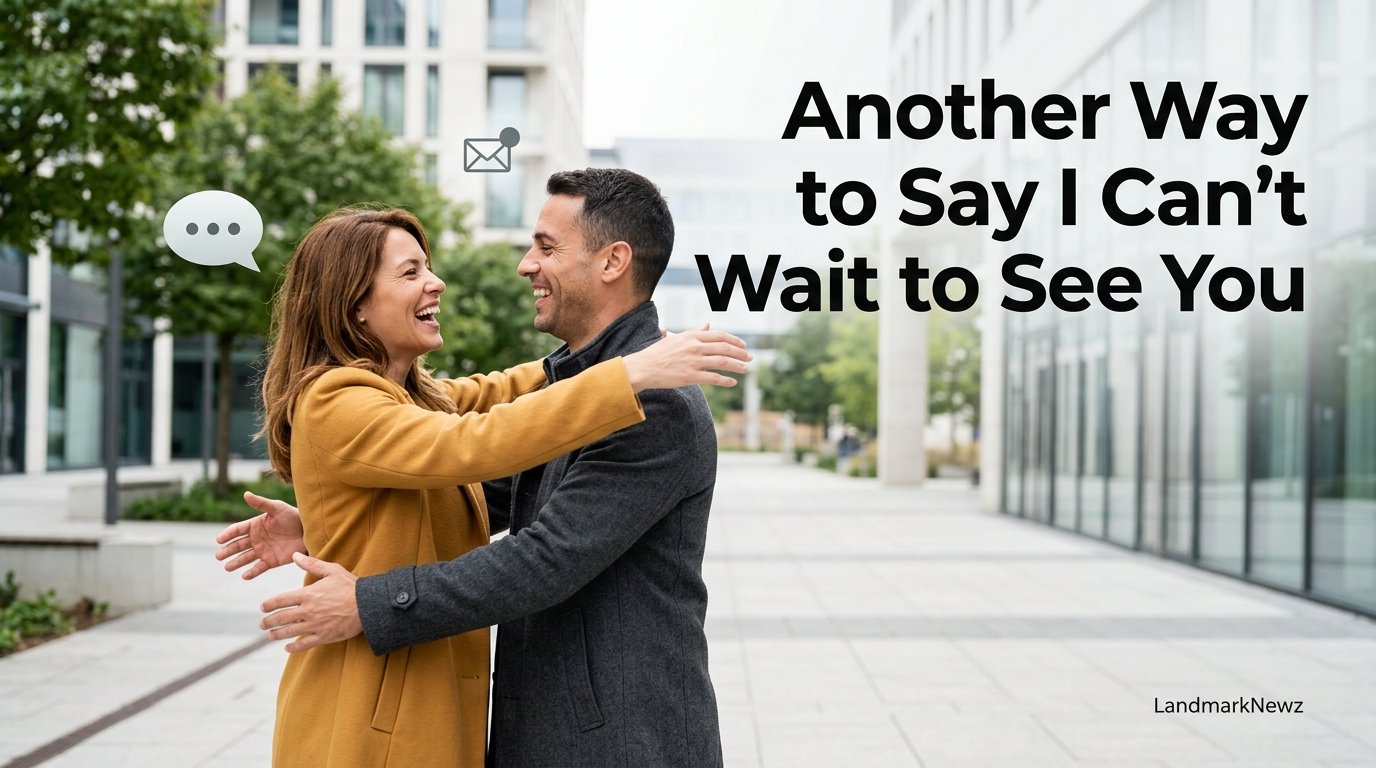
“I can’t wait to see you” is a common way to show excitement about an upcoming meeting. While it sounds natural in everyday conversation, you may want a different expression to make your message more professional, personal, warm, or playful.
Whether you are writing a text to a friend, an email to a colleague, or a message to someone special, the right alternative can make your feelings clearer.
What Does “Another Way to Say I Can’t Wait to See You” Mean?
“I can’t wait to see you” means that you are very excited about seeing someone and do not want to wait for the meeting to happen. It usually communicates enthusiasm, affection, anticipation, or genuine happiness.
People commonly use the phrase in texts, conversations, social messages, invitations, and personal emails. However, the best alternative changes depending on the situation.
For example, “I’m looking forward to seeing you” sounds polished and appropriate for work, while “I’m counting down the days” feels more personal and excited.
Why Use Other Ways to Say “I Can’t Wait to See You”?
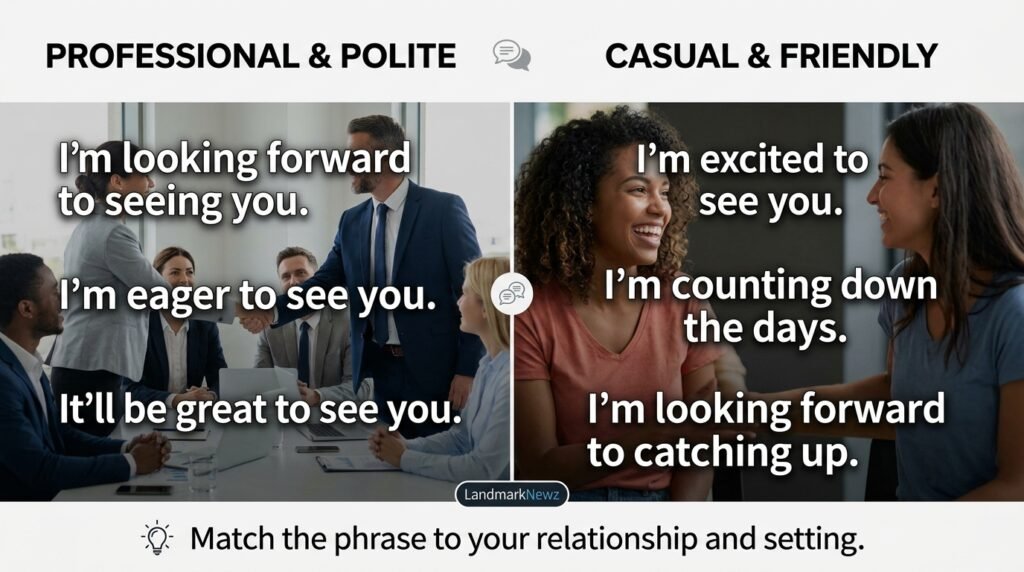
Using different expressions helps you communicate the same idea without sounding repetitive. It also lets you match your words to the relationship and setting.
You may want another phrase to:
- Sound more professional or polished.
- Make a text feel warmer and more personal.
- Express excitement without sounding overly casual.
- Add a playful or affectionate touch.
- Avoid repeating “I can’t wait to see you.”
- Choose language that fits an email, text, or conversation.
10 Best Other Ways to Say “I Can’t Wait to See You”
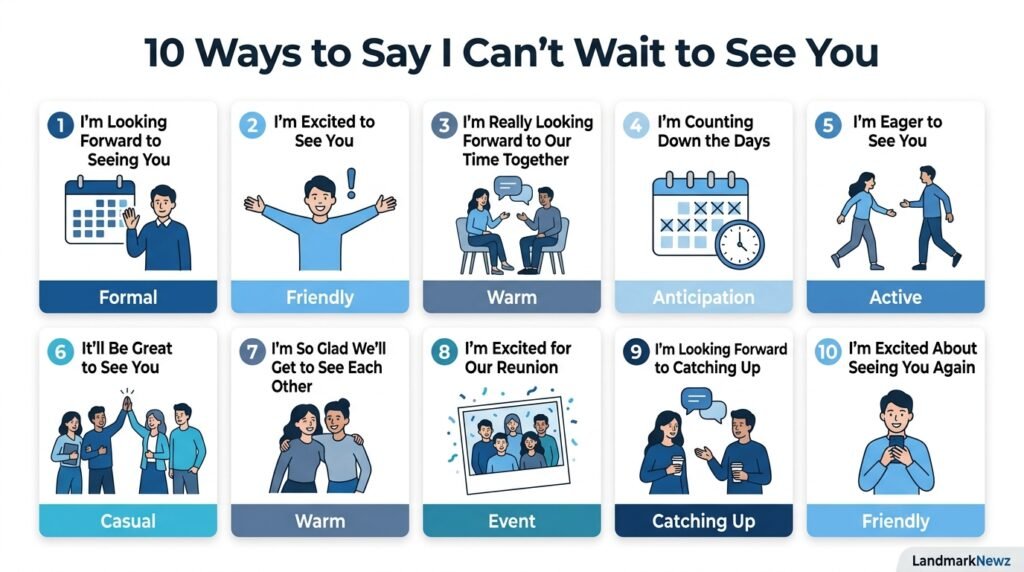
1. I’m Looking Forward to Seeing You
Meaning
This is one of the most natural and versatile alternatives. It expresses positive anticipation while sounding polite and composed.
Best For
- Professional
- Formal
- Friendly
- Polite
- Warm
Example 1
I’m looking forward to seeing you at the conference next week.
Example 2
We’ve been planning this trip for months, and I’m really looking forward to seeing you.
Quick Tip
Use this phrase when you want to express enthusiasm without sounding overly emotional.
2. I’m Excited to See You
Meaning
“I’m excited to see you” directly communicates happiness and anticipation. It sounds natural in both casual conversations and friendly messages.
Best For
- Casual
- Friendly
- Warm
Example 1
I’m excited to see you when you get back from your trip.
Example 2
I’m so excited to see you this weekend and catch up on everything.
Quick Tip
Add “so” for stronger enthusiasm, but leave it out when you want a more restrained tone.
3. I’m Really Looking Forward to Our Time Together
Meaning
This phrase focuses on the time you will spend together rather than simply the act of meeting. It feels warm and thoughtful.
Best For
- Friendly
- Warm
- Polite
- Formal
Example 1
I’m really looking forward to our time together during your visit.
Example 2
After such a busy year, I’m really looking forward to our time together.
Quick Tip
This works especially well when the meeting involves spending several hours or days together.
4. I’m Counting Down the Days
Meaning
“I’m counting down the days” shows strong anticipation. It has a playful, energetic quality and suggests that you are eagerly waiting for the occasion.
Best For
- Casual
- Friendly
- Warm
Example 1
I’m counting down the days until we finally get to meet in person.
Example 2
Your wedding is almost here, and I’m counting down the days!
Quick Tip
Use this expression with friends, family, or someone close rather than in a formal business email.
5. I’m Eager to See You
Meaning
“I’m eager to see you” communicates sincere enthusiasm, but it sounds slightly more polished than “I can’t wait to see you.” It can work when you want to sound enthusiastic yet controlled.
Best For
- Formal
- Professional
- Polite
- Warm
Example 1
I’m eager to see you and discuss the next steps in person.
Example 2
I’m eager to see you again after all these years.
Quick Tip
Because “eager” sounds more formal, it is a useful choice for professional or semi-formal communication.
6. It’ll Be Great to See You
Meaning
This phrase expresses positive anticipation in a relaxed and natural way. It is less intense than “I can’t wait,” making it useful when you want to sound friendly but understated.
Best For
- Casual
- Friendly
- Professional
- Polite
Example 1
It’ll be great to see you at the team meeting tomorrow.
Example 2
It’ll be great to see you again when you’re back in town.
Quick Tip
Choose this option when you want to express enthusiasm without emphasizing strong emotion.
7. I’m So Glad We’ll Get to See Each Other
Meaning
This expression highlights happiness about having the opportunity to meet. It feels personal, sincere, and especially natural when two people have not seen each other for a while.
Best For
- Friendly
- Warm
- Casual
- Polite
Example 1
I’m so glad we’ll get to see each other during the holidays.
Example 2
After being apart for so long, I’m so glad we’ll get to see each other soon.
Quick Tip
This is a great choice when distance or a long separation is part of the story.
8. I’m Excited for Our Reunion
Meaning
“I’m excited for our reunion” emphasizes the idea of meeting again after time apart. It sounds especially fitting for friends, relatives, classmates, or former colleagues.
Best For
- Friendly
- Warm
- Casual
Example 1
I’m excited for our reunion and all the stories we’ll have to share.
Example 2
Everyone is excited for our family reunion next month.
Quick Tip
Use “reunion” when the people involved have been separated for a meaningful period.
9. I’m Looking Forward to Catching Up
Meaning
This phrase is ideal when seeing someone means talking about recent events and reconnecting. It sounds natural and relaxed in American English.
Best For
- Casual
- Friendly
- Warm
- Professional
Example 1
I’m looking forward to catching up over coffee next Friday.
Example 2
It’s been too long, and I’m looking forward to catching up with you.
Quick Tip
Use this when you have already known the person and want to reconnect rather than meet for the first time.
10. I’m Excited About Seeing You Again
Meaning
This phrase clearly combines excitement with the idea of meeting someone you already know. It sounds sincere without being overly dramatic.
Best For
- Casual
- Friendly
- Warm
- Polite
Example 1
I’m excited about seeing you again when you visit Chicago.
Example 2
I’m genuinely excited about seeing you again after all this time.
Quick Tip
“Again” makes the phrase especially useful when you have already met the person before.
Comparison Table
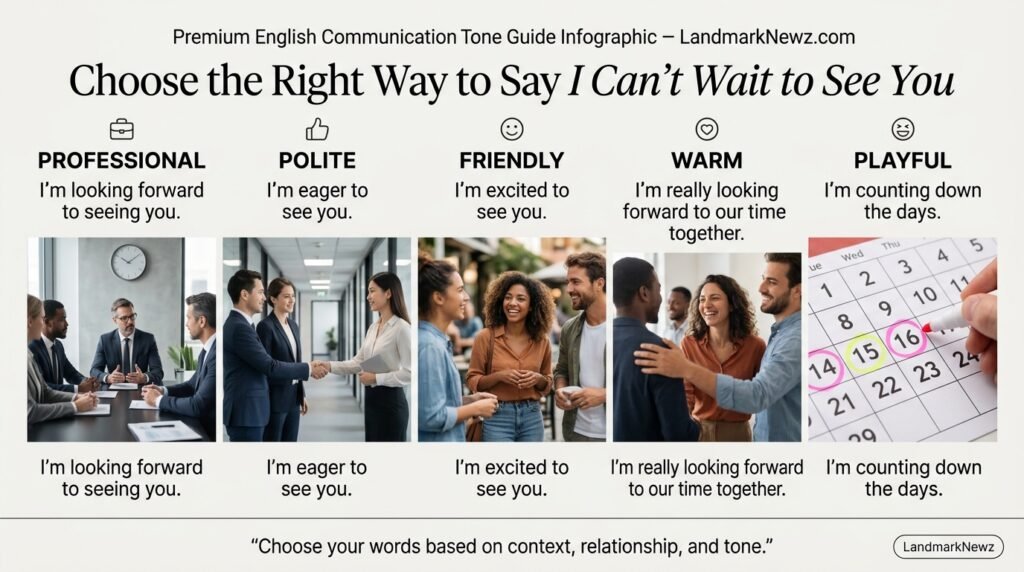
| Alternative | Best Used In | Tone |
| I’m Looking Forward to Seeing You | Work, emails, conversations | Professional, warm |
| I’m Excited to See You | Texts, conversations | Friendly, enthusiastic |
| I’m Really Looking Forward to Our Time Together | Visits, personal messages | Warm, thoughtful |
| I’m Counting Down the Days | Personal messages | Playful, excited |
| I’m Eager to See You | Professional or formal settings | Polite, enthusiastic |
| It’ll Be Great to See You | Work or casual conversations | Relaxed, friendly |
| I’m So Glad We’ll Get to See Each Other | Family and friends | Warm, sincere |
| I’m Excited for Our Reunion | Reunions and gatherings | Warm, enthusiastic |
| I’m Looking Forward to Catching Up | Friends and colleagues | Friendly, relaxed |
| I’m Excited About Seeing You Again | Personal conversations | Warm, enthusiastic |
Common Mistakes
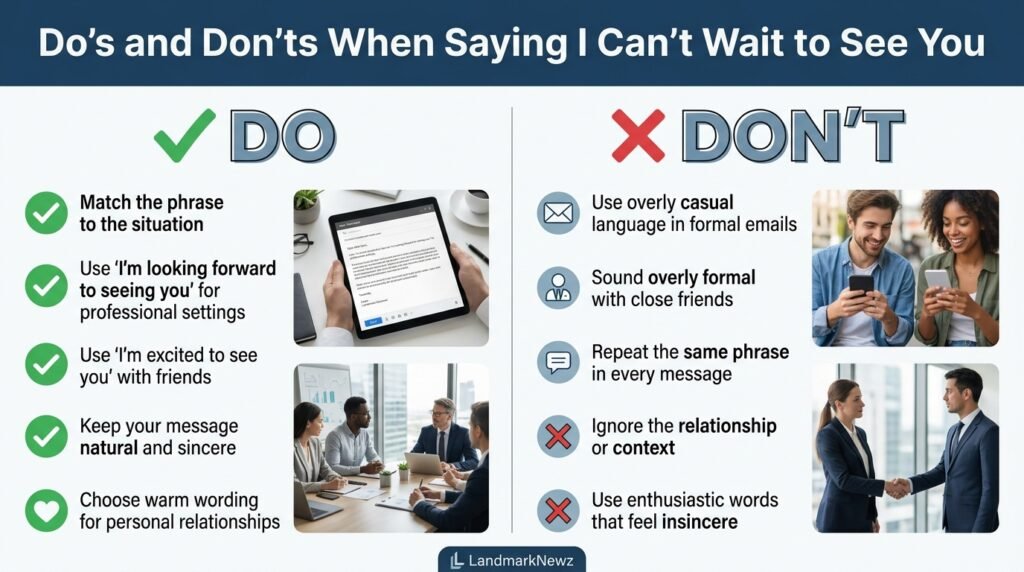
1. Using Casual Phrases in Professional Emails
Expressions such as “I’m counting down the days” may sound too personal in a formal workplace message. For professional communication, “I’m looking forward to seeing you” is usually safer.
2. Choosing Overly Formal Language
Not every situation requires polished wording. Saying “I’m eager to see you” to a close friend can sound more formal than necessary.
3. Repeating the Same Phrase
Using “I can’t wait to see you” in every message can make your writing feel predictable. Rotate between natural alternatives that match the situation.
4. Forgetting Context
Think about who will receive your message. A phrase that works beautifully for a partner or close friend may not be appropriate for a manager, client, or professional contact.
5. Sounding Insincere
Avoid using enthusiastic language if the situation does not call for it. Choose a simple expression when you want your message to sound genuine and understated.
Frequently Asked Questions
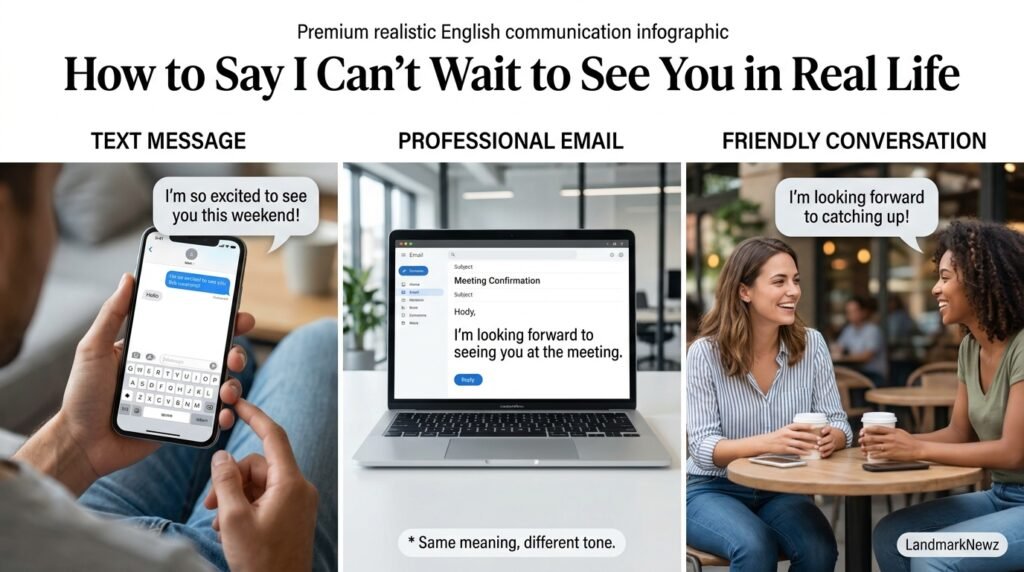
What is a professional way to say “I can’t wait to see you”?
“I’m looking forward to seeing you” is one of the best professional alternatives. It communicates positive anticipation without sounding too casual or emotional. You can use it in business emails, meeting confirmations, workplace messages, and professional invitations when you expect to meet someone soon.
What is a casual way to say “I can’t wait to see you”?
“I’m excited to see you” is a natural casual alternative. You can also say “I’m counting down the days” when you want a more playful tone. Both expressions work well in texts and conversations with friends, family members, or people you know well.
How do you say “I can’t wait to see you” in a sweet way?
For a sweeter message, try “I’m so glad we’ll get to see each other” or “I’m really looking forward to our time together.” These phrases communicate warmth and affection while sounding natural rather than overly dramatic.
What is another way to say “I’m excited to see you”?
You can say “I’m looking forward to seeing you,” “It’ll be great to see you,” or “I’m eager to see you.” The best choice depends on your tone. “I’m looking forward to seeing you” is more polished, while “I’m excited to see you” feels more casual and enthusiastic.
Can I say “I can’t wait to see you” in a professional email?
Yes, but context matters. The phrase is grammatically correct and can sound friendly, but it may be too casual for some professional situations. If you want a safer option, use “I’m looking forward to seeing you,” especially when communicating with a client, manager, or business partner.
Is “I’m looking forward to seeing you” formal?
It can be formal, but it is also common in everyday communication. Its flexibility makes it one of the safest alternatives to “I can’t wait to see you.” The surrounding message determines whether it feels professional, friendly, or warmly personal.
How can I say “I can’t wait to see you” without sounding romantic?
Use a neutral phrase such as “It’ll be great to see you,” “I’m looking forward to catching up,” or “I’m excited to see you.” These expressions show enthusiasm without automatically suggesting romantic feelings.
What is the best phrase for someone I have not seen in a long time?
“I’m really looking forward to seeing you again” is an excellent choice. You can also say “I’m so glad we’ll get to see each other” when you want to emphasize how meaningful the reunion feels. Both options work well for friends, relatives, and former colleagues.
Conclusion
There are many ways to say “I can’t wait to see you.” “I’m looking forward to seeing you” works well professionally, while “I’m excited to see you” feels more casual. Understanding the meaning of “look forward to” can help you use it naturally.
If you want something playful, “I’m counting down the days” adds extra excitement. When reconnecting with someone you already know, “I’m looking forward to catching up” sounds warm and relaxed. Meanwhile, “I’m really looking forward to our time together” adds a more personal touch.
The key is to match your words to the relationship and context. A thoughtful phrase will make your message feel more natural, genuine, and appropriate.

Professional Writing & Workplace Communication Expert
Marcus Hale is a business communication specialist with 11 years of experience in corporate training and professional writing. He has worked with mid-sized companies and remote teams to improve clarity in emails, reports, performance reviews, and client-facing messages.
Marcus focuses on polished, professional alternatives that help readers sound confident without sounding stiff. His guides cover workplace phrases, resume language, leadership communication, and formal-to-natural transitions. He holds a background in business administration and technical writing, and has led workshops on effective professional English.
At LandmarkNewz, Marcus creates practical synonym lists and phrasing tips that professionals can apply immediately in emails, meetings, and career documents.