Finding another way to say sad can make your writing more precise, natural, and expressive. While “sad” is simple and widely understood, it does not always capture the exact emotion someone is experiencing.
For example, someone can feel disappointed after missing an opportunity, heartbroken after a loss, or gloomy during a difficult day. Choosing the right synonym helps readers understand the feeling more clearly.
What Does “Another Way to Say Sad” Mean?
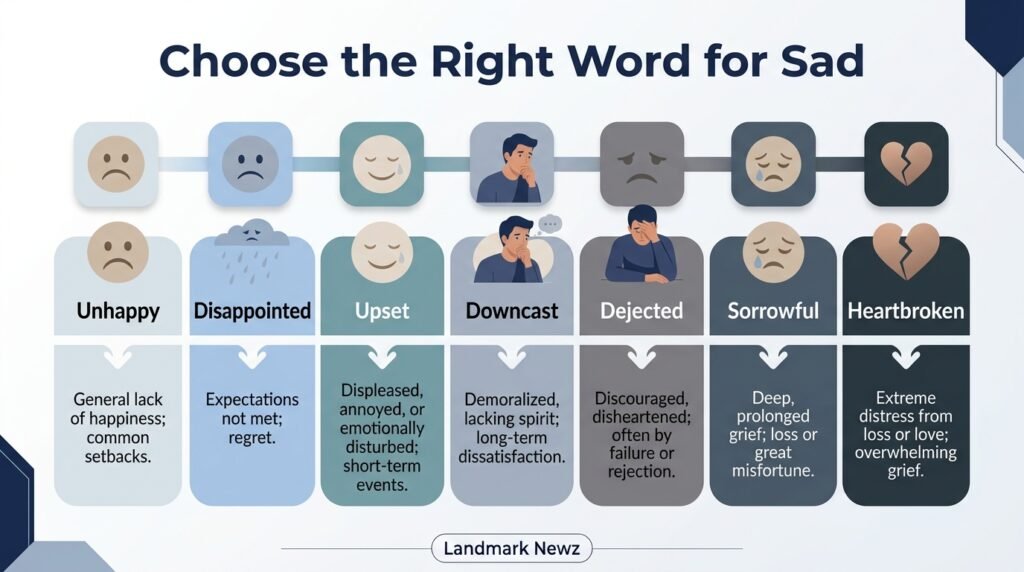
The phrase “another way to say sad” means looking for a synonym or alternative expression that communicates feelings of unhappiness, sorrow, disappointment, or emotional pain.
People commonly search for alternatives when they want to improve an essay, email, story, conversation, resume, or other type of writing. The right word can also help avoid repeating “sad” several times in the same piece.
Common alternatives include unhappy, sorrowful, upset, melancholy, miserable, downcast, dejected, disappointed, gloomy, and heartbroken.
Why Use Other Ways to Say “Sad”?
Using different words for sadness allows you to communicate more accurately and naturally.
You might use a mild synonym when describing a small disappointment and a stronger expression when discussing serious emotional pain.
Other benefits include:
- Avoid repetition: Prevent “sad” from appearing too often.
- Improve clarity: Show the specific type of sadness involved.
- Match the tone: Choose words that fit casual, formal, or creative writing.
- Make writing stronger: More precise vocabulary can create a clearer emotional picture.
- Express emotion naturally: Help readers understand the intensity behind the feeling.
10 Best Other Ways to Say “Sad”
1. Unhappy
Meaning
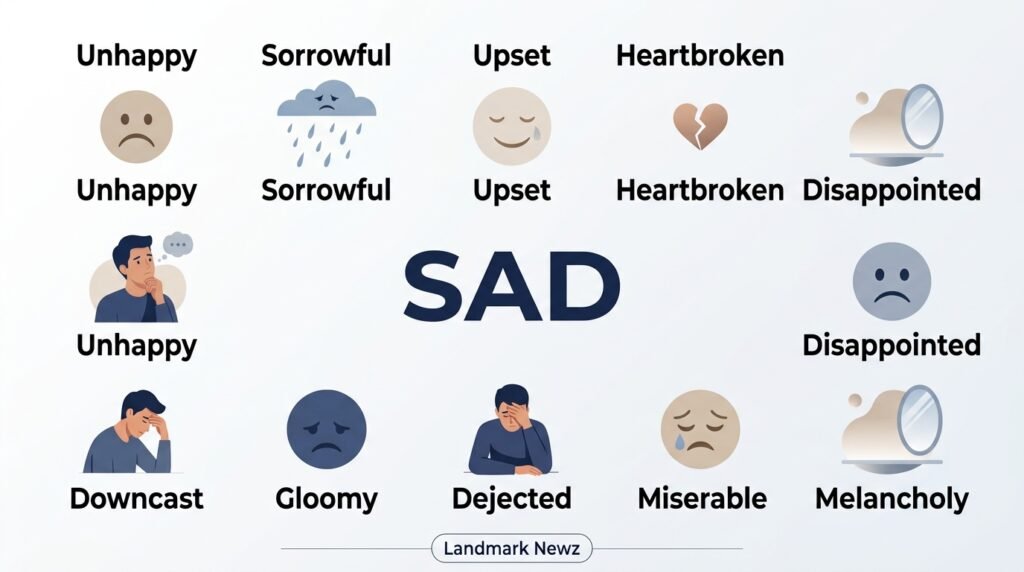
Unhappy is one of the closest and most natural alternatives to “sad.” It describes a general lack of happiness without necessarily suggesting severe emotional pain.
Best For
- Professional
- Formal
- Casual
- Friendly
Example 1
She felt unhappy about the decision but decided to move forward.
Example 2
He seemed unhappy after hearing that the event had been canceled.
Quick Tip
Use unhappy when you want a straightforward replacement for “sad” without making the emotion sound overly dramatic.
2. Sorrowful
Meaning
Sorrowful describes deep sadness, often connected to loss, grief, or a painful experience. It has a more serious and literary tone than the everyday word “sad.”
Best For
- Formal
- Warm
Example 1
The family gathered for a sorrowful farewell.
Example 2
Her sorrowful expression showed how deeply she missed her friend.
Quick Tip
Choose sorrowful when the sadness is serious or connected to grief rather than an ordinary disappointment.
3. Upset
Meaning
Upset is a common conversational alternative that can describe sadness, frustration, anger, or emotional distress. Its meaning depends heavily on the surrounding context.
Best For
- Casual
- Friendly
- Polite
Example 1
I was upset when I learned that my application had been rejected.
Example 2
The child became upset when her favorite toy broke.
Quick Tip
Use upset when the emotion involves sadness mixed with frustration, worry, or disappointment.
4. Heartbroken
Meaning
Heartbroken describes extremely deep sadness, especially after losing someone or something important. It is much stronger than simply saying “sad.”
Best For
- Casual
- Warm
- Friendly
Example 1
She was heartbroken when her longtime pet passed away.
Example 2
He felt heartbroken after saying goodbye to his closest friend.
Quick Tip
Reserve heartbroken for powerful emotional pain rather than minor disappointments.
5. Disappointed
Meaning
Disappointed describes sadness caused by an expectation, hope, or desired outcome not being met. It is often more specific than “sad.”
Best For
- Professional
- Formal
- Casual
- Polite
Example 1
The team was disappointed that the project did not receive approval.
Example 2
I was disappointed that the concert was postponed until next month.
Quick Tip
Use disappointed when something did not happen the way you expected or wanted.
6. Downcast
Meaning
Downcast describes someone who looks or feels sad, discouraged, or low in spirit. It is especially useful when describing a person’s appearance or mood.
Best For
- Formal
- Friendly
- Warm
Example 1
The students looked downcast after hearing the disappointing news.
Example 2
He arrived home with a downcast expression.
Quick Tip
Downcast works particularly well when you are describing someone’s visible mood or facial expression.
7. Gloomy
Meaning
Gloomy can describe a person’s mood, an atmosphere, or even a situation that feels dark and depressing. It often suggests a lingering sense of sadness or negativity.
Best For
- Casual
- Friendly
- Creative
Example 1
The rainy afternoon left everyone feeling gloomy.
Example 2
The office had a gloomy atmosphere after the announcement.
Quick Tip
Use gloomy for moods, places, situations, or atmospheres that feel noticeably depressing.
8. Dejected
Meaning
Dejected means feeling sad, discouraged, or disappointed because something went wrong. It often suggests that a person has lost confidence or enthusiasm.
Best For
- Formal
- Professional
- Warm
Example 1
The player looked dejected after missing the final shot.
Example 2
She felt dejected after receiving several job rejections.
Quick Tip
Choose dejected when sadness is closely connected to discouragement or failure.
9. Miserable
Meaning
Miserable describes a very unhappy or uncomfortable emotional state. It is stronger than “sad” and can suggest that the person feels deeply unhappy.
Best For
- Casual
- Friendly
- Warm
Example 1
He felt miserable after spending the entire weekend alone.
Example 2
She was miserable when her vacation plans fell apart.
Quick Tip
Because miserable is strong, avoid using it for minor disappointments unless you intentionally want to emphasize the emotion.
10. Melancholy
Meaning
Melancholy describes a quiet, thoughtful, or lingering sadness. Unlike “heartbroken,” it often has a softer and more reflective quality.
Best For
- Formal
- Warm
- Creative
Example 1
A feeling of melancholy came over him as he looked through old photographs.
Example 2
The song has a gentle, melancholy quality that makes listeners reflect.
Quick Tip
Use melancholy when sadness feels reflective, subdued, or somewhat nostalgic rather than intense.
Comparison Table
| Alternative | Best Used In | Tone |
| Unhappy | Everyday and professional writing | Neutral |
| Sorrowful | Grief and serious situations | Deep |
| Upset | Conversations and everyday situations | Casual |
| Heartbroken | Major loss or emotional pain | Very strong |
| Disappointed | Unmet expectations | Neutral |
| Downcast | Describing someone’s mood | Gentle |
| Gloomy | Moods and atmospheres | Negative |
| Dejected | Failure or discouragement | Serious |
| Miserable | Strong unhappiness | Intense |
| Melancholy | Reflective or creative writing | Thoughtful |
How to Choose the Right Synonym for “Sad”
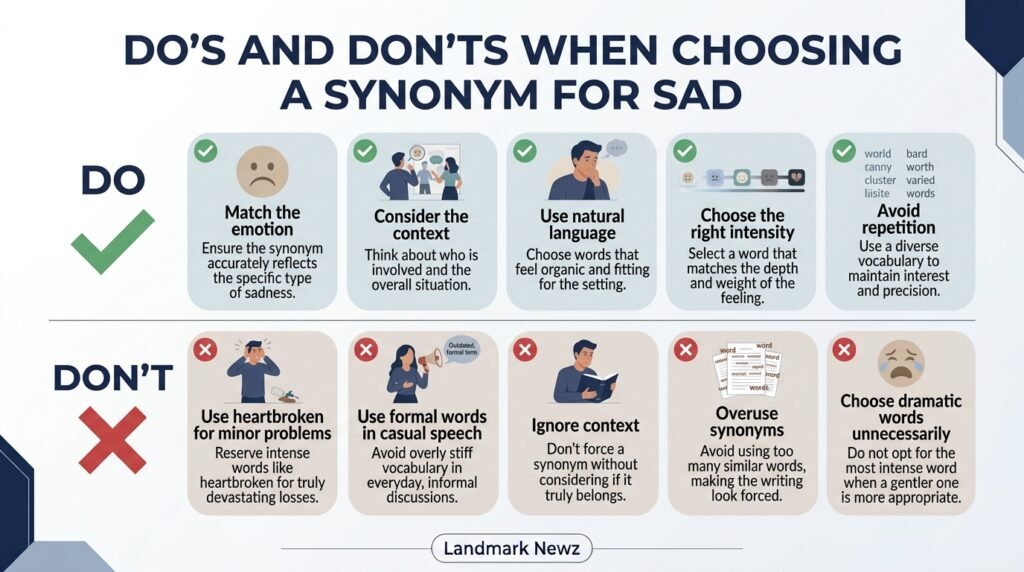
The best alternative depends on why someone feels sad and how intense the emotion is.
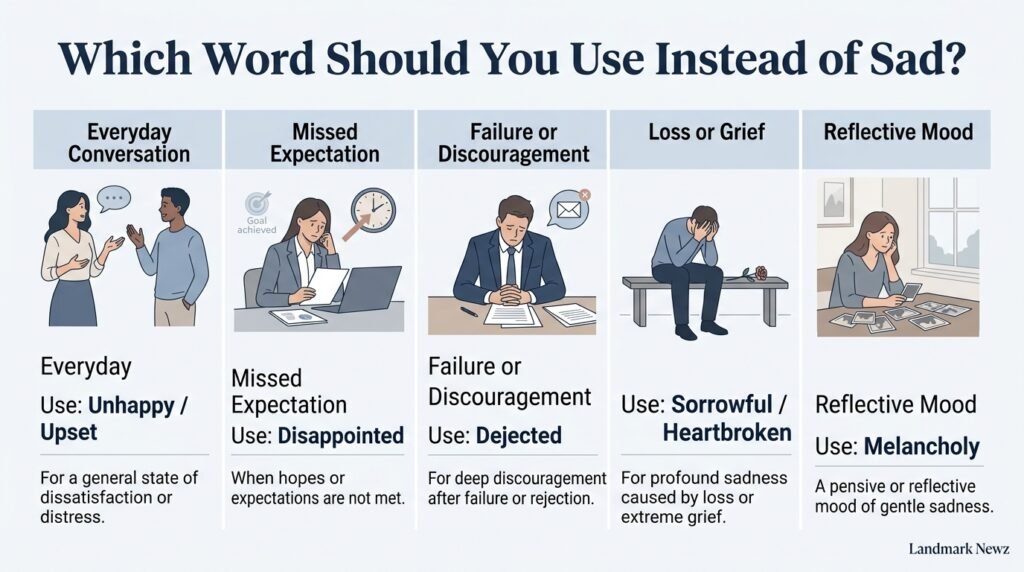
For everyday situations, unhappy and upset are safe choices. If someone expected a positive outcome and did not get it, disappointed is more precise.
For deeper emotions, consider sorrowful or heartbroken. When describing someone’s appearance or mood, downcast can sound more natural.
For creative writing, melancholy can add a reflective quality, while gloomy works well for an atmosphere or setting.
Common Mistakes
1. Using a Strong Word for a Minor Emotion
Calling someone “heartbroken” because their lunch order was wrong may sound exaggerated. Match the strength of the word to the actual emotion.
2. Treating Every Synonym as Identical
Words such as disappointed, upset, and sorrowful are related to sadness, but they do not mean exactly the same thing. Consider the cause of the emotion before choosing a replacement.
3. Using Formal Words in Casual Conversations
Words like sorrowful and melancholy may sound unnatural in everyday speech. In casual situations, upset or unhappy is usually more appropriate.
4. Ignoring Context
“Gloomy” can describe a person’s mood, a room, or even the weather. Make sure the alternative fits the subject and sentence.
5. Choosing a Word That Sounds Insincere
Overly dramatic vocabulary can weaken emotional writing. If the situation is serious, a simple and honest word may communicate more effectively than an exaggerated expression.
Frequently Asked Questions
What is the best synonym for sad?
The best general synonym for sad is unhappy because it works in many everyday and professional situations. However, the ideal choice depends on the emotion. Use disappointed for unmet expectations, heartbroken for intense emotional pain, and melancholy for quiet, reflective sadness.
What is a stronger word for sad?
Several words are stronger than “sad,” including heartbroken, miserable, sorrowful, and devastated. Among the alternatives in this guide, heartbroken usually communicates especially deep emotional pain. Use stronger words only when the situation genuinely calls for them.
What is a professional way to say sad?
In professional writing, unhappy, disappointed, concerned, discouraged, or dissatisfied may work depending on the context. For example, “I was disappointed with the outcome” sounds more professional and specific than simply saying, “I was sad about the outcome.”
What is a nice way to say sad?
A softer alternative to “sad” can be melancholy, downcast, or a little low. These expressions can communicate emotion without sounding overly dramatic. For sensitive conversations, choosing gentle language can make your message feel more thoughtful and considerate.
What is another way to say very sad?
For very strong sadness, you can say heartbroken, miserable, devastated, crushed, or deeply sorrowful. The best choice depends on the cause. “Heartbroken” often relates to personal loss, while “devastated” can describe an overwhelming reaction to extremely painful news.
What is another word for sad in writing?
Useful alternatives include unhappy, sorrowful, melancholy, downcast, dejected, gloomy, disappointed, and heartbroken. Creative writers often choose more specific words because they help readers understand the character’s emotional state instead of simply labeling the character as “sad.”
What is a better word than sad for an essay?
For an essay, choose a precise word based on the context. Disappointed works for unmet expectations, sorrowful can fit serious loss, and dejected can describe discouragement. Avoid replacing every instance of “sad” with a complicated synonym; clarity should come first.
Can “upset” mean sad?
Yes. Upset can describe sadness, but it can also refer to anger, frustration, worry, or emotional distress. The surrounding sentence determines its meaning. For example, “She was upset after hearing the news” could mean she was sad, angry, worried, or a combination of those emotions.
Conclusion
Knowing another way to say sad can help you communicate emotions with greater accuracy and variety. The key is to choose a synonym that matches both the situation and the strength of the feeling. Exploring sad synonyms and alternatives can help you choose the right word for each context.
For everyday use, unhappy and upset are natural choices. Disappointed works best when expectations are not met, while downcast and dejected describe discouragement or a visibly low mood. For deeper pain, sorrowful and heartbroken are stronger options. If you want a reflective or creative tone, melancholy may be the better fit.
The most effective vocabulary is not necessarily the most complicated. Choose the word that communicates the exact emotion clearly, naturally, and appropriately for your reader.

Language & Everyday Communication Specialist
Elena Voss is a language enthusiast and communication coach with over 9 years of experience helping people express themselves more naturally in English. She previously worked as an ESL instructor and corporate language trainer, guiding professionals and students on clearer everyday conversations, polite alternatives, and natural phrasing.
Elena specializes in practical synonym guides and “another way to say…” content that feels conversational rather than textbook. Her writing focuses on real-life situations — emails to friends, casual workplace chat, social media, and daily interactions. She believes the best language advice is simple, useful, and easy to remember.
When she’s not creating content for LandmarkNewz, Elena enjoys analyzing modern slang trends and testing new phrases in real conversations.