
When someone thanks you at work, replying with “my pleasure” is polite and professional. However, using the same expression repeatedly can make your emails and conversations sound predictable.
Fortunately, there are several natural alternatives to “my pleasure.” The right phrase can help you sound appreciative, confident, helpful, and professional without becoming overly formal.
What Does “Another Way to Say My Pleasure Professionally” Mean?
The phrase “another way to say my pleasure professionally” refers to alternative expressions you can use when responding to someone who thanks you in a workplace or business setting.
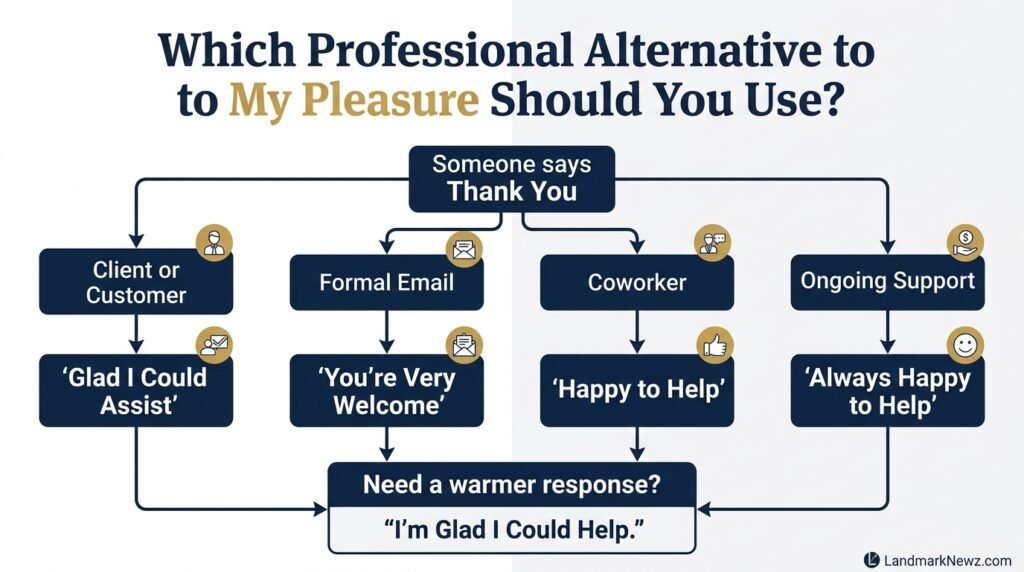
“My pleasure” communicates that you were happy to help and did not consider the assistance a burden. Depending on the situation, you might choose a warmer phrase such as “happy to help,” a polished response such as “you’re very welcome,” or a service-focused expression such as “glad I could assist.”
These alternatives are commonly used in professional emails, customer service, meetings, workplace conversations, business correspondence, and client interactions.
Why Use Other Ways to Say “My Pleasure” Professionally?

Choosing different expressions helps you communicate naturally while keeping your tone appropriate.
You may want another way to say “my pleasure” to:
- Avoid repeating the same phrase.
- Sound more natural in professional conversations.
- Match your tone to a client, coworker, manager, or customer.
- Make emails feel warm without sounding overly casual.
- Show genuine willingness to help.
- Adjust your language for formal and informal workplace situations.
The key is not simply finding a synonym. It is choosing an expression that fits the relationship and context.
10 Best Other Ways to Say “My Pleasure” Professionally
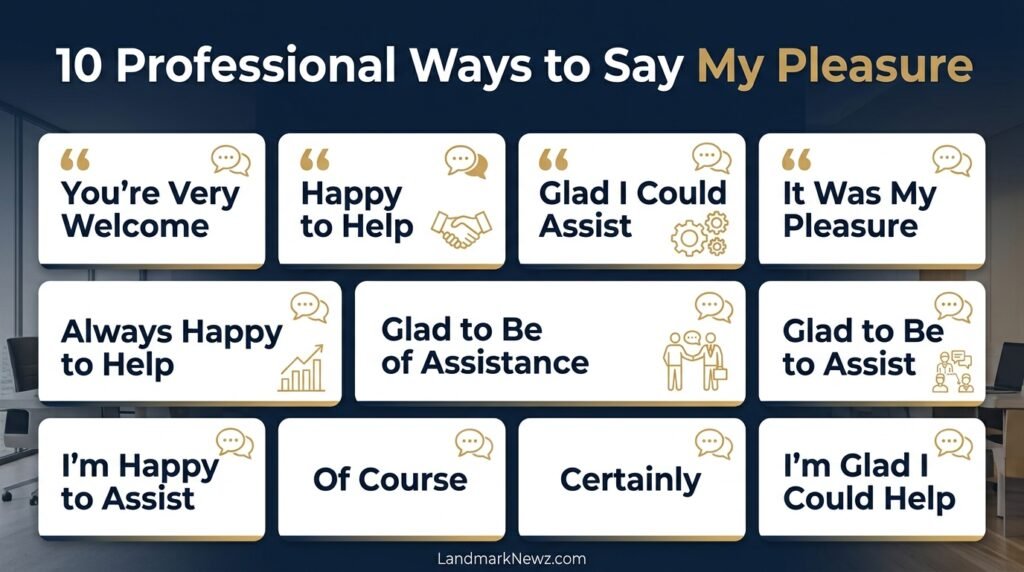
1. You’re Very Welcome
Meaning
“You’re very welcome” is a polished and courteous response to someone who thanks you. It works well when you want to sound professional without being stiff or overly formal.
Best For
- Professional
- Formal
- Polite
- Friendly
Example 1
“You’re very welcome. Please let me know if you need anything else.”
Example 2
“You’re very welcome, and I’m glad we were able to resolve the issue.”
Quick Tip
Use this phrase when you want a safe, professional response that works with clients, coworkers, and business contacts.
2. Happy to Help
Meaning
“Happy to help” communicates that you were glad to provide assistance. It sounds friendly and professional, making it one of the most versatile alternatives to “my pleasure.”
Best For
- Professional
- Friendly
- Warm
- Polite
Example 1
“Happy to help with the presentation updates.”
Example 2
“Happy to help. I’ll send the revised document this afternoon.”
Quick Tip
This is an excellent choice for workplace emails because it sounds natural without being excessively formal.
3. Glad I Could Assist
Meaning
“Glad I could assist” emphasizes satisfaction with being able to solve a problem or provide support. It is especially suitable when communicating with customers, clients, or professional contacts.
Best For
- Professional
- Formal
- Polite
Example 1
“I’m glad I could assist with your account request.”
Example 2
“Glad I could assist in getting the report finalized before the deadline.”
Quick Tip
Use “assist” when you want a slightly more formal tone than “help.”
4. It Was My Pleasure
Meaning
“It was my pleasure” is a slightly more complete and polished version of “my pleasure.” It works particularly well after completing a meaningful task or providing personal assistance.
Best For
- Formal
- Professional
- Warm
- Polite
Example 1
“It was my pleasure to help you prepare for the client meeting.”
Example 2
“It was my pleasure working with your team on this project.”
Quick Tip
Use this expression when you want to emphasize that you genuinely enjoyed helping.
5. Always Happy to Help
Meaning
“Always happy to help” suggests that you are open to providing assistance again in the future. It creates a supportive and approachable tone while remaining appropriate for professional communication.
Best For
- Professional
- Friendly
- Warm
Example 1
“Always happy to help with questions about the new process.”
Example 2
“Thanks for reaching out. I’m always happy to help when you need clarification.”
Quick Tip
This phrase works especially well when you want to encourage someone to contact you again.
6. Glad to Be of Assistance
Meaning
“Glad to be of assistance” is a more formal alternative that highlights your willingness to provide useful support. It fits customer service, business correspondence, and formal workplace interactions.
Best For
- Formal
- Professional
- Polite
Example 1
“I’m glad to be of assistance. Your request has now been completed.”
Example 2
“We’re glad to be of assistance and appreciate your patience.”
Quick Tip
Choose this option when communicating with customers or clients who expect a polished, service-oriented tone.
7. I’m Happy to Assist
Meaning
“I’m happy to assist” is professional, clear, and slightly more formal than “happy to help.” It communicates willingness while maintaining a courteous business tone.
Best For
- Professional
- Formal
- Polite
Example 1
“I’m happy to assist with the onboarding process.”
Example 2
“I’m happy to assist if you have any additional questions about the proposal.”
Quick Tip
This is a strong choice for professional emails when “happy to help” feels slightly too casual.
8. Of Course
Meaning
“Of course” is a short and natural response to thanks. It suggests that helping was easy or expected and can make a professional conversation feel relaxed and personable.
Best For
- Casual
- Friendly
- Professional
Example 1
“Of course. I’ll make those changes before the meeting.”
Example 2
“Of course, and please feel free to reach out if anything else comes up.”
Quick Tip
Use “of course” with familiar coworkers or professional contacts. For highly formal situations, choose a more explicit response.
9. Certainly
Meaning
“Certainly” conveys willingness and professionalism in a concise way. It is particularly useful when someone thanks you after requesting assistance or receiving a service.
Best For
- Professional
- Formal
- Polite
Example 1
“Certainly. I’ll forward the information to you shortly.”
Example 2
“Certainly, and I’ll make sure the appropriate team receives your request.”
Quick Tip
“Certainly” is useful when you want your response to sound confident and courteous without unnecessary words.
10. I’m Glad I Could Help
Meaning
“I’m glad I could help” sounds sincere and approachable while remaining professional. It focuses on the positive result of your assistance rather than simply acknowledging the other person’s thanks.
Best For
- Professional
- Friendly
- Warm
- Polite
Example 1
“I’m glad I could help you find the information you needed.”
Example 2
“I’m glad I could help get everything ready for the presentation.”
Quick Tip
Use this phrase when your assistance solved a specific problem or helped someone reach a goal.
Comparison Table
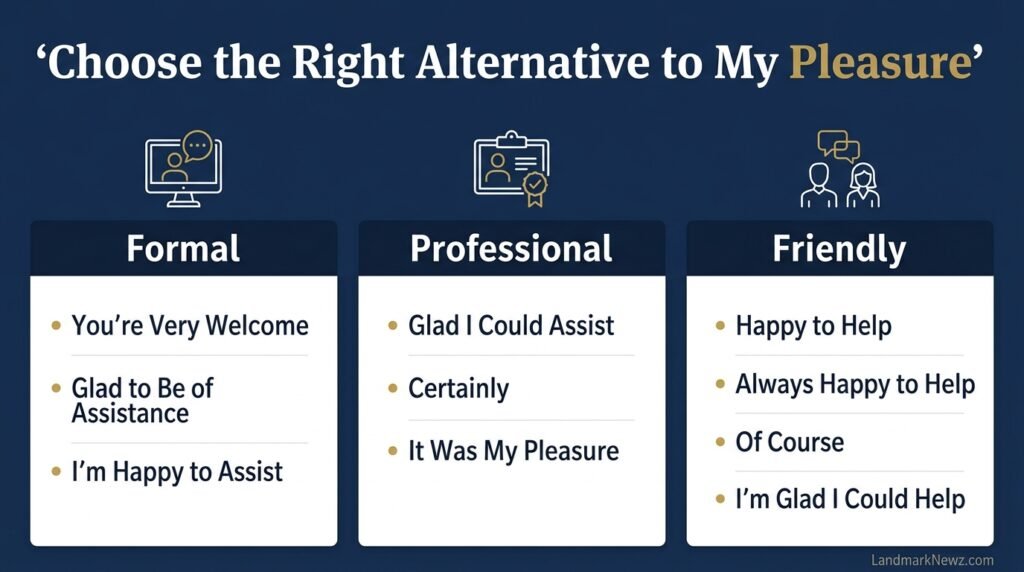
| Alternative | Best Used In | Tone |
| You’re Very Welcome | Emails, business conversations | Polished, courteous |
| Happy to Help | Everyday workplace communication | Friendly, professional |
| Glad I Could Assist | Customer service, client communication | Formal, helpful |
| It Was My Pleasure | Formal conversations, meaningful assistance | Warm, polished |
| Always Happy to Help | Ongoing professional relationships | Warm, supportive |
| Glad to Be of Assistance | Customer service, formal emails | Formal, courteous |
| I’m Happy to Assist | Business emails, client interactions | Professional, polished |
| Of Course | Coworker conversations, casual business settings | Relaxed, friendly |
| Certainly | Formal workplace communication | Concise, confident |
| I’m Glad I Could Help | Workplace and customer interactions | Warm, sincere |
Common Mistakes
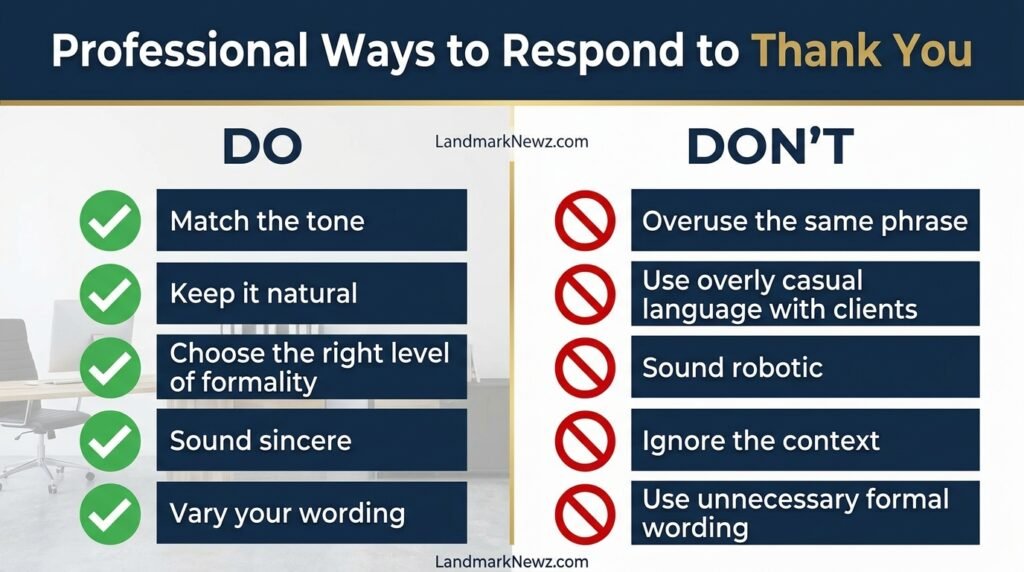
1. Using Casual Phrases in Formal Emails
Expressions such as “no problem” or “sure thing” can sound too relaxed in certain professional situations. When writing to an executive, client, or unfamiliar business contact, choose a more polished alternative.
2. Choosing Language That Is Too Formal
Not every workplace conversation requires highly formal language. Saying “I am delighted to have been of assistance” may sound unnatural when a simple “happy to help” would be more appropriate.
3. Repeating the Same Phrase
Using “my pleasure” after every thank-you can make your communication feel repetitive. Rotate between natural alternatives while keeping your tone consistent.
4. Ignoring the Context
A phrase that works with a coworker may not be ideal for a customer. Consider who you are speaking with, what they thanked you for, and how formal the situation is.
5. Sounding Insincere
Professional language should still sound genuine. Avoid overly elaborate expressions when a short, honest response communicates your meaning more effectively.
Frequently Asked Questions
What is the most professional way to say “my pleasure”?
“You’re very welcome,” “happy to help,” and “glad I could assist” are excellent professional alternatives. The best choice depends on the situation. “You’re very welcome” is broadly appropriate, while “glad I could assist” works particularly well in customer service and client communication.
Is “happy to help” professional?
Yes, “happy to help” is professional and widely used in American workplace communication. It sounds friendly without becoming too casual, making it suitable for coworkers, customers, clients, and business contacts. It is especially effective in emails where you want to maintain a warm and approachable tone.
Can I use “my pleasure” in a professional email?
Absolutely. “My pleasure” is polite and professional, particularly when someone thanks you for helping them. However, you can vary your wording with expressions such as “happy to help,” “you’re very welcome,” or “I’m glad I could assist” to avoid repetition.
What can I say instead of “my pleasure” to a client?
For a client, try “you’re very welcome,” “happy to help,” “glad I could assist,” or “I’m happy to assist.” These expressions communicate professionalism while showing that you value the client’s interaction and are willing to provide further support.
Is “glad I could help” professional?
Yes. “Glad I could help” is professional, warm, and natural. It works particularly well after you have solved a problem or completed a task for someone. If you need a more formal version, “glad I could assist” is a good alternative.
What is a formal way to say “my pleasure”?
Formal alternatives include “you’re very welcome,” “glad to be of assistance,” and “I’m happy to assist.” These phrases work well in formal emails, customer service interactions, business correspondence, and situations where you want to maintain a polished tone.
Is “of course” a good response to thank you at work?
“Yes, of course” can work well with coworkers and familiar professional contacts. It creates a relaxed, friendly tone. However, it may be less suitable for highly formal communication, where “you’re very welcome” or “I’m happy to assist” sounds more polished.
What is the best response to “thank you” in a professional setting?
The best response depends on the situation. “You’re very welcome” is a reliable all-purpose choice, while “happy to help” feels warmer and more conversational. For customer service, “glad I could assist” is particularly effective. Choose the phrase that naturally matches your relationship and the level of formality.
Conclusion
Finding another way to say “my pleasure” professionally can make your communication more natural, flexible, and engaging. While “my pleasure” remains a perfectly appropriate response, alternatives such as “you’re very welcome,” “happy to help,” and “I’m glad I could assist” let you adjust your tone to fit the situation. For more guidance, learn about professional communication at work.
In everyday workplace conversations, “happy to help” is warm and approachable. When communicating with clients or in formal business settings, “you’re very welcome” or “I’m happy to assist” can sound more polished. To emphasize a successful outcome, “I’m glad I could help” is a natural choice.
The most important rule is to consider your audience and context. Choose wording that sounds sincere, professional, and comfortable for the relationship rather than forcing an overly formal expression.

Language & Everyday Communication Specialist
Elena Voss is a language enthusiast and communication coach with over 9 years of experience helping people express themselves more naturally in English. She previously worked as an ESL instructor and corporate language trainer, guiding professionals and students on clearer everyday conversations, polite alternatives, and natural phrasing.
Elena specializes in practical synonym guides and “another way to say…” content that feels conversational rather than textbook. Her writing focuses on real-life situations — emails to friends, casual workplace chat, social media, and daily interactions. She believes the best language advice is simple, useful, and easy to remember.
When she’s not creating content for LandmarkNewz, Elena enjoys analyzing modern slang trends and testing new phrases in real conversations.