Finding another way to say about me on a website can make your site feel more distinctive and better aligned with your brand. Although “About Me” is perfectly acceptable, it can sometimes sound generic, especially when you want your website to have a strong personality.
The right heading can immediately tell visitors what they will learn about you. Whether you are creating a portfolio, personal blog, freelancer website, professional profile, or creator site, a thoughtful alternative can make your introduction more engaging.
What Does “Another Way to Say About Me on a Website” Mean?
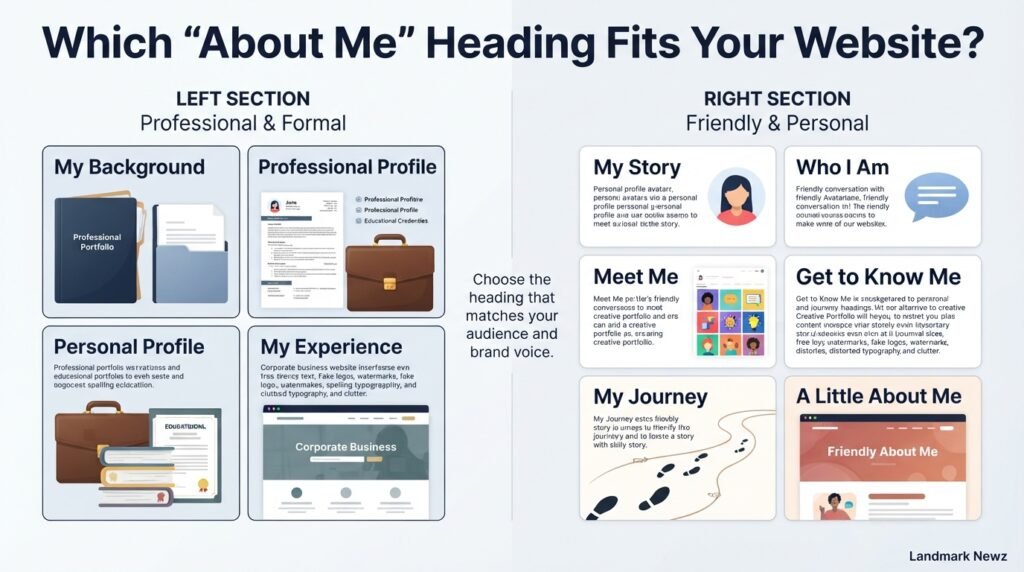
The phrase refers to alternative headings you can use instead of “About Me” on a website. These headings introduce information about your identity, experience, skills, background, values, interests, or professional journey.
“About Me” commonly appears on personal websites, portfolios, resumes, blogs, freelancer profiles, and creator websites. However, alternatives such as “My Story,” “Who I Am,” and “My Background” can make the same section feel more natural or specific.
People often look for different wording because they want their website to sound less standard. A well-chosen heading can also support a particular brand personality, from professional and polished to warm and conversational.
Why Use Other Ways to Say “About Me” on a Website?
You do not have to replace “About Me.” It is clear and familiar. Still, another heading may fit your website better.
Using an alternative can help you:
- Avoid generic website language.
- Create a stronger personal brand.
- Match your website’s tone and audience.
- Make your introduction feel more inviting.
- Highlight your professional background or personal journey.
- Give visitors a clearer idea of what the section contains.
For example, a photographer might prefer “Behind the Lens”, while a consultant may choose “Professional Profile.” The best wording depends on what you want visitors to understand first.
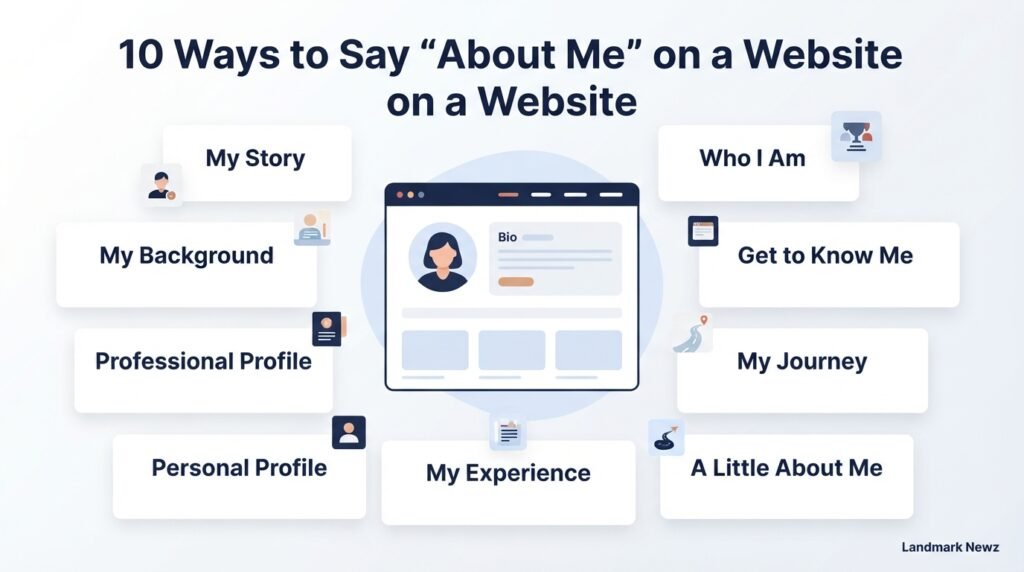
10 Best Other Ways to Say “About Me” on a Website
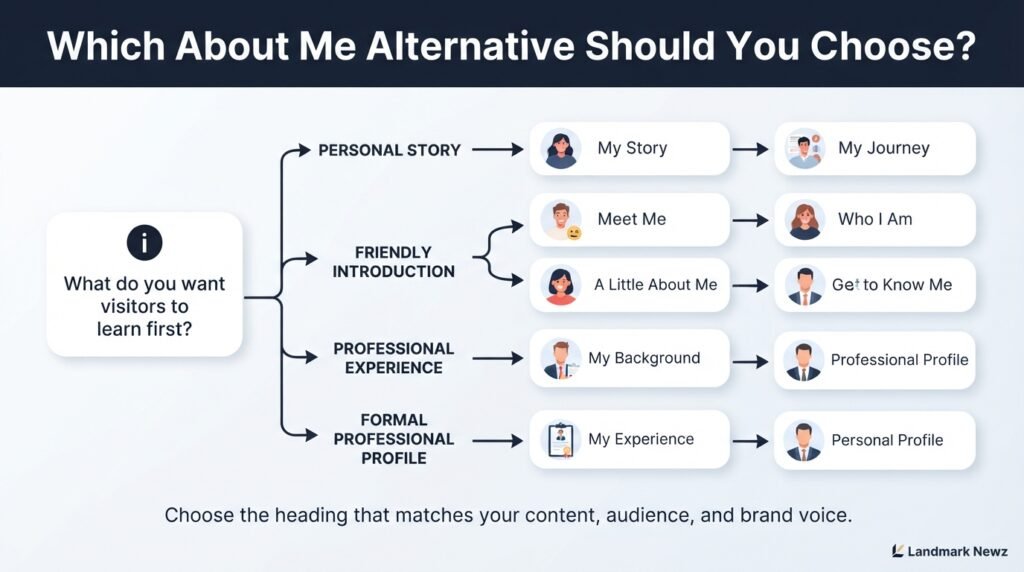
1. My Story
Meaning
“My Story” presents your introduction as a personal journey rather than a simple list of facts. It works especially well when your experiences, challenges, achievements, or motivation are an important part of your website.
Best For
- Friendly
- Warm
- Casual
- Personal
Example 1
My Story explains how I turned a childhood interest in design into a career as a creative professional.
Example 2
Read My Story to learn what inspired me to start this business and where I hope to take it next.
Quick Tip
Choose “My Story” when you want visitors to connect with the person behind your work.
2. Who I Am
Meaning
“Who I Am” is a direct and personal alternative to “About Me.” It focuses on your identity, personality, values, and the qualities that shape how you work or live.
Best For
- Casual
- Friendly
- Warm
- Personal
Example 1
In Who I Am, I share the values that guide my work and relationships with clients.
Example 2
Visit Who I Am to learn more about my interests, goals, and creative approach.
Quick Tip
This heading is a strong choice when personality matters as much as professional experience.
3. Meet Me
Meaning
“Meet Me” gives your website a welcoming, conversational tone. It feels like an invitation to get acquainted rather than a formal biography.
Best For
- Friendly
- Casual
- Warm
Example 1
Head over to Meet Me to learn about my creative process and the people who inspire my work.
Example 2
Want to know the person behind the photographs? Start with Meet Me.
Quick Tip
“Meet Me” works particularly well for photographers, artists, coaches, bloggers, and personal brands.
4. My Background
Meaning
“My Background” emphasizes your experience, education, career history, and professional development. It is more focused on credentials than personality.
Best For
- Professional
- Formal
- Polite
Example 1
My Background includes more than a decade of experience in digital marketing and content strategy.
Example 2
You can explore My Background to see my education, certifications, and previous roles.
Quick Tip
Use this heading when visitors need to understand your qualifications quickly.
5. Professional Profile
Meaning
“Professional Profile” gives your website a polished and career-focused feel. It is useful when your introduction mainly discusses your expertise, accomplishments, skills, and professional identity.
Best For
- Professional
- Formal
Example 1
My Professional Profile outlines my experience in project management and business development.
Example 2
Review my Professional Profile for an overview of my skills and career achievements.
Quick Tip
This is a strong alternative for consultants, executives, job seekers, and service professionals.
6. Get to Know Me
Meaning
“Get to Know Me” sounds inviting and conversational. It suggests that the section will give visitors a fuller picture of your personality, interests, experiences, and professional life.
Best For
- Friendly
- Warm
- Casual
Example 1
Get to Know Me and discover what motivates me both inside and outside of work.
Example 2
I created this page to help new clients get to know me before we begin working together.
Quick Tip
Use this option when you want your website to feel approachable rather than corporate.
7. My Journey
Meaning
“My Journey” focuses on progress and development over time. It works well when your career, business, education, or creative work has evolved through several meaningful stages.
Best For
- Warm
- Friendly
- Professional
Example 1
My Journey from entry-level designer to creative director taught me the value of curiosity and persistence.
Example 2
Explore My Journey to see the major milestones that shaped my career.
Quick Tip
Choose this heading when your growth and experiences are central to your personal brand.
8. Personal Profile
Meaning
“Personal Profile” provides a balanced description of who you are and what you do. It can cover professional qualifications while still allowing room for personality, interests, and personal values.
Best For
- Professional
- Formal
- Polite
Example 1
My Personal Profile provides a brief overview of my experience, interests, and professional goals.
Example 2
Visit my Personal Profile for a closer look at the skills and values I bring to each project.
Quick Tip
This option works well when you want a professional heading without making the page sound overly formal.
9. My Experience
Meaning
“My Experience” puts the focus on what you have learned and accomplished. It is especially useful for professionals whose expertise is an important reason visitors are considering their services.
Best For
- Professional
- Formal
Example 1
My Experience includes working with startups, nonprofits, and established companies across several industries.
Example 2
Learn more about My Experience in web development, user experience, and digital strategy.
Quick Tip
Use this heading when credibility and practical experience are more important than personal details.
10. A Little About Me
Meaning
“A Little About Me” is a softer, more relaxed variation of the traditional heading. It suggests that visitors will get a brief and approachable introduction rather than a detailed biography.
Best For
- Casual
- Friendly
- Warm
Example 1
A Little About Me: I love helping small businesses turn complex ideas into simple digital experiences.
Example 2
Here’s A Little About Me before we get started: I’m a writer, coffee enthusiast, and lifelong learner.
Quick Tip
This heading is ideal when you want to keep your introduction short, personal, and easy to read.
Comparison Table
| Alternative | Best Used In | Tone |
| My Story | Personal websites and blogs | Warm, personal |
| Who I Am | Personal brands and creator sites | Friendly, casual |
| Meet Me | Portfolios and creative websites | Friendly, welcoming |
| My Background | Career and professional websites | Professional |
| Professional Profile | Business and career sites | Formal, polished |
| Get to Know Me | Personal brands and blogs | Warm, conversational |
| My Journey | Career and storytelling websites | Personal, reflective |
| Personal Profile | Professional portfolios | Polite, professional |
| My Experience | Consultant and service websites | Professional, credible |
| A Little About Me | Blogs and casual personal sites | Casual, friendly |
Common Mistakes
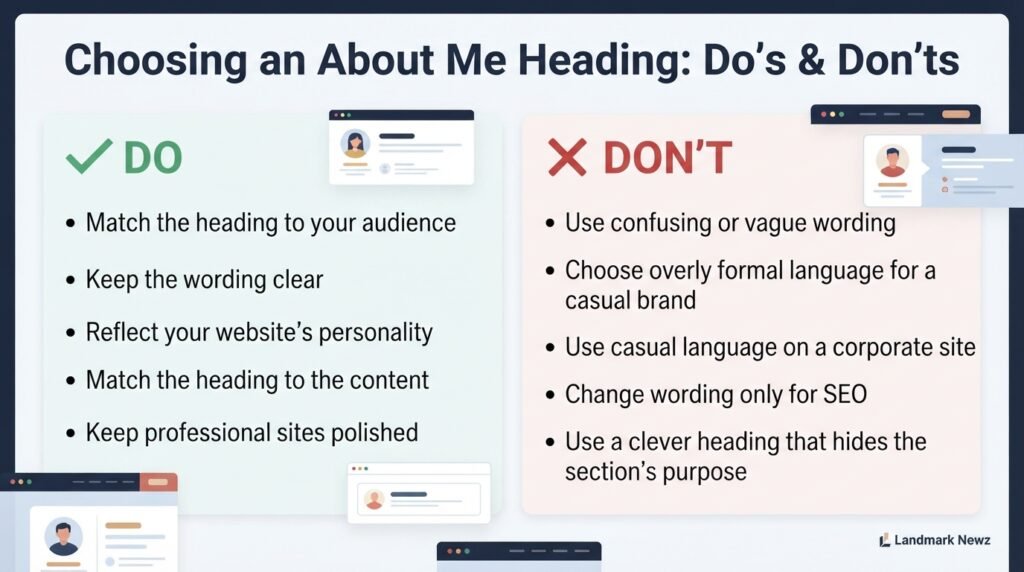
1. Using a Casual Phrase on a Formal Website
A heading such as “Meet Me” may feel too relaxed for a law firm, financial consultancy, or corporate website. Match the wording to your industry and audience.
2. Choosing Overly Formal Language
Not every professional website needs a heading like “Professional Biography.” If your brand is friendly and modern, simpler wording can create a better visitor experience.
3. Repeating the Same Phrase
If every page uses similar generic language, your website may feel predictable. Choose headings that add meaning instead of changing wording simply for the sake of variety.
4. Forgetting Context
Consider what visitors expect to find beneath the heading. “My Experience” suggests career details, while “My Story” suggests a broader personal narrative.
5. Sounding Insincere
A creative heading cannot replace authentic content. Your introduction should honestly explain who you are, what you do, and why visitors should care.
Frequently Asked Questions
What is a good alternative to “About Me” on a website?
Good alternatives include “My Story,” “Who I Am,” “Meet Me,” “My Background,” and “Get to Know Me.” For a professional website, “Professional Profile” or “My Experience” may be more appropriate. The best choice depends on whether you want the section to emphasize personality, career history, qualifications, or your personal journey.
What should I call my About Me page?
You can call it “My Story,” “Who I Am,” “My Background,” “Meet Me,” or “Get to Know Me.” If your site is strongly career-focused, “Professional Profile” or “My Experience” may communicate the purpose more clearly. Choose a heading that matches your brand voice and the information visitors will find on the page.
Is “About Me” professional?
Yes. “About Me” is professional, clear, and widely recognized. It is not necessary to replace it simply because it is common. However, a more specific heading may work better if you want to highlight your experience, career journey, personality, or professional credentials.
What is a creative way to say “About Me”?
“My Story,” “My Journey,” and “Behind the Scenes” can provide a more creative feel than “About Me.” The right choice depends on your website. For example, “My Journey” works well for a career-focused personal brand, while a creative professional might use a heading that connects directly to their work.
What should I put on an About Me section?
An About Me section can include your name, role, experience, skills, values, interests, accomplishments, and reason for doing what you do. Avoid adding unnecessary personal information. Focus on details that help visitors understand you, your expertise, and how you can help them.
What is the best About Me heading for a portfolio?
“My Work and Experience,” “My Background,” “Meet Me,” or “Professional Profile” can work well for a portfolio. If the portfolio belongs to a creative professional, “My Story” or “My Journey” may feel more distinctive. Select a heading that supports the type of work and audience represented on the site.
Should I use “About” or “About Me”?
Both can work. “About” is concise and broad, making it suitable for companies, teams, and personal brands. “About Me” is more personal and clearly signals that the page focuses on an individual. For a personal portfolio, “About Me” often feels more direct.
Can I use a unique title instead of “About Me”?
Absolutely. A unique title can strengthen your website’s personality when it remains clear to visitors. For example, a photographer might use “Behind the Lens,” while a writer could choose “The Story Behind the Words.” Make sure the heading still gives visitors a reasonable idea of what the section contains.
Conclusion
There are plenty of ways to say “About Me” on a website without making your page confusing or overly creative. My Story, Who I Am, Meet Me, My Background, Professional Profile, and My Journey each communicate a slightly different idea.
For a professional website, choose My Background, Professional Profile, My Experience, or Personal Profile. For a personal brand or creative portfolio, My Story, Meet Me, Get to Know Me, or My Journey can create a warmer connection.
Most importantly, let the heading match the content underneath it. A simple, accurate title is usually more effective than a clever one that leaves visitors guessing. For additional guidance, see these tips for writing an effective About Me page.
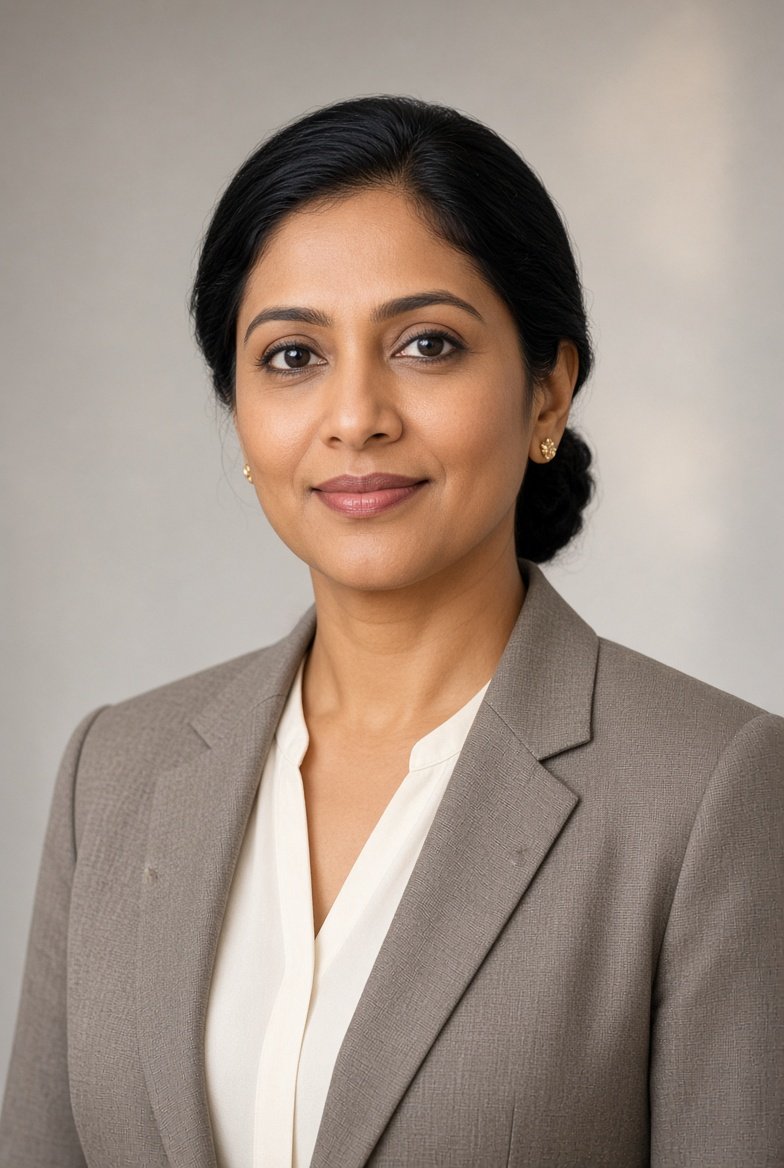
About Dr. Priya Nair
Dr. Priya Nair is a passionate Writer & Blogger at LandMarkNewz.com, dedicated to creating informative, engaging, and easy-to-understand content for readers. With a strong interest in research, current trends, lifestyle, and everyday topics, she focuses on presenting useful information in a clear and reader-friendly way.
Through her writing, Priya aims to help readers discover valuable insights, understand complex topics more easily, and stay informed about subjects that matter to them. Her approach combines thoughtful research with a simple and engaging writing style.
At LandMarkNewz.com, she contributes original articles designed to inform, educate, and provide practical value to readers.