

The phrase “go the extra mile” means to make more effort than someone normally expects or requires. It often describes a person who willingly does something additional to help others, solve a problem, provide excellent service, or achieve a better result.
While the expression is common and positive, repeating it too often can make your writing sound predictable. Using a suitable alternative can make your emails, resumes, performance reviews, and everyday conversations more precise and natural.
What Does “Go the Extra Mile” Mean?
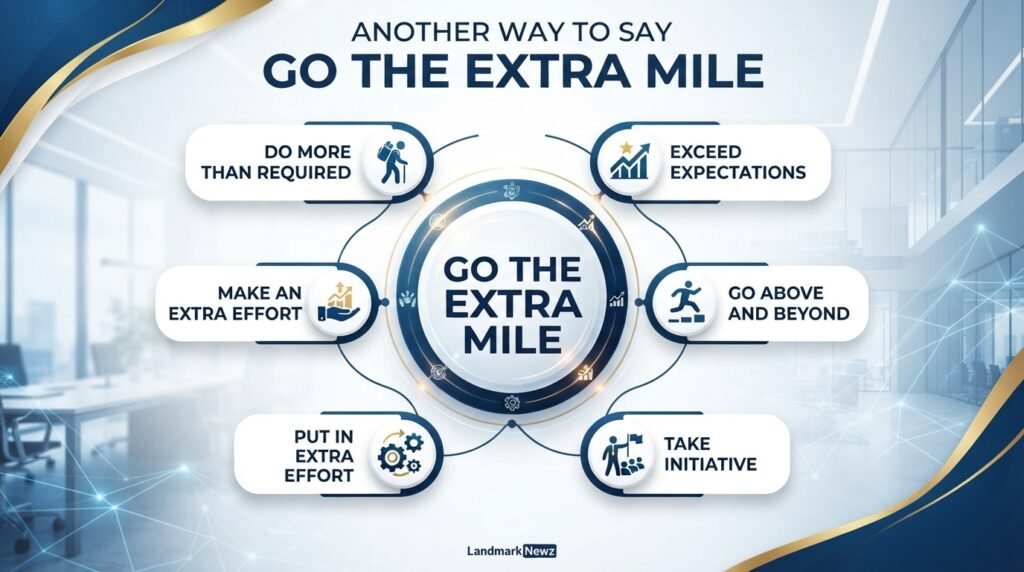
Go the extra mile means to do more than what is expected, required, or necessary. It suggests extra effort, commitment, care, or willingness to help.
For example, a manager might say, “Sarah always goes the extra mile for her team.” This means Sarah does more than her basic responsibilities and takes additional steps to support her coworkers.
The phrase is commonly used in professional communication, customer service, workplace feedback, resumes, recommendations, and personal conversations.
Why Use Other Ways to Say “Go the Extra Mile”?
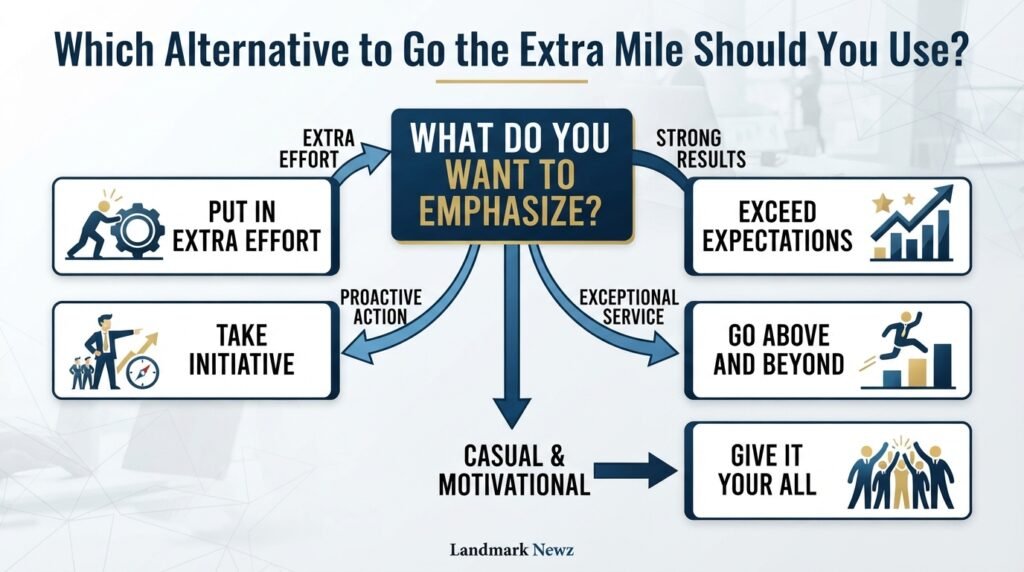
Different situations call for different levels of formality. A resume may benefit from “exceeded expectations,” while a casual conversation may sound more natural with “gave it my all.”
Using alternatives can help you:
- Avoid repeating the same expression.
- Make your writing sound more natural.
- Match your wording to a professional or casual setting.
- Describe extra effort more precisely.
- Show appreciation without sounding repetitive.
- Make resumes and performance reviews more specific.
10 Best Other Ways to Say “Go the Extra Mile”
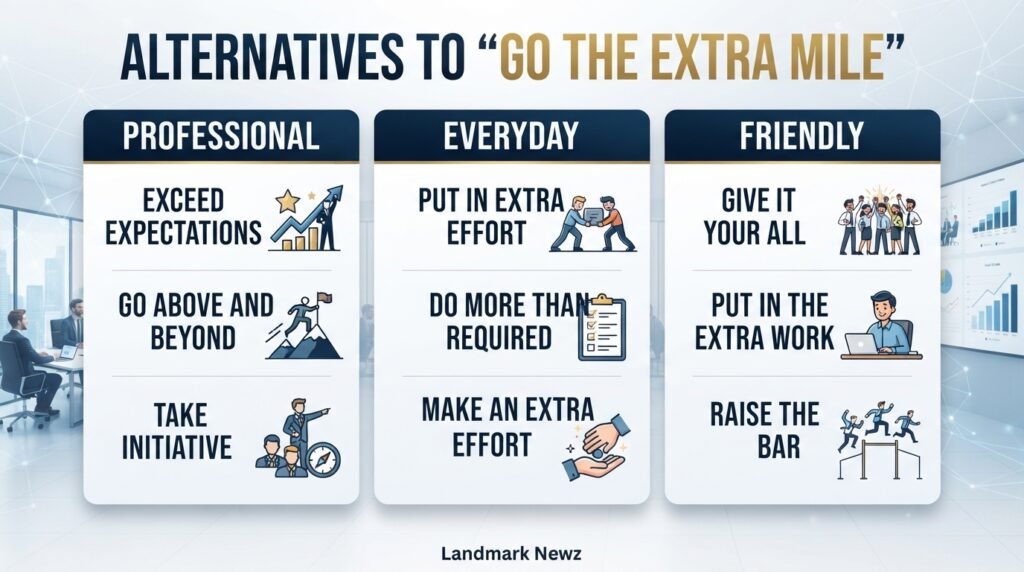
1. Go Above and Beyond
Meaning
Go above and beyond means doing more than your responsibilities or other people expect. It is one of the closest and most natural alternatives to “go the extra mile.”
Best For
- Professional
- Formal
- Warm
- Polite
Example 1
Our customer support team consistently goes above and beyond to resolve client concerns.
Example 2
Thank you for going above and beyond to make the event successful.
Quick Tip
Use this phrase when you want to praise exceptional effort without sounding overly formal.
2. Exceed Expectations
Meaning
Exceed expectations means performing better or delivering more than someone expected. It is especially useful when describing measurable achievements or strong workplace performance.
Best For
- Professional
- Formal
Example 1
Maria consistently exceeded expectations while managing several high-priority projects.
Example 2
The new service has exceeded customer expectations since its launch.
Quick Tip
This is an excellent choice for resumes, performance reviews, and professional recommendations.
3. Put in Extra Effort
Meaning
Put in extra effort directly emphasizes the additional work someone makes to achieve a goal. It is simple, clear, and less idiomatic than “go the extra mile.”
Best For
- Professional
- Casual
- Friendly
Example 1
James put in extra effort to ensure every presentation was ready before the deadline.
Example 2
I really appreciate you putting in extra effort to help me understand the process.
Quick Tip
Choose this option when clarity matters more than using an expressive idiom.
4. Go Beyond What Is Required
Meaning
This phrase clearly communicates that someone has done more than their assigned duties or basic requirements. It works especially well when describing responsibilities at work.
Best For
- Professional
- Formal
Example 1
The employee regularly goes beyond what is required to support new team members.
Example 2
She went beyond what was required to make sure the client received everything on time.
Quick Tip
Use it when you want to highlight additional responsibility in a precise, professional way.
5. Give It Your All
Meaning
Give it your all means putting your maximum effort, energy, or commitment into something. Unlike some workplace alternatives, it has a more personal and enthusiastic tone.
Best For
- Casual
- Friendly
- Warm
Example 1
He gave it his all during the final week of the project.
Example 2
If you really want to reach your goal, give it your all and stay consistent.
Quick Tip
This phrase works best in encouraging or personal conversations rather than formal business documents.
6. Take the Extra Step
Meaning
Take the extra step means doing something additional to improve a situation or help someone. It is natural, positive, and easy to use in both professional and everyday communication.
Best For
- Professional
- Friendly
- Polite
- Warm
Example 1
Our receptionist always takes the extra step to make visitors feel welcome.
Example 2
Taking the extra step can make a noticeable difference in customer satisfaction.
Quick Tip
Use this phrase when the additional action is small but meaningful.
7. Make an Extra Effort
Meaning
Make an extra effort means deliberately putting more time, energy, or attention into something. It is straightforward and fits many contexts.
Best For
- Professional
- Formal
- Polite
Example 1
The sales representative made an extra effort to understand the customer’s concerns.
Example 2
I made an extra effort to organize the files before handing them over.
Quick Tip
This is a safe choice when you want professional language that sounds natural rather than overly enthusiastic.
8. Do More Than Expected
Meaning
Do more than expected directly states that someone has delivered more than others anticipated. It is useful when the main goal is to emphasize exceptional performance.
Best For
- Professional
- Casual
- Friendly
Example 1
The technician did more than expected to get the equipment working again.
Example 2
She always does more than expected when helping customers with difficult requests.
Quick Tip
Use this phrase when you want your meaning to be immediately clear to the reader.
9. Exceed What Is Expected
Meaning
Exceed what is expected highlights performance that goes beyond a normal standard or expectation. It has a polished tone and can work well in professional evaluations.
Best For
- Professional
- Formal
Example 1
Our team consistently exceeds what is expected when handling complex customer requests.
Example 2
The candidate demonstrated a strong ability to exceed what is expected in demanding situations.
Quick Tip
This option is particularly useful when discussing standards, goals, or performance.
10. Step Up and Do More
Meaning
Step up and do more suggests taking initiative and accepting additional responsibility when needed. It sounds more direct and action-oriented than “go the extra mile.”
Best For
- Professional
- Casual
- Friendly
Example 1
When the deadline moved forward, the entire team stepped up and did more to finish on time.
Example 2
Great leaders step up and do more when their teams need support.
Quick Tip
Use this phrase when you want to emphasize initiative, responsibility, and action.
Comparison Table
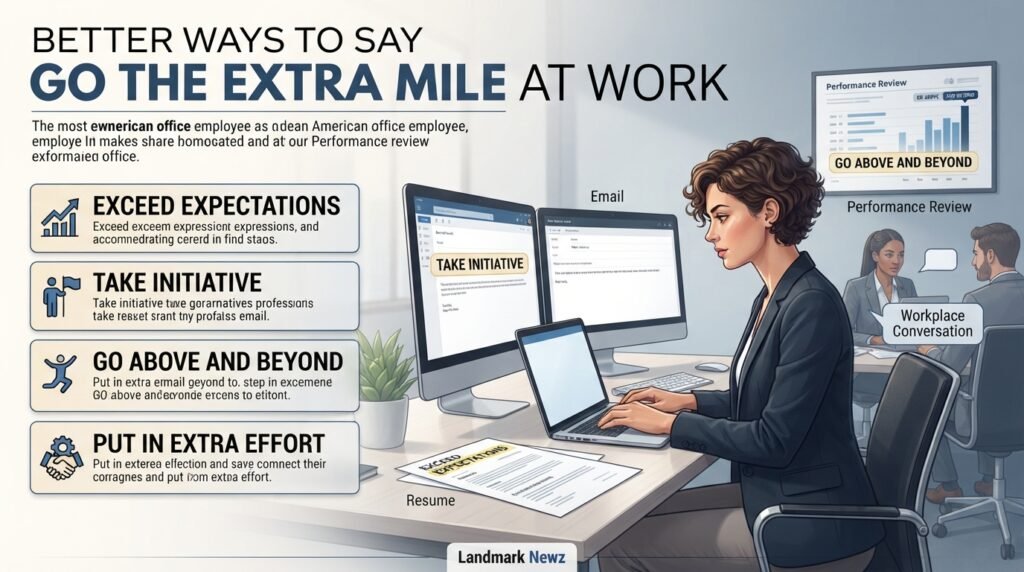
| Alternative | Best Used In | Tone |
| Go Above and Beyond | Work, emails, appreciation | Professional, warm |
| Exceed Expectations | Resumes, reviews, business | Formal, professional |
| Put in Extra Effort | Work and everyday conversation | Natural, friendly |
| Go Beyond What Is Required | Workplace, evaluations | Formal, precise |
| Give It Your All | Personal conversations, encouragement | Casual, enthusiastic |
| Take the Extra Step | Customer service, workplace | Warm, professional |
| Make an Extra Effort | Emails, work, everyday writing | Polite, professional |
| Do More Than Expected | Reviews, conversations | Natural, positive |
| Exceed What Is Expected | Evaluations, business writing | Formal, professional |
| Step Up and Do More | Leadership, teamwork | Direct, encouraging |
Common Mistakes
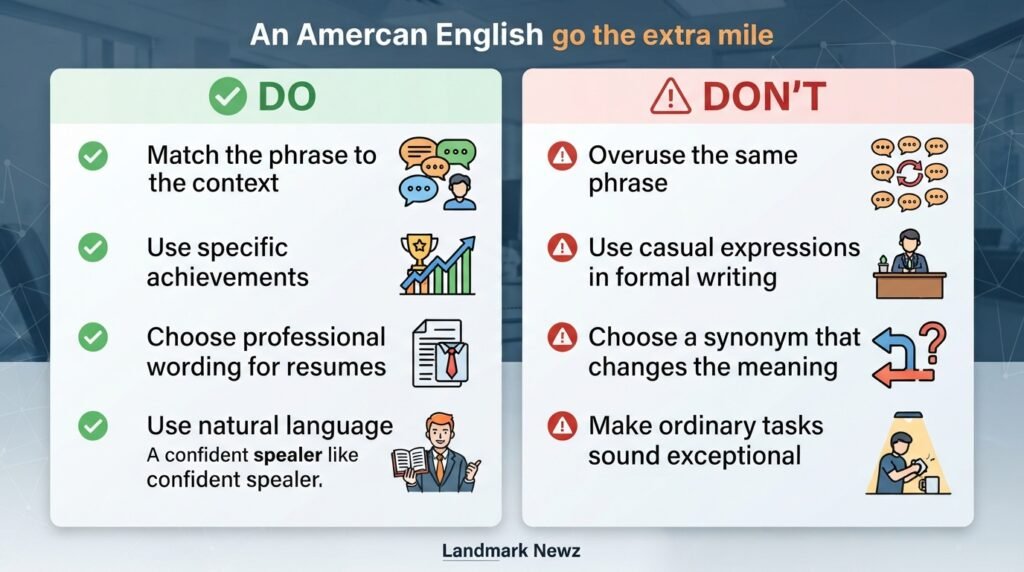
1. Using Casual Phrases in Professional Emails
Expressions such as “give it your all” may sound too conversational in a formal business email. Choose “exceed expectations” or “make an extra effort” when professionalism matters.
2. Choosing Overly Formal Language
Not every situation needs sophisticated wording. In a friendly conversation, “put in extra effort” can sound more natural than a formal expression such as “exceed what is expected.”
3. Repeating the Same Phrase
Using “go the extra mile” several times in one article, email, or review can become repetitive. Replace it with alternatives that describe the specific type of effort.
4. Forgetting the Context
An alternative should match the situation. “Go above and beyond” suits professional praise, while “give it your all” is better for motivation or personal encouragement.
5. Sounding Insincere
Avoid praising ordinary responsibilities as exceptional achievements. Choose language that accurately reflects what the person actually did beyond normal expectations.
Frequently Asked Questions
What is another way to say “go the extra mile” professionally?
The best professional alternatives include “go above and beyond,” “exceed expectations,” “make an extra effort,” and “go beyond what is required.” These phrases work well in resumes, emails, performance reviews, recommendations, and workplace conversations because they communicate additional effort without sounding too casual.
What is a synonym for “go the extra mile”?
Common synonyms include go above and beyond, exceed expectations, put in extra effort, take the extra step, do more than expected, and make an extra effort. The best synonym depends on whether you want to emphasize effort, performance, initiative, or willingness to help.
What is a good resume alternative to “go the extra mile”?
For a resume, use stronger and more specific wording such as “exceeded expectations,” “took initiative,” “went above and beyond,” or “consistently exceeded performance goals.” Whenever possible, connect the phrase to a measurable result so employers can see exactly how your extra effort benefited the organization.
Is “go above and beyond” the same as “go the extra mile”?
Yes, the two expressions have nearly the same meaning. Both describe doing more than what is normally expected or required. “Go above and beyond” is often preferred in professional writing because it sounds polished and works naturally in performance reviews, recommendations, and workplace communication.
How do you say “go the extra mile” in a formal way?
Formal options include “exceed expectations,” “exceed what is required,” “demonstrate exceptional commitment,” and “make an additional effort.” Among these, “exceed expectations” is especially useful for business documents because it is concise, professional, and easy to understand.
What is a casual way to say “go the extra mile”?
For casual situations, you can say “give it your all,” “put in extra effort,” “take the extra step,” or “do more than expected.” These alternatives sound natural when talking with friends, coworkers, classmates, or family members.
How can I praise someone for going the extra mile?
You can say, “Thank you for going above and beyond,” “I appreciate the extra effort,” or “You really went beyond what was expected.” If you want to sound warmer, explain what the person did and why it made a difference rather than relying only on a general compliment.
What is the best alternative to “go the extra mile” in customer service?
“Go above and beyond” and “take the extra step” are strong choices for customer service. They communicate that an employee did something additional to help a customer. For a more formal performance review, “consistently exceeded customer expectations” provides a more professional description.
Conclusion
Finding another way to say go the extra mile can make your writing more precise, natural, and appropriate for the situation. While “go above and beyond” is the closest all-purpose alternative, other choices offer different shades of meaning.
Use “exceed expectations” for resumes, reviews, and formal workplace writing. Choose “put in extra effort” or “make an extra effort” when you want clear, straightforward language. For friendly or motivational conversations, “give it your all” feels more personal and energetic.For workplace examples, see these practical tips for going above and beyond at work.
The key is to describe the kind of extra effort you mean rather than simply replacing one phrase with another. When your wording matches the situation and accurately reflects the person’s actions, your communication becomes stronger and more convincing.

About Dr. Priya Nair
Dr. Priya Nair is a passionate Writer & Blogger at LandMarkNewz.com, dedicated to creating informative, engaging, and easy-to-understand content for readers. With a strong interest in research, current trends, lifestyle, and everyday topics, she focuses on presenting useful information in a clear and reader-friendly way.
Through her writing, Priya aims to help readers discover valuable insights, understand complex topics more easily, and stay informed about subjects that matter to them. Her approach combines thoughtful research with a simple and engaging writing style.
At LandMarkNewz.com, she contributes original articles designed to inform, educate, and provide practical value to readers.