
If you’re looking for another way to say “go-to person,” you have several natural options to choose from. “Go-to person” is a common American English expression for someone you can rely on when you need help, advice, information, or expertise. Although the phrase sounds natural in everyday speech, you may want a different expression for a resume, business email, report, or formal conversation.
Fortunately, several alternatives can communicate the same basic idea while giving your sentence a more specific tone.
What Does “Another Way to Say Go to Person” Mean?

A “go-to person” is someone others regularly depend on for assistance, guidance, information, or expertise. For example, if everyone on a team asks Maria about software problems, Maria might be described as the team’s go-to person for technical support.
The expression is common in casual and professional American English. However, it can sound informal in certain documents, so alternatives such as “point of contact,” “subject matter expert,” or “trusted resource” may be a better fit.
People often use “go-to person” when describing:
- A reliable coworker
- A knowledgeable team member
- A trusted advisor
- A department contact
- Someone with specialized skills
- A person others approach for solutions
Why Use Other Ways to Say “Go-to Person”?
Using another expression can make your communication more precise and appropriate for the situation. The best alternative depends on whether you want to emphasize expertise, reliability, authority, accessibility, or trust.
Using different phrases can help you:
- Avoid repeating “go-to person.”
- Sound more polished in professional writing.
- Highlight someone’s specific expertise.
- Describe workplace roles more accurately.
- Match formal, casual, or friendly situations.
- Make resumes and business documents sound stronger.
For example, “She is our go-to person for accounting questions” is conversational, while “She is our primary point of contact for accounting matters” sounds more professional.
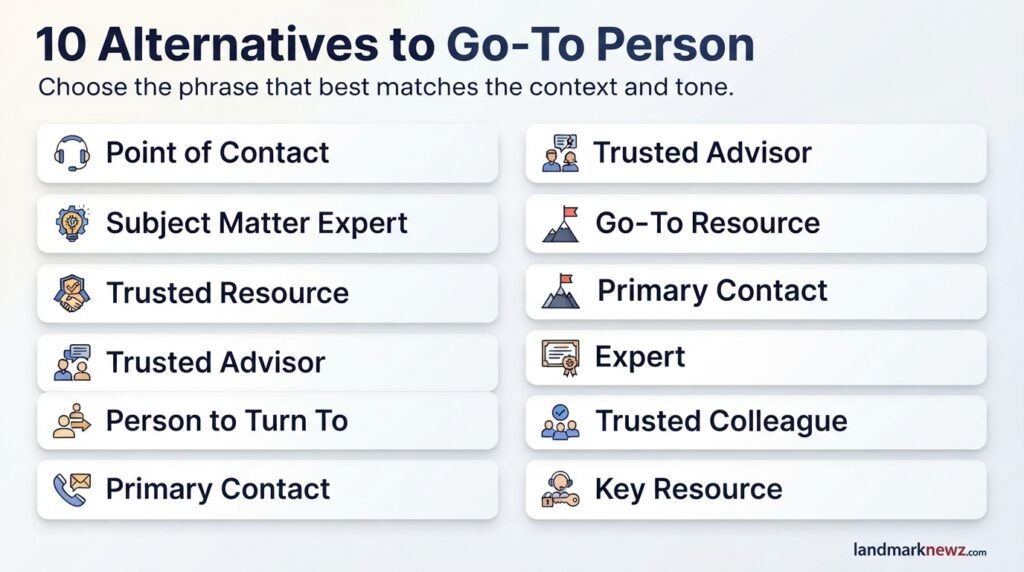
10 Best Other Ways to Say “Go-to Person”
1. Point of Contact
Meaning
“Point of contact” refers to the person others should communicate with about a particular project, department, service, or issue. It is especially useful when the person has an assigned communication or coordination role.
Best For
- Professional
- Formal
- Polite
Example 1
Jordan is the primary point of contact for questions about the new benefits program.
Example 2
Please reach out to Elena, our point of contact for vendor communications.
Quick Tip
Use “point of contact” when the person is responsible for handling questions or coordinating communication.
2. Subject Matter Expert
Meaning
“Subject matter expert,” often shortened to SME, describes someone with deep knowledge of a particular topic or field. It emphasizes expertise rather than simply being helpful or available.
Best For
- Professional
- Formal
Example 1
Marcus is our subject matter expert on cybersecurity compliance.
Example 2
The marketing team consulted a subject matter expert before launching the campaign.
Quick Tip
Choose this phrase when you want to highlight specialized knowledge or professional authority.
3. Trusted Resource
Meaning
A “trusted resource” is someone people can depend on for accurate information, guidance, or assistance. The phrase emphasizes reliability and usefulness without sounding overly formal.
Best For
- Professional
- Friendly
- Warm
Example 1
Lisa has become a trusted resource for new employees learning our internal systems.
Example 2
Our HR manager is a trusted resource whenever employees have workplace questions.
Quick Tip
Use “trusted resource” when reliability matters more than the person’s official title.
4. Trusted Advisor
Meaning
A “trusted advisor” is someone whose judgment and guidance people value. It suggests an established relationship based on confidence, experience, and sound advice.
Best For
- Professional
- Formal
- Warm
Example 1
David has served as a trusted advisor to the company’s leadership team for years.
Example 2
Clients see Priya as a trusted advisor because she always provides practical recommendations.
Quick Tip
This phrase works particularly well for consultants, managers, mentors, and business professionals.
5. Person to Turn To
Meaning
“Person to turn to” conveys that someone is dependable when help, support, or advice is needed. It has a more personal and human feel than many workplace alternatives.
Best For
- Casual
- Friendly
- Warm
- Polite
Example 1
Whenever I have a difficult customer issue, Sam is the person I turn to.
Example 2
She has always been the person to turn to when our team needs honest advice.
Quick Tip
Use this expression when emphasizing trust and personal dependability rather than formal responsibility.
6. Go-To Resource
Meaning
“Go-to resource” is a close alternative to “go-to person” that still sounds natural in professional settings. It describes someone people consistently rely on for information, assistance, or expertise.
Best For
- Professional
- Friendly
- Casual
Example 1
Tom is the go-to resource for questions about our customer database.
Example 2
After years of experience, Nina became the team’s go-to resource for training materials.
Quick Tip
This is a natural choice when you want to keep the familiar “go-to” idea while sounding slightly more professional.
7. Primary Contact
Meaning
“Primary contact” identifies the main person responsible for communication about a particular matter. It is direct, clear, and common in business settings.
Best For
- Professional
- Formal
- Polite
Example 1
Amanda will be your primary contact throughout the implementation process.
Example 2
Please list Kevin as the primary contact for all project-related questions.
Quick Tip
Use “primary contact” when the person’s communication role is official or clearly defined.
8. Expert
Meaning
“Expert” is a simple and direct alternative when the main reason people approach someone is their knowledge or skill. Unlike “go-to person,” it focuses specifically on competence.
Best For
- Professional
- Formal
- Casual
Example 1
Rachel is an expert in digital accessibility and inclusive web design.
Example 2
If you need help with financial reporting, Carlos is the expert to ask.
Quick Tip
Use “expert” only when the person’s knowledge genuinely supports the description.
9. Trusted Colleague
Meaning
“Trusted colleague” describes a coworker whom others respect and rely on for assistance, feedback, or professional judgment. It emphasizes workplace trust rather than formal authority.
Best For
- Professional
- Friendly
- Warm
Example 1
Michael has become a trusted colleague for teams working on complex client projects.
Example 2
I appreciate having a trusted colleague like Jenna to review important presentations.
Quick Tip
This phrase is ideal when you want to emphasize collaboration and professional trust.
10. Key Resource
Meaning
“Key resource” describes a person who provides important knowledge, support, or capabilities to a team or organization. It sounds professional without necessarily suggesting that the person is the formal leader.
Best For
- Professional
- Formal
Example 1
Samantha is a key resource for our team during the annual budgeting process.
Example 2
The company considers its senior engineers key resources for solving complex technical problems.
Quick Tip
Use “key resource” when describing someone’s important contribution to a team, project, or organization.
Comparison Table
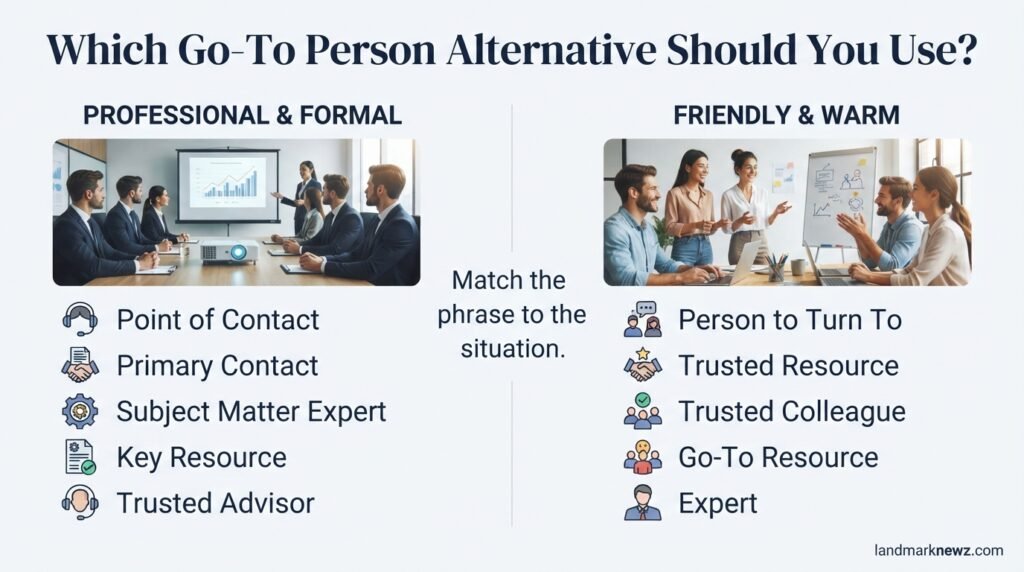
| Alternative | Best Used In | Tone |
| Point of Contact | Business emails, projects, workplace communication | Professional |
| Subject Matter Expert | Technical, academic, and professional settings | Formal |
| Trusted Resource | Workplace, teams, everyday professional communication | Professional/Warm |
| Trusted Advisor | Consulting, leadership, client relationships | Professional/Warm |
| Person to Turn To | Personal and conversational situations | Friendly/Warm |
| Go-To Resource | Workplace and casual professional writing | Friendly/Professional |
| Primary Contact | Business communication and project coordination | Formal/Professional |
| Expert | Professional, academic, and everyday contexts | Direct |
| Trusted Colleague | Workplace relationships and recommendations | Warm/Professional |
| Key Resource | Teams, projects, and organizational writing | Professional |
Common Mistakes
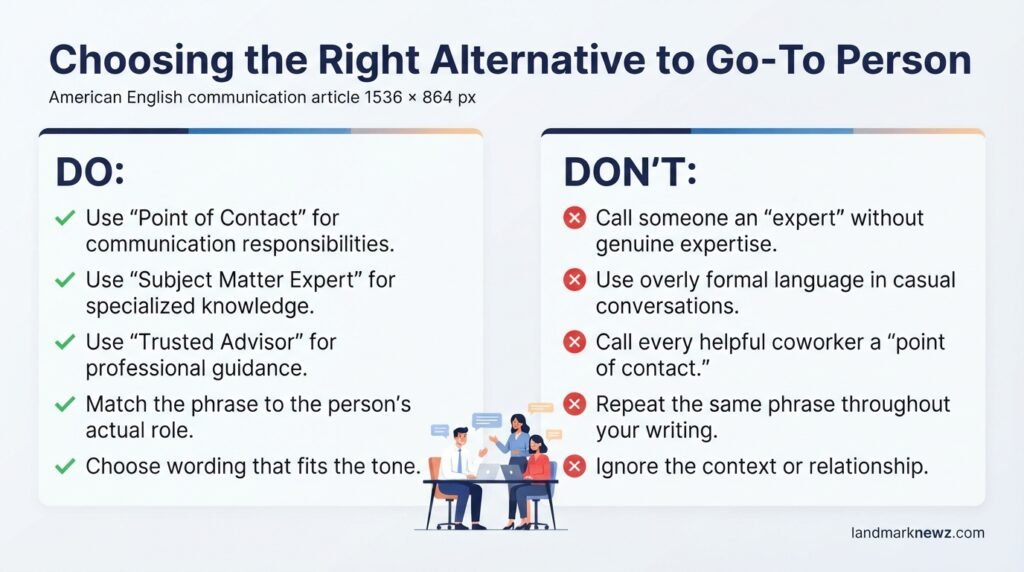
1. Using Casual Phrases in Formal Emails
“Go-to person” is perfectly understandable, but a phrase such as “primary contact” may sound more polished in a formal business email.
2. Calling Someone an Expert Without Evidence
“Expert” carries a stronger meaning than “go-to person.” Use it when the individual has genuine knowledge, experience, qualifications, or authority in the subject.
3. Ignoring the Person’s Actual Role
Not every reliable coworker is a “point of contact.” That term suggests responsibility for communication, so choose it only when the person actually handles inquiries or coordination.
4. Choosing an Alternative That Sounds Too Formal
A phrase like “subject matter expert” may feel excessive in a casual conversation. If you’re talking to a friend or coworker, “person to turn to” may sound much more natural.
5. Repeating the Same Phrase Too Often
Even a good expression can become repetitive. Vary your wording based on whether you’re emphasizing expertise, trust, communication, or responsibility.
Frequently Asked Questions
What is another way to say “go-to person” professionally?
Some professional alternatives include “point of contact,” “subject matter expert,” “primary contact,” “trusted resource,” and “key resource.” The best option depends on the meaning you want to convey. Use “point of contact” for communication responsibilities and “subject matter expert” when the person’s specialized knowledge is the main reason people rely on them.
What is a formal word for “go-to person”?
“Point of contact” is one of the best formal alternatives when someone handles questions or communication. “Subject matter expert” is also appropriate when the person has specialized knowledge. For broader situations, “trusted advisor” can work well when the individual provides valued professional guidance.
What can I say instead of “go-to person” on a resume?
For a resume, consider phrases such as “subject matter expert,” “key resource,” “primary contact,” or “trusted advisor,” depending on your actual responsibilities. Instead of simply saying you were the “go-to person,” describe the specific value you provided, such as resolving technical issues, training coworkers, or supporting clients.
Is “point of contact” the same as “go-to person”?
They can overlap, but they are not always identical. A “point of contact” is usually responsible for communication about a particular matter. A “go-to person” is broader and can refer to anyone people regularly approach for advice, assistance, knowledge, or solutions.
What is a synonym for a person everyone goes to for help?
Depending on the context, you can say “trusted resource,” “go-to resource,” “subject matter expert,” “expert,” or “person to turn to.” “Trusted resource” is particularly useful when the person is known for being dependable, while “subject matter expert” highlights specialized knowledge.
Is “go-to person” professional English?
Yes. “Go-to person” is common and acceptable in American professional English, particularly in conversations, emails, and less formal workplace writing. However, more specific alternatives may be preferable in formal reports, resumes, job descriptions, or corporate documents.
What is the best alternative to “go-to person” in an email?
“Point of contact” is usually the safest professional choice when you’re identifying someone responsible for a project or topic. For example, “Sarah is the primary point of contact for this account” sounds clear and professional. If the person is known mainly for expertise, “subject matter expert” may be more accurate.
What is a friendly way to say “go-to person”?
“Person to turn to” is a warm, natural option. You can also use “trusted resource” when describing someone at work. Both phrases communicate reliability without making the relationship sound overly formal or official.
Conclusion
There are many useful alternatives to “go-to person,” and the right choice depends on what you want to emphasize.If someone handles communication, point of contact or primary contact is usually the clearest option. For more context on the role, see this guide to point of contact in business communication.
For a warmer tone, try trusted resource, trusted colleague, or person to turn to. In business and consulting contexts, trusted advisor can communicate both experience and confidence.
The important thing is to match the phrase to the person’s actual role. Instead of automatically replacing “go-to person,” consider whether you’re describing expertise, responsibility, trust, or availability. That small distinction can make your writing sound more precise, natural, and professional.

About Dr. Priya Nair
Dr. Priya Nair is a passionate Writer & Blogger at LandMarkNewz.com, dedicated to creating informative, engaging, and easy-to-understand content for readers. With a strong interest in research, current trends, lifestyle, and everyday topics, she focuses on presenting useful information in a clear and reader-friendly way.
Through her writing, Priya aims to help readers discover valuable insights, understand complex topics more easily, and stay informed about subjects that matter to them. Her approach combines thoughtful research with a simple and engaging writing style.
At LandMarkNewz.com, she contributes original articles designed to inform, educate, and provide practical value to readers.