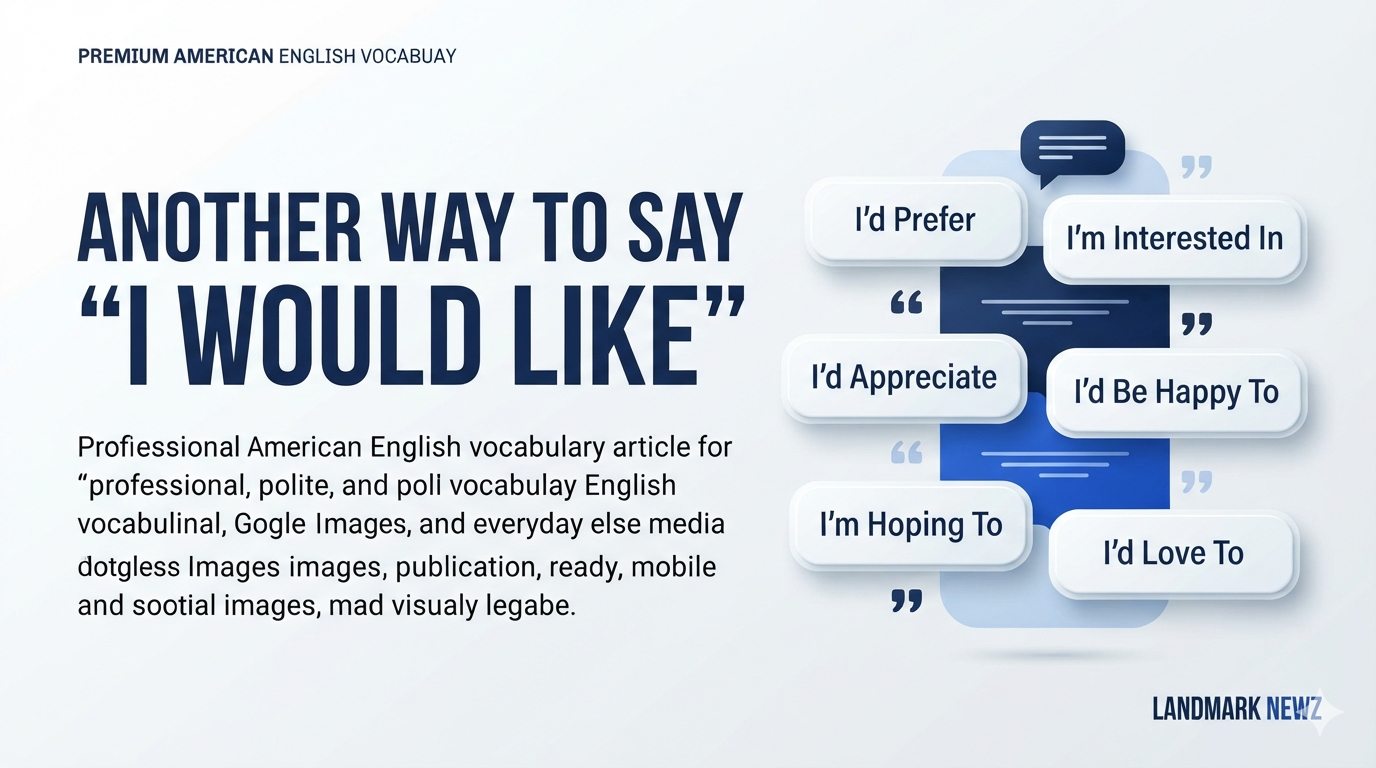
Finding another way to say “I would like” can help you sound more natural, polite, or professional in different situations. Whether you are making a request, expressing a preference, or communicating in a formal setting, choosing the right alternative can make your message clearer and more appropriate.
Fortunately, there are many natural alternatives. The right choice depends on what you mean and how you want to sound.
What Does “Another Way to Say I Would Like” Mean?
The phrase “another way to say I would like” refers to alternative expressions that communicate the same or a similar idea as “I would like.”
For example, instead of saying, “I would like more information about the position,” you could say, “I’m interested in learning more about the position.”
People often search for alternatives because they want to improve their vocabulary, make professional emails sound smoother, or express a request without repeating the same wording.
You may use these alternatives in emails, cover letters, workplace conversations, customer service situations, academic writing, invitations, and everyday conversations.
Why Use Other Ways to Say “I Would Like”?
Although “I would like” is polite and grammatically correct, different situations call for different expressions.
Using suitable alternatives can help you:
- Avoid repeating the same phrase.
- Make your writing sound more natural.
- Express preferences more clearly.
- Make professional requests sound polished.
- Show interest without sounding too direct.
- Adjust your tone for formal or casual situations.
The goal is not to replace “I would like” every time. Instead, choose an expression that matches your exact meaning.
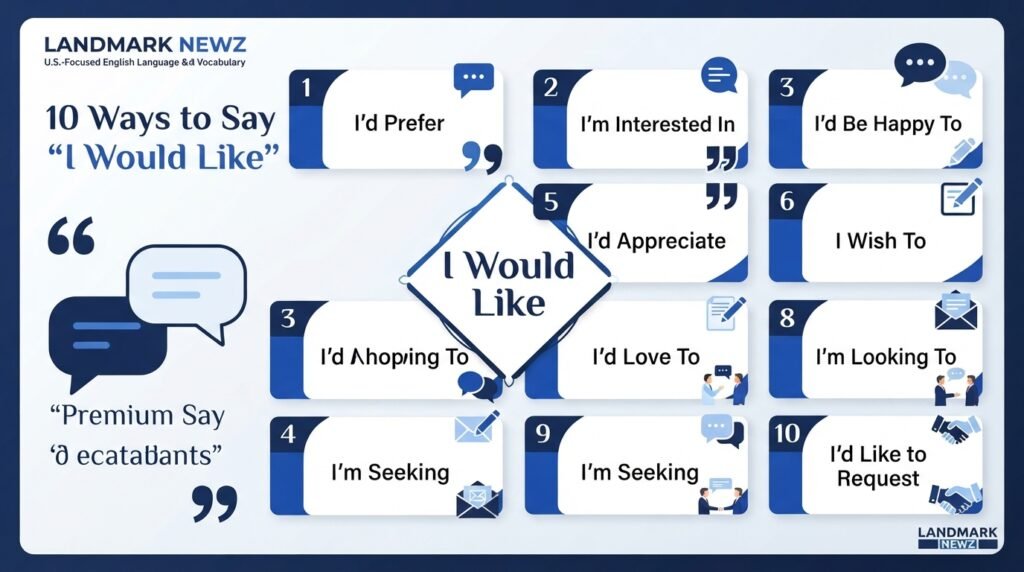
10 Best Other Ways to Say “I Would Like”
1. I’d Prefer
Meaning
“I’d prefer” is a clear way to express a preference between two or more options. It works best when you want to explain what you favor without sounding demanding.
Best For
- Professional
- Polite
- Casual
- Friendly
Example 1
“I’d prefer to schedule the meeting for Thursday afternoon.”
Example 2
“I’d prefer a window seat if one is available.”
Quick Tip
Use “I’d prefer” when your main meaning is choosing one option over another.
2. I’m Interested in
Meaning
“I’m interested in” expresses genuine curiosity, attention, or desire to learn more about something. It is particularly useful when discussing jobs, services, opportunities, products, or projects.
Best For
- Professional
- Formal
- Polite
Example 1
“I’m interested in learning more about your marketing services.”
Example 2
“I’m interested in applying for the communications coordinator position.”
Quick Tip
Use this phrase when you want to communicate interest rather than make a direct request.
3. I’d Be Happy to
Meaning
“I’d be happy to” adds a warm and cooperative tone to an offer or proposed action. It shows that you are willing and positive about doing something.
Best For
- Professional
- Friendly
- Warm
- Polite
Example 1
“I’d be happy to send you the updated report this afternoon.”
Example 2
“I’d be happy to discuss the project during our next call.”
Quick Tip
Use this expression when you are offering to do something rather than simply asking for something.
4. I’m Hoping to
Meaning
“I’m hoping to” communicates an intention or desired outcome in a softer way. It can make a statement feel less forceful while still clearly showing what you want.
Best For
- Professional
- Friendly
- Warm
- Polite
Example 1
“I’m hoping to complete the training program by December.”
Example 2
“I’m hoping to connect with the hiring manager about the position.”
Quick Tip
This phrase is ideal when your desired action depends on timing, approval, availability, or another condition.
5. I’d Appreciate
Meaning
“I’d appreciate” is a polite way to make a request. It often sounds more considerate than giving a direct instruction, especially in professional correspondence.
Best For
- Professional
- Formal
- Polite
Example 1
“I’d appreciate your feedback on the proposal when you have a chance.”
Example 2
“I’d appreciate it if you could confirm the appointment time.”
Quick Tip
Use “I’d appreciate” for requests where you want to sound respectful and professional.
6. I Wish to
Meaning
“I wish to” expresses a clear intention or desire. It has a formal tone and is more common in official correspondence, legal language, business writing, and formal announcements.
Best For
- Formal
- Professional
- Polite
Example 1
“I wish to formally withdraw my application.”
Example 2
“I wish to request additional information regarding the policy.”
Quick Tip
Avoid using this phrase in relaxed conversations because it can sound more formal than necessary.
7. I’d Love to
Meaning
“I’d love to” expresses strong enthusiasm or genuine desire. It is warmer and more personal than “I would like,” making it a natural choice for friendly conversations and informal professional communication.
Best For
- Casual
- Friendly
- Warm
Example 1
“I’d love to join you for dinner after the conference.”
Example 2
“I’d love to hear your thoughts about the new design.”
Quick Tip
Use “I’d love to” when you want to show enthusiasm, but choose a more neutral phrase for highly formal situations.
8. I’m Looking to
Meaning
“I’m looking to” describes something you are currently seeking, planning, or hoping to accomplish. It is common in modern American English, especially in workplace and business conversations.
Best For
- Professional
- Casual
- Friendly
Example 1
“I’m looking to expand our customer support team this year.”
Example 2
“I’m looking to find a reliable software solution for our business.”
Quick Tip
This phrase works especially well when describing a goal, plan, or current search.
9. I’m Seeking
Meaning
“I’m seeking” is a concise and professional way to communicate that you are actively looking for something. It is more formal than “I’m looking for” and often appears in business, academic, and professional settings.
Best For
- Professional
- Formal
Example 1
“I’m seeking additional information about the certification requirements.”
Example 2
“We’re seeking experienced candidates for the open position.”
Quick Tip
Use “I’m seeking” when you want a concise, polished expression for a formal request or goal.
10. I’d Like to Request
Meaning
“I’d like to request” is a direct but courteous alternative when you specifically need something from another person or organization. It works particularly well in formal emails and workplace communication.
Best For
- Professional
- Formal
- Polite
Example 1
“I’d like to request a copy of the updated contract.”
Example 2
“I’d like to request additional time to complete the assignment.”
Quick Tip
Use this phrase when making a specific request and you want to remain clear and respectful.
Comparison Table
| Alternative | Best Used In | Tone |
| I’d prefer | Choices and preferences | Polite, clear |
| I’m interested in | Opportunities and information | Professional, polite |
| I’d be happy to | Offers and cooperation | Warm, friendly |
| I’m hoping to | Plans and intentions | Soft, positive |
| I’d appreciate | Polite requests | Formal, respectful |
| I wish to | Official communication | Formal |
| I’d love to | Enthusiastic responses | Warm, friendly |
| I’m looking to | Goals and plans | Professional, natural |
| I’m seeking | Formal requests and searches | Professional, formal |
| I’d like to request | Specific requests | Formal, polite |
Common Mistakes
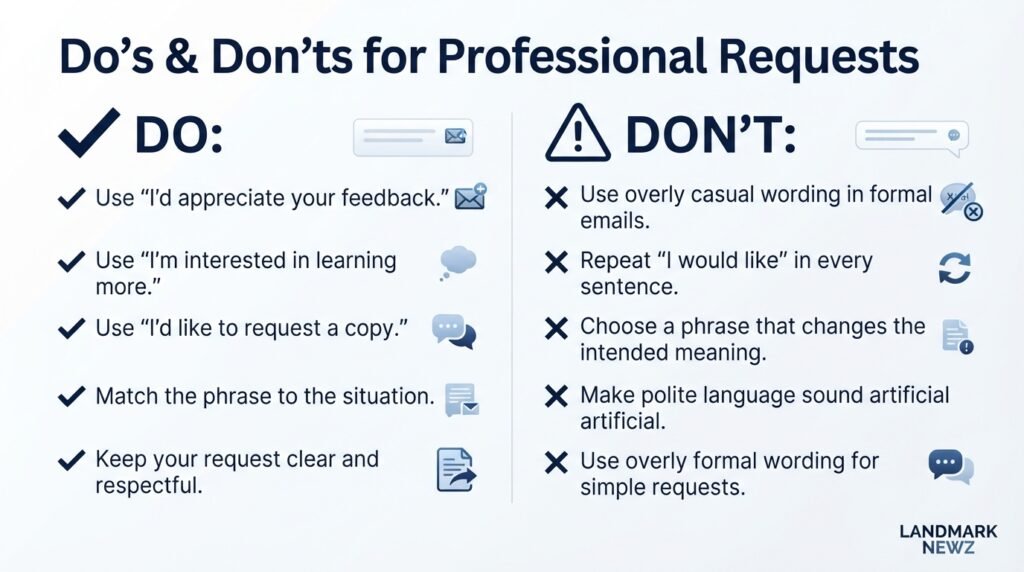
1. Using Casual Phrases in Professional Emails
Expressions such as “I’d love to” can sound friendly, but they may not fit every formal situation. For highly professional messages, consider “I’m interested in,” “I’d appreciate,” or “I’m seeking.”
2. Choosing Language That Is Too Formal
“I Wish to” is grammatically correct, but it can sound stiff in everyday American English. In a normal workplace email, “I’d like to” or “I’m hoping to” may sound more natural.
3. Repeating “I Would Like” Too Often
Using the same phrase several times in one email can make your writing feel repetitive. Vary your wording when the meaning changes, rather than replacing every occurrence with a random synonym.
4. Forgetting the Context
Not every alternative means exactly the same thing. “I’d prefer” expresses a preference, while “I’d appreciate” usually introduces a request. Choose the phrase based on your intended meaning.
5. Sounding Insincere
A polite phrase can still feel unnatural if it does not match your normal voice. Choose wording that sounds genuine and fits your relationship with the reader.
Frequently Asked Questions
What is another way to say “I would like” professionally?
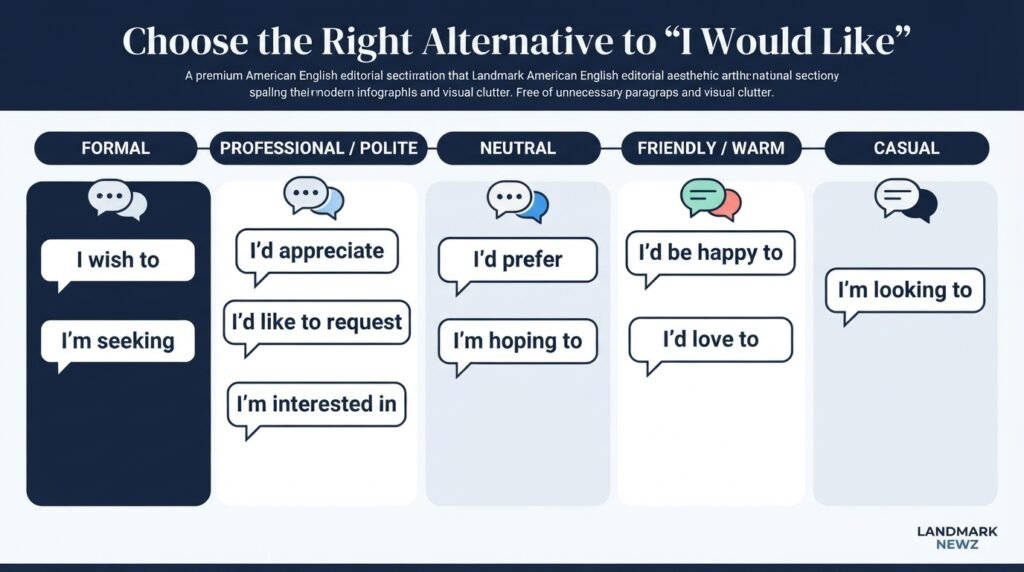
Professional alternatives include “I’m interested in,” “I’d appreciate,” “I’m seeking,” “I’d like to request,” and “I’m hoping to.” The best option depends on your purpose. For example, use “I’d appreciate” for a polite request and “I’m interested in” when expressing interest in an opportunity or subject.
What is a polite way to say “I would like”?
“I’d appreciate,” “I’m hoping to,” and “I’d like to request” are polite alternatives. They allow you to communicate what you need without sounding demanding. For example, “I’d appreciate your feedback” is a courteous way to ask someone to review your work.
What can I say instead of “I would like” in an email?
In an email, you can use “I’m interested in,” “I’m hoping to,” “I’d appreciate,” or “I’d like to request.” Select the phrase based on your purpose. “I’m interested in” works well for inquiries, while “I’d appreciate” is especially useful for polite requests.
Is “I’d love to” the same as “I would like”?
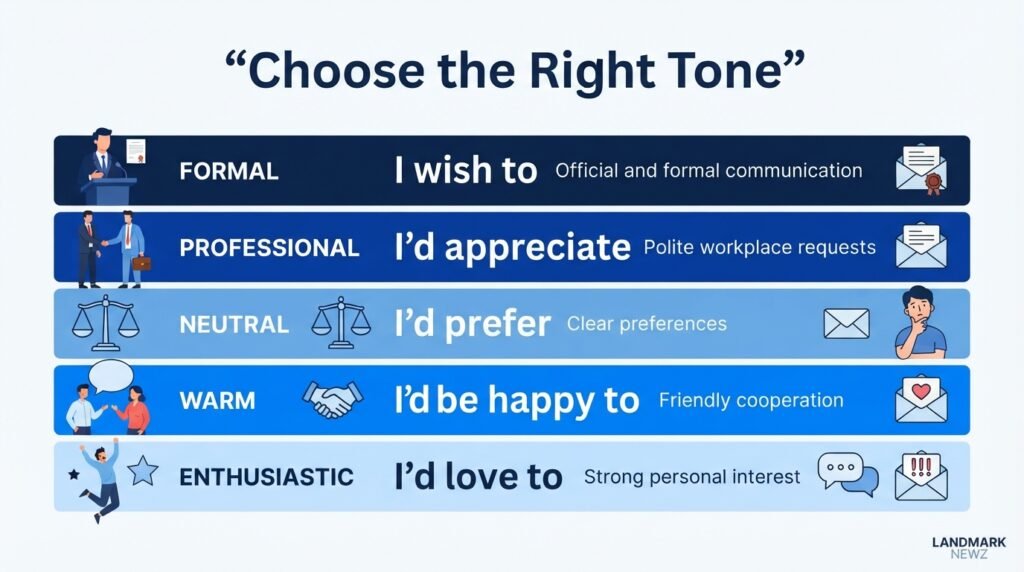
They are similar, but their tones differ. “I’d love to” expresses stronger enthusiasm and feels warmer, while “I would like to” is more neutral and polite. Use “I’d love to” with friends, colleagues, or familiar contacts when you want to show genuine excitement.
What is a formal alternative to “I would like”?
“I wish to,” “I’m seeking,” and “I’d like to request” are formal alternatives. “I wish to” is particularly formal and may suit official correspondence. “I’m seeking” is more concise and natural for professional settings such as applications, inquiries, and business communication.
How can I say “I would like to ask” professionally?
You can say “I’d appreciate your help with,” “I’d like to request,” or “I’m hoping you can help me with.” For example, “I’d appreciate your guidance on this matter” sounds professional while keeping the request courteous and clear.
What is a casual way to say “I would like”?
“I’d love to,” “I’m looking to,” or simply “I want to” can work in casual settings, depending on the situation. “I’d love to” is warmer and more polite, while “I want to” is more direct. Consider your relationship with the listener before choosing one.
How do I choose the best alternative to “I would like”?
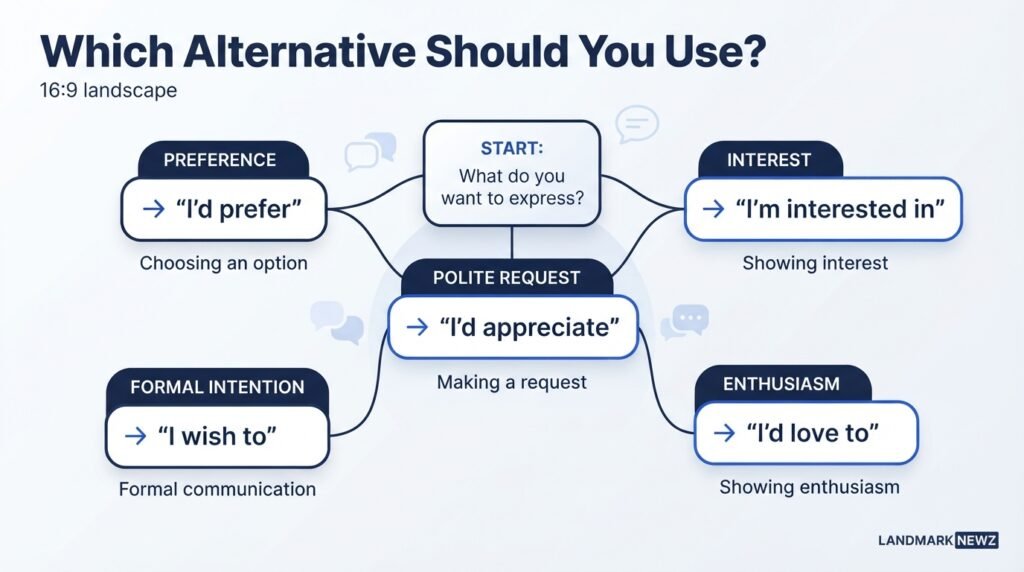
First, identify your purpose. If you are expressing a preference, use “I’d prefer.” If you are making a request, “I’d appreciate” works well. For interest, choose “I’m interested in.” For enthusiasm, “I’d love to” is a natural option.
Conclusion
There are many natural ways to say “I would like,” but the best alternative depends on your meaning and the situation. “I’d prefer” is useful for expressing a choice, while “I’m interested in” works well when discussing opportunities or information.
For polite requests, “I’d appreciate” and “I’d like to request” are strong professional choices. The British Council explains how “I would like” is used to express what you want or want to do in a polite way. If you want to sound enthusiastic and friendly, “I’d love to” is a better fit. Meanwhile, “I wish to” and “I’m seeking” can suit more formal communication.
You do not need to avoid “I would like” altogether. It remains a clear, polite, and natural expression. The key is to choose language that accurately reflects your intention, audience, and tone.

Professional Writing & Workplace Communication Expert
Marcus Hale is a business communication specialist with 11 years of experience in corporate training and professional writing. He has worked with mid-sized companies and remote teams to improve clarity in emails, reports, performance reviews, and client-facing messages.
Marcus focuses on polished, professional alternatives that help readers sound confident without sounding stiff. His guides cover workplace phrases, resume language, leadership communication, and formal-to-natural transitions. He holds a background in business administration and technical writing, and has led workshops on effective professional English.
At LandmarkNewz, Marcus creates practical synonym lists and phrasing tips that professionals can apply immediately in emails, meetings, and career documents.