

What Does “Another Way to Say God Bless” Mean?

“God bless” is a common expression used to wish someone well, offer encouragement, show kindness, or express a religious blessing. In American English, people may say it when saying goodbye, thanking someone, comforting a person, or wishing them safety and happiness.
The phrase can sound warm and sincere, but it may not fit every situation. Sometimes you may want a more personal, formal, gentle, or neutral expression.
For example, “May God watch over you” emphasizes protection, while “Blessings to you” sounds warm without repeating the exact phrase “God bless.”
Why Use Other Ways to Say “God Bless”?
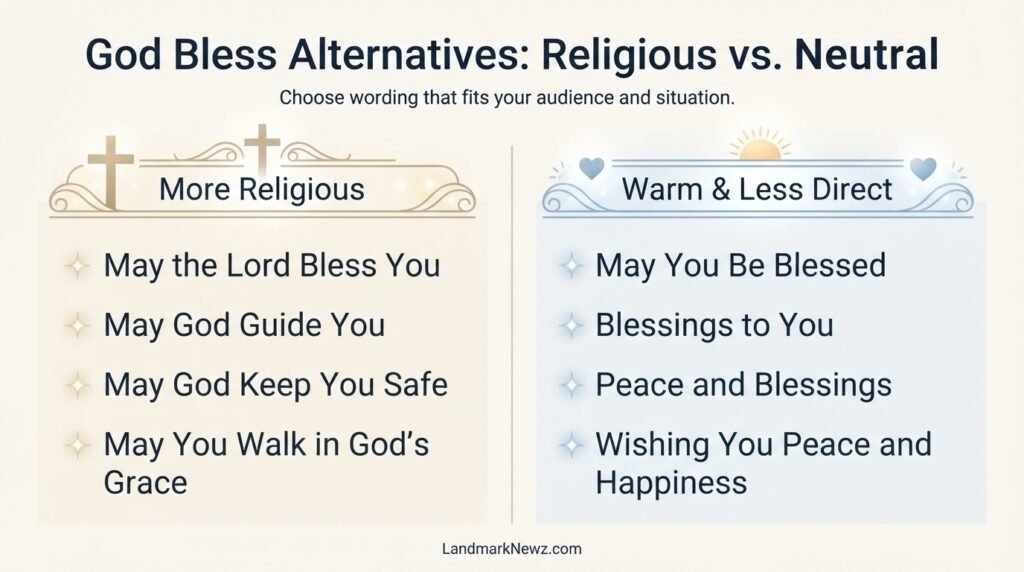
Using different expressions can help you communicate the same goodwill while matching the situation more naturally.
You might want another phrase to:
- Avoid repeating “God bless.”
- Make your message more personal.
- Express comfort or encouragement.
- Emphasize protection or guidance.
- Sound warmer in a farewell.
- Choose wording appropriate for a particular faith-based setting.
- Offer good wishes without using the exact same expression.
The key is to choose a phrase that feels genuine and suits your relationship with the person.
10 Best Other Ways to Say “God Bless”

1. May You Be Blessed
Meaning
“May you be blessed” is a warm way to wish someone happiness, peace, or positive things in their life. It keeps the spiritual meaning of “God bless” while sounding slightly more general and graceful.
Best For
- Warm
- Friendly
- Polite
- Formal
Example 1
May you be blessed with peace and strength during this difficult time.
Example 2
Thank you for everything you’ve done for our family. May you be blessed always.
Quick Tip
Use this phrase when you want to offer a sincere blessing without making the message too elaborate.
2. Blessings to You
Meaning
“Blessings to you” is a concise and friendly alternative to “God bless.” It works especially well when you want to leave someone with a positive, caring, and spiritual sentiment.
Best For
- Friendly
- Warm
- Polite
- Casual
Example 1
It was wonderful speaking with you today. Blessings to you and your family.
Example 2
I hope everything works out beautifully for you. Blessings to you on your journey.
Quick Tip
This is a natural choice for cards, social media messages, personal notes, and friendly conversations.
3. May God Watch Over You
Meaning
“May God watch over you” focuses specifically on divine protection and care. It can be especially meaningful when someone is traveling, facing uncertainty, or going through a challenging period.
Best For
- Warm
- Formal
- Polite
- Friendly
Example 1
Have a safe trip, and may God watch over you wherever you go.
Example 2
As you begin this new chapter, may God watch over you and guide your steps.
Quick Tip
Choose this phrase when protection and safety are more important than simply expressing general goodwill.
4. Wishing You God’s Blessings
Meaning
“Wishing you God’s blessings” expresses sincere hopes for someone’s happiness, peace, success, or well-being. It has a polished tone and can work nicely in written messages.
Best For
- Formal
- Warm
- Polite
- Friendly
Example 1
Wishing you God’s blessings as you celebrate this special occasion.
Example 2
Wishing you God’s blessings, peace, and happiness in the years ahead.
Quick Tip
This wording is particularly suitable for greeting cards, congratulatory notes, and meaningful personal messages.
5. May the Lord Bless You
Meaning
“May the Lord bless you” is a more explicitly religious alternative that directly addresses God and conveys a traditional blessing. It can sound especially natural in Christian conversations and faith-based settings.
Best For
- Formal
- Warm
- Religious
- Polite
Example 1
May the Lord bless you and give you strength as you move forward.
Example 2
Your kindness has meant so much to us. May the Lord bless you abundantly.
Quick Tip
Use this expression when you know the recipient is comfortable with explicitly Christian language.
6. May You Walk in God’s Grace
Meaning
This phrase offers a deeper spiritual wish, suggesting that someone may experience God’s grace and guidance. It has a reflective and heartfelt tone compared with the simple “God bless.”
Best For
- Formal
- Warm
- Religious
- Polite
Example 1
As you begin your new journey, may you walk in God’s grace and wisdom.
Example 2
May you walk in God’s grace and find peace through every challenge.
Quick Tip
Because this phrase has a more spiritual tone, it works best in religious or deeply personal messages.
7. May God Guide You
Meaning
“May God guide you” focuses on wisdom, direction, and support. It is a thoughtful choice when someone is making an important decision or entering a new stage of life.
Best For
- Warm
- Friendly
- Polite
- Religious
Example 1
Whatever decision you make, may God guide you toward what is best.
Example 2
Congratulations on your new opportunity. May God guide you throughout this exciting chapter.
Quick Tip
Use this alternative when the person needs encouragement, wisdom, or direction rather than a simple farewell.
8. May God Keep You Safe
Meaning
“May God keep you safe” is a caring expression that asks for divine protection. It is especially appropriate when someone is traveling, working in a risky environment, or facing a difficult situation.
Best For
- Warm
- Friendly
- Polite
- Religious
Example 1
Drive carefully tonight, and may God keep you safe on the road.
Example 2
We’ll be thinking of you during your trip. May God keep you safe wherever you travel.
Quick Tip
Choose this phrase when your main intention is to wish someone protection and safety.
9. Take Care, and God Be With You
Meaning
“Take care, and God be with you” combines an everyday farewell with a spiritual wish. It feels personal and supportive while making the religious meaning clear.
Best For
- Friendly
- Warm
- Polite
- Casual
Example 1
Thank you for stopping by. Take care, and God be with you.
Example 2
We’ll miss having you around. Take care, and God be with you on your next adventure.
Quick Tip
This works best when saying goodbye to someone you know well rather than in a highly formal business setting.
10. Peace and Blessings
Meaning
“Peace and blessings” is a warm expression that wishes someone peace, goodwill, and spiritual well-being. It can sound thoughtful without directly repeating the words “God bless.”
Best For
- Friendly
- Warm
- Casual
- Polite
Example 1
Thank you for sharing your story with us. Peace and blessings to you.
Example 2
I hope your family finds comfort and strength during this season. Peace and blessings.
Quick Tip
Use this phrase when you want a short, uplifting expression with a spiritual but gentle tone.
Comparison Table

| Alternative | Best Used In | Tone |
| May You Be Blessed | Personal messages, cards | Warm, graceful |
| Blessings to You | Friendly conversations | Warm, friendly |
| May God Watch Over You | Travel, difficult times | Caring, protective |
| Wishing You God’s Blessings | Cards, congratulations | Polished, warm |
| May the Lord Bless You | Christian settings | Religious, sincere |
| May You Walk in God’s Grace | Spiritual messages | Reflective, heartfelt |
| May God Guide You | New beginnings, decisions | Supportive, spiritual |
| May God Keep You Safe | Travel, safety wishes | Caring, protective |
| Take Care, and God Be With You | Goodbyes | Personal, warm |
| Peace and Blessings | Personal notes, conversations | Gentle, uplifting |
Common Mistakes When Choosing Another Way to Say “God Bless”

1. Using Highly Religious Language With the Wrong Audience
Not everyone shares the same beliefs. If you’re unsure about someone’s religious preferences, consider a gentle expression such as “Wishing you peace and happiness.”
2. Choosing an Overly Formal Phrase
Some spiritual expressions can sound too serious for a quick text. Match the wording to the relationship and communication style.
3. Ignoring the Situation
“May God keep you safe” makes sense before a long trip, while “Wishing you God’s blessings” may be better for a celebration. The context should guide your choice.
4. Making the Message Sound Insincere
A blessing feels most meaningful when it matches your genuine feelings. Avoid adding elaborate religious language simply because it sounds impressive.
5. Repeating the Same Expression
If you frequently write “God bless,” varying your wording can make personal messages feel more natural. Choose alternatives based on whether you want to emphasize peace, guidance, protection, or general goodwill.
Frequently Asked Questions
What is another way to say “God bless”?
Common alternatives include “May you be blessed,” “Blessings to you,” “May God watch over you,” “Wishing you God’s blessings,” and “May God guide you.” The best option depends on what you want to express, such as protection, encouragement, peace, or general goodwill.
What is a nice way to say “God bless you”?
“May you be blessed” is a simple and warm alternative. If you want to emphasize protection, “May God watch over you” works well. For a more traditional Christian expression, “May the Lord bless you” can be appropriate.
How do you say “God bless” without saying God?
You can use phrases such as “May you be blessed,” “Blessings to you,” or “Peace and blessings.” These expressions can communicate warmth and goodwill while avoiding a direct reference to God.
What can I say instead of “God bless” in a text?
For a casual text, try “Blessings to you,” “Take care,” or “Peace and blessings.” If the person is religious and you want to keep the spiritual meaning, “May God guide you” or “May God watch over you” are thoughtful choices.
What is another way to say “God bless” when someone is traveling?
“May God keep you safe” and “May God watch over you” are especially fitting for travel. Both phrases focus on protection and safety while maintaining the spiritual sentiment behind “God bless.”
Is “blessings to you” the same as “God bless”?
“Blessings to you” has a similar purpose but is slightly less direct. “God bless” explicitly refers to God, while “Blessings to you” focuses on the positive blessing itself. Both can express kindness, goodwill, and spiritual warmth.
Can I use “God bless” in a professional email?
You can, but consider the recipient and workplace culture first. If you know the person welcomes religious language, it may be appropriate in a personal closing. Otherwise, a neutral phrase such as “Wishing you all the best” may be safer for professional communication.
What is the best alternative to “God bless” for a farewell?
“Take care, and God be with you” is a warm faith-based farewell. If you want something shorter, “Blessings to you” works well. For a more neutral goodbye, “Wishing you peace and happiness” can convey a similar sense of goodwill.
Conclusion
There are many natural ways to say “God bless,” and the right choice depends on your message and relationship with the recipient. The phrase “God bless” is commonly used to wish someone well, especially when saying goodbye. “May you be blessed” is versatile, while “Blessings to you” feels friendly and simple.
If you’re wishing someone protection, “May God watch over you” or “May God keep you safe” is more specific. For guidance, “May God guide you” offers a thoughtful touch.
In a Christian setting, “May the Lord bless you” or “May you walk in God’s grace” can express a deeper spiritual sentiment. For a gentle farewell, “Take care, and God be with you” works naturally. Ultimately, the best alternative is the one that sounds sincere and fits the moment. Choose words that reflect your genuine care, respect the audience, and communicate exactly what you want to wish for the other person.

Professional Writing & Workplace Communication Expert
Marcus Hale is a business communication specialist with 11 years of experience in corporate training and professional writing. He has worked with mid-sized companies and remote teams to improve clarity in emails, reports, performance reviews, and client-facing messages.
Marcus focuses on polished, professional alternatives that help readers sound confident without sounding stiff. His guides cover workplace phrases, resume language, leadership communication, and formal-to-natural transitions. He holds a background in business administration and technical writing, and has led workshops on effective professional English.
At LandmarkNewz, Marcus creates practical synonym lists and phrasing tips that professionals can apply immediately in emails, meetings, and career documents.