

“What’s up?” is one of the most common casual greetings in American English. It can mean “How are you?”, “What are you doing?”, or “What’s happening?” depending on the context.
While the phrase is perfectly natural, you may want another way to say “what’s up” when you want to sound warmer, more polite, more professional, or simply avoid repeating the same greeting.
What Does “Another Way to Say Whats Up” Mean?
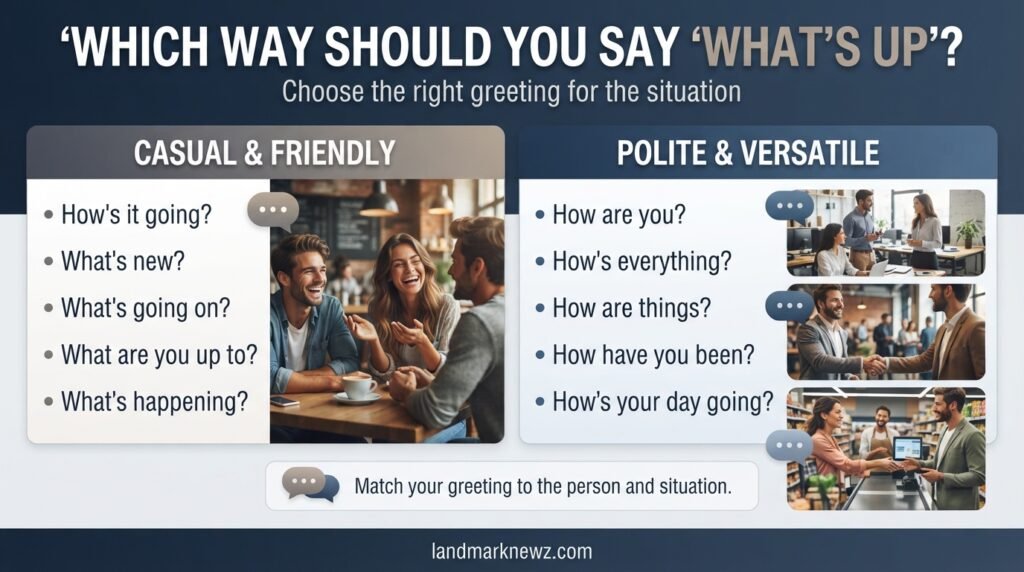
The phrase “another way to say what’s up” refers to alternative expressions that communicate a similar idea to “What’s up?”
“What’s up?” is usually informal and works best with friends, classmates, coworkers you know well, and family members. It can function as a greeting or a casual question about what someone is doing.
For example:
“Hey, what’s up?”
Depending on the response, the speaker may be asking how the other person feels, what they have been doing, or whether anything interesting is happening.
Why Use Other Ways to Say “Whats Up”?
Using different greetings can make your conversations sound more natural and better suited to the situation. While “What’s up?” is common, it is not ideal for every person or setting.
Other expressions can help you:
- Avoid repeating the same greeting.
- Sound more friendly and conversational.
- Show genuine interest in someone.
- Adjust your tone for different situations.
- Use more polite language when appropriate.
- Start a conversation naturally.
- Ask about recent events or personal updates.
The key is to choose an expression that fits your relationship with the other person.
10 Best Other Ways to Say “Whats Up”
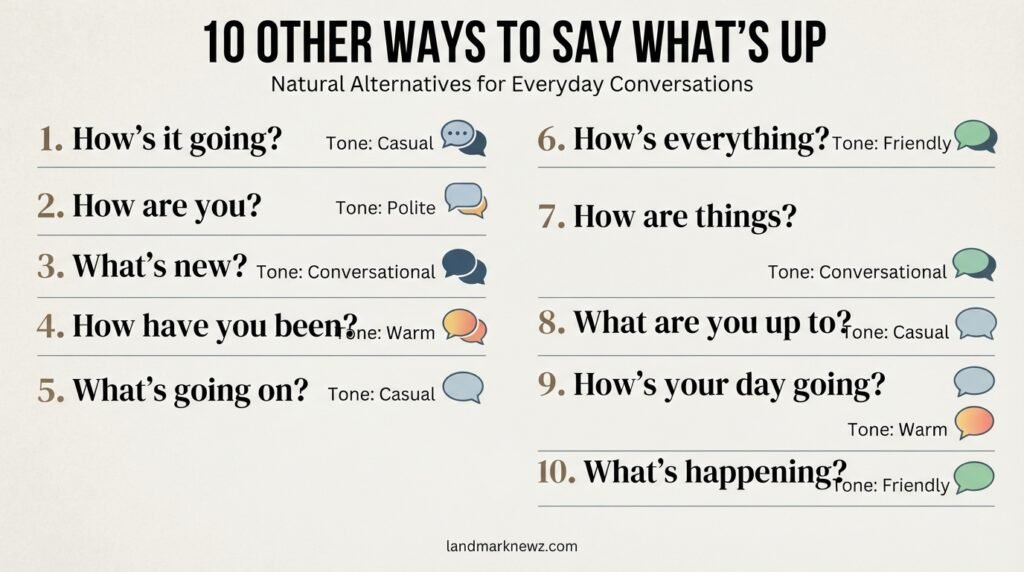
1. How’s It Going?
Meaning
“How’s it going?” is one of the closest natural alternatives to “What’s up?” It is a relaxed way to ask how someone is doing or how things are going.
Best For
- Casual
- Friendly
- Warm
Example 1
“Hey, Mike! How’s it going?”
Example 2
“Hi, Sarah. How’s it going with your new project?”
Quick Tip
Use this when you want a friendly greeting that feels natural without being overly informal.
2. How Are You?
Meaning
“How are you?” is a simple and widely accepted greeting. Unlike “What’s up?”, it can work in casual, polite, and somewhat professional conversations.
Best For
- Professional
- Casual
- Friendly
- Polite
Example 1
“Good morning, James. How are you?”
Example 2
“Hey, Emma! How are you doing these days?”
Quick Tip
Choose “How are you?” when you want a safe option that works with almost anyone.
3. What’s New?
Meaning
“What’s new?” asks whether anything interesting or different has happened recently. It works especially well when you have not spoken to someone for a while.
Best For
- Casual
- Friendly
- Warm
Example 1
“Hey, Chris! What’s new?”
Example 2
“It’s been a few months. What’s new with you?”
Quick Tip
Use this when you genuinely want to hear about recent changes in someone’s life.
4. How Have You Been?
Meaning
“How have you been?” is a warm way to reconnect with someone after some time apart. It usually invites the person to share more than a simple “I’m fine.”
Best For
- Friendly
- Warm
- Polite
Example 1
“Hi, Laura! It’s great to see you. How have you been?”
Example 2
“I haven’t talked to you since graduation. How have you been?”
Quick Tip
This phrase is particularly natural when you have not seen or spoken to someone recently.
5. What’s Going On?
Meaning
“What’s going on?” can be a casual greeting or a genuine question about what is happening. Your tone and context determine which meaning the listener takes.
Best For
- Casual
- Friendly
Example 1
“Hey, guys! What’s going on?”
Example 2
“You’ve been quiet today. What’s going on?”
Quick Tip
Be aware that this phrase can sound concerned if the situation suggests that something might be wrong.
6. How’s Everything?
Meaning
“How’s everything?” is a friendly way to ask about someone’s overall situation. It can cover work, family, school, or everyday life without asking about one specific topic.
Best For
- Friendly
- Warm
- Polite
Example 1
“Hi, Daniel. How’s everything?”
Example 2
“We haven’t caught up lately. How’s everything going?”
Quick Tip
Use it when you want to show broad interest in how someone is doing.
7. How Are Things?
Meaning
“How are things?” is a natural conversational expression that asks about someone’s current situation. It sounds slightly more thoughtful than a quick “What’s up?”
Best For
- Friendly
- Polite
- Warm
Example 1
“Hey, Rachel. How are things at work?”
Example 2
“Nice running into you! How are things?”
Quick Tip
This works especially well when you want to encourage someone to talk about what has been happening recently.
8. What Are You Up To?
Meaning
“What are you up to?” usually asks what someone is doing now or what they plan to do. It is more specific than “What’s up?”
Best For
- Casual
- Friendly
Example 1
“Hey, Jake! What are you up to tonight?”
Example 2
“What are you up to this weekend?”
Quick Tip
Use this when you are interested in someone’s current plans or activities.
9. How’s Your Day Going?
Meaning
“How’s your day going?” is a friendly greeting that focuses on the person’s current day. It can create a more personal conversation than a general greeting.
Best For
- Friendly
- Warm
- Polite
Example 1
“Hey, Olivia! How’s your day going?”
Example 2
“Good to see you. How’s your day going so far?”
Quick Tip
This is a great choice when you want to show genuine interest without sounding overly formal.
10. What’s Happening?
Meaning
“What’s happening?” can be used as a casual greeting or a question about current events around you. It has a relaxed tone and is common in everyday conversations.
Best For
- Casual
- Friendly
Example 1
“Hey, everyone! What’s happening?”
Example 2
“I just got here. What’s happening?”
Quick Tip
Use it with people you know well, especially in relaxed social settings.
Comparison Table
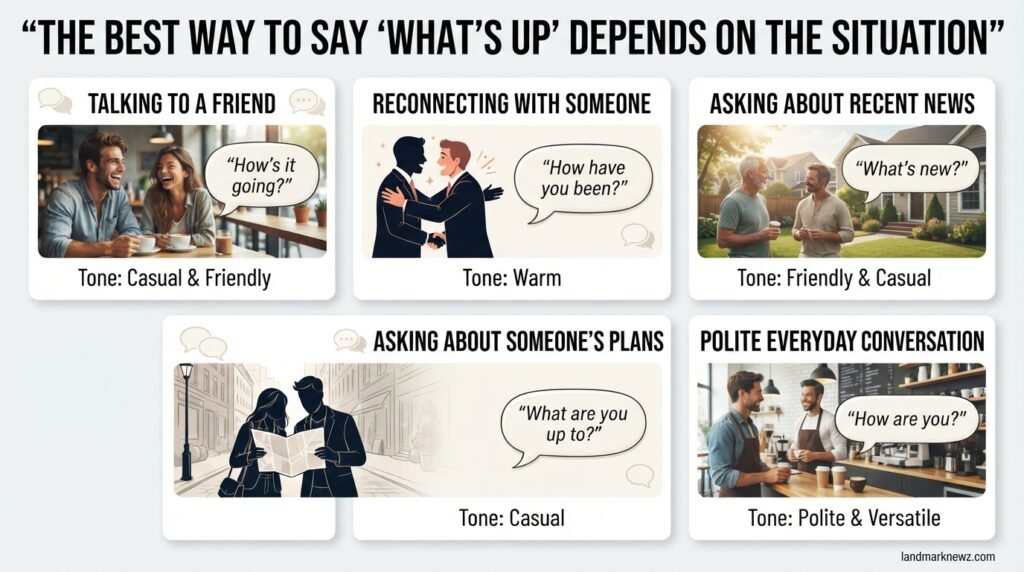
| Alternative | Best Used In | Tone |
| How’s It Going? | Everyday conversations | Friendly, casual |
| How Are You? | Casual and polite settings | Polite, friendly |
| What’s New? | Catching up | Warm, casual |
| How Have You Been? | Reconnecting | Warm, friendly |
| What’s Going On? | Casual conversations | Relaxed, casual |
| How’s Everything? | General check-ins | Warm, polite |
| How Are Things? | Personal or work updates | Friendly, thoughtful |
| What Are You Up To? | Asking about plans | Casual, friendly |
| How’s Your Day Going? | Everyday check-ins | Warm, friendly |
| What’s Happening? | Relaxed social settings | Casual, energetic |
Common Mistakes
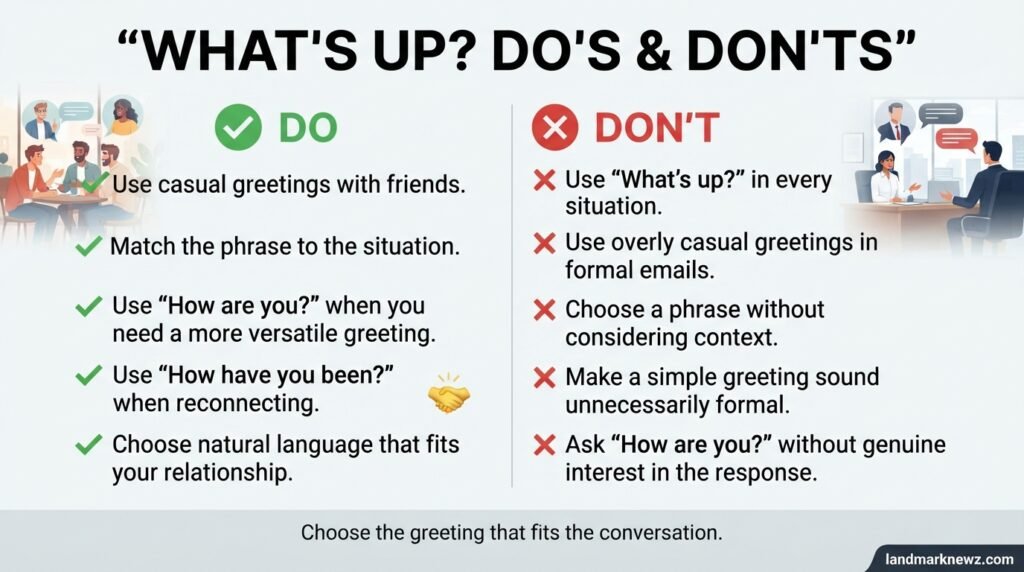
1. Using Casual Phrases in Professional Emails
“What’s up?” and “What are you up to?” can sound too informal in a business email. Choose “How are you?” or get directly to the purpose of your message instead.
2. Choosing Overly Formal Language
Not every conversation needs a formal greeting. Saying “How do you do?” in a casual conversation can sound unnatural or old-fashioned.
3. Repeating the Same Phrase
Using “What’s up?” every time you greet someone can make your conversations feel repetitive. Rotate between natural alternatives when the situation allows.
4. Forgetting Context
Some alternatives ask about specific things. “What are you up to?” focuses on activities, while “How have you been?” usually suggests that you have not spoken recently.
5. Sounding Insincere
Avoid asking “How are you?” automatically if you have no interest in continuing the conversation. A genuine follow-up can make the greeting feel more meaningful.
Frequently Asked Questions
1. What is a better way to say “What’s up?”
“How’s it going?” is one of the best alternatives because it sounds natural, friendly, and relaxed. Other good choices include “How are you?”, “What’s new?”, “How have you been?”, and “How are things?” Choose based on whether you are greeting someone casually or reconnecting after some time.
2. Is “What’s up?” professional?
“What’s up?” is generally considered informal, so it is better suited to friends, family, and familiar coworkers. In professional communication, especially emails or first-time interactions, “How are you?” or a direct, polite opening is usually a safer choice.
3. What can I say instead of “What’s up?” to a friend?
With a friend, you have many natural choices. Try “How’s it going?”, “What’s new?”, “What are you up to?”, “What’s happening?”, or “How have you been?” The best option depends on whether you simply want to greet them or start a conversation about their activities.
4. What is a polite alternative to “What’s up?”
“How are you?” is the simplest polite alternative. “How are things?” and “How have you been?” can also work well, especially when you want the greeting to sound more thoughtful and personal.
5. Is “How’s it going?” the same as “What’s up?”
They are very similar, but they do not always ask exactly the same thing. “What’s up?” can ask what someone is doing or what is happening, while “How’s it going?” usually focuses more on how things are going for the person.
6. What can I say instead of “What’s up?” in a text?
For texting, “Hey, how’s it going?”, “What’s new?”, and “What are you up to?” are natural choices. If you are reconnecting after a long time, “Hey! How have you been?” sounds warmer and gives the other person an easy way to continue the conversation.
7. Is “What’s happening?” a good replacement for “What’s up?”
Yes. “What’s happening?” can work as a casual greeting, particularly among friends or in relaxed social settings. However, it may also ask about a specific event or situation, so context and tone can affect its meaning.
8. What is the most natural American English alternative to “What’s up?”
“How’s it going?” is one of the most natural everyday alternatives in American English. It sounds relaxed without being overly slangy and works with friends, acquaintances, and familiar coworkers. For a more universally polite option, “How are you?” is an excellent choice.
Conclusion
“What’s up?” is a common and natural American English greeting, but it is not your only option. Choosing a different expression can help you sound more specific, friendly, polite, or interested in the other person.
For everyday conversations, “How’s it going?” is an excellent all-purpose choice. If you are reconnecting with someone, “How have you been?” or “What’s new?” works especially well. For a polite or professional setting, “How are you?” is usually safer.
The most important factor is context. Think about your relationship with the person, the setting, and what you actually want to ask. When your greeting matches the situation, your conversation will sound more natural and genuine. For more context on “What’s up?” as an informal greeting, see the Cambridge Dictionary definition.

About Dr. Priya Nair
Dr. Priya Nair is a passionate Writer & Blogger at LandMarkNewz.com, dedicated to creating informative, engaging, and easy-to-understand content for readers. With a strong interest in research, current trends, lifestyle, and everyday topics, she focuses on presenting useful information in a clear and reader-friendly way.
Through her writing, Priya aims to help readers discover valuable insights, understand complex topics more easily, and stay informed about subjects that matter to them. Her approach combines thoughtful research with a simple and engaging writing style.
At LandMarkNewz.com, she contributes original articles designed to inform, educate, and provide practical value to readers.