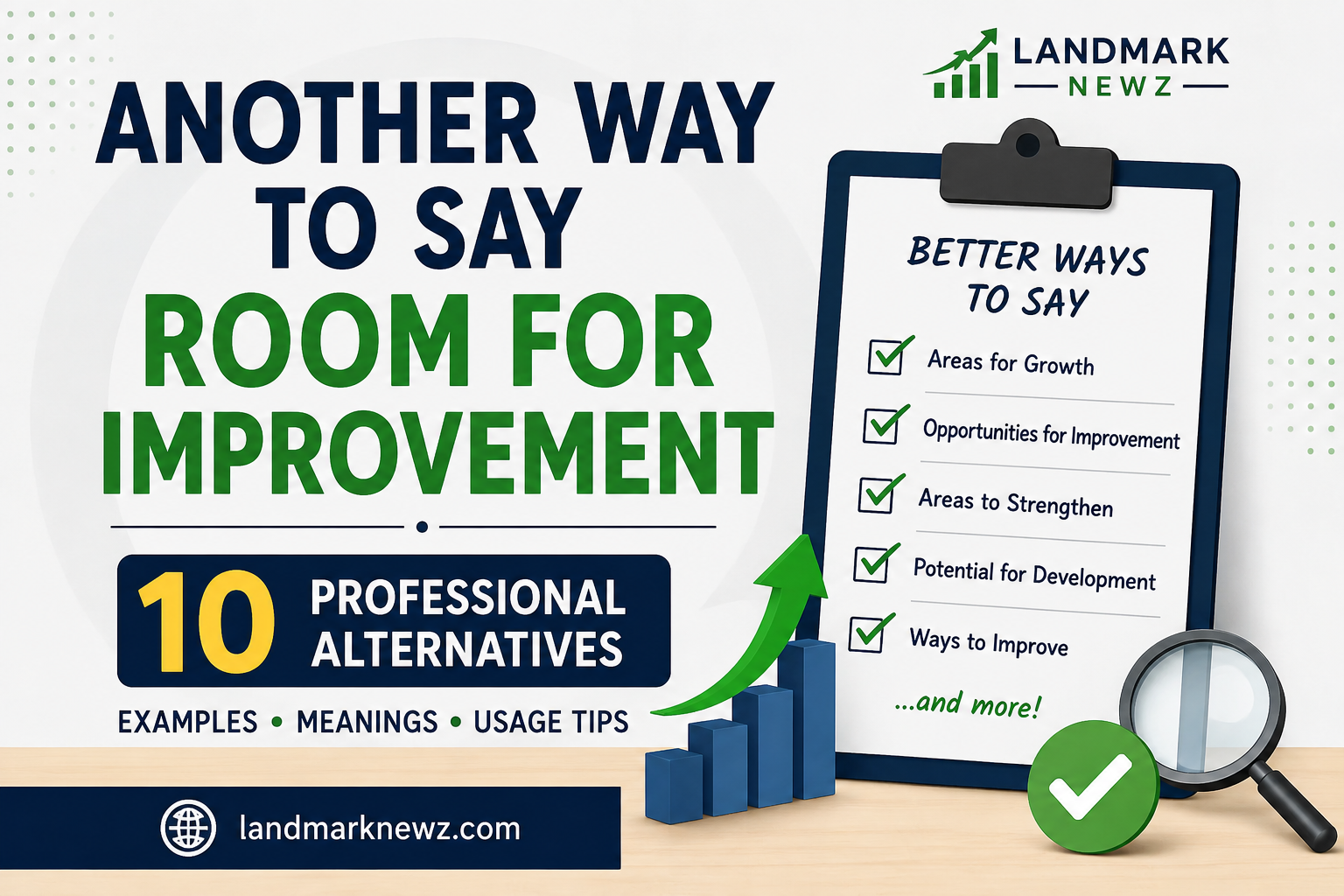
Finding another way to say room for improvement can help you communicate feedback more clearly and professionally. While “room for improvement” is common, repeating it too often can make your writing sound predictable.
Whether you are writing a performance review, giving constructive feedback, updating a resume, or discussing a project, the right alternative can make your message more positive and precise. Some phrases emphasize growth, while others point directly to weaknesses or areas that need attention.
What Does “Room for Improvement” Mean?
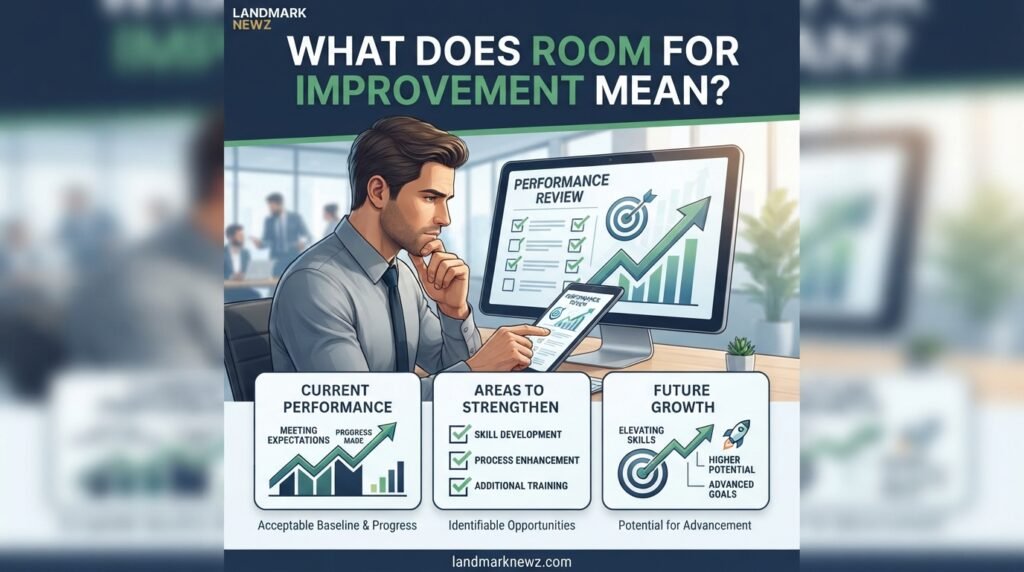
“Room for improvement” means that something is good enough in its current state but could become better. It often suggests that a person, process, skill, product, or result has areas that could be developed further.
For example, a manager might say, “Your presentation was strong, but there is still room for improvement.” The phrase is usually less harsh than directly saying something is weak or unsuccessful.
It commonly appears in workplace feedback, performance reviews, education, coaching, business communication, project evaluations, and personal development discussions.
Why Use Other Ways to Say “Room for Improvement”?
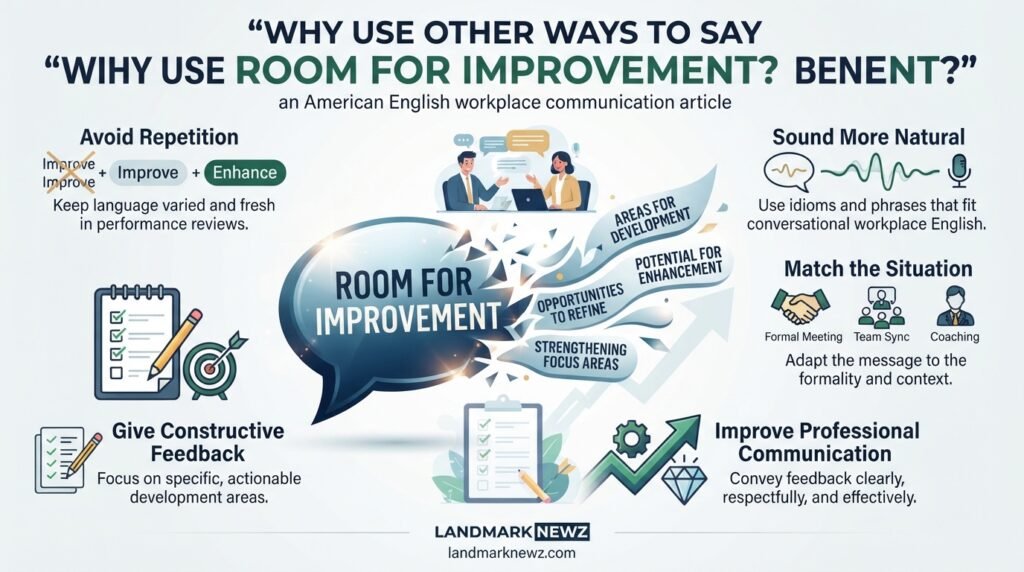
Using different expressions gives you more control over your message. A phrase such as “areas for growth” sounds encouraging, while “areas to strengthen” can sound more specific and action-oriented.
Alternative wording can help you:
- Avoid repeating the same expression.
- Make feedback sound more constructive.
- Choose language appropriate for professional settings.
- Focus on growth rather than weaknesses.
- Communicate criticism in a respectful way.
- Match your wording to the seriousness of the situation.
For sensitive conversations, positive and specific language usually works better than blunt criticism.
10 Best Other Ways to Say “Room for Improvement”
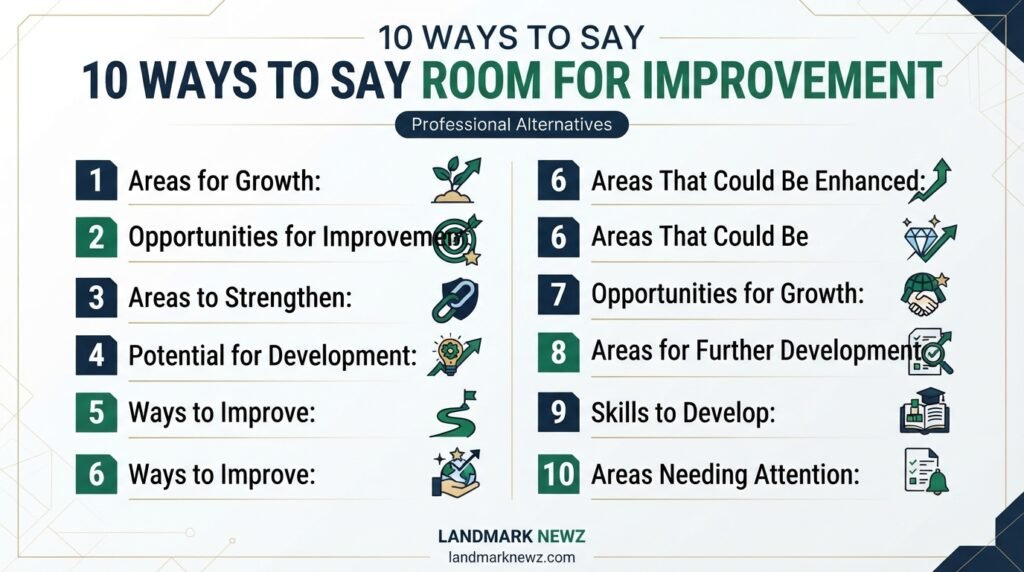
1. Areas for Growth
Meaning
“Areas for growth” is a positive way to describe skills, behaviors, or results that could develop further. It focuses on potential rather than shortcomings, making it especially useful when giving constructive feedback.
Best For
- Professional
- Formal
- Friendly
- Warm
Example 1
Your communication skills are strong, with a few areas for growth as you take on larger projects.
Example 2
The review identified several areas for growth that can support her career development.
Quick Tip
Use this phrase when you want feedback to sound encouraging and future-focused.
2. Opportunities for Improvement
Meaning
“Opportunities for improvement” directly communicates that something could be better while avoiding overly negative language. It is one of the most useful choices for workplace evaluations and formal feedback.
Best For
- Professional
- Formal
- Polite
Example 1
The supervisor discussed several opportunities for improvement during the quarterly review.
Example 2
The team found opportunities for improvement in the customer support process.
Quick Tip
This is a safe choice for performance reviews, business reports, and professional emails.
3. Areas to Strengthen
Meaning
“Areas to strengthen” suggests that a person already has a foundation but could make certain skills or qualities stronger. It sounds practical and supportive.
Best For
- Professional
- Formal
- Friendly
Example 1
Time management is one of the main areas to strengthen before taking on a leadership role.
Example 2
The assessment highlighted several areas to strengthen before the next presentation.
Quick Tip
Choose this phrase when you want to emphasize development rather than deficiency.
4. Potential for Development
Meaning
“Potential for development” highlights the possibility of future progress. It works especially well when discussing employees, skills, projects, or ideas that have a solid foundation but are not fully developed.
Best For
- Professional
- Formal
Example 1
The candidate demonstrated strong potential for development in strategic planning.
Example 2
This project has considerable potential for development as the team gathers more customer feedback.
Quick Tip
Use it when you want to recognize existing potential while pointing toward future progress.
5. Ways to Improve
Meaning
“Ways to improve” is simple, direct, and easy to understand. It works when you want to shift the conversation from identifying a weakness to finding practical solutions.
Best For
- Professional
- Casual
- Friendly
- Polite
Example 1
Let’s discuss a few ways to improve the checkout experience for customers.
Example 2
The coach offered several ways to improve her consistency during matches.
Quick Tip
This is an excellent everyday alternative because it sounds natural without being overly formal.
6. Areas That Could Be Enhanced
Meaning
“Areas that could be enhanced” is a polished expression that suggests something is already functional but could become stronger or more effective. It works well in business and formal writing.
Best For
- Professional
- Formal
- Polite
Example 1
The report identified areas that could be enhanced before the final presentation.
Example 2
There are several areas of the website that could be enhanced to improve usability.
Quick Tip
Use this option when discussing products, documents, websites, or processes in a professional setting.
7. Opportunities for Growth
Meaning
“Opportunities for growth” presents improvement as a positive possibility. It is particularly effective when discussing someone’s career, skills, responsibilities, or long-term potential.
Best For
- Professional
- Friendly
- Warm
Example 1
The position provides several opportunities for growth within the company.
Example 2
The manager identified opportunities for growth in leadership and project management.
Quick Tip
Choose this phrase when you want your feedback to feel motivating rather than critical.
8. Areas for Further Development
Meaning
“Areas for further development” communicates that something needs additional work, practice, or refinement. It has a professional tone and fits formal assessments particularly well.
Best For
- Professional
- Formal
- Polite
Example 1
The evaluation highlighted areas for further development in technical writing.
Example 2
The employee has strong analytical skills, with a few areas for further development.
Quick Tip
This phrase is especially suitable for performance evaluations, academic feedback, and professional development plans.
9. Skills to Develop
Meaning
“Skills to develop” is more specific than “room for improvement” because it identifies abilities that could become stronger. It works best when discussing an individual’s career or personal development.
Best For
- Professional
- Formal
- Friendly
Example 1
The internship helped me identify several skills to develop before entering the workforce.
Example 2
The mentor recommended focusing on presentation and negotiation as key skills to develop.
Quick Tip
Use this option when your feedback is specifically about abilities rather than general performance.
10. Areas Needing Attention
Meaning
“Areas needing attention” is a more direct alternative. It suggests that something deserves additional focus, correction, or review without automatically labeling it as a failure.
Best For
- Professional
- Formal
- Polite
Example 1
The audit revealed several areas needing attention before the system can launch.
Example 2
The teacher identified a few areas needing attention before the student’s next assignment.
Quick Tip
Use this phrase when an issue requires action and you want your wording to remain professional.
Comparison Table
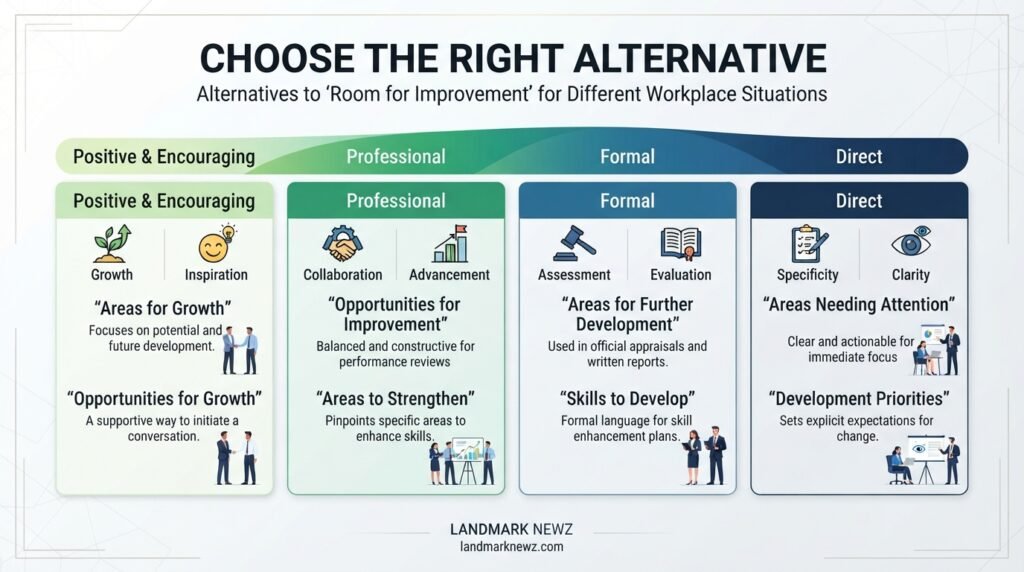
| Alternative | Best Used In | Tone |
| Areas for Growth | Workplace, coaching | Positive |
| Opportunities for Improvement | Reviews, business | Professional |
| Areas to Strengthen | Feedback, development | Supportive |
| Potential for Development | Careers, projects | Formal |
| Ways to Improve | Everyday communication | Direct |
| Areas That Could Be Enhanced | Business, reports | Polished |
| Opportunities for Growth | Career discussions | Encouraging |
| Areas for Further Development | Evaluations | Formal |
| Skills to Develop | Career, education | Constructive |
| Areas Needing Attention | Reviews, audits | Direct and professional |
Common Mistakes
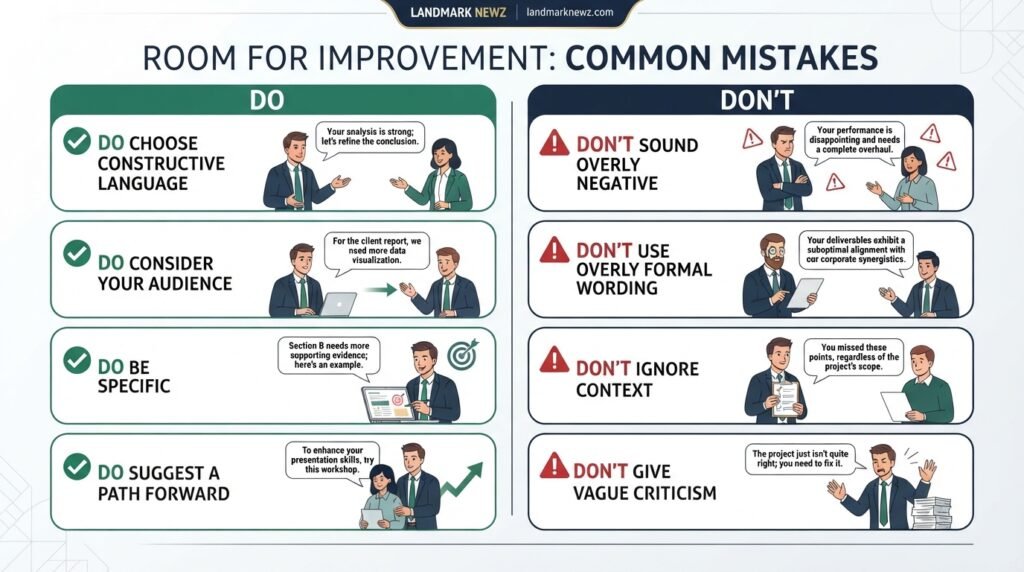
1. Using Casual Phrases in Professional Feedback
A phrase that works with friends may sound too informal in a performance review. Choose wording that fits the professional relationship and situation.
2. Making Feedback Sound Too Negative
Directly describing someone’s weaknesses can make constructive feedback feel like criticism. Expressions such as “areas for growth” create a more supportive tone.
3. Choosing Overly Formal Language
Not every situation requires sophisticated wording. In an everyday conversation, “ways to improve” may sound much more natural than “potential for further development.”
4. Ignoring the Context
The best alternative depends on what you are describing. “Skills to develop” works for abilities, while “areas needing attention” may be better for a business process or project.
5. Giving Vague Feedback
Changing the phrase does not make feedback useful by itself. Whenever possible, explain what could improve and provide a practical suggestion for how to improve it.
Frequently Asked Questions
What is a professional way to say “room for improvement”?
“Opportunities for improvement” is one of the most professional alternatives. It works well in performance reviews, workplace emails, reports, and meetings. “Areas for growth” is another strong option when you want your feedback to sound more positive and encouraging.
What is a positive way to say “room for improvement”?
“Areas for growth” and “opportunities for growth” are highly positive alternatives. Both phrases focus on potential and development instead of weaknesses. They are especially useful when discussing employee performance, career development, education, coaching, or personal goals.
How do you say “room for improvement” in a performance review?
You can say “areas for further development,” “opportunities for improvement,” or “areas to strengthen.” These expressions maintain a professional tone while making it clear that the employee has specific areas where additional effort or development could lead to better results.
What is another way to say someone needs improvement?
You can say that someone has “areas to strengthen,” “skills to develop,” or “opportunities for growth.” These alternatives sound less harsh than saying someone “needs improvement.” Choose the wording based on whether you want to emphasize performance, skills, potential, or future development.
Is “areas for growth” better than “room for improvement”?
Often, yes. “Areas for growth” has a more positive and encouraging tone, while “room for improvement” can sometimes sound like criticism. However, both phrases are useful. Choose “areas for growth” when you want to emphasize potential and development.
What is another way to say “there is room for improvement”?
You could say “there are opportunities for improvement,” “there are areas to strengthen,” or “there is potential for further development.” The best choice depends on your audience and whether you want the statement to sound direct, supportive, or formal.
How can I politely give feedback about weaknesses?
Focus on the behavior or result rather than the person’s character. Instead of saying, “You’re not good at presentations,” try saying, “Presentation skills are an area to strengthen.” Then offer a specific suggestion that can help the person make progress.
Can these alternatives be used on a resume?
Some can, but context matters. “Skills to develop” and “areas for growth” are generally better suited to self-assessments or career discussions than a standard resume. On a resume, it is usually more effective to emphasize accomplishments, relevant skills, and measurable results.
Conclusion
Knowing another way to say room for improvement gives you more flexibility when discussing feedback, development, and performance. Although the original phrase is perfectly acceptable, alternatives can help you communicate a more specific message.
For positive and encouraging feedback, choose “areas for growth” or “opportunities for growth.” For workplace evaluations, “opportunities for improvement” and “areas for further development” are reliable choices. If you are discussing specific abilities, “skills to develop” or “areas to strengthen” may work better.
The key is to match your wording with your audience and purpose. Good feedback should not simply identify what could be better; it should help the listener understand what to work on next. Choose language that is clear, respectful, and useful. For the original expression’s definition and usage, consult the Cambridge Dictionary’s meaning of room for improvement.

Professional Writing & Workplace Communication Expert
Marcus Hale is a business communication specialist with 11 years of experience in corporate training and professional writing. He has worked with mid-sized companies and remote teams to improve clarity in emails, reports, performance reviews, and client-facing messages.
Marcus focuses on polished, professional alternatives that help readers sound confident without sounding stiff. His guides cover workplace phrases, resume language, leadership communication, and formal-to-natural transitions. He holds a background in business administration and technical writing, and has led workshops on effective professional English.
At LandmarkNewz, Marcus creates practical synonym lists and phrasing tips that professionals can apply immediately in emails, meetings, and career documents.