
Another Way to Say “works well with others ” Mean?
The phrase “works well with others” means that someone can cooperate, communicate, and build positive working relationships with people around them. It suggests that the person contributes to a team without creating unnecessary conflict or communication problems.
People commonly use this phrase in resumes, cover letters, interviews, performance reviews, job descriptions, school applications, and professional conversations.
However, “works well with others” can sound somewhat general or overused, especially on a resume. Using a more specific alternative can show whether you are highlighting collaboration, communication, teamwork, adaptability, or relationship-building.
Why Use Other Ways to Say “Works Well With Others”?
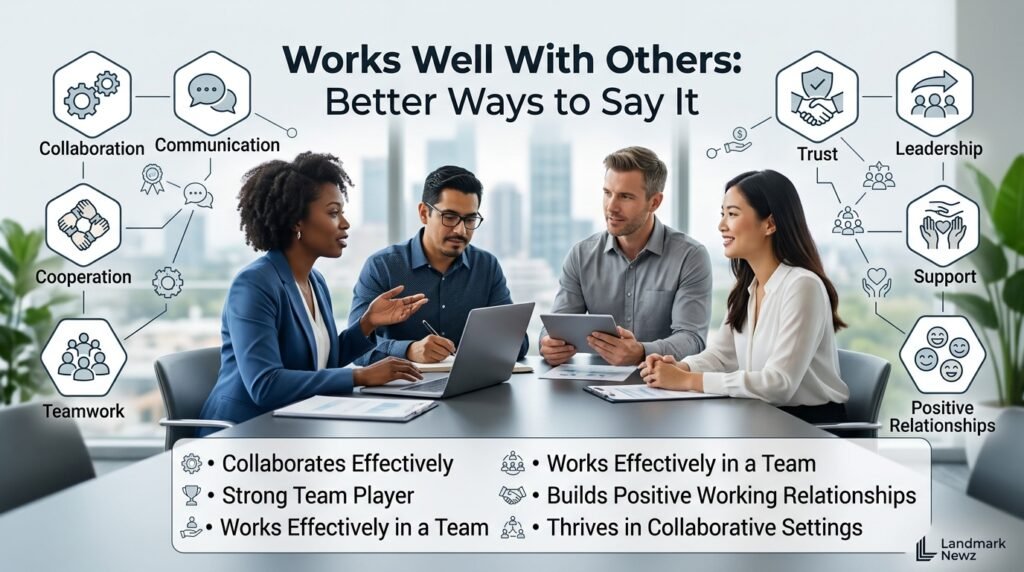
Choosing a stronger alternative can make your writing more precise and professional. Instead of simply stating that you work well with people, you can describe the specific interpersonal strength you bring to a team.
Using different wording can help you:
- Avoid repetitive or generic language.
- Make a resume sound more polished.
- Highlight a specific teamwork skill.
- Match your wording to a professional or casual situation.
- Communicate your strengths more clearly.
- Make interview and cover letter answers more memorable.
For example, “collaborates effectively with cross-functional teams” provides more information than simply saying “works well with others.”
10 Best Other Ways to Say “Works Well With Others”
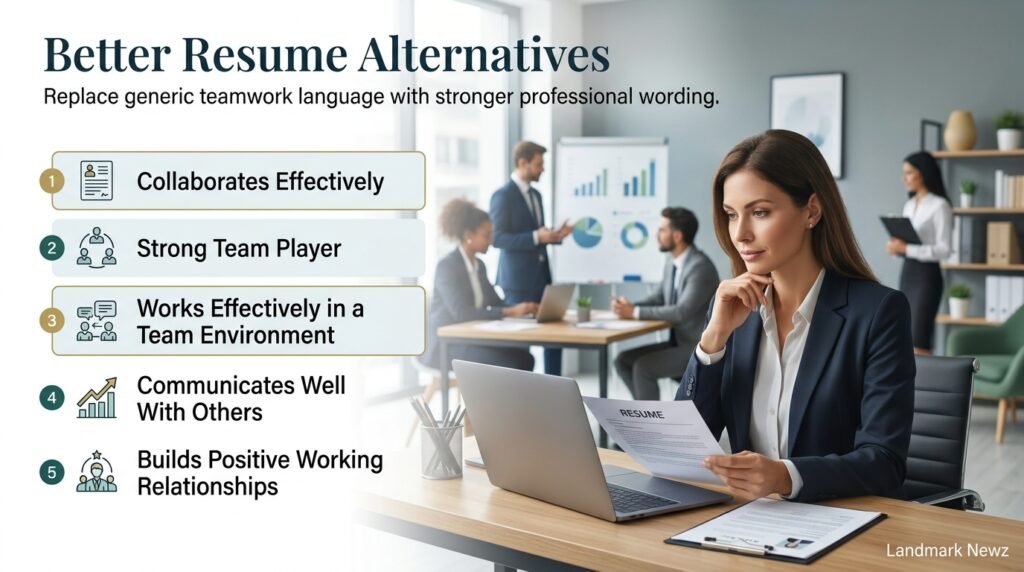
1. Collaborates Effectively
Meaning
“Collaborates effectively” means you can work productively with other people toward a shared goal. It emphasizes cooperation, communication, and the ability to contribute to a group effort.
Best For
- Professional
- Formal
Example 1
I collaborate effectively with designers, developers, and project managers to deliver projects on schedule.
Example 2
She collaborates effectively with colleagues from different departments to solve complex problems.
Quick Tip
This is one of the strongest alternatives for a resume, LinkedIn profile, or cover letter because it sounds professional without being overly formal.
2. Is a Strong Team Player
Meaning
Being a “strong team player” means you contribute positively to a group while supporting coworkers and working toward common objectives. It directly communicates that you value teamwork.
Best For
- Professional
- Friendly
Example 1
I am a strong team player who enjoys helping colleagues meet shared deadlines.
Example 2
Our new coordinator is a strong team player who keeps everyone informed throughout each project.
Quick Tip
Use this phrase when you want to emphasize teamwork and cooperation rather than individual achievement.
3. Works Effectively in a Team Environment
Meaning
This phrase explains that someone performs well when working as part of a group. It is especially useful when describing how a person handles shared responsibilities, communication, and team goals.
Best For
- Professional
- Formal
Example 1
I work effectively in a team environment and remain focused when priorities change.
Example 2
The candidate works effectively in a team environment while also managing independent assignments.
Quick Tip
This is an excellent option for job applications because it sounds clear, objective, and workplace-focused.
4. Communicates Well With Others
Meaning
“Communicates well with others” focuses on the ability to share information clearly, listen carefully, and maintain productive conversations. It is slightly different from teamwork because communication is the main skill being highlighted.
Best For
- Professional
- Friendly
- Casual
Example 1
He communicates well with others and explains technical information in an easy-to-understand way.
Example 2
I communicate well with others, especially when coordinating tasks across multiple teams.
Quick Tip
Choose this alternative when communication skills are more important to the position than teamwork alone.
5. Builds Positive Working Relationships
Meaning
This phrase highlights your ability to develop respectful and productive relationships with coworkers, managers, clients, or partners. It suggests trust, professionalism, and good interpersonal skills.
Best For
- Professional
- Formal
- Warm
Example 1
She builds positive working relationships with clients by listening carefully to their needs.
Example 2
I build positive working relationships with coworkers by maintaining open and respectful communication.
Quick Tip
This wording works especially well for customer service, management, sales, human resources, and leadership roles.
6. Cooperates Well With Colleagues
Meaning
“Cooperates well with colleagues” emphasizes willingness to help, share responsibilities, and work toward a common objective. It has a straightforward and professional tone.
Best For
- Professional
- Formal
- Polite
Example 1
I cooperate well with colleagues when handling busy periods and unexpected challenges.
Example 2
The employee cooperates well with colleagues and willingly assists when additional support is needed.
Quick Tip
Use this phrase when you want to emphasize reliability, helpfulness, and a cooperative attitude.
7. Fosters Strong Team Relationships
Meaning
To “foster strong team relationships” means to help create trust, respect, and cooperation within a group. The phrase suggests that you actively contribute to a healthy team dynamic.
Best For
- Professional
- Formal
Example 1
She fosters strong team relationships by encouraging open communication and mutual respect.
Example 2
Our supervisor fosters strong team relationships through regular feedback and supportive leadership.
Quick Tip
This option is particularly effective for supervisory, managerial, and leadership positions.
8. Thrives in Collaborative Settings
Meaning
“Thrives in collaborative settings” means you perform particularly well when working with other people. It suggests that teamwork is not simply something you tolerate but an environment in which you can produce strong results.
Best For
- Professional
- Formal
Example 1
I thrive in collaborative settings where team members share ideas and solve problems together.
Example 2
The designer thrives in collaborative settings and enjoys turning group feedback into practical solutions.
Quick Tip
This phrase can make a resume more engaging, especially when the position involves brainstorming, group projects, or cross-functional work.
9. Develops Strong Interpersonal Relationships
Meaning
This phrase refers to the ability to create positive, respectful connections with other people. It emphasizes interpersonal skills rather than teamwork alone.
Best For
- Professional
- Formal
Example 1
I develop strong interpersonal relationships with clients by listening carefully and responding thoughtfully.
Example 2
The manager develops strong interpersonal relationships that help create a supportive workplace.
Quick Tip
Use this alternative when the role requires frequent interaction with clients, employees, customers, or stakeholders.
10. Contributes Positively to Team Success
Meaning
“Contributes positively to team success” focuses on the value you bring to a group. Rather than simply saying you get along with coworkers, it suggests that your actions help the team achieve meaningful results.
Best For
- Professional
- Formal
- Warm
Example 1
I contribute positively to team success by sharing ideas, meeting deadlines, and supporting coworkers.
Example 2
He contributes positively to team success by taking initiative when projects require additional support.
Quick Tip
This is a strong choice when you want to connect teamwork with measurable contributions or results.
Comparison Table
| Alternative | Best Used In | Tone |
| Collaborates effectively | Resumes, cover letters, LinkedIn | Professional |
| Is a strong team player | Resumes, interviews, workplace communication | Professional, friendly |
| Works effectively in a team environment | Job applications, performance reviews | Formal, professional |
| Communicates well with others | Resumes, interviews, everyday work | Professional, friendly |
| Builds positive working relationships | Leadership, customer service, resumes | Professional, warm |
| Cooperates well with colleagues | Performance reviews, workplace writing | Professional, polite |
| Fosters strong team relationships | Management, leadership, workplace writing | Formal, professional |
| Thrives in collaborative settings | Resumes, interviews, LinkedIn | Professional, formal |
| Develops strong interpersonal relationships | Customer-facing and leadership roles | Formal, professional |
| Contributes positively to team success | Resumes, reviews, interviews | Professional, warm |
How to Choose the Right Alternative
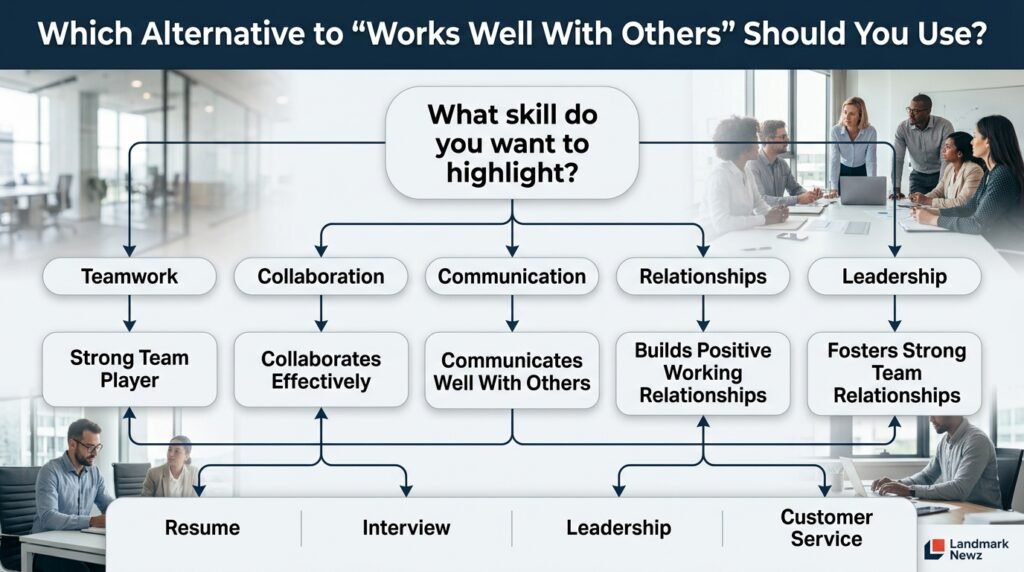
The best phrase depends on the skill you actually want to communicate.
For a resume, choose specific and action-oriented language such as “collaborates effectively” or “thrives in collaborative settings.” These phrases sound stronger when followed by evidence of what you achieved.
For an interview, “I’m a strong team player” is natural and easy to understand. You can make it more convincing by briefly describing a situation in which you helped a team solve a problem or reach a goal.
For leadership roles, “fosters strong team relationships” can better communicate your ability to create trust and cooperation.
For customer-facing positions, “builds positive working relationships” or “develops strong interpersonal relationships” may be more relevant.
Common Mistakes
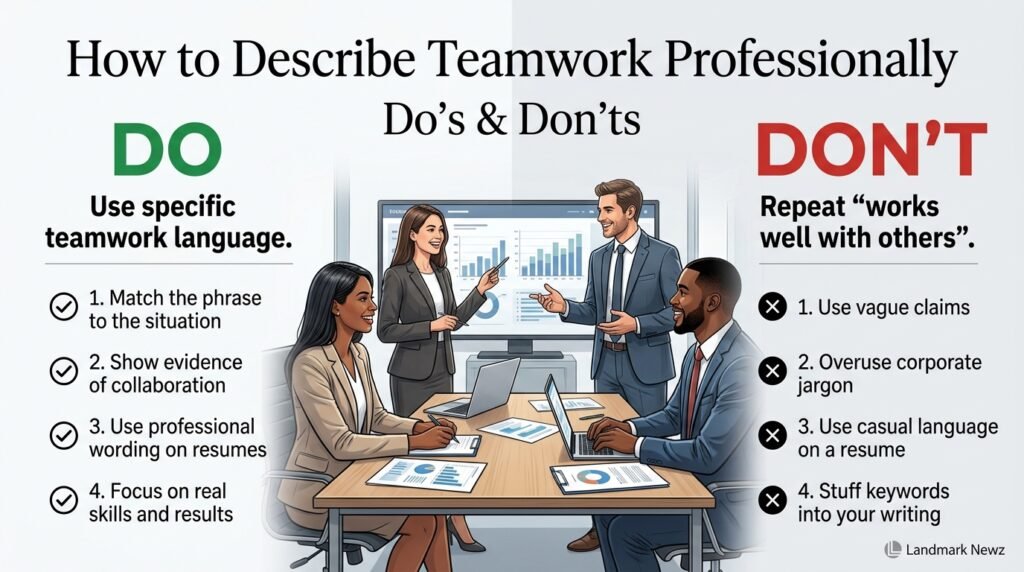
1. Using Casual Phrases in Professional Writing
Phrases such as “I get along with everyone” may sound too informal for a resume or cover letter. Choose professional wording that clearly describes your interpersonal skills.
2. Choosing Overly Formal Language
Not every situation requires sophisticated vocabulary. If a simple phrase such as “strong team player” communicates your meaning clearly, there is no need to make the sentence complicated.
3. Repeating the Same Phrase
Using “works well with others” several times can make a resume or application sound repetitive. Vary your wording while keeping each phrase relevant to the skill you are describing.
4. Forgetting Context
Not every teamwork alternative means exactly the same thing. “Communicates well with others” emphasizes communication, while “contributes positively to team success” focuses more on results.
5. Making Unsupported Claims
Simply saying you are a great team player does not prove the skill. Whenever possible, support your statement with a specific example, responsibility, achievement, or result.
Frequently Asked Questions
What is a professional way to say “works well with others”?
A professional way to say “works well with others” is “collaborates effectively.” Other strong options include “works effectively in a team environment,” “builds positive working relationships,” and “contributes positively to team success.” For resumes, choose the phrase that best matches the specific teamwork or interpersonal skill required by the position.
What is another way to say “works well with others” on a resume?
For a resume, “collaborates effectively” is one of the strongest choices because it is concise, professional, and action-oriented. You can also use “thrives in collaborative settings” or “works effectively in a team environment.” Whenever possible, connect the phrase to a real accomplishment to make your resume more persuasive.
How do you say you are a good team player professionally?
You can say, “I collaborate effectively with colleagues to achieve shared goals.” This sounds more specific than simply saying you are a good team player. Other options include “I contribute positively to team success” and “I build positive working relationships.” The best choice depends on the job and the skill you want to emphasize.
What is a strong synonym for teamwork skills?
Strong alternatives related to teamwork skills include collaboration, cooperation, communication, interpersonal skills, relationship-building, and team coordination. The right term depends on what you actually do. For example, collaboration emphasizes working together, while communication focuses on exchanging information clearly and effectively.
How can I describe teamwork skills in a cover letter?
In a cover letter, describe teamwork through a specific action rather than making a broad claim. For example, you could explain how you collaborated with coworkers to complete a project, resolve a customer issue, improve a process, or meet an important deadline. Specific evidence makes the statement more credible.
Is “strong team player” good for a resume?
Yes, but it is somewhat common and general. You can make it stronger by showing what being a team player looks like in practice. For example, mention that you coordinated with colleagues, supported a project, resolved team challenges, or helped achieve a measurable result.
What is another way to say “good with people”?
Depending on the context, you could say “builds strong interpersonal relationships,” “communicates effectively,” “develops positive working relationships,” or “connects well with others.” For professional writing, choose the phrase that describes the actual skill instead of relying on a broad statement such as “good with people.”
How do I prove that I work well with others?
The best way is to provide evidence. Mention a team project, successful collaboration, conflict you helped resolve, customer relationship you developed, or shared goal you helped achieve. On a resume, measurable results are particularly useful because they show what your teamwork contributed to rather than simply claiming that you have the skill.
Conclusion
There are many effective ways to say “works well with others,” but the best choice depends on your purpose.
For resumes and professional profiles, “collaborates effectively” is concise and polished, while “thrives in collaborative settings” emphasizes your ability to perform in team-based environments. Learning how to highlight collaboration skills on a resume can help you present these strengths more effectively.
If you want to highlight communication, choose “communicates well with others.” For relationship-building roles, “builds positive working relationships” may be more appropriate. Leadership candidates can use “fosters strong team relationships” to emphasize their ability to create a supportive team culture.
Most importantly, avoid making teamwork sound like an unsupported claim. Pair your chosen phrase with a real example or result, and your writing will sound more specific, credible, and professional.
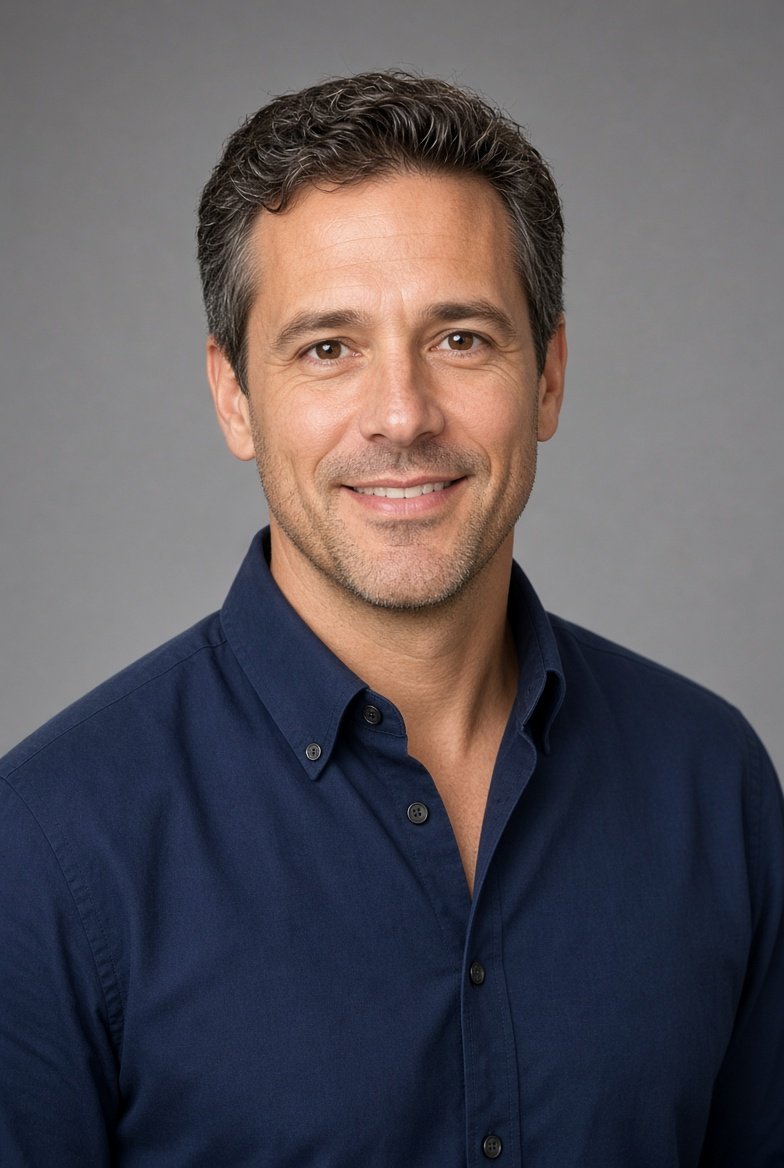
Professional Writing & Workplace Communication Expert
Marcus Hale is a business communication specialist with 11 years of experience in corporate training and professional writing. He has worked with mid-sized companies and remote teams to improve clarity in emails, reports, performance reviews, and client-facing messages.
Marcus focuses on polished, professional alternatives that help readers sound confident without sounding stiff. His guides cover workplace phrases, resume language, leadership communication, and formal-to-natural transitions. He holds a background in business administration and technical writing, and has led workshops on effective professional English.
At LandmarkNewz, Marcus creates practical synonym lists and phrasing tips that professionals can apply immediately in emails, meetings, and career documents.