“Can’t wait to see you” is a friendly and enthusiastic way to tell someone that you are very excited about seeing them soon. It expresses anticipation, warmth, and genuine interest in spending time together.
People commonly use this phrase in texts, emails, social media messages, invitations, and everyday conversations. It can describe excitement about seeing a friend, family member, coworker, date, or someone you have not seen for a while.
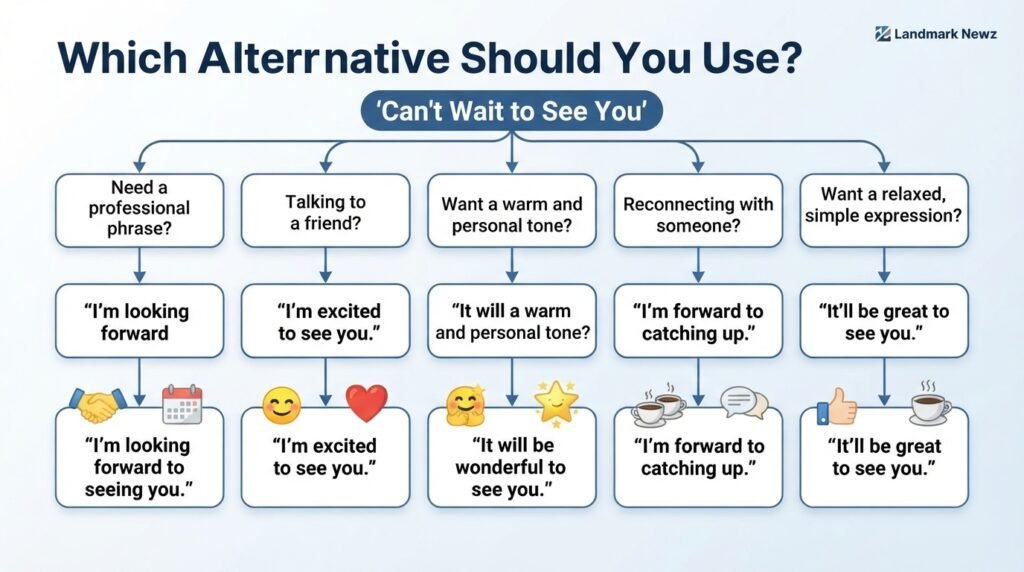
Because “can’t wait to see you” is fairly casual, you may want a different expression when writing a professional email or speaking in a more formal setting.
Why Use Other Ways to Say “Can’t Wait to See You”?
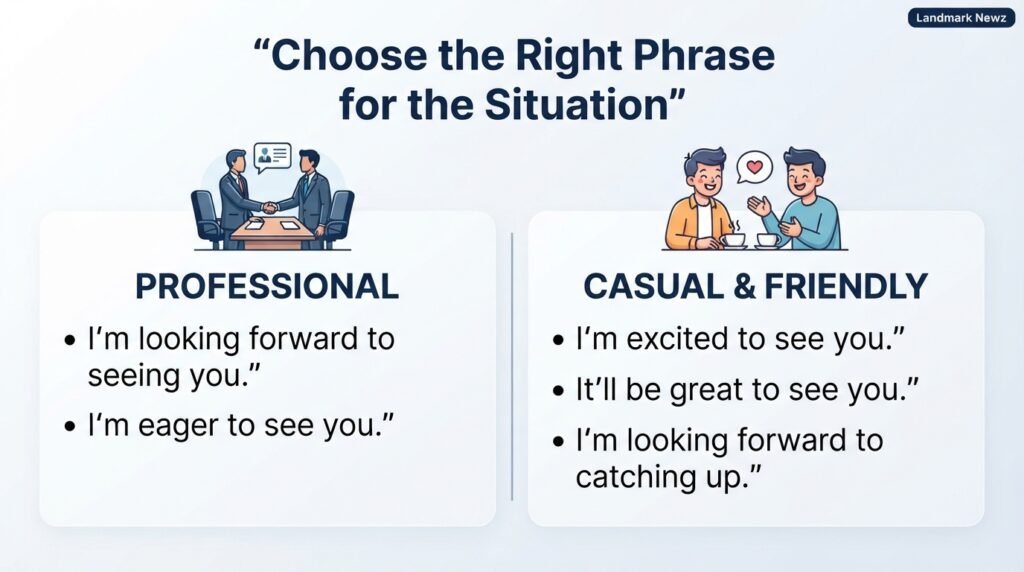
Using different expressions can help you communicate the same feeling while matching the situation more naturally.
You may want another phrase to:
- Avoid repeating the same expression.
- Sound more professional or polished.
- Show excitement without sounding overly casual.
- Make a message feel warmer and more personal.
- Match the tone of a friendship, relationship, or workplace conversation.
- Express anticipation in a more natural way.
The key is not simply finding a synonym. It is choosing wording that fits who you are speaking to, why you are meeting, and how enthusiastic you want to sound.
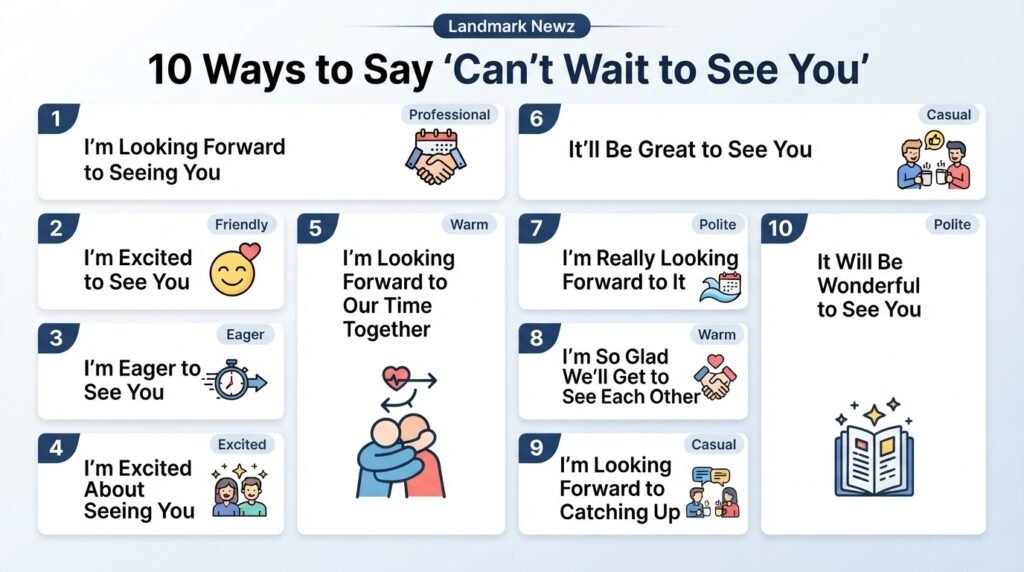
10 Best Other Ways to Say “Can’t Wait to See You”
1. I’m Looking Forward to Seeing You
Meaning
“I’m looking forward to seeing you” is a natural and widely accepted alternative. It communicates positive anticipation while sounding more polished than “can’t wait to see you.”
Best For
- Professional
- Formal
- Friendly
- Warm
- Polite
Example 1
I’m looking forward to seeing you at the conference next week.
Example 2
Thanks for making the plans—I’m really looking forward to seeing you.
Quick Tip
Use this as your safest option when you want to express excitement without sounding too casual.
2. I’m Excited to See You
Meaning
“I’m excited to see you” directly communicates enthusiasm. It feels warm and genuine without being overly formal.
Best For
- Friendly
- Casual
- Warm
- Polite
Example 1
I’m excited to see you when you arrive on Friday.
Example 2
We’ve talked about this trip for months, so I’m excited to see you in person.
Quick Tip
This works especially well when you want your message to sound enthusiastic and sincere.
3. I’m Eager to See You
Meaning
“I’m eager to see you” expresses strong anticipation in a slightly more polished way. It is less conversational than “I’m excited to see you,” but still sounds positive.
Best For
- Professional
- Formal
- Warm
- Polite
Example 1
I’m eager to see you and discuss the next steps in person.
Example 2
Everyone here is eager to see you when you return.
Quick Tip
Choose “eager” when you want to emphasize anticipation while keeping your wording professional.
4. I’m Excited About Seeing You
Meaning
This expression puts extra emphasis on the upcoming meeting itself. It sounds natural and conversational while clearly showing enthusiasm.
Best For
- Casual
- Friendly
- Warm
Example 1
I’m excited about seeing you during the holiday weekend.
Example 2
I’m really excited about seeing you after all these years.
Quick Tip
Add “really” when you want to make the emotion stronger without changing the basic meaning.
5. I’m Looking Forward to Our Time Together
Meaning
This phrase focuses not only on seeing the person but also on spending meaningful time with them. It creates a warmer and more personal tone.
Best For
- Friendly
- Warm
- Polite
- Formal
Example 1
I’m looking forward to our time together during your visit.
Example 2
Thank you for arranging the weekend; I’m looking forward to our time together.
Quick Tip
Use this when the quality of the time you will spend together matters as much as the meeting itself.
6. It’ll Be Great to See You
Meaning
“It’ll be great to see you” is relaxed, positive, and friendly. It shows that you are happy about the upcoming meeting without sounding overly enthusiastic.
Best For
- Casual
- Friendly
- Warm
Example 1
It’ll be great to see you at the family gathering.
Example 2
It’ll be great to see you again after such a long time.
Quick Tip
This is an excellent choice when you want to sound friendly but not overly emotional.
7. I’m Really Looking Forward to It
Meaning
“I’m really looking forward to it” expresses strong anticipation without repeating the word “see.” It works particularly well when both people already know what upcoming event or meeting they mean.
Best For
- Professional
- Friendly
- Casual
- Warm
Example 1
Thanks for confirming the dinner plans. I’m really looking forward to it.
Example 2
Your visit is finally coming up, and I’m really looking forward to it.
Quick Tip
Use this when the context already makes it clear that you are talking about seeing the person.
8. I’m So Glad We’ll Get to See Each Other
Meaning
This expression sounds especially warm and personal. It highlights mutual anticipation and works well when two people have been apart for some time.
Best For
- Friendly
- Warm
- Casual
Example 1
I’m so glad we’ll get to see each other during the reunion.
Example 2
After being away for so long, I’m so glad we’ll get to see each other soon.
Quick Tip
Use this with people you know well when you want your message to feel heartfelt.
9. I’m Looking Forward to Catching Up
Meaning
“I’m looking forward to catching up” suggests that you are excited to talk, share updates, and reconnect. It is particularly natural when you have not seen someone recently.
Best For
- Casual
- Friendly
- Warm
Example 1
I’m looking forward to catching up over coffee next week.
Example 2
It’s been too long, and I’m looking forward to catching up with you.
Quick Tip
Use “catching up” when conversation and reconnecting are an important part of the meeting.
10. It Will Be Wonderful to See You
Meaning
“It will be wonderful to see you” expresses strong warmth and appreciation. It is more heartfelt than “it’ll be great to see you” while remaining natural.
Best For
- Formal
- Friendly
- Warm
- Polite
Example 1
It will be wonderful to see you again when you visit town.
Example 2
It will be wonderful to see you and celebrate this special occasion together.
Quick Tip
Choose this phrase when you want to communicate genuine warmth without using highly emotional language.
Comparison Table
| Alternative | Best Used In | Tone |
| I’m Looking Forward to Seeing You | Professional, personal | Polished, warm |
| I’m Excited to See You | Friends, family, personal | Enthusiastic |
| I’m Eager to See You | Professional, formal | Polished, positive |
| I’m Excited About Seeing You | Personal conversations | Warm, enthusiastic |
| I’m Looking Forward to Our Time Together | Personal, special occasions | Warm, thoughtful |
| It’ll Be Great to See You | Friends, casual messages | Friendly, relaxed |
| I’m Really Looking Forward to It | General conversations | Positive, natural |
| I’m So Glad We’ll Get to See Each Other | Close relationships | Heartfelt, warm |
| I’m Looking Forward to Catching Up | Friends, coworkers | Friendly, casual |
| It Will Be Wonderful to See You | Personal, polite situations | Warm, sincere |
Common Mistakes
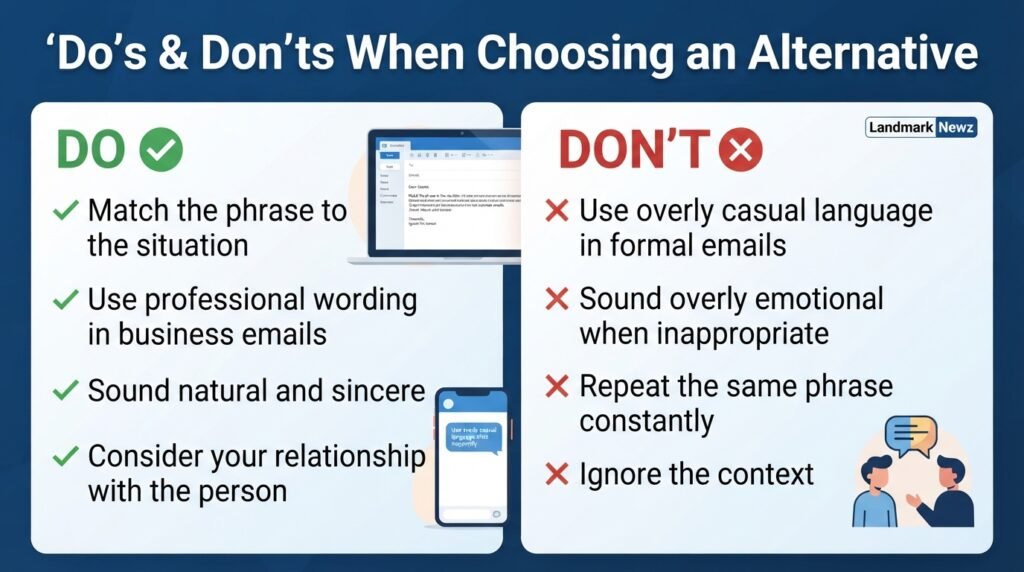
- Using casual phrases in professional emails
“Can’t wait to see you!” may feel too informal for certain business situations. “I’m looking forward to seeing you” is usually more appropriate. - Choosing overly formal language
Extremely formal wording can make a simple friendly message feel unnatural. Keep your language appropriate to the relationship. - Repeating the same phrase
Using “can’t wait to see you” in every message can make your communication sound repetitive. Rotate expressions naturally. - Forgetting the context
A phrase that works for a close friend may not work for a manager, client, or new professional contact. - Sounding insincere
Avoid exaggerated enthusiasm if it does not match your actual feelings. Natural wording is usually more effective than overly emotional language.
Frequently Asked Questions
What is a professional way to say “can’t wait to see you”?
“I’m looking forward to seeing you” is one of the best professional alternatives. It communicates enthusiasm while remaining polished and appropriate for workplace emails, meetings, interviews, conferences, and business appointments.
What is a casual way to say “can’t wait to see you”?
For casual communication, try “I’m excited to see you,” “It’ll be great to see you,” or “I’m looking forward to catching up.” These expressions sound relaxed and natural in texts and conversations with friends.
Is “I’m looking forward to seeing you” formal?
It can be formal or semi-formal depending on the context. It is common in professional emails, but it also works perfectly well in personal messages. Its flexibility makes it one of the safest alternatives to “can’t wait to see you.”
How do you say “can’t wait to see you” in a text?
In a text, you can say “I’m so excited to see you,” “Can’t wait to catch up!” or “It’ll be great to see you!” The best option depends on how close you are to the person and how enthusiastic you want to sound.
What is a romantic way to say “can’t wait to see you”?
For a romantic message, “I’m so excited to see you,” “I’m really looking forward to being with you,” or “I can’t wait until we’re together again” can sound warm and affectionate without feeling forced.
Can I say “I’m eager to see you” to a coworker?
Yes. “I’m eager to see you” is grammatically correct and can work with coworkers, especially in formal or professional settings. However, “I’m looking forward to seeing you” generally sounds more natural in everyday American workplace communication.
What is another way to say “can’t wait to see you again”?
Good options include “I’m really looking forward to seeing you again,” “It’ll be wonderful to see you again,” and “I’m excited to see you again.” Choose based on whether you want a professional, friendly, or heartfelt tone.
What is the best alternative to “can’t wait to see you”?
For most situations, “I’m looking forward to seeing you” is the best all-purpose alternative. It sounds natural, positive, and polite while working across professional, personal, and social situations.
Conclusion
Finding another way to say “can’t wait to see you” can make your message sound more natural, thoughtful, and appropriate for the situation. The best alternative depends on your relationship with the person, your tone, and how much excitement you want to express.
For professional communication, “I’m looking forward to seeing you” is a reliable choice. The phrase “look forward to” expresses positive anticipation and works well in both professional and everyday communication. For friends and family, “I’m excited to see you” or “It’ll be great to see you” feels more relaxed. If you have not seen someone for a while, “I’m looking forward to catching up” adds a friendly sense of reconnection.
The key is to choose a phrase that matches the relationship and situation. A simple, sincere expression of anticipation will usually sound more natural than wording that feels overly formal or emotional.

Professional Writing & Workplace Communication Expert
Marcus Hale is a business communication specialist with 11 years of experience in corporate training and professional writing. He has worked with mid-sized companies and remote teams to improve clarity in emails, reports, performance reviews, and client-facing messages.
Marcus focuses on polished, professional alternatives that help readers sound confident without sounding stiff. His guides cover workplace phrases, resume language, leadership communication, and formal-to-natural transitions. He holds a background in business administration and technical writing, and has led workshops on effective professional English.
At LandmarkNewz, Marcus creates practical synonym lists and phrasing tips that professionals can apply immediately in emails, meetings, and career documents.