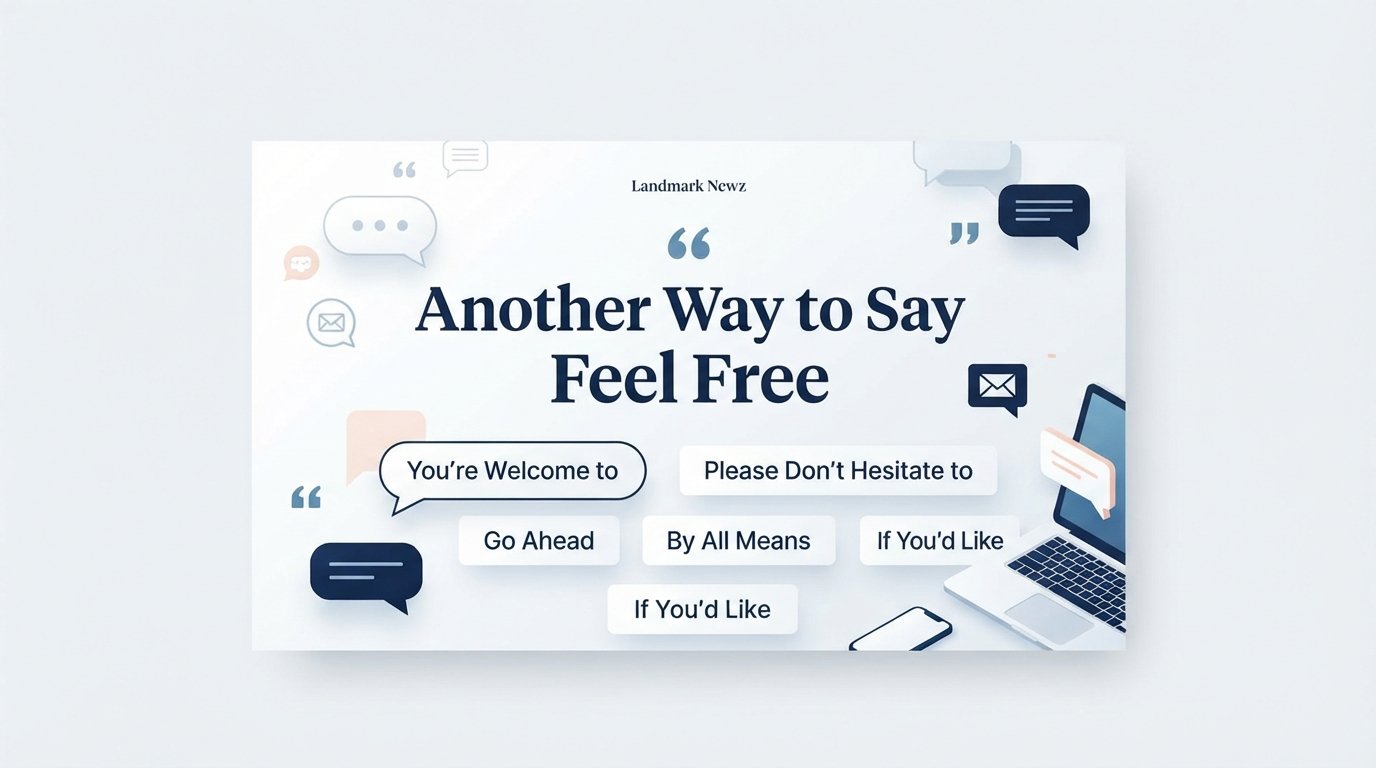
The phrase “feel free” is commonly used to give someone permission or encourage them to do something without worrying about bothering you. For example, “Feel free to contact me” tells the reader that contacting you is welcome.
People often use it in emails, workplace conversations, customer service, invitations, and everyday communication. However, repeating “feel free” too often can make your writing sound predictable, so choosing a suitable alternative can make your message more natural and specific.
Why Use Other Ways to Say “Feel Free”?
Although “feel free” is friendly and useful, another expression may better match your intended tone.
Using different phrases can help you:
- Avoid repeating the same expression.
- Make professional emails sound more polished.
- Create a warmer or more welcoming tone.
- Give clear permission without sounding demanding.
- Match your wording to formal, casual, or friendly situations.
- Make invitations and requests sound more natural.
The key is to choose an alternative based on context, not simply replace “feel free” with a random synonym.
10 Best Other Ways to Say “Feel Free”
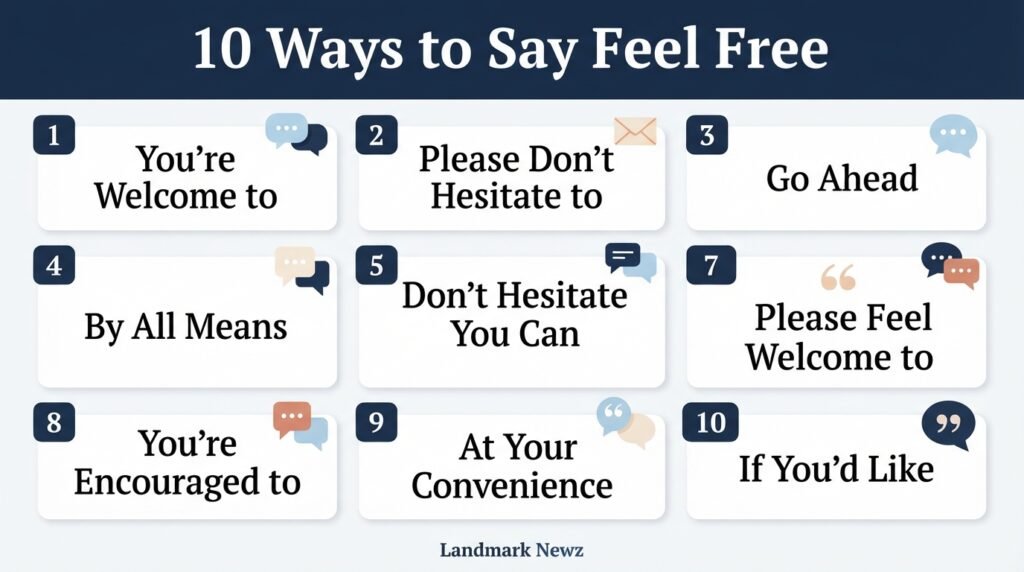
1. You’re Welcome to
Meaning
“You’re welcome to” is a polite way to tell someone that they have permission to do something. It sounds natural without being overly formal, making it one of the most versatile alternatives to “feel free.”
Best For
- Professional
- Polite
- Friendly
- Warm
Example 1
You’re welcome to reach out if you have any questions about the proposal.
Example 2
You’re welcome to join us for dinner if you’re available tonight.
Quick Tip
Use this phrase when you want to make an invitation or permission sound sincere and welcoming.
2. Please Don’t Hesitate to
Meaning
“Please don’t hesitate to” encourages someone to contact you or ask for help without feeling uncomfortable. It is especially common in professional communication because it sounds courteous and reassuring.
Best For
- Professional
- Formal
- Polite
Example 1
Please don’t hesitate to contact me if you need additional information.
Example 2
Please don’t hesitate to let our support team know if you experience any problems.
Quick Tip
This is an excellent choice for business emails, customer service messages, and professional correspondence.
3. Go Ahead
Meaning
“Go ahead” gives someone direct permission to proceed with an action. It is shorter and more conversational than “feel free,” so it works best when the situation is already clear.
Best For
- Casual
- Friendly
- Polite
Example 1
If you want to use my charger, go ahead.
Example 2
Go ahead and start without me if I’m running late.
Quick Tip
Use “go ahead” with friends, coworkers, or people you already have a comfortable relationship with.
4. By All Means
Meaning
“By all means” is a warm way to give enthusiastic permission. It can communicate more encouragement than “feel free,” especially when someone has asked whether something is acceptable.
Best For
- Friendly
- Warm
- Polite
- Formal
Example 1
“Can I bring a colleague to the meeting?” “By all means.”
Example 2
By all means, use the conference room if you need a quiet place to work.
Quick Tip
Choose this phrase when you want your permission to sound enthusiastic rather than merely acceptable.
5. Don’t Hesitate to
Meaning
“Don’t hesitate to” has a similar purpose to “please don’t hesitate to,” but it is slightly shorter and more direct. It reassures the reader that asking for assistance or getting in touch is completely acceptable.
Best For
- Professional
- Polite
- Friendly
Example 1
Don’t hesitate to call me if you need help with the installation.
Example 2
Don’t hesitate to send over any questions before Friday’s presentation.
Quick Tip
This option works particularly well when you want to sound approachable while keeping your message professional.
6. You Can
Meaning
“You can” is a simple and direct way to give permission or explain an available option. Because it is so natural, it fits many everyday situations without sounding overly formal.
Best For
- Casual
- Friendly
- Professional
- Polite
Example 1
You can stop by my office whenever you have a few minutes.
Example 2
You can use the guest Wi-Fi while you’re here.
Quick Tip
Use “you can” when clarity matters more than adding a formal or highly polished tone.
7. Please Feel Welcome to
Meaning
“Please feel welcome to” emphasizes hospitality and openness. It is useful when you want someone to know that their participation, questions, or requests are genuinely welcome.
Best For
- Warm
- Friendly
- Polite
- Formal
Example 1
Please feel welcome to share your thoughts during the discussion.
Example 2
Please feel welcome to visit our booth and speak with a member of our team.
Quick Tip
This phrase works especially well for invitations, events, hospitality, and community-focused communication.
8. You’re Encouraged to
Meaning
“You’re encouraged to” communicates that an action is recommended or welcomed. Unlike “feel free,” it can suggest that the speaker actively wants the other person to take action.
Best For
- Professional
- Formal
- Polite
Example 1
You’re encouraged to submit your feedback after completing the survey.
Example 2
Employees are encouraged to ask questions during the training session.
Quick Tip
Use this expression when you want to go beyond permission and actively recommend an action.
9. At Your Convenience
Meaning
“At your convenience” gives someone freedom to choose when they want to complete an action. It is particularly useful when you want to avoid making a request sound urgent or demanding.
Best For
- Professional
- Formal
- Polite
Example 1
Please review the attached document at your convenience.
Example 2
You may schedule a follow-up call at your convenience.
Quick Tip
This phrase focuses more on timing than permission, so use it when the other person can choose when to act.
10. If You’d Like
Meaning
“If you’d like” offers someone an option without putting pressure on them. It is softer and more conversational than many formal alternatives, making it useful for personal, workplace, and customer-facing communication.
Best For
- Casual
- Friendly
- Warm
- Polite
Example 1
If you’d like, I can send you a copy of the presentation.
Example 2
If you’d like to stay longer, we can save you a seat.
Quick Tip
Choose this phrase when you want to offer an option while giving the other person complete freedom to decide.
Comparison Table
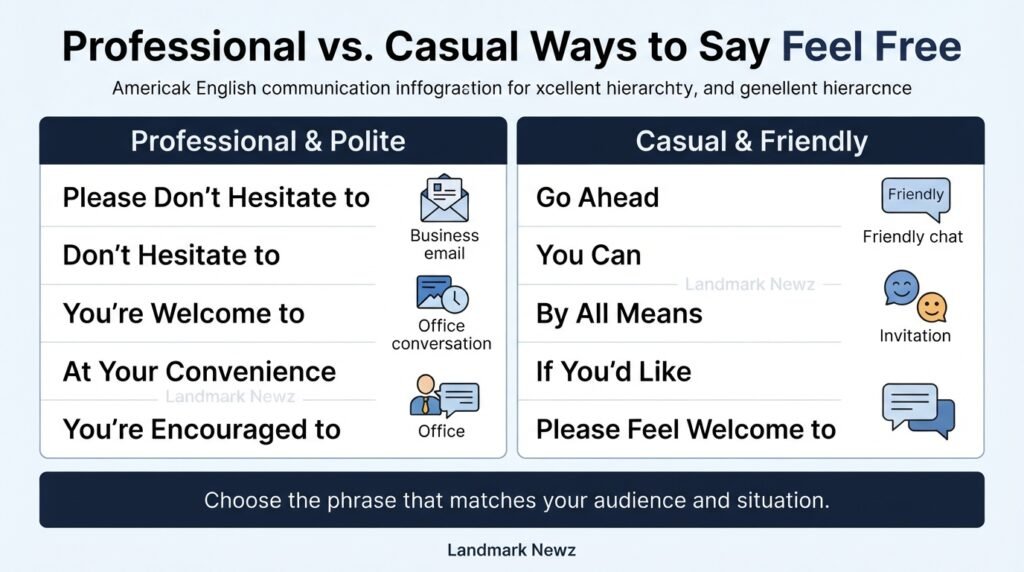
| Alternative | Best Used In | Tone |
| You’re welcome to | Emails, invitations, everyday communication | Polite and warm |
| Please don’t hesitate to | Business emails, customer service | Professional and courteous |
| Go ahead | Everyday conversations | Casual and direct |
| By all means | Permission and invitations | Warm and enthusiastic |
| Don’t hesitate to | Workplace communication | Professional and approachable |
| You can | Everyday and workplace situations | Simple and direct |
| Please feel welcome to | Invitations and hospitality | Warm and welcoming |
| You’re encouraged to | Workplace policies and instructions | Formal and supportive |
| At your convenience | Business emails and scheduling | Formal and respectful |
| If you’d like | Offers and casual communication | Friendly and flexible |
Common Mistakes
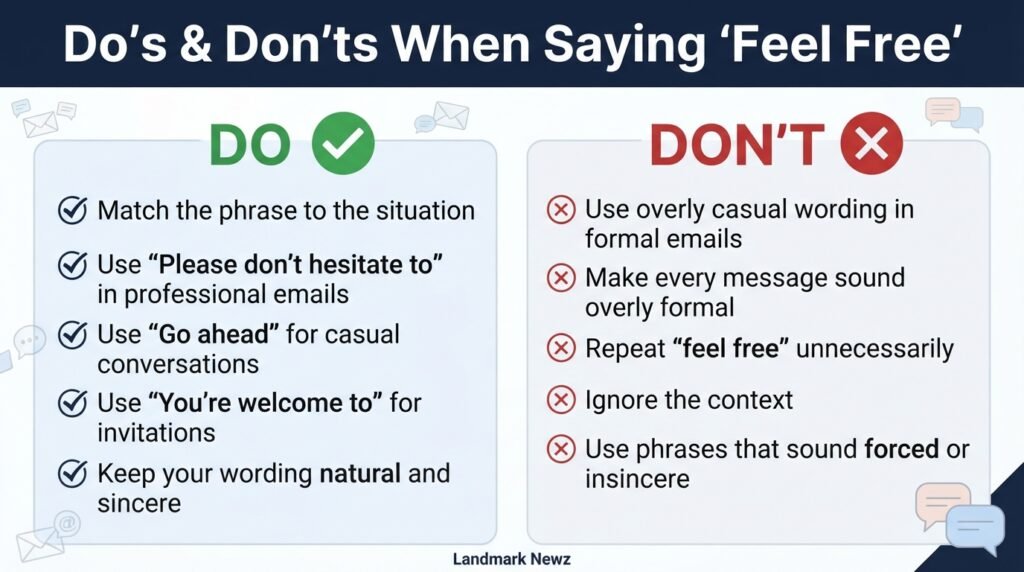
1. Using Casual Phrases in Professional Emails
Expressions such as “go ahead” may sound too relaxed in highly formal correspondence. For a client or business contact, “please don’t hesitate to” may be a better choice.
2. Choosing Overly Formal Language
Not every conversation needs formal wording. Saying “you’re encouraged to” to a close friend can sound stiff when “you can” or “go ahead” would feel more natural.
3. Repeating “Feel Free” Too Often
Using the same phrase throughout an email or article can make your writing repetitive. Varying your language when appropriate keeps communication fresh.
4. Forgetting the Context
Not every alternative means exactly the same thing. “At your convenience,” for example, focuses on timing, while “by all means” expresses enthusiastic permission.
5. Sounding Insincere
An expression can lose its warmth if the surrounding message feels cold or overly scripted. Choose wording that matches your genuine relationship with the reader.
Frequently Asked Questions
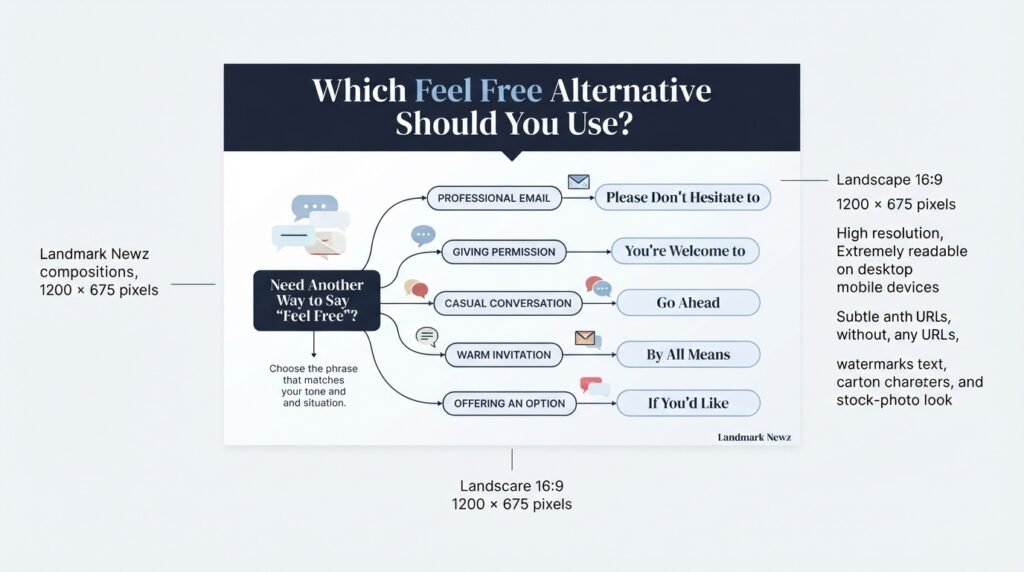
What is a professional way to say “feel free”?
A professional alternative is “please don’t hesitate to.” It works especially well when inviting someone to ask questions, contact you, or request assistance. For example, “Please don’t hesitate to contact me if you need further information” sounds polished, respectful, and appropriate for workplace emails.
What is a friendly way to say “feel free”?
Friendly alternatives include “go ahead,” “you can,” “you’re welcome to,” and “if you’d like.” The best option depends on the situation. “Go ahead” is casual and direct, while “you’re welcome to” sounds warmer and more inviting.
Is “you’re welcome to” the same as “feel free”?
They are very similar, but there can be a slight difference in tone. “Feel free” gives someone permission without hesitation, while “you’re welcome to” can sound more explicitly inviting. Both phrases work well when you want someone to know that an action is acceptable.
How do I say “feel free to contact me” professionally?
You can say “Please don’t hesitate to contact me” or “Please feel welcome to reach out.” Another polished option is “I’d be happy to assist if you have any questions.” These alternatives sound professional while still showing that you are approachable.
What can I say instead of “feel free” in an email?
In an email, consider the purpose of the sentence. Use “please don’t hesitate to” for questions or assistance, “you’re welcome to” for permission, and “at your convenience” when the recipient can choose when to act.
Is “by all means” formal or casual?
“By all means” can work in both formal and casual settings, but it often has a warm, enthusiastic quality. It is especially natural when someone asks for permission and you want to communicate a strong “yes” rather than simple acceptance.
Is “don’t hesitate to” professional?
Yes. “Don’t hesitate to” is widely suitable for professional communication. It tells the reader that contacting you or asking for help is welcome. Adding “please” makes the expression slightly more courteous: “Please don’t hesitate to reach out if you have questions.”
Which alternative to “feel free” is best for a business email?
For most business emails, “please don’t hesitate to” is a strong choice because it sounds professional, courteous, and approachable. However, “you’re welcome to” may be better for permission, while “at your convenience” is useful when discussing flexible timing.
Conclusion
There are many natural ways to say “feel free,” but the best alternative depends on your audience, purpose, and tone. For professional emails, “please don’t hesitate to” is a reliable choice, while “you’re welcome to” works well when giving permission or extending an invitation.
For casual conversations, phrases such as “go ahead” and “you can” sound simple and natural. If you want to sound especially welcoming, “by all means” or “please feel welcome to” can add warmth.
The important thing is not to replace “feel free” automatically. Instead, choose an expression that communicates exactly what you mean—whether that is permission, encouragement, an invitation, or flexibility. Choosing the right tone in business writing can make your communication clearer, more natural, and more appropriate for the situation.

Language & Everyday Communication Specialist
Elena Voss is a language enthusiast and communication coach with over 9 years of experience helping people express themselves more naturally in English. She previously worked as an ESL instructor and corporate language trainer, guiding professionals and students on clearer everyday conversations, polite alternatives, and natural phrasing.
Elena specializes in practical synonym guides and “another way to say…” content that feels conversational rather than textbook. Her writing focuses on real-life situations — emails to friends, casual workplace chat, social media, and daily interactions. She believes the best language advice is simple, useful, and easy to remember.
When she’s not creating content for LandmarkNewz, Elena enjoys analyzing modern slang trends and testing new phrases in real conversations.