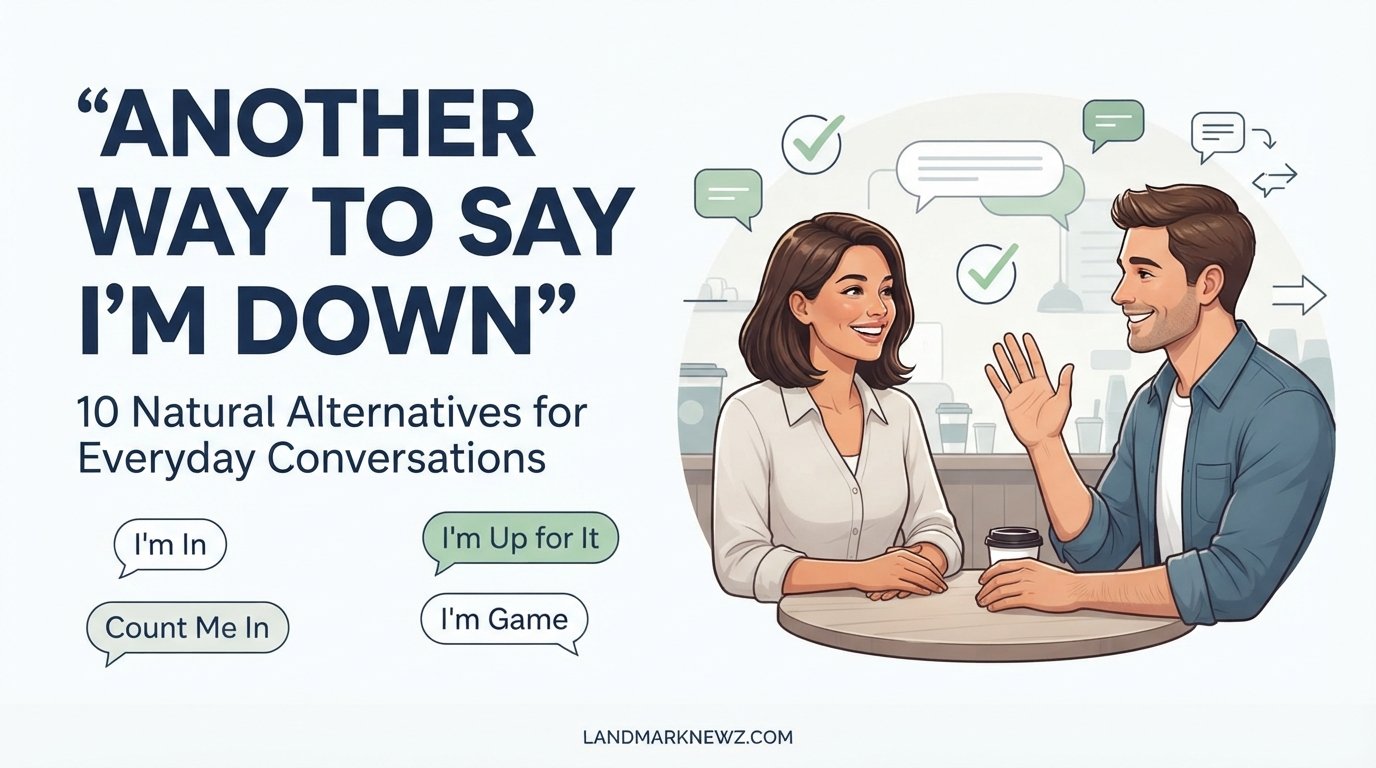
Looking for another way to say I’m down? The phrase “I’m down” is a casual way to show that you agree, want to participate, or are interested in a plan. Depending on the situation, alternatives such as “I’m in,” “count me in,” or “I’m up for it” can make your response sound more natural and appropriate.
What Does “I’m Down” Mean?
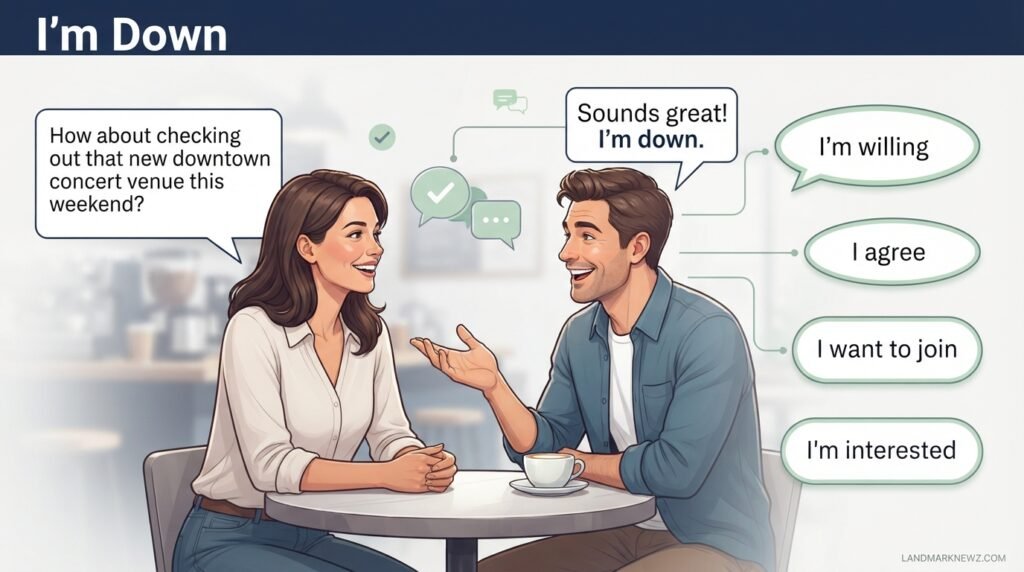
“I’m down” is a casual American English expression that usually means “I agree,” “I’m interested,” or “I want to participate.” For example, if a friend asks, “Want to grab pizza tonight?” you might answer, “I’m down.”
The phrase is common in texts, social media, conversations with friends, and other informal settings. It shows enthusiasm or willingness without sounding overly formal.
However, “I’m down” can have another meaning. Depending on the context, it can describe feeling sad, discouraged, or emotionally low, as in “I’ve been feeling down lately.” Because of this, the surrounding words and situation matter.
Why Use Another Way to Say I’m Down?
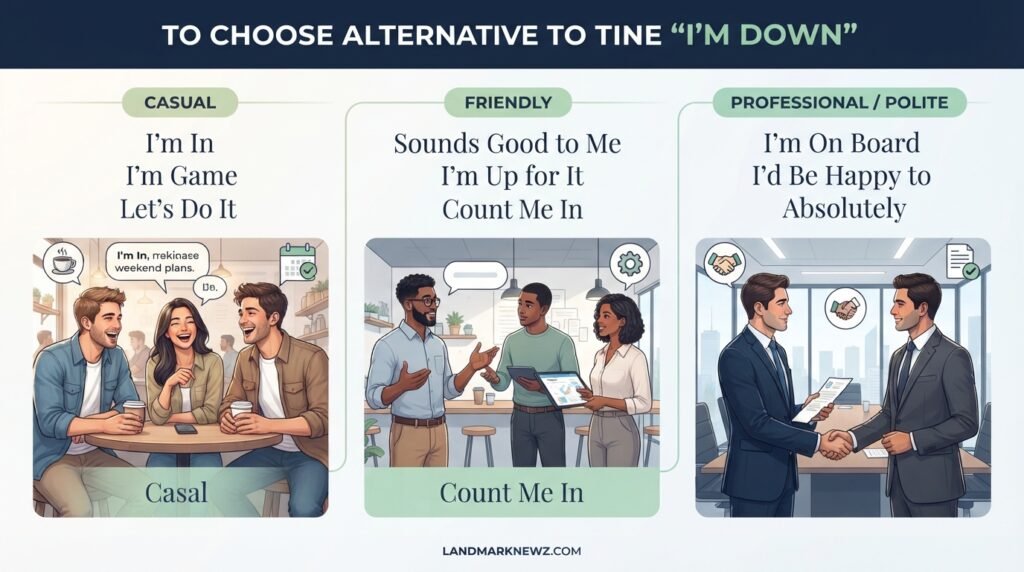
Knowing another way to say I’m down can help you choose words that fit the conversation. While “I’m down” works naturally with friends, a different expression may sound better in a professional, polite, or more enthusiastic setting.
When choosing another way to say I’m down, consider who you are talking to and how strongly you want to express your agreement.
Different alternatives can help you:
- Sound more enthusiastic about a plan.
- Make your agreement clearer.
- Match the tone of the person you are speaking with.
- Avoid repeating “I’m down.”
- Use more professional language when needed.
- Show willingness, excitement, or polite agreement more precisely.
10 Best Other Ways to Say “I’m Down”
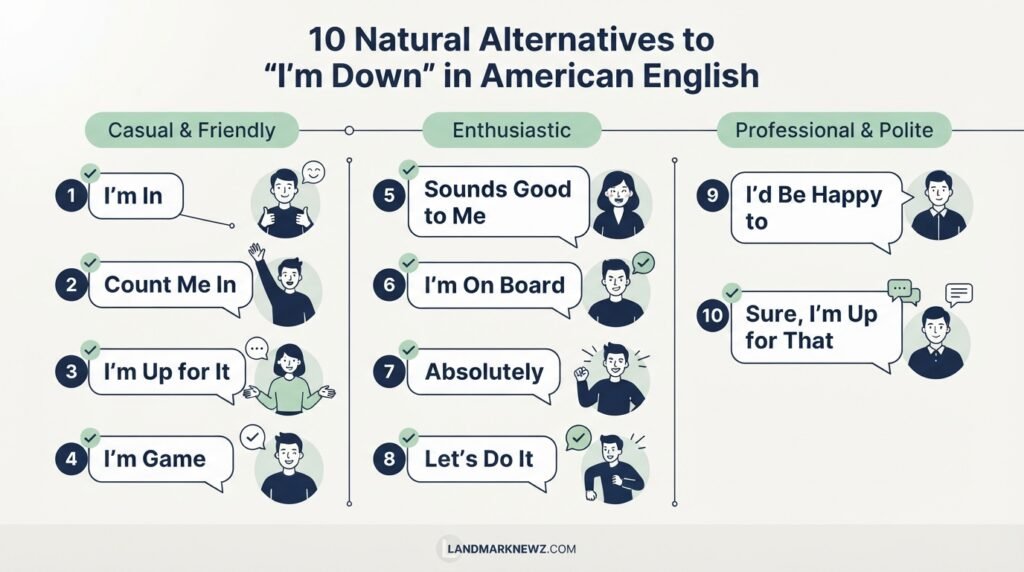
1. I’m In
Meaning
“I’m in” is one of the closest alternatives to “I’m down.” It means you agree with a plan and want to participate.
The phrase is short, confident, and natural in everyday American conversations. It works especially well when someone invites you to join an activity.
Best For
- Casual
- Friendly
- Warm
Example 1
“Everyone is going hiking Saturday morning, and I’m in.”
Example 2
“If you want to try that new restaurant tonight, I’m in.”
Quick Tip
Use “I’m in” when you want to sound enthusiastic without making your response too long.
2. Count Me In
Meaning
“Count me in” means you want to be included in a planned activity or event. It communicates clear agreement and often sounds slightly more enthusiastic than a simple “yes.”
It is a natural choice when someone is organizing a group activity.
Best For
- Casual
- Friendly
- Warm
Example 1
“You’re planning a game night next Friday? Count me in.”
Example 2
“If the team is ordering lunch, count me in for a burger.”
Quick Tip
Choose “count me in” when you want to emphasize that you definitely want to participate.
3. I’m Up for It
Meaning
“I’m up for it” means you are willing, interested, or ready to do something. It is a flexible expression that works for many everyday plans.
Unlike a strong commitment, it can sometimes suggest that you are open to the idea without sounding overly excited.
Best For
- Casual
- Friendly
- Polite
Example 1
“I’m up for it if you want to watch a movie after dinner.”
Example 2
“We could take a road trip this weekend. I’m up for it.”
Quick Tip
Use this phrase when you want to show willingness while keeping your response relaxed.
4. I’m Game
Meaning
“I’m game” means you are willing to try something or take part in an activity. It often carries a sense of adventure or openness to a new idea.
The expression is informal but widely understood in American English.
Best For
- Casual
- Friendly
Example 1
“You want to try the new escape room? I’m game.”
Example 2
“If everyone wants to go camping, I’m game.”
Quick Tip
“I’m game” works especially well when the idea is unusual, exciting, or something you have not tried before.
5. Sounds Good to Me
Meaning
“Sounds good to me” shows that you agree with a suggestion or plan. It is friendly, natural, and slightly more neutral than “I’m down.”
This phrase focuses more on approval than personal excitement.
Best For
- Casual
- Friendly
- Polite
Example 1
“Let’s meet at the coffee shop around six. Sounds good to me.”
Example 2
“We can order takeout and watch a movie. Sounds good to me.”
Quick Tip
Use this option when you want to agree without sounding overly enthusiastic.
6. I’m On Board
Meaning
“I’m on board” means you support an idea, plan, or decision. It can express agreement in both casual and professional conversations.
Because it does not sound strongly like slang, it is a useful alternative when “I’m down” feels too informal.
Best For
- Professional
- Friendly
- Polite
Example 1
“I’m on board with the new marketing plan.”
Example 2
“If everyone agrees to start earlier, I’m on board.”
Quick Tip
Use “I’m on board” for workplace discussions when you want to communicate clear support.
7. Absolutely
Meaning
“Absolutely” is a concise way to show strong agreement or willingness. Depending on the conversation, it can sound enthusiastic, confident, and positive.
It is more versatile than “I’m down” and can work in both personal and professional settings.
Best For
- Professional
- Formal
- Friendly
- Polite
Example 1
“Would you like to join us for dinner?” “Absolutely.”
Example 2
“Can you help us review the presentation?” “Absolutely.”
Quick Tip
Use “absolutely” when you want your agreement to sound confident and enthusiastic.
8. Let’s Do It
Meaning
“Let’s do it” expresses strong agreement and a willingness to move forward. It sounds energetic and decisive.
This phrase is especially useful when a group has discussed an idea and is ready to take action.
Best For
- Casual
- Friendly
- Warm
Example 1
“We’ve talked about taking a weekend trip for months. Let’s do it.”
Example 2
“You want to sign up for the cooking class together? Let’s do it.”
Quick Tip
Choose “let’s do it” when you want to show excitement and encourage action.
9. I’d Be Happy to
Meaning
“I’d be happy to” communicates willingness in a warm and polite way. It is especially useful when someone asks you to help, participate, or complete a task.
Unlike “I’m down,” this expression fits comfortably into many professional conversations.
Best For
- Professional
- Formal
- Polite
- Warm
Example 1
“Would you like to help with the client presentation?” “I’d be happy to.”
Example 2
“If you need someone to review the report, I’d be happy to help.”
Quick Tip
Use this phrase when you want to sound helpful and respectful rather than casual.
10. Sure, I’m Up for That
Meaning
“Sure, I’m up for that” combines agreement with willingness. It sounds relaxed and friendly while making it clear that you are interested in the specific suggestion.
It is a good conversational option when you want something more expressive than simply saying “sure.”
Best For
- Casual
- Friendly
- Polite
Example 1
“Want to check out the farmers market Sunday?” “Sure, I’m up for that.”
Example 2
“Would you like to grab coffee after work?” “Sure, I’m up for that.”
Quick Tip
Use this phrase when responding directly to a specific suggestion and you want to keep the conversation natural.
Comparison Table
| Alternative | Best Used In | Tone |
| I’m In | Casual conversations | Confident, enthusiastic |
| Count Me In | Group plans | Friendly, enthusiastic |
| I’m Up for It | Everyday conversations | Relaxed, willing |
| I’m Game | New or exciting ideas | Adventurous, casual |
| Sounds Good to Me | Suggestions and plans | Neutral, agreeable |
| I’m On Board | Work or group decisions | Supportive, professional |
| Absolutely | Personal or professional settings | Confident, positive |
| Let’s Do It | Plans ready for action | Energetic, decisive |
| I’d Be Happy to | Requests and offers | Warm, polite |
| Sure, I’m Up for That | Casual invitations | Friendly, relaxed |
Common Mistakes
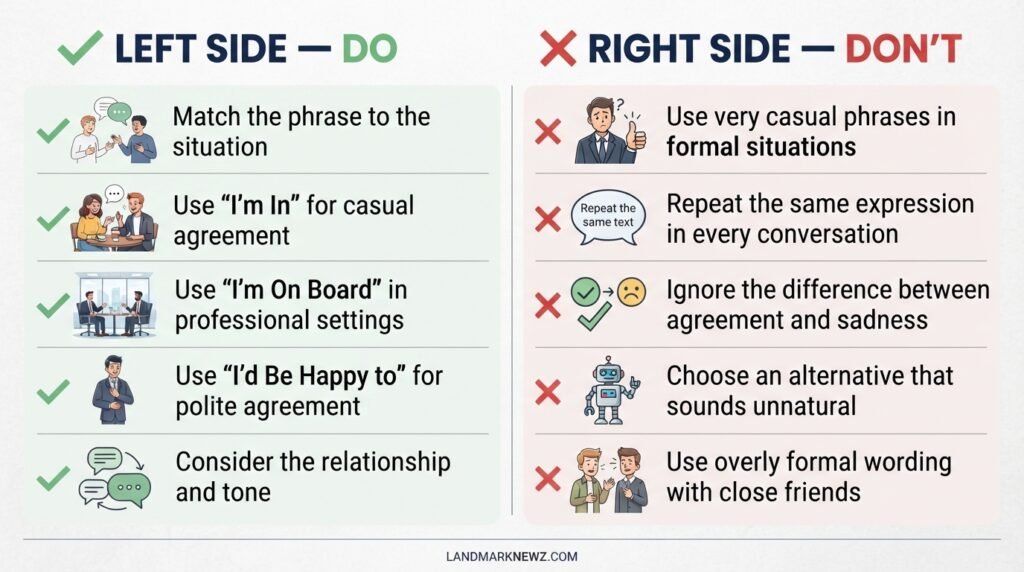
1. Using “I’m Down” in Every Situation
“I’m down” is natural, but it is strongly associated with casual speech. Using it in every setting can make professional communication sound too informal.
2. Confusing the Two Meanings
“I’m down” can mean “I agree” or “I feel sad.” For example, “I’m down to go” means willingness, while “I’m feeling down” describes a low mood.
3. Choosing an Alternative That Sounds Too Formal
Not every conversation needs polished language. Saying “I’d be delighted to participate” to a close friend may sound unnatural when “I’m in” would be much more comfortable.
4. Showing More Commitment Than You Mean
Expressions such as “Let’s do it” can sound decisive. If you are only considering an idea, “I’m up for it” may be a better choice.
5. Ignoring the Relationship
Think about who you are talking to. A phrase that works perfectly in a group chat may not be the best choice for a manager, client, professor, or business contact.
Frequently Asked Questions
What is another way to say “I’m down”?
Common alternatives include “I’m in,” “count me in,” “I’m up for it,” “I’m game,” and “sounds good to me.” These expressions generally communicate agreement or willingness to participate. The best choice depends on your relationship with the other person and how enthusiastic, casual, or professional you want to sound.
Is “I’m down” professional?
“I’m down” is usually considered informal rather than professional. It works well with friends, family, and casual conversations, but alternatives such as “I’m on board,” “absolutely,” or “I’d be happy to” are usually better for workplace communication, depending on the situation.
What is a professional way to say “I’m down”?
“I’m on board” is a strong professional alternative when you agree with an idea or plan. “I’d be happy to” works well when someone asks you to help or participate. “Absolutely” can also communicate confident agreement without sounding overly casual.
What is a friendly way to say “I’m down”?
“I’m in,” “count me in,” and “I’m up for it” are friendly alternatives. They sound natural in conversations with friends and family. “I’m in” is particularly useful when someone invites you to an activity and you want to show that you would like to participate.
Is “I’m game” the same as “I’m down”?
In many casual situations, “I’m game” and “I’m down” have a similar meaning. Both can show that you are willing to participate. However, “I’m game” often suggests that you are willing to try something new, unusual, or challenging.
Can I say “I’m down” in a text message?
Yes. “I’m down” is very common in casual text messages and online conversations in American English. For example, if a friend texts, “Want to get tacos tonight?” replying “I’m down” clearly communicates that you are interested in going.
What does “I’m down” mean when talking about feelings?
When discussing emotions, “I’m down” can mean that someone feels sad, discouraged, or low. For example, “I’ve been feeling down this week” describes an emotional state. The phrase therefore has a different meaning from “I’m down to go,” which means willingness to participate.
What is the best alternative to “I’m down”?
There is no single best alternative for every situation. “I’m in” is excellent for casual plans, “count me in” sounds enthusiastic, “I’m up for it” shows willingness, and “I’m on board” works well professionally. Choose the phrase that matches the level of enthusiasm and formality you need.
Conclusion
“I’m down” is a useful casual expression for showing agreement, interest, or willingness to participate. However, the best alternative depends on the situation and the tone you want to create.
For everyday conversations, “I’m in,” “count me in,” and “I’m up for it” are natural choices. If you are excited about trying something new, “I’m game” works well. For workplace conversations, “I’m on board,” “absolutely,” or “I’d be happy to” can sound more appropriate.
Remember that “I’m down” can also describe feeling sad, so context matters. The right phrase is not simply the closest synonym—it is the one that communicates your meaning naturally and fits the person and situation. Choosing the right tone for your audience can help make your communication clearer and more effective.

Professional Writing & Workplace Communication Expert
Marcus Hale is a business communication specialist with 11 years of experience in corporate training and professional writing. He has worked with mid-sized companies and remote teams to improve clarity in emails, reports, performance reviews, and client-facing messages.
Marcus focuses on polished, professional alternatives that help readers sound confident without sounding stiff. His guides cover workplace phrases, resume language, leadership communication, and formal-to-natural transitions. He holds a background in business administration and technical writing, and has led workshops on effective professional English.
At LandmarkNewz, Marcus creates practical synonym lists and phrasing tips that professionals can apply immediately in emails, meetings, and career documents.