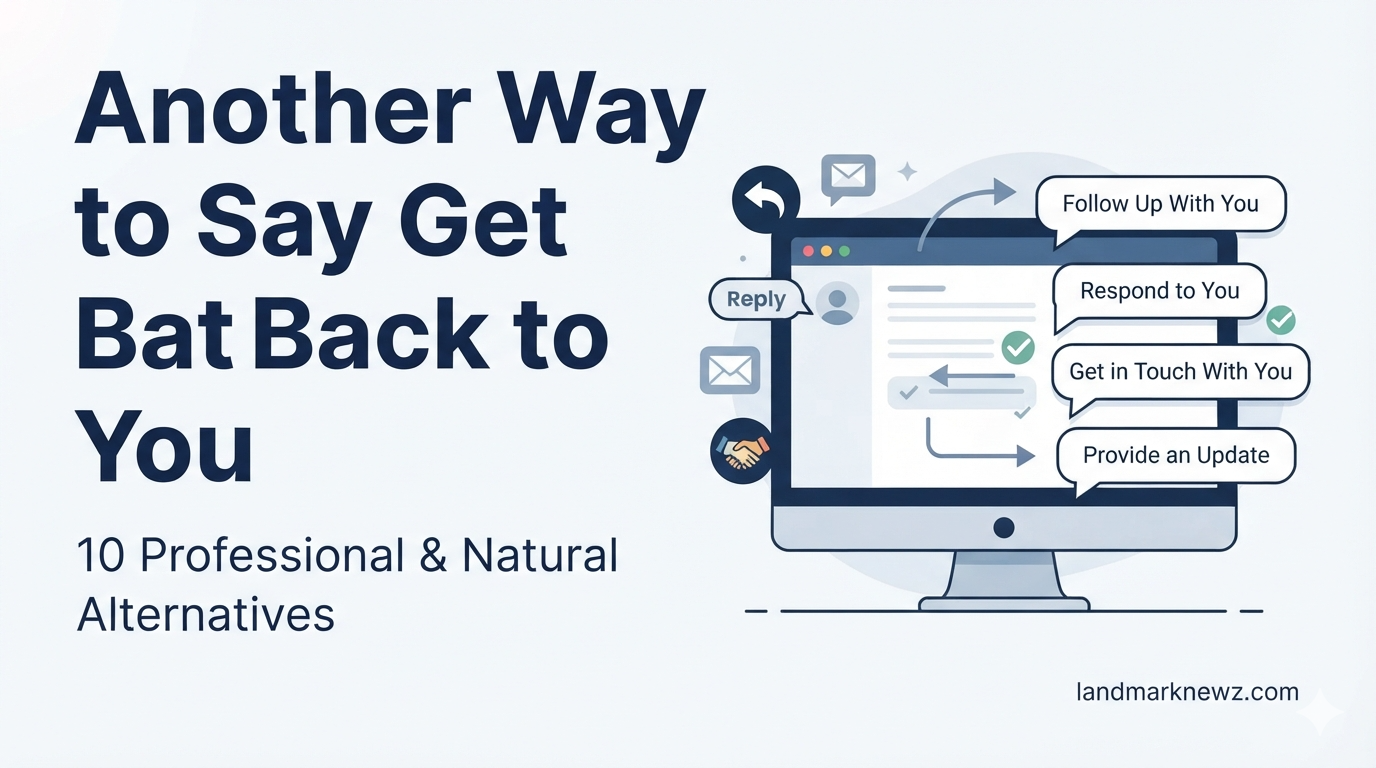
What Does “Another Way to Say Get Back to You” Mean?
“Get back to you” means contacting someone again after checking information, making a decision, or preparing an answer. It is common in everyday conversations, workplace communication, customer service, and professional emails.
For example, you might say, “I’ll get back to you tomorrow” when you need time before providing a complete response. While the phrase is perfectly natural, using alternatives can make your communication more precise and help you avoid repetition.
Why Use Other Ways to Say “Get Back to You”?
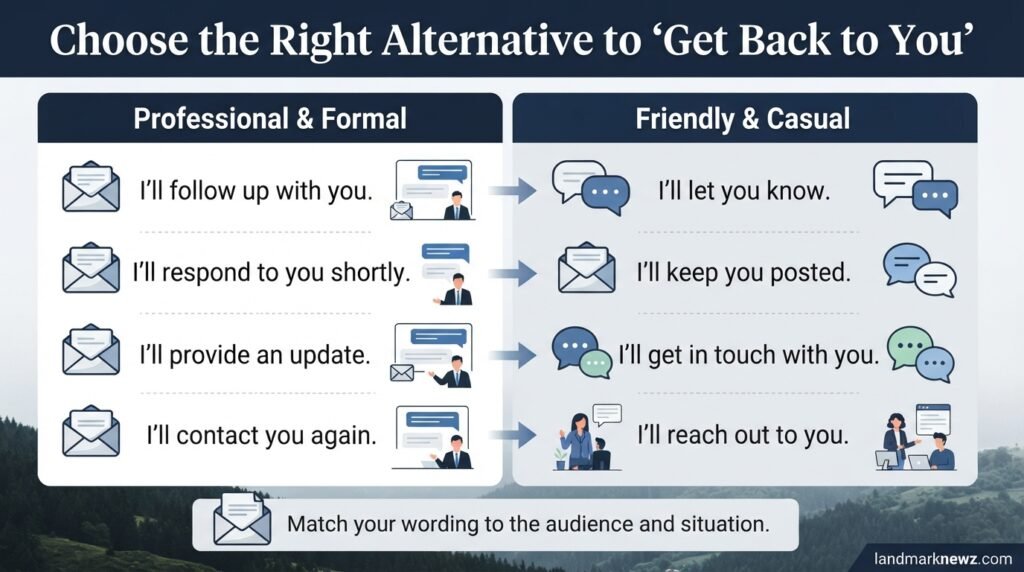
Choosing a different phrase can make your message fit the situation more naturally. For example, “follow up with you” sounds professional, while “I’ll let you know” feels more conversational.
Using alternatives can help you:
- Avoid repeating the same expression.
- Sound more polished in professional emails.
- Clearly explain what you plan to do next.
- Match formal, casual, friendly, or polite situations.
- Make your communication more specific and natural.
10 Best Other Ways to Say “Get Back to You”
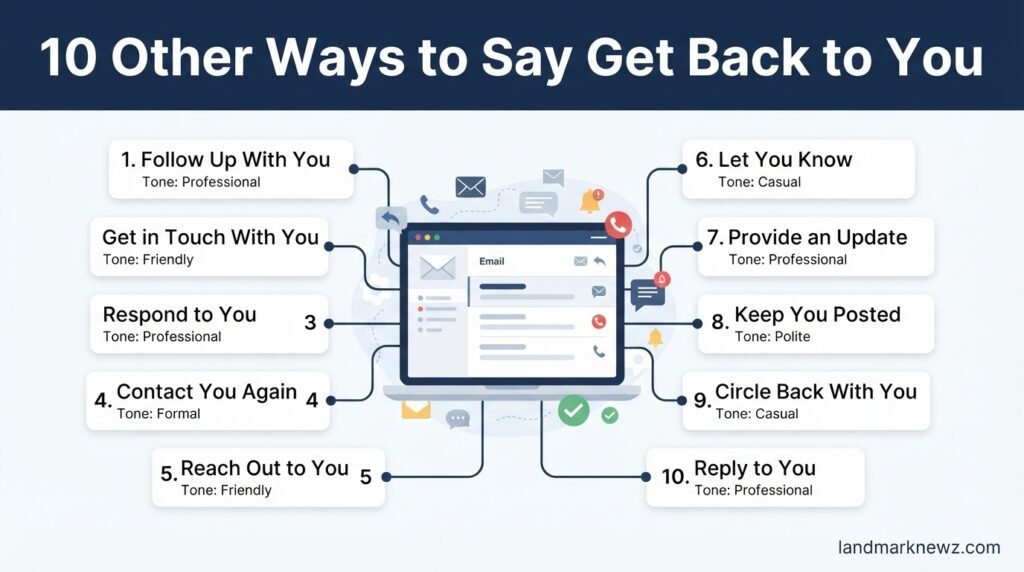
1. Follow Up With You
Meaning
“Follow up with you” means contacting someone again after an earlier conversation, request, meeting, or discussion. It is one of the most useful alternatives to “get back to you” in professional communication.
Best For
- Professional
- Formal
- Polite
Example 1
“I’ll follow up with you after I speak with the accounting team.”
Example 2
“Thanks for sending the proposal. I’ll follow up with you by Friday.”
Quick Tip
Use this phrase when there has already been some communication or when you are promising a later update.
2. Get in Touch With You
Meaning
“Get in touch with you” means contacting someone again through email, phone, text, or another method. It has a friendly, natural tone and works in both professional and personal communication.
Best For
- Professional
- Friendly
- Polite
- Casual
Example 1
“I’ll get in touch with you once I have the final schedule.”
Example 2
“Our hiring manager will get in touch with you next week.”
Quick Tip
Choose this option when you want to emphasize future contact rather than a specific response.
3. Respond to You
Meaning
“Respond to you” focuses specifically on giving someone an answer or reply. It is especially appropriate when the person has asked a question, submitted a request, or sent an email that requires a response.
Best For
- Professional
- Formal
- Polite
Example 1
“I’ll review your questions and respond to you this afternoon.”
Example 2
“Our support team will respond to you within one business day.”
Quick Tip
Use “respond” when the main purpose of the future communication is to answer or reply.
4. Contact You Again
Meaning
“Contact you again” is a straightforward and neutral way to say that you will communicate with someone in the future. It is clear without sounding too casual or overly formal.
Best For
- Professional
- Formal
- Polite
Example 1
“I’ll contact you again after we complete the review.”
Example 2
“Please expect us to contact you again if we need additional information.”
Quick Tip
This is a good choice when you want simple, direct wording without implying that you already have an answer.
5. Reach Out to You
Meaning
“Reach out to you” means making contact with someone, usually to provide information, ask a question, or continue a conversation. It is very common in modern American workplace communication.
Best For
- Professional
- Friendly
- Polite
Example 1
“I’ll reach out to you once the project timeline has been approved.”
Example 2
“Feel free to reach out to you” is incorrect; instead, say, “Feel free to reach out to me with any questions.”
Quick Tip
Be careful with pronouns. If you are the person making contact, say “I’ll reach out to you,” not “I’ll reach out to you” when the sentence subject changes.
6. Let You Know
Meaning
“Let you know” means informing someone when you have new information, a decision, or an answer. It is short, natural, and extremely common in everyday American English.
Best For
- Casual
- Friendly
- Professional
- Polite
Example 1
“I’ll let you know as soon as I hear from the client.”
Example 2
“We’re reviewing the available dates and will let you know which one works best.”
Quick Tip
This is one of the easiest alternatives when you want a simple and conversational tone.
7. Provide an Update
Meaning
“Provide an update” emphasizes sharing new information about a situation or project. It sounds professional and is particularly useful in business emails, project management, and customer communication.
Best For
- Professional
- Formal
- Polite
Example 1
“I’ll provide an update after tomorrow’s planning meeting.”
Example 2
“We’ll provide an update when the shipment reaches our distribution center.”
Quick Tip
Use this phrase when the person is expecting progress information rather than a simple yes-or-no answer.
8. Keep You Posted
Meaning
“Keep you posted” means regularly informing someone as new information becomes available. It suggests an ongoing flow of updates rather than one future response.
Best For
- Casual
- Friendly
- Professional
Example 1
“I’ll keep you posted as we receive updates from the vendor.”
Example 2
“Keep me posted if anything changes with the event schedule.”
Quick Tip
This phrase is friendly and common, but choose a more formal alternative for highly formal correspondence.
9. Circle Back With You
Meaning
“Circle back with you” means returning to a conversation or issue later, usually after gathering information or considering a decision. It is common in American business settings.
Best For
- Professional
- Polite
Example 1
“I’ll circle back with you after I discuss the budget with my manager.”
Example 2
“Let’s circle back with you next week once we have the updated figures.”
Quick Tip
Because “circle back” is business jargon, avoid overusing it when a simpler phrase such as “follow up” would be clearer.
10. Reply to You
Meaning
“Reply to you” means sending an answer or response, usually to a message or email. It is direct and easy to understand, making it useful when you want to clearly communicate that a response is coming.
Best For
- Professional
- Formal
- Polite
Example 1
“I’ll reply to you as soon as I’ve reviewed the attached documents.”
Example 2
“Thank you for your question. I’ll reply to you after confirming the details.”
Quick Tip
Use “reply” when responding to a particular message; use “contact” or “get in touch” when the method or purpose of communication is broader.
Comparison Table
| Alternative | Best Used In | Tone |
| Follow up with you | Work emails, business communication | Professional |
| Get in touch with you | General communication | Friendly, polite |
| Respond to you | Questions and requests | Formal, professional |
| Contact you again | Business and formal messages | Neutral |
| Reach out to you | Workplace communication | Professional, friendly |
| Let you know | Everyday and workplace conversations | Casual, polite |
| Provide an update | Projects and status reports | Professional |
| Keep you posted | Ongoing updates | Friendly, casual |
| Circle back with you | Business discussions | Professional |
| Reply to you | Emails and direct messages | Formal, polite |
Common Mistakes
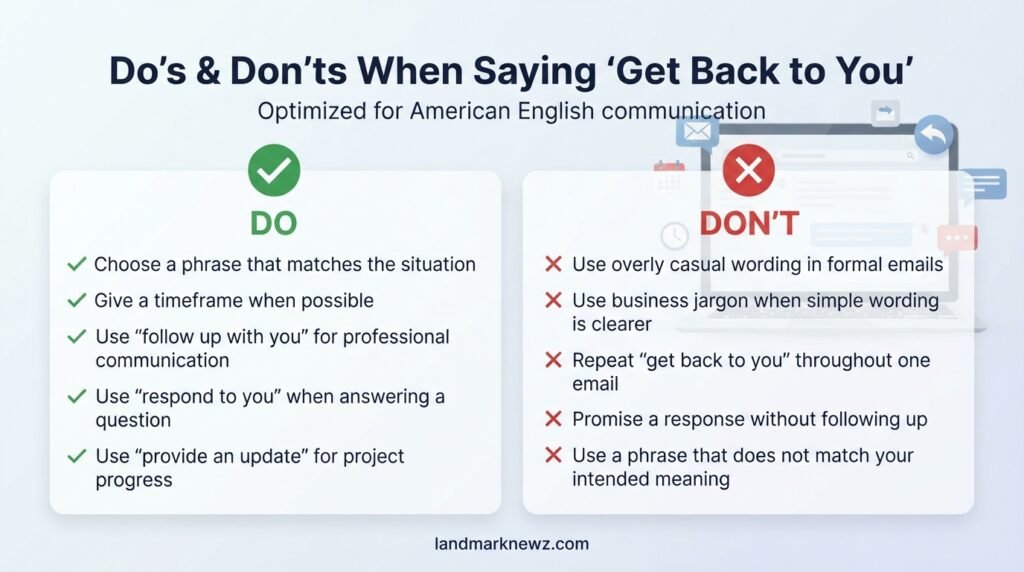
1. Using Casual Phrases in Formal Emails
Phrases such as “keep you posted” can sound too relaxed in highly formal correspondence. When writing to a client, executive, or official organization, “I’ll follow up with you” may be a better choice.
2. Choosing Overly Formal Language
Not every message needs corporate-sounding language. Saying “I’ll provide a further response regarding this matter” can sound stiff when “I’ll get back to you” would be perfectly clear.
3. Repeating the Same Phrase
Using “get back to you” several times in the same email can make your writing feel repetitive. Switch to alternatives such as “follow up,” “respond,” or “provide an update” when the meaning fits.
4. Forgetting the Context
Not every alternative means exactly the same thing. “Keep you posted” suggests ongoing updates, while “respond to you” usually means answering a specific message or question.
5. Sounding Vague
Simply saying “I’ll get back to you” may leave the reader wondering when they will hear from you. When possible, provide a timeframe, such as “I’ll follow up with you by Thursday.”
Frequently Asked Questions
What is a professional way to say “I’ll get back to you”?
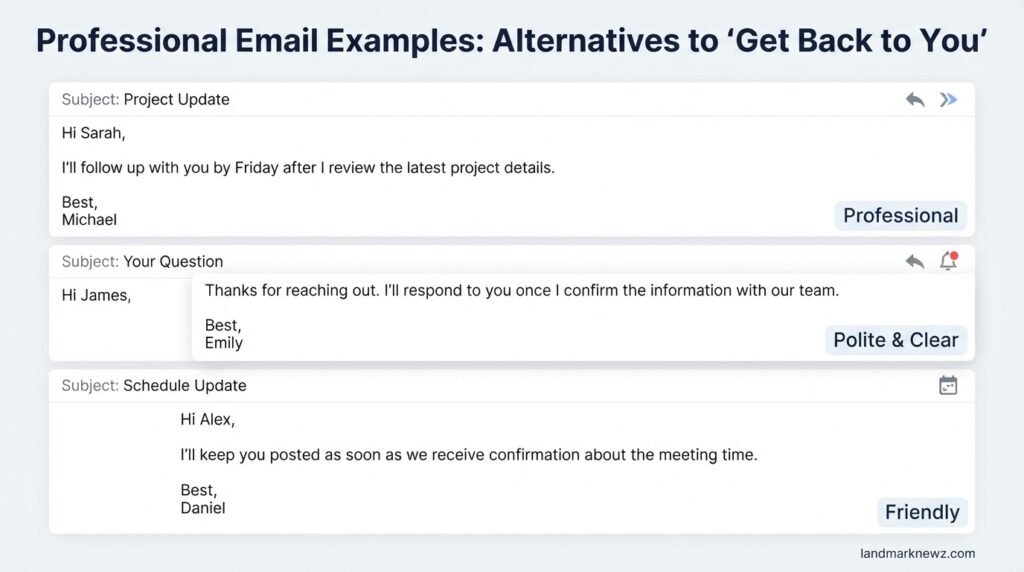
“I’ll follow up with you” is one of the best professional alternatives. Other strong choices include “I’ll respond shortly,” “I’ll provide an update,” and “I’ll contact you again.” If possible, add a timeframe to make the message more useful, such as “I’ll follow up with you by the end of the day.”
Is “I’ll get back to you” professional?
Yes. “I’ll get back to you” is professional, natural, and widely used in American workplace communication. However, it can sometimes be vague. For a more precise message, you can say “I’ll follow up with you tomorrow” or “I’ll respond once I’ve reviewed the information.”
What is another way to say “I will get back to you”?
You can say “I’ll follow up with you,” “I’ll get in touch with you,” “I’ll respond to you,” “I’ll contact you again,” or “I’ll let you know.” The best option depends on whether you are promising an answer, an update, or simply future contact.
How do you say “get back to you” in an email?
In a professional email, you could write, “I’ll follow up with you after reviewing the details.” For a more direct response, use “I’ll respond to you shortly.” If you are sharing future information, “I’ll provide an update by Friday” is especially clear.
Is “I’ll follow up with you” better than “I’ll get back to you”?
Neither is always better. “I’ll follow up with you” sounds slightly more business-oriented and works well when continuing an existing discussion. “I’ll get back to you” is more general and natural in both professional and casual conversations.
What is a polite way to say you will respond later?
A polite option is, “I’ll follow up with you as soon as I have more information.” You can also say, “I’ll respond once I’ve had a chance to review this.” These phrases acknowledge the request while clearly explaining that you need additional time.
Can I use “circle back” instead of “get back to you”?
Yes, but “circle back” is mainly associated with workplace and business communication. It means returning to a topic later, often after gathering information or discussing it with others. For simpler and more natural writing, “follow up with you” is usually the stronger choice.
How can I make “I’ll get back to you” more specific?
Add a clear timeframe or explain what you need to do first. For example, instead of “I’ll get back to you,” write, “I’ll review the contract and follow up with you by Wednesday.” This gives the reader a better idea of what to expect.
Conclusion
There are many natural alternatives to “get back to you,” and the best choice depends on your situation. For professional emails, “follow up with you” is a reliable option because it sounds polished without being stiff. If you are answering a question, “respond to you” or “reply to you” may be more precise.
For friendly communication, “get in touch with you,” “let you know,” and “keep you posted” work well. Meanwhile, “provide an update” is ideal for projects, deadlines, and status reports.
Most importantly, consider what you are actually promising: an answer, an update, or future contact. When possible, include a timeframe so your message is clear and useful. Considering your audience and communication needs can also help you choose wording that sounds natural, confident, and appropriate.

Professional Writing & Workplace Communication Expert
Marcus Hale is a business communication specialist with 11 years of experience in corporate training and professional writing. He has worked with mid-sized companies and remote teams to improve clarity in emails, reports, performance reviews, and client-facing messages.
Marcus focuses on polished, professional alternatives that help readers sound confident without sounding stiff. His guides cover workplace phrases, resume language, leadership communication, and formal-to-natural transitions. He holds a background in business administration and technical writing, and has led workshops on effective professional English.
At LandmarkNewz, Marcus creates practical synonym lists and phrasing tips that professionals can apply immediately in emails, meetings, and career documents.