What Does “Another Way to Say Go With the Flow” Mean?
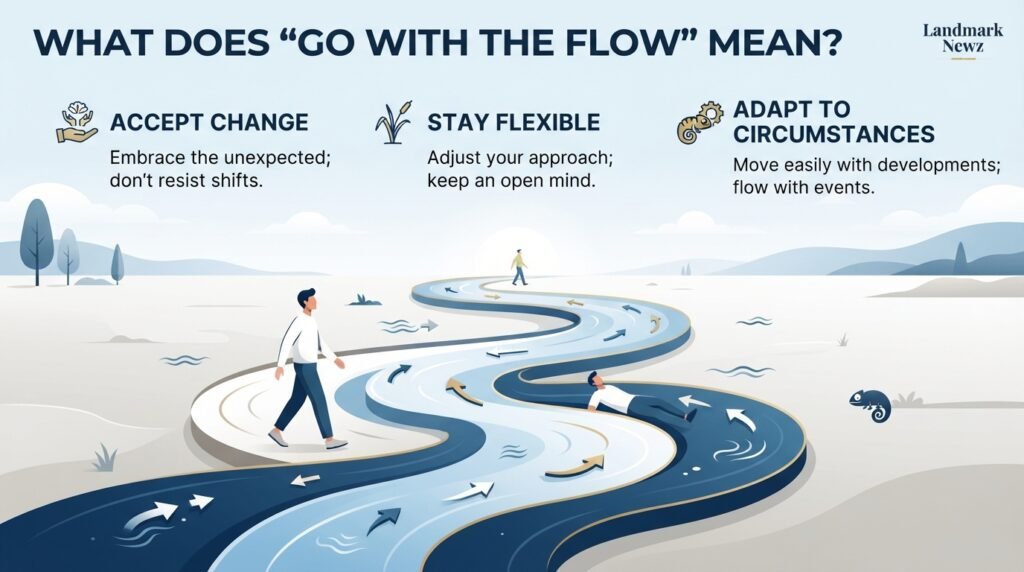
The phrase “go with the flow” means accepting circumstances as they happen instead of trying to control every detail. It often describes someone who stays relaxed, flexible, and open when plans change.
For example, if your friends have not decided where to eat, you might say, “I’m happy to go with the flow.” The phrase is common in everyday conversations, travel plans, social situations, relationships, and discussions about personal attitudes.
People often search for another way to say “go with the flow” because they want a phrase that sounds less repetitive or better matches a particular situation. A professional email, friendly text, and thoughtful conversation may each call for a different expression.
Why Use Other Ways to Say “Go With the Flow”?
Using different expressions can make your communication more precise and natural. While “go with the flow” is friendly and familiar, it may sound too casual in some professional or formal situations.
Other alternatives can help you:
- Avoid repeating the same expression.
- Match your words to the situation.
- Sound more professional when needed.
- Show flexibility without sounding passive.
- Express a relaxed or positive attitude.
- Communicate adaptability more clearly.
The key is not simply finding a synonym. Instead, choose a phrase that communicates the exact attitude you want to express.
10 Best Other Ways to Say “Go With the Flow”
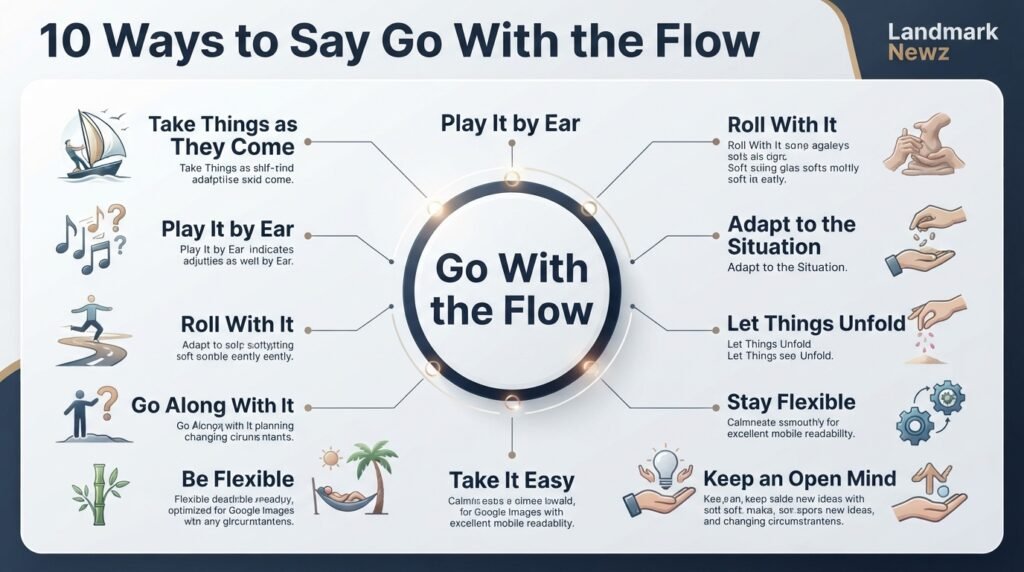
1. Take Things as They Come
Meaning
“Take things as they come” means dealing with events one at a time instead of worrying too much about what might happen. It closely matches the meaning of “go with the flow” and suggests a calm, practical attitude.
Best For
- Casual
- Friendly
- Warm
- Polite
Example 1
I don’t have a detailed plan for the weekend, so I’ll just take things as they come.
Example 2
She prefers to take things as they come rather than stress about every possible outcome.
Quick Tip
Use this when you want to emphasize staying calm and handling situations as they develop.
2. Play It by Ear
Meaning
“Play it by ear” means deciding what to do based on how a situation develops rather than making a firm plan ahead of time. It is especially useful when circumstances are uncertain.
Best For
- Casual
- Friendly
Example 1
We haven’t decided where we’re going after dinner, so let’s play it by ear.
Example 2
The weather may change, so we’ll play it by ear tomorrow.
Quick Tip
This phrase works best when you are talking about plans that may change.
3. Roll With It
Meaning
“Roll with it” means accepting an unexpected change and adjusting without becoming upset. It has a relaxed, upbeat tone and is common in everyday American English.
Best For
- Casual
- Friendly
- Warm
Example 1
The restaurant lost our reservation, but we decided to roll with it and find another place.
Example 2
Things didn’t go according to plan during the presentation, so I just rolled with it.
Quick Tip
Use “roll with it” when you want to show that you can handle surprises with a positive attitude.
4. Adapt to the Situation
Meaning
“Adapt to the situation” focuses on flexibility and making adjustments when circumstances change. Unlike some casual alternatives, it sounds professional and highlights practical problem-solving.
Best For
- Professional
- Formal
- Polite
Example 1
Good managers know how to adapt to the situation when priorities suddenly change.
Example 2
Our team is prepared to adapt to the situation as new information becomes available.
Quick Tip
Choose this phrase for resumes, workplace conversations, interviews, and professional writing.
5. Let Things Unfold
Meaning
“Let things unfold” means allowing events to develop naturally instead of forcing a particular result. It can sound more thoughtful and reflective than “go with the flow.”
Best For
- Formal
- Warm
- Friendly
Example 1
We don’t need to make a decision today; let’s let things unfold naturally.
Example 2
I’m trying to let things unfold instead of worrying about what comes next.
Quick Tip
This is a good choice when discussing relationships, life decisions, or uncertain situations.
6. Stay Flexible
Meaning
“Stay flexible” means remaining open to changes and being willing to adjust your plans. It is direct, useful, and widely understood in both personal and professional settings.
Best For
- Professional
- Casual
- Formal
- Polite
Example 1
We’ll stay flexible in case the client needs to change the meeting time.
Example 2
When traveling, it’s helpful to stay flexible and leave room for unexpected opportunities.
Quick Tip
Use this when you want to emphasize adaptability rather than simply being relaxed.
7. Take It Easy
Meaning
“Take it easy” can mean relaxing, avoiding unnecessary stress, or not worrying too much about circumstances. It does not always have exactly the same meaning as “go with the flow,” but it works when the focus is on staying relaxed.
Best For
- Casual
- Friendly
- Warm
Example 1
There’s no need to rush the decision, so take it easy and see what happens.
Example 2
I’m going to take it easy this weekend and enjoy whatever comes up.
Quick Tip
Use this expression when relaxation is more important than adaptability.
8. Keep an Open Mind
Meaning
“Keep an open mind” means being willing to consider different possibilities without immediately rejecting them. It emphasizes openness rather than simply accepting events.
Best For
- Professional
- Formal
- Friendly
- Polite
Example 1
Keep an open mind during the interview process because new opportunities may appear.
Example 2
I wasn’t sure about the idea at first, but I decided to keep an open mind.
Quick Tip
This phrase is ideal when you want to encourage someone to consider unexpected options.
9. Go Along With It
Meaning
“Go along with it” means accepting a plan, idea, or situation rather than resisting it. Depending on context, it can suggest cooperation or simply deciding not to object.
Best For
- Casual
- Friendly
- Polite
Example 1
My friends wanted to try a new hiking trail, so I decided to go along with it.
Example 2
I wasn’t completely convinced by the plan, but I decided to go along with it.
Quick Tip
Use this when you want to communicate acceptance of someone else’s idea or decision.
10. Be Flexible
Meaning
“Be flexible” means being willing to change your plans, expectations, or approach when circumstances require it. It is one of the clearest alternatives when the main idea is adaptability.
Best For
- Professional
- Formal
- Casual
- Polite
Example 1
Please be flexible with the schedule because the project timeline may change.
Example 2
I’m happy to be flexible if you need to choose a different meeting time.
Quick Tip
“Be flexible” is a strong choice for workplace communication because it sounds clear and professional.
Comparison Table
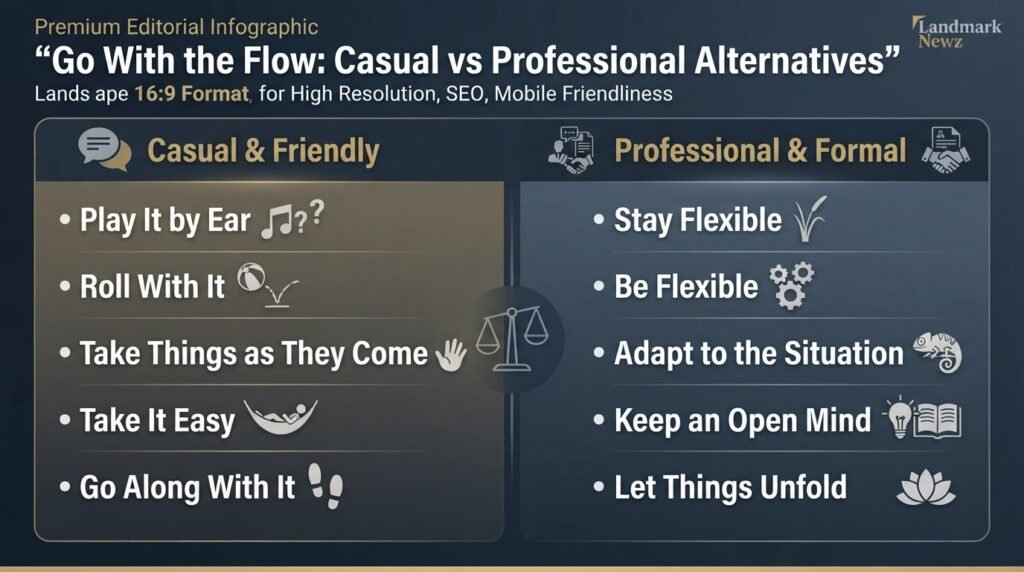
| Alternative | Best Used In | Tone |
| Take things as they come | Everyday conversations | Relaxed, calm |
| Play it by ear | Informal plans | Casual, spontaneous |
| Roll with it | Unexpected changes | Relaxed, upbeat |
| Adapt to the situation | Workplace and formal settings | Professional, practical |
| Let things unfold | Personal or reflective conversations | Thoughtful, calm |
| Stay flexible | Work and everyday situations | Professional, adaptable |
| Take it easy | Relaxed conversations | Casual, friendly |
| Keep an open mind | Advice and decision-making | Positive, thoughtful |
| Go along with it | Social situations | Casual, cooperative |
| Be flexible | Professional and personal settings | Clear, adaptable |
Common Mistakes
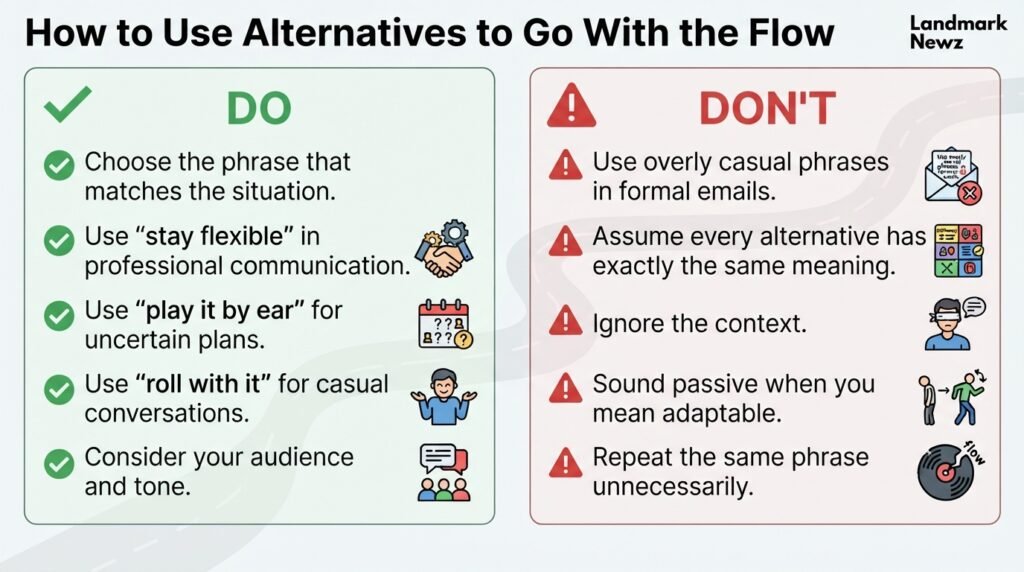
1. Using a Casual Phrase in a Professional Setting
Phrases such as “roll with it” and “play it by ear” sound natural with friends but may feel too informal in a business email. Choose “stay flexible” or “adapt to the situation” when professionalism matters.
2. Assuming Every Alternative Has the Same Meaning
These expressions overlap, but they are not identical. “Take it easy” focuses on relaxation, while “be flexible” emphasizes adaptability. Consider the exact message before choosing a replacement.
3. Choosing Overly Formal Language
You do not need a complicated expression when a simple one works. In everyday conversation, “take things as they come” may sound much more natural than a formal phrase about adapting to circumstances.
4. Ignoring Context
The best phrase depends on what is happening. If plans are uncertain, “play it by ear” may be ideal. If circumstances suddenly change, “roll with it” may communicate your meaning better.
5. Sounding Too Passive
“Go with the flow” can sometimes suggest simply accepting whatever happens. When you want to show active problem-solving, use “adapt to the situation” or “stay flexible” instead.
Frequently Asked Questions
What is the best another way to say “go with the flow”?
One of the closest alternatives is “take things as they come.” It communicates the idea of accepting circumstances without worrying too much about controlling the outcome. For casual plans, “play it by ear” also works well, while “stay flexible” is usually better for professional communication.
What is a professional way to say “go with the flow”?
A professional alternative is “stay flexible” or “adapt to the situation.” Both phrases communicate that you can adjust when circumstances change. For example, you could say, “We need to stay flexible as the project develops.” These options sound more workplace-appropriate than the casual phrase “go with the flow.”
Is “play it by ear” the same as “go with the flow”?
They are similar but not exactly the same. “Go with the flow” usually means accepting circumstances as they happen, while “play it by ear” often means waiting to see how a situation develops before deciding what to do. Both can describe flexible approaches to uncertain plans.
What is a casual way to say “go with the flow”?
Common casual alternatives include “roll with it,” “play it by ear,” and “take things as they come.” “Roll with it” is especially natural when something unexpected happens and you want to show that you are not bothered by the change.
What does “take things as they come” mean?
“Take things as they come” means handling events one at a time instead of worrying about everything that could happen in the future. It suggests staying calm, accepting uncertainty, and responding to circumstances as they develop rather than trying to control every detail.
How do you say “go with the flow” in a positive way?
You can say “stay flexible,” “keep an open mind,” or “let things unfold.” These alternatives can give the idea a more intentional and positive tone. They suggest that you are comfortable with uncertainty while remaining open to new possibilities and changes.
What is a better phrase than “go with the flow” for a resume?
For a resume, avoid the casual phrase “go with the flow.” Instead, use professional wording such as “adaptable,” “flexible,” “responsive to change,” or “able to adapt to changing priorities.” These expressions communicate the same general strength while sounding more specific and professional.
Can “go with the flow” sound unprofessional?
Yes, depending on the situation. The phrase is perfectly natural in casual conversation, but it can sound vague or overly relaxed in a resume, cover letter, business email, or interview. In professional communication, phrases such as “adapt to changing circumstances” make the intended skill clearer.
Conclusion
Finding another way to say “go with the flow” is useful when you want your language to sound more precise, natural, or appropriate for a particular situation. “Take things as they come” is an excellent general alternative, while “play it by ear” works well for uncertain plans.
For unexpected changes, “roll with it” has a friendly and relaxed feel. In professional settings, “stay flexible,” “be flexible,” and “adapt to the situation” communicate adaptability more clearly. If you want a thoughtful tone, “let things unfold” or “keep an open mind” may be a better fit.
Ultimately, the best expression depends on your audience, purpose, and tone. Choose the phrase that communicates not only flexibility but also the attitude you want your reader or listener to understand. For the original idiom’s definition and usage, explore the meaning of go with the flow in the Cambridge Dictionary.
About Dr. Priya Nair
Dr. Priya Nair is a passionate Writer & Blogger at LandMarkNewz.com, dedicated to creating informative, engaging, and easy-to-understand content for readers. With a strong interest in research, current trends, lifestyle, and everyday topics, she focuses on presenting useful information in a clear and reader-friendly way.
Through her writing, Priya aims to help readers discover valuable insights, understand complex topics more easily, and stay informed about subjects that matter to them. Her approach combines thoughtful research with a simple and engaging writing style.
At LandMarkNewz.com, she contributes original articles designed to inform, educate, and provide practical value to readers.