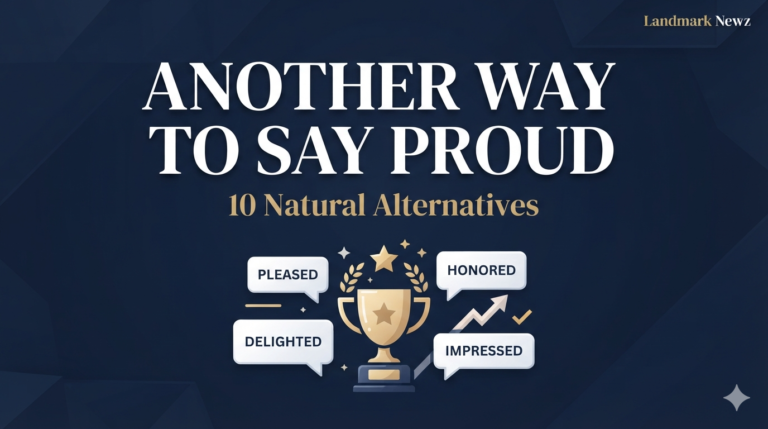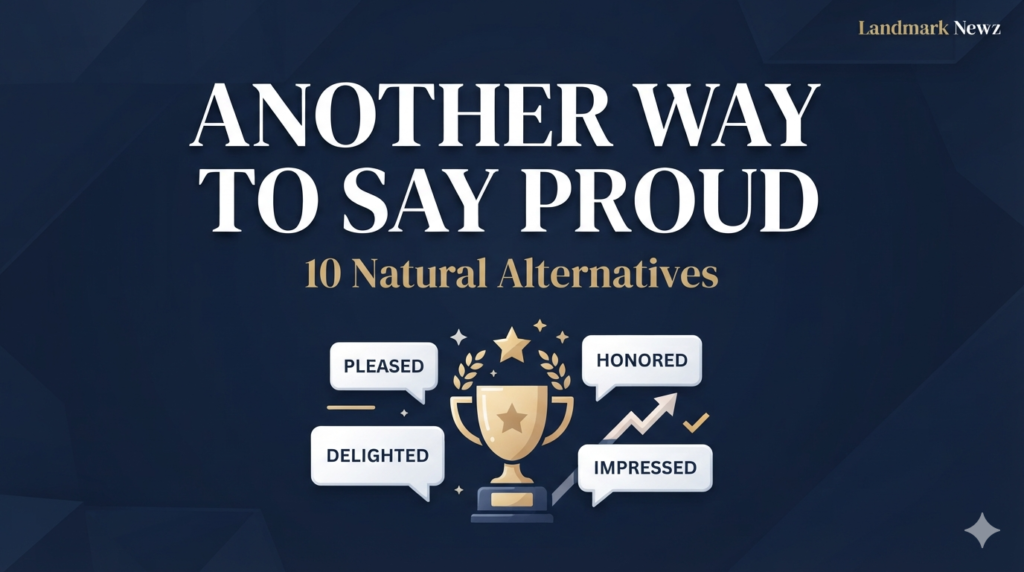
Finding another way to say proud can help you make your writing more natural, specific, and expressive. While “proud” is common and versatile, the right alternative can better communicate whether you feel happy about an achievement, admire someone’s success, or feel honored to be involved.
For example, you might tell a coworker, “I’m pleased with what you accomplished,” instead of “I’m proud of you.” In a personal message, however, “I’m so happy for you” may sound warmer and more conversational.
What Does “Another Way to Say Proud” Mean?
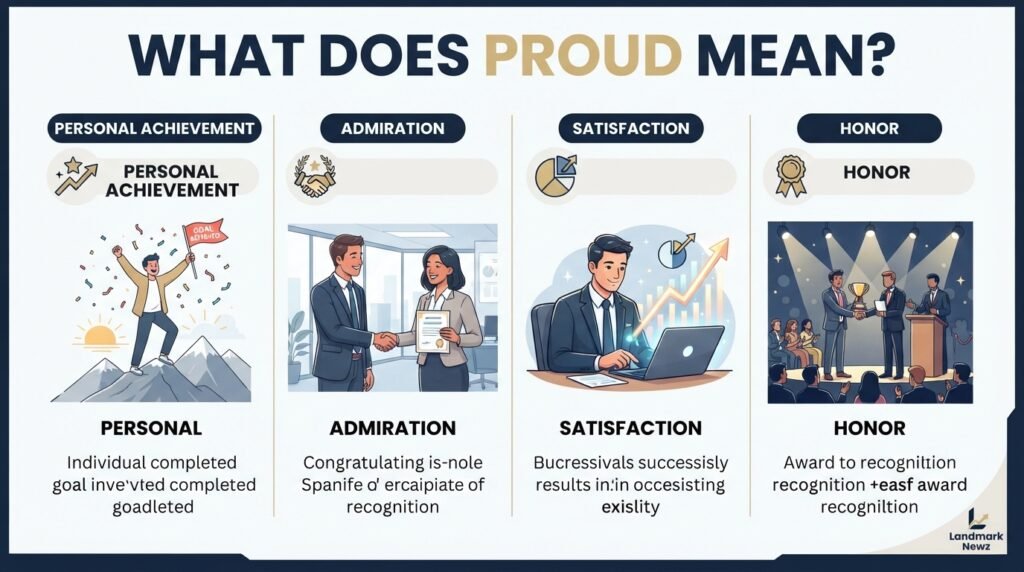
The phrase “another way to say proud” refers to alternative words or expressions that communicate a similar feeling without using the word “proud.”
“Proud” can have several meanings. It may describe satisfaction with your own achievement, admiration for someone else, or a sense of honor connected to a person, group, or accomplishment.
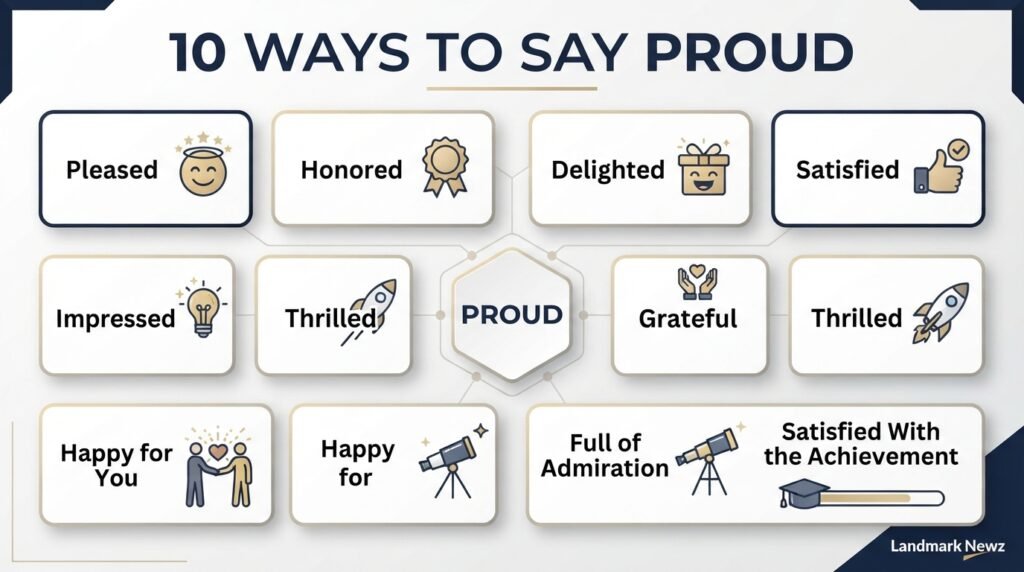
Common alternatives include pleased, honored, delighted, satisfied, impressed, thrilled, grateful, happy for you, and full of admiration. Each carries a slightly different tone, so context matters.
People often look for alternatives to “proud” when writing emails, congratulations, social media posts, speeches, cards, resumes, or personal messages.
Why Use Other Ways to Say “Proud”?
Using different expressions can make your communication more precise and engaging. Instead of repeating “proud,” you can choose wording that reflects the exact emotion you want to convey.
Other benefits include:
- Avoiding repetitive language.
- Making compliments sound more genuine.
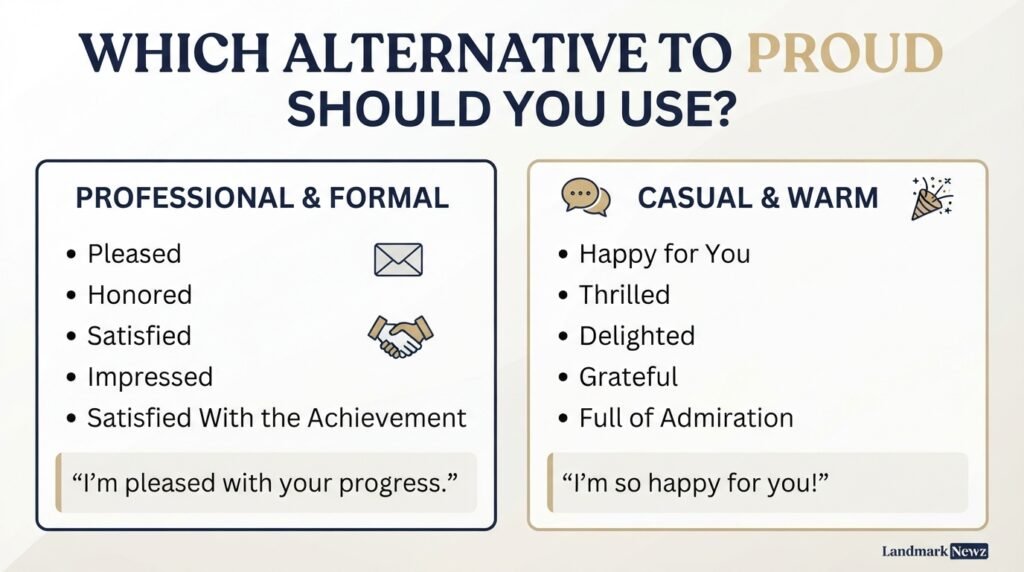
- Matching formal and informal situations.
- Expressing admiration more clearly.
- Adding warmth to personal messages.
- Making professional writing more polished.
- Showing exactly why someone deserves recognition.
The key is to choose an alternative based on meaning and tone, rather than simply selecting a synonym.
10 Best Other Ways to Say “Proud”
1. Pleased
Meaning
“Pleased” expresses happiness or satisfaction about something that happened. It is a versatile alternative to “proud” and works especially well when you want a calm, professional tone.
Best For
- Professional
- Formal
- Polite
Example 1
I’m very pleased with the progress the team has made this quarter.
Example 2
Her parents were pleased to see how confidently she handled the presentation.
Quick Tip
Use “pleased” when you want to communicate positive feelings without sounding overly emotional.
2. Honored
Meaning
“Honored” communicates a strong sense of respect, privilege, or appreciation. It is particularly appropriate when someone recognizes you, gives you an opportunity, or includes you in an important event.
Best For
- Formal
- Professional
- Warm
Example 1
I’m honored to be part of this important project.
Example 2
We are honored to receive this award from the community.
Quick Tip
Choose “honored” when your feeling of pride is connected to appreciation or privilege.
3. Delighted
Meaning
“Delighted” expresses genuine happiness and enthusiasm. It is stronger and more cheerful than “pleased,” making it useful when you want your message to feel especially positive.
Best For
- Friendly
- Warm
- Polite
- Professional
Example 1
I’m delighted to see how much you’ve grown since starting the program.
Example 2
We’re delighted with the results of your hard work.
Quick Tip
Use “delighted” when you want your praise to sound enthusiastic without becoming overly casual.
4. Satisfied
Meaning
“Satisfied” suggests that something has met or exceeded expectations. It often focuses on the quality of a result rather than the emotional connection behind the achievement.
Best For
- Professional
- Formal
Example 1
The manager was satisfied with the team’s performance during the launch.
Example 2
I’m satisfied with the progress we’ve made toward our annual goals.
Quick Tip
“Satisfied” is best for professional or results-focused situations, not deeply emotional personal messages.
5. Impressed
Meaning
“Impressed” shows that someone’s actions, skills, effort, or achievement made a strong positive impact on you. It is a natural way to praise another person’s performance.
Best For
- Professional
- Friendly
- Casual
- Warm
Example 1
I’m impressed by how quickly you learned the new software.
Example 2
Everyone was impressed by her ability to stay calm under pressure.
Quick Tip
Use “impressed” when you want to emphasize someone’s ability, effort, or performance.
6. Thrilled
Meaning
“Thrilled” communicates strong excitement and happiness. It is more energetic than “pleased” and works well when celebrating a major accomplishment or exciting news.
Best For
- Casual
- Friendly
- Warm
Example 1
I’m thrilled to see you reach such an important milestone.
Example 2
Your entire family must be thrilled about your graduation.
Quick Tip
Save “thrilled” for situations where you genuinely want to express strong excitement.
7. Grateful
Meaning
“Grateful” focuses on appreciation rather than pride itself. It works when your positive feelings come from someone’s actions, support, presence, or contribution.
Best For
- Warm
- Formal
- Polite
- Friendly
Example 1
I’m grateful to have had the opportunity to work with such a talented team.
Example 2
We’re grateful for everything you contributed to the community project.
Quick Tip
Choose “grateful” when appreciation is more important than personal achievement.
8. Happy for You
Meaning
“Happy for you” is a warm, conversational expression used to celebrate someone else’s success or good news. It sounds natural in everyday conversations and personal messages.
Best For
- Casual
- Friendly
- Warm
Example 1
I’m so happy for you and everything you’ve accomplished this year.
Example 2
You worked incredibly hard for this opportunity, and I’m truly happy for you.
Quick Tip
This is an excellent choice for texts, cards, social media comments, and conversations with friends or family.
9. Full of Admiration
Meaning
“Full of admiration” emphasizes deep respect for someone’s character, effort, talent, or accomplishments. It is more expressive than a simple statement of pride.
Best For
- Formal
- Warm
- Professional
Example 1
I’m full of admiration for the courage you showed throughout the process.
Example 2
Her dedication to helping others left everyone full of admiration.
Quick Tip
Use this expression when you want to highlight respect rather than simply celebrate an achievement.
10. Satisfied With the Achievement
Meaning
“Satisfied with the achievement” directly connects positive feelings to a specific result or accomplishment. It is useful when discussing goals, milestones, or completed work.
Best For
- Professional
- Formal
Example 1
The director was satisfied with the achievement after months of preparation.
Example 2
We’re satisfied with the achievement and ready to take on the next challenge.
Quick Tip
This phrase works best in formal or workplace writing where you want to focus on measurable results.
Comparison Table
| Alternative | Best Used In | Tone |
| Pleased | Workplace, emails, formal communication | Professional, positive |
| Honored | Awards, opportunities, recognition | Respectful, sincere |
| Delighted | Praise, announcements, congratulations | Warm, enthusiastic |
| Satisfied | Work results, goals, performance | Formal, measured |
| Impressed | Compliments and achievements | Positive, admiring |
| Thrilled | Celebrations and exciting news | Energetic, enthusiastic |
| Grateful | Appreciation and recognition | Warm, sincere |
| Happy for You | Friends, family, personal messages | Casual, friendly |
| Full of Admiration | Speeches, praise, meaningful messages | Respectful, expressive |
| Satisfied With the Achievement | Professional accomplishments | Formal, results-focused |
Co]mmon Mistakes
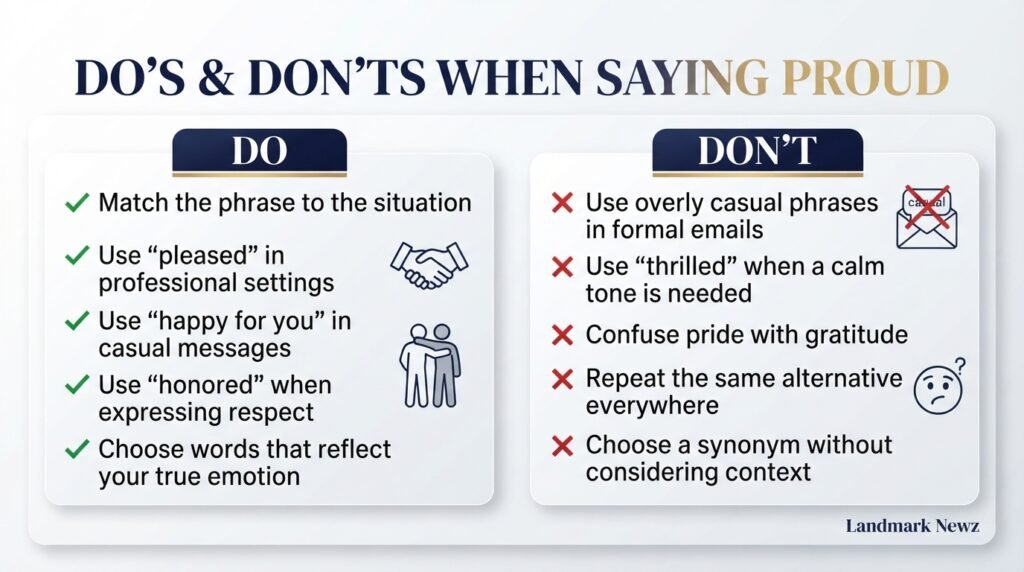
1. Using a synonym without considering context
Not every alternative works in every situation. “Thrilled” may sound too casual for a formal business report, while “satisfied” may feel cold in a heartfelt message to a family member.
2. Choosing overly formal language
Expressions such as “full of admiration” can sound unnatural in a quick text message. Match your wording to the relationship and communication channel.
3. Repeating the same alternative
Replacing “proud” with “pleased” every time does not solve repetition. Rotate your wording based on the specific emotion you want to express.
4. Forgetting the difference between pride and gratitude
Being proud usually involves satisfaction or admiration, while being grateful focuses on appreciation. These emotions can overlap, but they are not identical.
5. Sounding insincere
Strong words such as “thrilled” should reflect genuine enthusiasm. If the situation is serious or professional, a measured phrase like “pleased” may sound more authentic.
Frequently Asked Questions
What is a professional way to say “I’m proud of you”?
A professional alternative to “I’m proud of you” is “I’m impressed by your accomplishment” or “I’m pleased with the progress you’ve made.” These expressions recognize someone’s performance without sounding overly personal. They work well in workplace emails, performance reviews, mentoring conversations, and professional congratulations.
What is a better way to say “I’m proud of myself”?
You can say “I’m pleased with what I accomplished,” “I’m satisfied with my progress,” or “I’m proud of what I achieved.” For professional writing, “I’m pleased with the results” sounds modest and confident. In personal conversations, “I feel great about what I accomplished” sounds more natural.
What is another word for proud of someone?
Depending on the situation, you can use impressed, pleased, delighted, admiring, honored, or happy for you. “Impressed” highlights someone’s ability or effort, while “happy for you” feels more personal. “Honored” works when the situation involves respect or a special achievement.
What is a casual way to say “I’m proud of you”?
For casual communication, try “I’m so happy for you,” “You did an amazing job,” “You crushed it,” or “You should feel great about yourself.” These expressions sound natural in texts and conversations. Choose the one that best matches your relationship and the person’s accomplishment.
How do you say “proud” without sounding arrogant?
Focus on the achievement, effort, or people involved rather than presenting yourself as superior. For example, “I’m really pleased with how the project turned out” sounds more measured than making a broad statement about being better than others.
Is “pleased” the same as “proud”?
Not exactly. “Pleased” generally means happy or satisfied with something, while “proud” often carries a stronger sense of personal achievement or admiration. However, “pleased” can replace “proud” naturally in many professional contexts where a restrained tone is preferred.
What is a strong synonym for proud?
The strongest alternative depends on what you mean by “proud.” Thrilled conveys strong excitement, honored communicates respect and privilege, and impressed emphasizes admiration. For personal achievement, “satisfied with what I accomplished” can communicate pride without directly using the word.
Can I use these alternatives in a professional email?
Yes, but choose according to the situation. “Pleased,” “impressed,” “honored,” and “satisfied” are generally appropriate for professional communication. Avoid very casual expressions when writing to clients, executives, or formal business contacts unless you already have an informal relationship.
Conclusion
There are many natural ways to express the feeling behind “proud,” but the best choice depends on your intended meaning and tone. Use pleased or satisfied for measured professional communication, impressed when recognizing someone’s performance, and honored when expressing respect or privilege.
For warmer personal messages, delighted, thrilled, grateful, or happy for you can sound more genuine. If you want to emphasize deep respect, full of admiration is a stronger choice.
Remember that synonyms are not always interchangeable. The right phrase should match the situation, relationship, and emotion you want to communicate. When choosing another way to say proud, focus less on finding a perfect replacement and more on expressing exactly what you mean. For additional context, explore the meaning and usage of proud in the Cambridge Dictionary.

Professional Writing & Workplace Communication Expert
Marcus Hale is a business communication specialist with 11 years of experience in corporate training and professional writing. He has worked with mid-sized companies and remote teams to improve clarity in emails, reports, performance reviews, and client-facing messages.
Marcus focuses on polished, professional alternatives that help readers sound confident without sounding stiff. His guides cover workplace phrases, resume language, leadership communication, and formal-to-natural transitions. He holds a background in business administration and technical writing, and has led workshops on effective professional English.
At LandmarkNewz, Marcus creates practical synonym lists and phrasing tips that professionals can apply immediately in emails, meetings, and career documents.