Looking for another way to say “Got It”? While this simple phrase works in many situations, using the same expression repeatedly can make your communication feel less natural. Whether you are writing an email, responding to a manager, texting a friend, or acknowledging instructions, choosing a more specific alternative can make your message clearer and more professional.
What Does “Another Way to Say Got It” Mean?
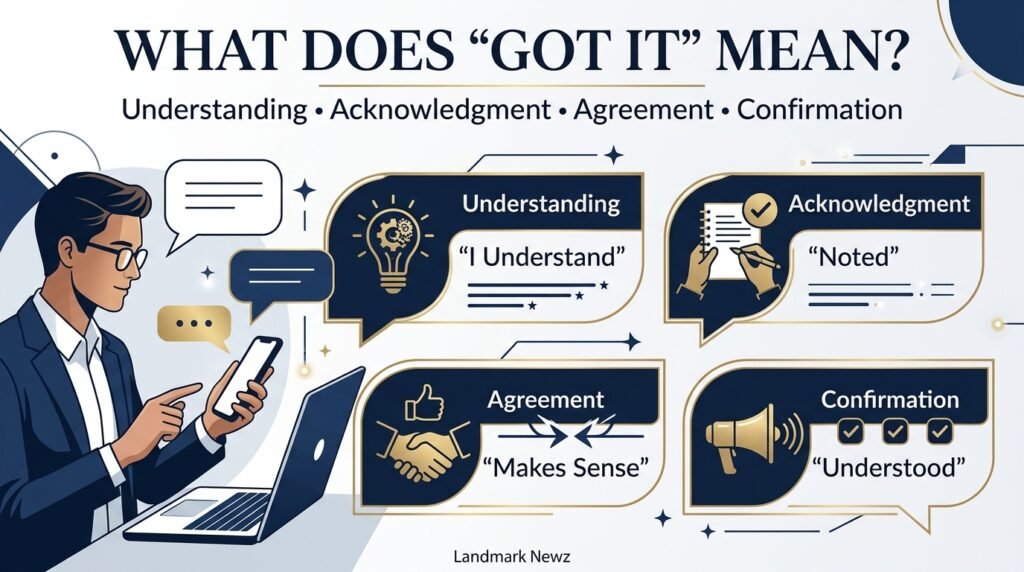
The phrase “another way to say got it” refers to alternative expressions that communicate understanding, acknowledgment, or agreement. When someone says “got it,” they usually mean “I understand,” “I see what you mean,” or “I acknowledge what you said.”
The phrase is common in everyday American English. However, “got it” can sound too casual in some professional or formal situations, so alternatives such as “understood,” “I understand,” or “noted” may be more appropriate.
Why Use Other Ways to Say “Got It”?
Using different expressions helps you communicate the exact meaning and tone you want. While “got it” is perfectly acceptable in many situations, another phrase may sound more professional, polite, warm, or precise.
Other expressions can help you:
- Avoid repeating the same phrase.
- Sound more natural in conversations.
- Match formal and informal situations.
- Communicate professionally at work.
- Show understanding more clearly.
- Acknowledge instructions without sounding abrupt.
10 Best Other Ways to Say “Got It”
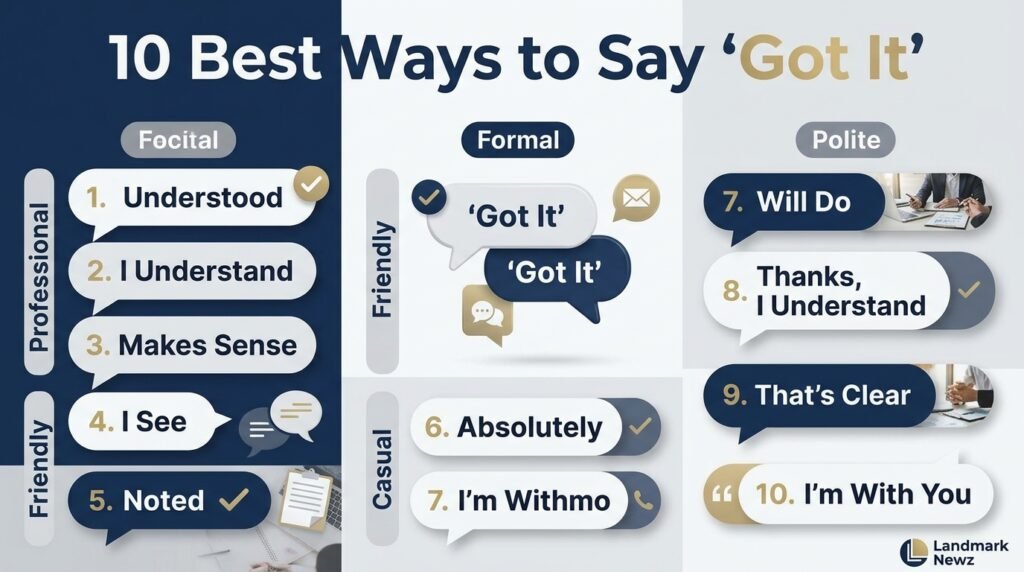
1. Understood
Meaning
“Understood” clearly tells someone that you comprehend what they have said or requested. It is concise and professional, making it especially useful when acknowledging instructions.
Best For
- Professional
- Formal
- Polite
Example 1
“Understood. I’ll send the revised proposal before the meeting.”
Example 2
“Understood, and I’ll make sure the team follows the updated procedure.”
Quick Tip
Use “understood” when you want to acknowledge instructions without adding unnecessary words.
2. I Understand
Meaning
“I understand” directly communicates that you comprehend someone’s explanation, request, or point of view. It sounds professional while remaining warm and approachable.
Best For
- Professional
- Formal
- Polite
- Friendly
Example 1
“I understand your concerns, and I’ll review the issue again.”
Example 2
“I understand what you need from me before Friday.”
Quick Tip
Choose “I understand” when you want to sound attentive rather than simply acknowledging a message.
3. Makes Sense
Meaning
“Makes sense” indicates that something is logical or easy to understand. It has a relaxed, conversational tone and works especially well when discussing ideas or explanations.
Best For
- Casual
- Friendly
- Warm
Example 1
“Thanks for explaining the schedule. That makes sense.”
Example 2
“Your decision makes sense given the information we have.”
Quick Tip
Use this phrase when you want to show that you understand the reasoning behind something.
4. I See
Meaning
“I see” is a natural way to show that you now understand something that may have been unclear before. It can also signal that you are listening carefully.
Best For
- Casual
- Friendly
- Polite
Example 1
“I see. So the delivery will arrive on Thursday instead.”
Example 2
“Oh, I see why you changed the deadline.”
Quick Tip
“I see” works particularly well during conversations when someone is explaining a situation.
5. Noted
Meaning
“Noted” means that you have acknowledged and recorded or taken notice of the information. It is brief and commonly used in professional communication.
Best For
- Professional
- Formal
- Polite
Example 1
“Noted. I’ll include those changes in the final report.”
Example 2
“Noted, and I’ll keep the new deadline in mind.”
Quick Tip
Use “noted” for instructions, updates, deadlines, and requests rather than emotional or personal conversations.
6. Absolutely
Meaning
“Absolutely” can communicate strong agreement, confirmation, or willingness to follow through. Depending on context, it can replace “got it” when the speaker wants to sound positive and enthusiastic.
Best For
- Friendly
- Warm
- Professional
- Polite
Example 1
“Absolutely. I’ll have the presentation ready for tomorrow.”
Example 2
“Absolutely, I can take care of that task this afternoon.”
Quick Tip
Use “absolutely” when you want to communicate both understanding and enthusiasm.
7. Will Do
Meaning
“Will do” means that you understand a request and intend to complete it. It is short, confident, and useful when responding to a task or instruction.
Best For
- Casual
- Friendly
- Professional
Example 1
“Will do. I’ll call the client after lunch.”
Example 2
“Will do—I’ll update the spreadsheet before the end of the day.”
Quick Tip
Use “will do” when the main point is confirming that you will take action.
8. Thanks, I Understand
Meaning
“Thanks, I understand” combines appreciation with acknowledgment. It is useful when someone has taken time to explain something or clarify a confusing point.
Best For
- Professional
- Friendly
- Warm
- Polite
Example 1
“Thanks, I understand the changes you want in the contract.”
Example 2
“Thanks, I understand how the new scheduling system works now.”
Quick Tip
This is a good choice when you want your response to sound appreciative instead of overly brief.
9. That’s Clear
Meaning
“That’s clear” tells someone that their explanation or instructions have made sense to you. It sounds more polished than “got it” while still feeling natural.
Best For
- Professional
- Formal
- Polite
Example 1
“That’s clear. I’ll follow the updated submission process.”
Example 2
“Thanks for walking me through the requirements. That’s clear now.”
Quick Tip
Add “now” when you want to emphasize that something became understandable after an explanation.
10. I’m With You
Meaning
“I’m with you” can mean that you understand someone’s point, follow their reasoning, or support what they are saying. It is more conversational and personal than most alternatives.
Best For
- Casual
- Friendly
- Warm
Example 1
“I’m with you. We should solve the scheduling issue before adding new projects.”
Example 2
“I’m with you on that—the simpler approach will probably work better.”
Quick Tip
Use this phrase with people you know well, especially during discussions or informal conversations.
Comparison Table
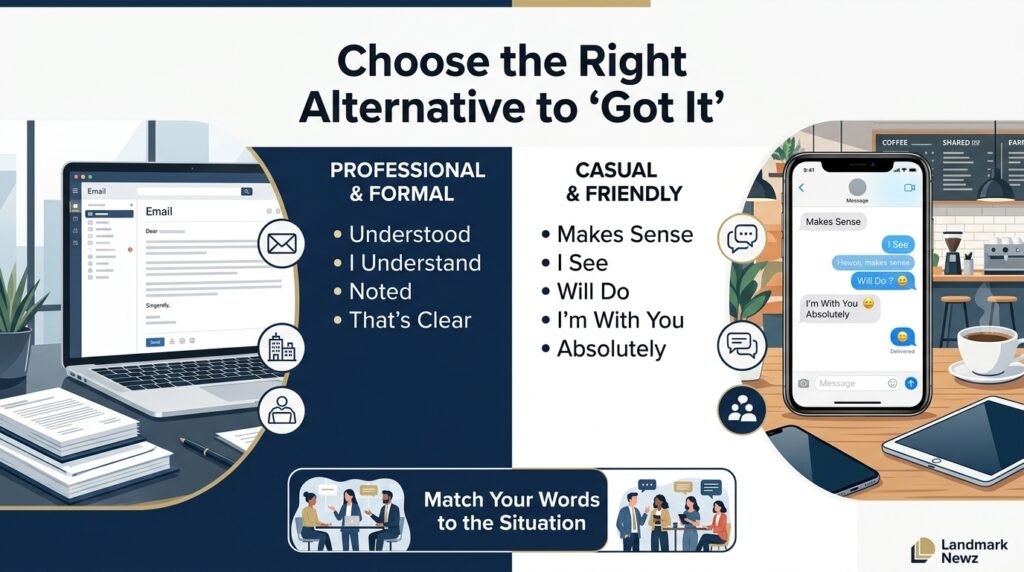
| Alternative | Best Used In | Tone |
|---|---|---|
| Understood | Work, instructions, formal messages | Professional |
| I Understand | Work, explanations, conversations | Professional, polite |
| Makes Sense | Everyday conversations | Casual, friendly |
| I See | Explanations and discussions | Conversational |
| Noted | Emails, instructions, updates | Formal, professional |
| Absolutely | Requests and confirmations | Positive, warm |
| Will Do | Tasks and instructions | Confident, casual |
| Thanks, I Understand | Explanations and clarification | Warm, polite |
| That’s Clear | Professional explanations | Polished, professional |
| I’m With You | Discussions and personal conversations | Friendly, supportive |
Common Mistakes
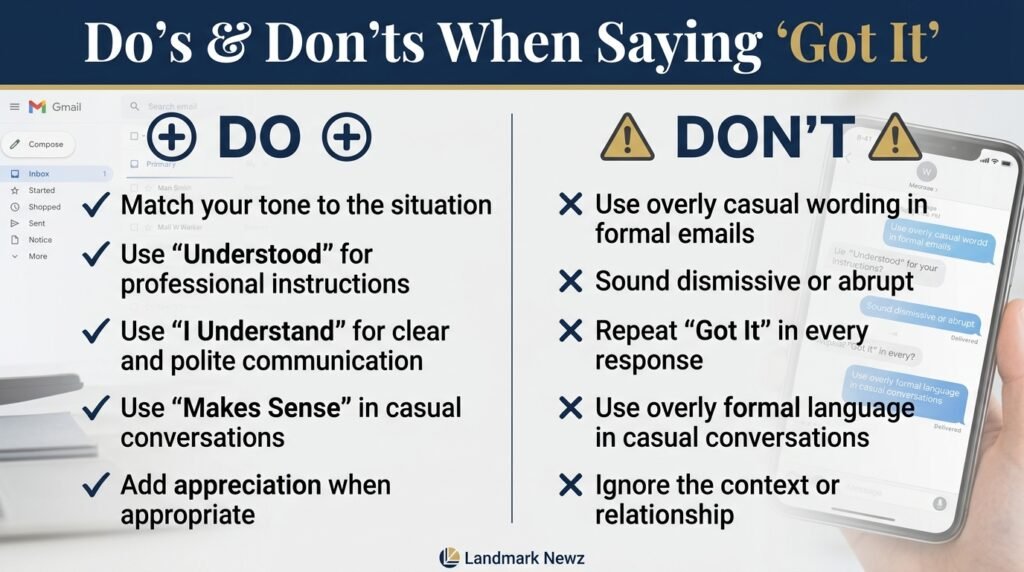
1. Using Casual Phrases in Professional Emails
“Got it” is not wrong, but it may sound too casual in some workplace situations. “Understood” or “I understand” can create a more polished impression.
2. Choosing Overly Formal Language
Not every conversation needs formal wording. Saying “I acknowledge receipt of your instructions” instead of “Got it” may sound stiff and unnatural in an everyday workplace exchange.
3. Repeating the Same Phrase
Using “got it” in every response can make your communication sound repetitive. Rotate between natural alternatives based on what you actually mean.
4. Forgetting the Context
An expression that works with a coworker may not work with a customer, manager, friend, or family member. Always consider your relationship with the person before choosing your wording.
5. Sounding Insincere
A short response can sometimes seem dismissive. If someone has shared a concern or taken time to explain something, “Thanks, I understand” may show more attention and respect.
Frequently Asked Questions
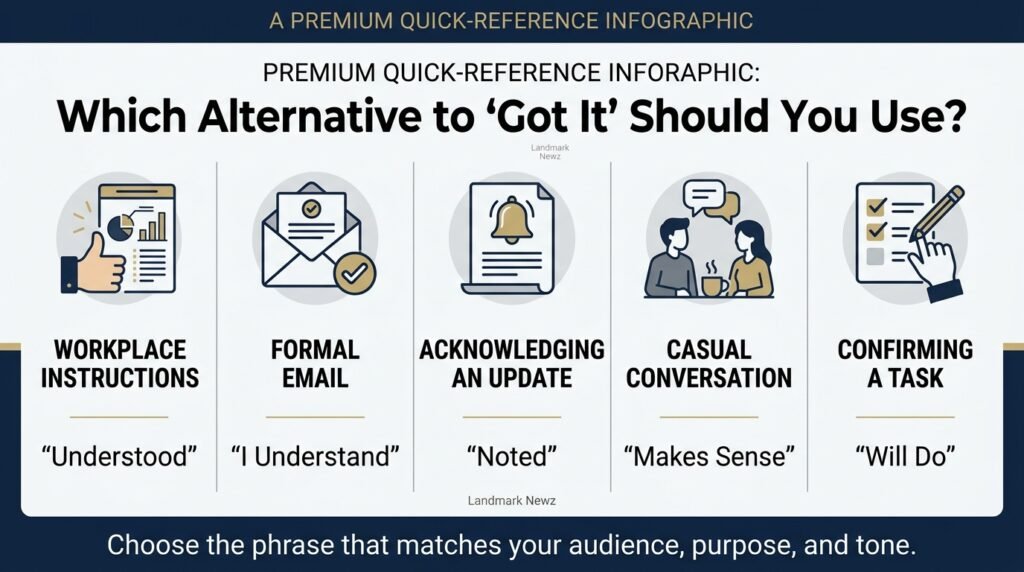
What is a professional way to say “got it”?
“Understood” is one of the best professional alternatives to “got it.” It is concise, clear, and appropriate for workplace conversations, emails, and instructions. “I understand” is another strong option when you want to sound slightly warmer and show that you fully comprehend the information.
What is a polite way to say “got it”?
“I understand,” “noted,” and “that’s clear” are polite alternatives. The best choice depends on the situation. “I understand” works well when responding to an explanation, while “noted” is better for acknowledging instructions, requests, or important information.
What can I say instead of “got it” in an email?
In a professional email, try “Understood,” “I understand,” “Noted,” or “Thanks, I understand.” These expressions sound clearer and more polished than repeatedly using “got it,” especially when communicating with clients, managers, or business partners.
Is “got it” professional?
“Got it” can be professional in casual workplace conversations, especially with coworkers you know well. However, it is still an informal expression. For formal emails, client communication, or sensitive situations, “I understand” or “Understood” may be a better choice.
What is a casual way to say “got it”?
“Makes sense,” “I see,” and “will do” are natural casual alternatives. “Makes sense” shows that you understand an explanation, while “will do” confirms that you will complete a requested action.
What is another way to say “I understand”?
You can say “Understood,” “I see,” “That makes sense,” “That’s clear,” or “I follow you.” Each expression has a slightly different tone, so choose one based on whether you want to sound professional, casual, supportive, or appreciative.
How do you say “got it” without sounding rude?
Add context or appreciation to make your response warmer. Instead of simply saying “Got it,” try “Thanks, I understand,” “That makes sense,” or “Understood, I’ll take care of it.” These options show that you listened and understood what the other person meant.
What is the best alternative to “got it” for work?
“Understood” is usually the safest choice for work because it is brief, professional, and clear. For a warmer tone, use “I understand.” If you are confirming that you will complete a task, “Will do” can be more direct and action-focused.
Conclusion
“Got it” is a convenient phrase for showing that you understand or acknowledge something, but it is not the only option. Choosing a more specific expression can make your communication sound clearer, more professional, or more personal.
For workplace instructions, “understood” and “noted” are strong choices. When responding to an explanation, “I understand,” “I see,” or “that’s clear” may fit better. For casual conversations, “makes sense,” “will do,” and “I’m with you” sound natural and relaxed.
The best alternative depends on what you want to communicate—not simply on replacing the words “got it.” Think about your audience and tone before choosing your response. A small wording change can make your message feel much more natural and intentional.

Professional Writing & Workplace Communication Expert
Marcus Hale is a business communication specialist with 11 years of experience in corporate training and professional writing. He has worked with mid-sized companies and remote teams to improve clarity in emails, reports, performance reviews, and client-facing messages.
Marcus focuses on polished, professional alternatives that help readers sound confident without sounding stiff. His guides cover workplace phrases, resume language, leadership communication, and formal-to-natural transitions. He holds a background in business administration and technical writing, and has led workshops on effective professional English.
At LandmarkNewz, Marcus creates practical synonym lists and phrasing tips that professionals can apply immediately in emails, meetings, and career documents.