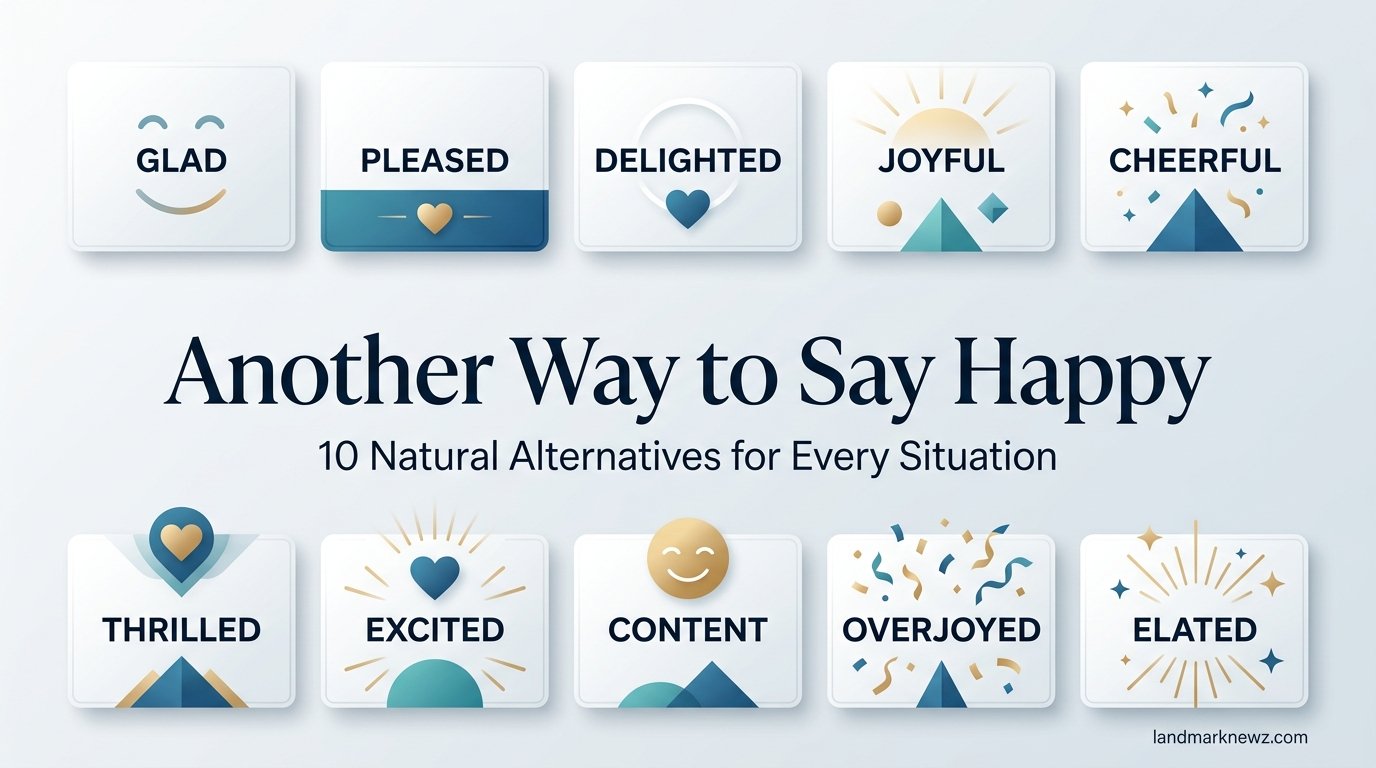
Finding another way to say happy can make your writing more precise, natural, and engaging. Although “happy” is one of the most common words in English, it does not always capture the exact feeling you want to express.
For example, you might be pleased with a result, thrilled about exciting news, content with your life, or delighted by someone’s kindness. Each word carries a slightly different meaning and emotional tone.
What Does “Another Way to Say Happy” Mean?
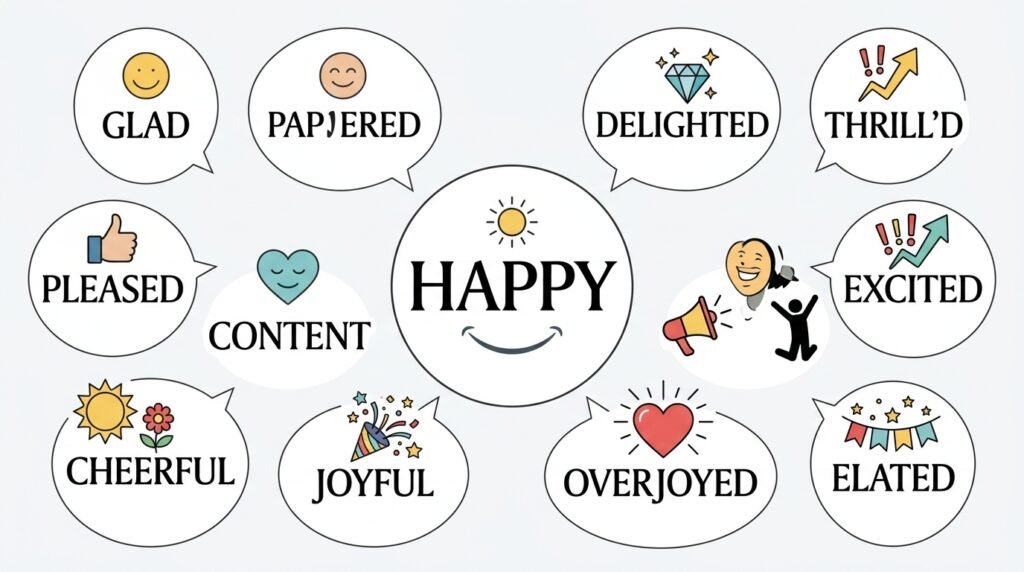
“Another way to say happy” refers to a different word or phrase that expresses happiness, pleasure, satisfaction, joy, or excitement.
People search for alternatives to “happy” when they want to avoid repetition or choose a word that better matches a particular situation. These alternatives are useful in conversations, emails, essays, resumes, stories, social media posts, and professional communication.
For instance, instead of saying, “I am happy with the results,” you could say, “I am pleased with the results.” The second version sounds more polished and is often better suited to professional writing.
Why Use Other Ways to Say “Happy”?
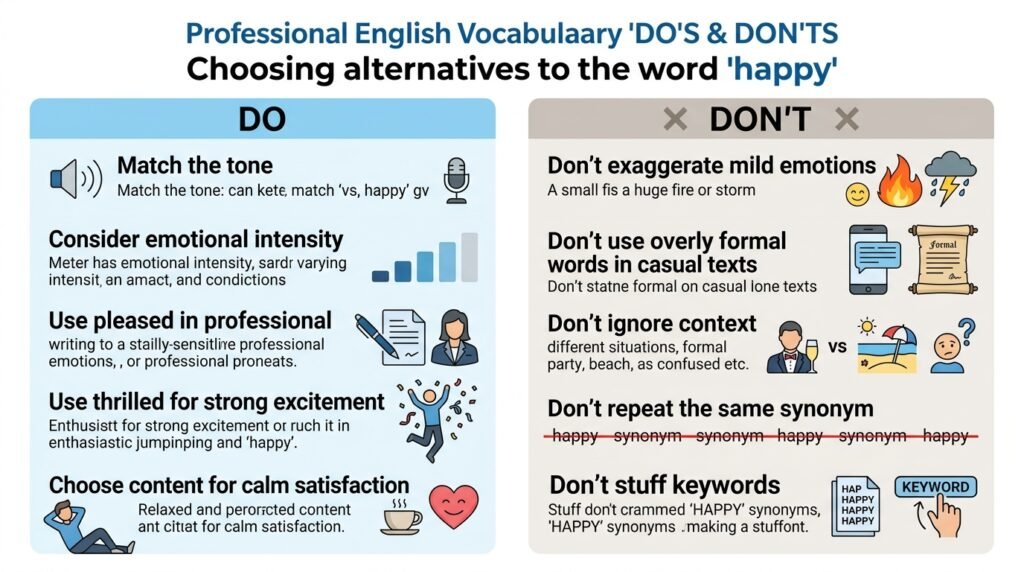
Using different words for happiness gives your communication greater variety and precision. The right synonym can also help you show how strong the emotion is.
You may want another way to say happy to:
- Avoid repeating the same word.
- Make your writing sound more natural.
- Express a specific type of happiness.
- Match a professional, casual, or emotional tone.
- Make stories and personal writing more vivid.
- Describe stronger feelings such as excitement or delight.
- Sound more polished in emails, essays, and workplace communication.
The key is to choose a synonym based on context and intensity, rather than simply replacing “happy” with any similar word.
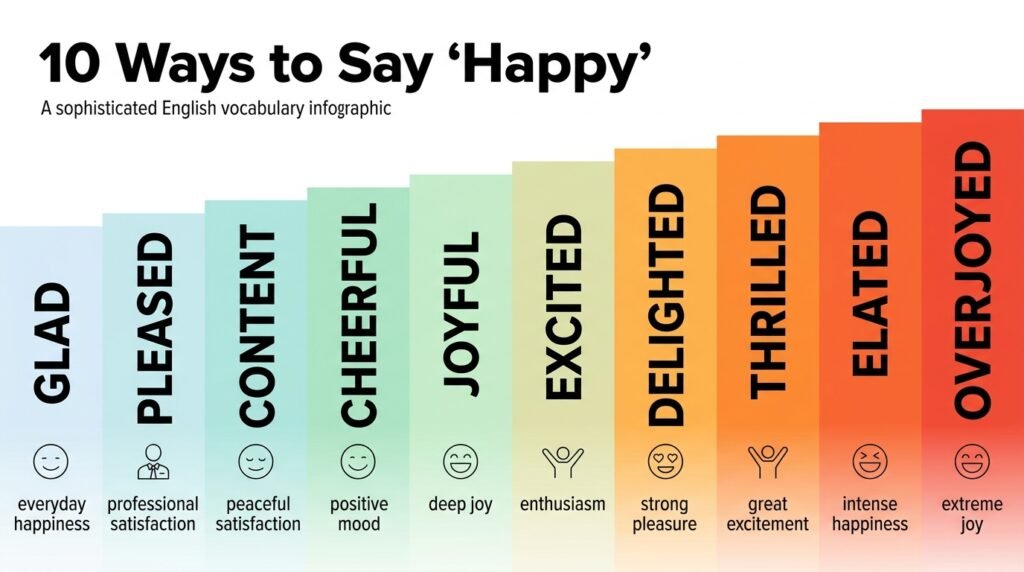
10 Best Other Ways to Say “Happy”
1. Pleased
Meaning
“Pleased” means feeling happy or satisfied about something. It is especially useful when describing a positive reaction to an outcome, decision, service, or achievement.
Best For
- Professional
- Formal
- Polite
- Friendly
Example 1
“We are pleased with the progress the team has made this quarter.”
Example 2
“I was pleased to hear that your application was accepted.”
Quick Tip
Use “pleased” instead of “happy” when you want your writing to sound professional without becoming overly formal.
2. Glad
Meaning
“Glad” expresses a simple, genuine feeling of happiness or relief. It is common in everyday American English and sounds natural in both personal and casual professional conversations.
Best For
- Casual
- Friendly
- Warm
- Polite
Example 1
“I’m glad you decided to come to the party.”
Example 2
“She was glad to have another chance to explain her idea.”
Quick Tip
“Glad” is one of the easiest alternatives to “happy” when you want a natural, conversational tone.
3. Delighted
Meaning
“Delighted” describes a strong feeling of happiness and pleasure. It often sounds warmer and more expressive than “pleased,” making it useful when something genuinely brings you joy.
Best For
- Formal
- Professional
- Warm
- Polite
Example 1
“We were delighted to welcome the new members to our organization.”
Example 2
“He was delighted by the thoughtful birthday surprise.”
Quick Tip
Choose “delighted” when “happy” feels too plain but “thrilled” would sound too intense.
4. Joyful
Meaning
“Joyful” describes a deep, positive feeling of joy. It is often used for meaningful occasions, celebrations, relationships, and moments that create a strong sense of happiness.
Best For
- Warm
- Friendly
- Formal
- Casual
Example 1
“The family shared a joyful dinner together after the graduation ceremony.”
Example 2
“Her joyful attitude made everyone in the room feel welcome.”
Quick Tip
“Joyful” works especially well when you are describing an overall mood rather than a brief reaction.
5. Thrilled
Meaning
“Thrilled” means extremely excited and happy about something. It communicates much stronger emotion than ordinary “happy” and is common when someone receives exciting news or an opportunity.
Best For
- Casual
- Friendly
- Warm
- Professional
Example 1
“I’m thrilled to join such a talented team.”
Example 2
“They were thrilled when they learned they had won the competition.”
Quick Tip
Use “thrilled” when you want to emphasize excitement as well as happiness.
6. Excited
Meaning
“Excited” describes strong enthusiasm and anticipation about something that is happening or expected to happen. Unlike “happy,” it usually focuses on energy and eagerness.
Best For
- Casual
- Friendly
- Warm
- Professional
Example 1
“She is excited about starting her new position next month.”
Example 2
“We’re excited to announce the launch of our new service.”
Quick Tip
Use “excited” when the happiness is connected to something upcoming, such as an event, opportunity, trip, or change.
7. Content
Meaning
“Content” means feeling peaceful, satisfied, and comfortable with your current situation. It describes a calmer form of happiness rather than intense excitement.
Best For
- Formal
- Warm
- Friendly
Example 1
“After years of searching, he finally felt content with his simple lifestyle.”
Example 2
“She felt content sitting by the lake and enjoying the quiet afternoon.”
Quick Tip
Choose “content” when you mean peaceful satisfaction rather than energetic excitement.
8. Overjoyed
Meaning
“Overjoyed” describes an extremely strong feeling of happiness or joy. It is appropriate when something especially meaningful or wonderful happens.
Best For
- Warm
- Formal
- Friendly
- Casual
Example 1
“The parents were overjoyed when their daughter graduated from college.”
Example 2
“She was overjoyed to reunite with her childhood friend after many years.”
Quick Tip
Because “overjoyed” expresses intense emotion, reserve it for genuinely significant moments.
9. Elated
Meaning
“Elated” means extremely happy, excited, and uplifted. It is stronger and somewhat more formal than everyday words such as “glad” or “happy.”
Best For
- Formal
- Professional
- Warm
Example 1
“The researchers were elated by the successful results of the study.”
Example 2
“He felt elated after completing his first marathon.”
Quick Tip
“Elated” works particularly well in polished writing when you want to describe powerful happiness without sounding overly casual.
10. Cheerful
Meaning
“Cheerful” describes someone who appears happy, positive, and pleasant. Unlike words that describe a temporary emotional reaction, it can also describe a person’s usual mood or manner.
Best For
- Casual
- Friendly
- Warm
- Professional
Example 1
“Despite the long workday, Maya remained cheerful and helpful.”
Example 2
“The cheerful receptionist greeted every visitor with a smile.”
Quick Tip
Use “cheerful” when describing a person’s attitude, personality, or outward mood rather than a specific happy event.
Comparison Table
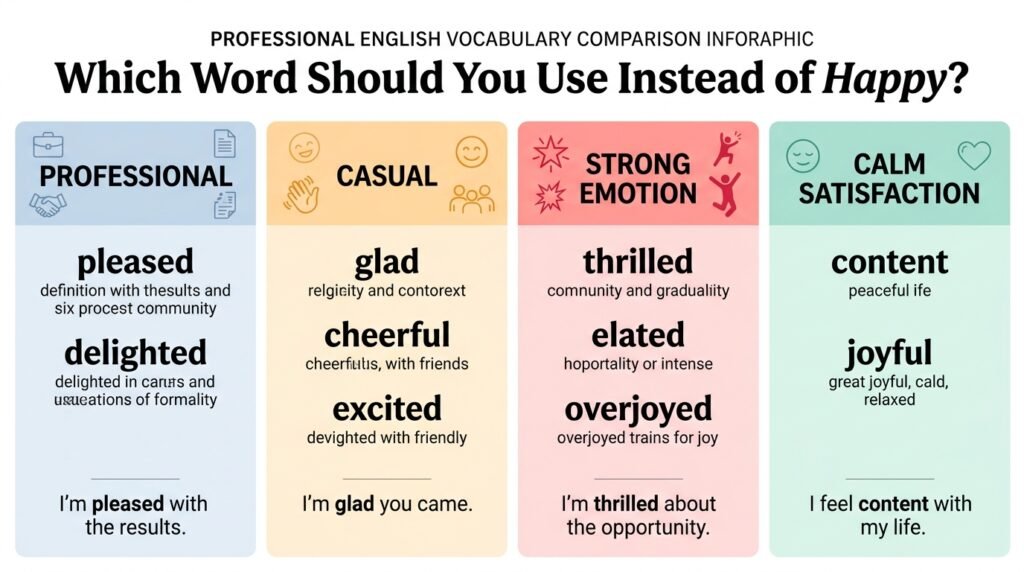
| Alternative | Best Used In | Tone |
| Pleased | Work, emails, formal communication | Professional and polite |
| Glad | Everyday conversations | Friendly and natural |
| Delighted | Work, personal communication | Warm and positive |
| Joyful | Personal writing, celebrations | Warm and expressive |
| Thrilled | Exciting news and achievements | Energetic and enthusiastic |
| Excited | Future events and opportunities | Energetic and casual |
| Content | Personal reflection and calm situations | Peaceful and satisfied |
| Overjoyed | Major life events | Extremely emotional |
| Elated | Formal or polished writing | Strong and elevated |
| Cheerful | Personality and mood descriptions | Positive and friendly |
Common Mistakes
1. Using a Strong Synonym for a Mild Feeling
Words such as “overjoyed” and “elated” express intense happiness. Using them for a small everyday event can make your sentence sound exaggerated.
2. Choosing a Word That Does Not Fit the Context
“Excited” usually suggests anticipation, while “content” suggests calm satisfaction. Consider the exact emotion before choosing a synonym.
3. Using Overly Formal Language in Casual Conversations
Words such as “elated” can sound unnatural in a relaxed text message. In casual situations, “glad,” “excited,” or “thrilled” may sound more natural.
4. Replacing “Happy” Without Checking the Meaning
Not every synonym has exactly the same meaning. For example, “cheerful” can describe someone’s general personality, while “pleased” often describes a reaction to something specific.
5. Repeating the Same Synonym
Replacing “happy” with “pleased” does not solve repetition if you use “pleased” in every sentence. Vary your vocabulary naturally while keeping the intended meaning clear.
Frequently Asked Questions
What is another way to say happy?
Common alternatives include glad, pleased, delighted, joyful, thrilled, excited, content, overjoyed, elated, and cheerful. The best option depends on the situation. “Pleased” works well in professional settings, while “glad” sounds natural in everyday conversations and “thrilled” communicates a stronger sense of excitement.
What is a professional way to say happy?
“Pleased” is one of the best professional alternatives to “happy.” For example, instead of saying, “I’m happy with the results,” you can write, “I’m pleased with the results.” “Delighted” can also work when you want to communicate stronger positive feelings in a polished way.
What is a stronger word for happy?
Words such as thrilled, delighted, elated, and overjoyed express stronger happiness. “Thrilled” often combines happiness with excitement, while “overjoyed” suggests extremely intense joy. “Elated” is also strong but tends to sound more formal or literary.
What is a casual way to say happy?
“Glad” is one of the most natural casual alternatives to “happy.” You might say, “I’m glad you came,” or “She’s glad everything worked out.” “Excited” and “thrilled” are also common in casual American English when happiness involves enthusiasm or anticipation.
What is another way to say very happy?
You can say thrilled, delighted, overjoyed, elated, ecstatic, or extremely pleased. The choice depends on the level of emotion and context. For everyday communication, “thrilled” sounds natural, while “overjoyed” is better for a major or deeply meaningful occasion.
How can I say I am happy in a formal email?
In a formal email, consider phrases such as “I’m pleased to hear that,” “I’m delighted to share,” or “We are pleased with the outcome.” These expressions sound professional while still communicating a positive response. Avoid overly emotional words when the situation calls for a measured business tone.
What is the difference between happy, glad, and pleased?
“Happy” is the broadest term and can describe many positive emotions. “Glad” usually sounds conversational and often expresses happiness or relief about something specific. “Pleased” commonly describes satisfaction with a result, decision, service, or situation and is especially useful in professional communication.
What word describes someone who is always happy?
“Cheerful” is often the best word for someone who generally has a positive, pleasant mood. Depending on the context, you could also use “upbeat,” “positive,” or “joyful.” “Cheerful” is particularly useful when describing how someone behaves or interacts with other people.
Conclusion
Knowing another way to say happy helps you communicate with greater precision and variety. Instead of relying on “happy” in every situation, explore [happy synonyms and alternatives] to choose a word that reflects the exact feeling you want to express.
For professional communication, pleased is a reliable choice, while glad works naturally in everyday conversations. If you want to show excitement, consider thrilled or excited. For a stronger emotional response, delighted, elated, or overjoyed may fit better.
When you mean peaceful satisfaction, content is more precise, while cheerful works well for someone’s general mood or personality.
The best synonym is not always the strongest one. Choose the word that matches your context, audience, and emotional intensity, and your writing will sound more natural and intentional.

Professional Writing & Workplace Communication Expert
Marcus Hale is a business communication specialist with 11 years of experience in corporate training and professional writing. He has worked with mid-sized companies and remote teams to improve clarity in emails, reports, performance reviews, and client-facing messages.
Marcus focuses on polished, professional alternatives that help readers sound confident without sounding stiff. His guides cover workplace phrases, resume language, leadership communication, and formal-to-natural transitions. He holds a background in business administration and technical writing, and has led workshops on effective professional English.
At LandmarkNewz, Marcus creates practical synonym lists and phrasing tips that professionals can apply immediately in emails, meetings, and career documents.