
What Does “Have a Great Weekend” Mean?
The expression is a friendly way to wish someone well before they leave work or finish a conversation near the end of the week. It usually carries a positive and relaxed tone.
People use it with coworkers, friends, family members, clients, and other acquaintances. The phrase can appear in spoken conversations, text messages, emails, workplace chats, and social interactions.
For example, a coworker might say, “Thanks for your help today. Have a great weekend!” A friend could use the same words after making plans for the next few days.
The expression is already natural and polite, so there is no need to replace it every time. However, having several alternatives can help you avoid repetitive wording and choose a phrase that better fits the situation.
Why Use Other Ways to Say “Have a Great Weekend”?
Different situations call for different levels of warmth and formality. A phrase that sounds perfect in a text to a friend may not be the best choice for a client or business email.
Using alternatives can help you:
- Avoid repeating the same closing.
- Make emails and messages sound more natural.
- Match your language to the relationship.
- Create a warmer or more professional tone.
- Make your writing feel more personal.
- Choose words that fit the specific situation.
The key is to focus on context rather than complexity. A simple expression often sounds more natural than an unusual phrase chosen only to be different.
10 Best Alternatives to “Have a Great Weekend”
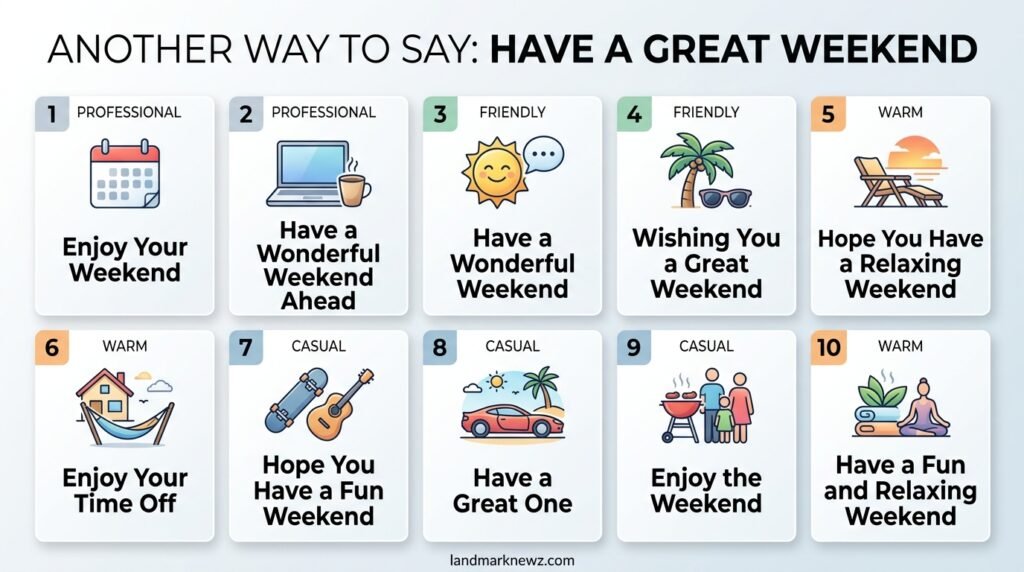
1. Enjoy Your Time Off
“Enjoy your time off” focuses on the person’s break from work or other responsibilities. It sounds friendly while remaining professional, making it a useful choice for workplace communication.
Best For: Professional, Polite, Friendly
Example 1:
“Thanks for getting those reports finished. Enjoy your time off!”
Example 2:
“Everything is covered while you’re away, so enjoy your time off.”
Quick Tip: This is especially suitable when you know the person is taking a few days away from work.
2. Have a Wonderful One
“Have a wonderful one” is a warm and flexible closing. Because “one” refers to the occasion already being discussed, you can avoid repeating the same noun.
Best For: Friendly, Casual, Warm
Example 1:
“Thanks for stopping by today. Have a wonderful one!”
Example 2:
“I’ll send you the final details on Monday. Have a wonderful one.”
Quick Tip: Use it when the context is already obvious to the reader or listener.
3. Hope You Have a Relaxing Break
This phrase emphasizes rest rather than excitement. It is a thoughtful choice for someone who has had a demanding workweek or a busy schedule.
Best For: Warm, Friendly, Polite
Example 1:
“You’ve been working hard on the launch. Hope you have a relaxing break.”
Example 2:
“The project is finally wrapped up. Hope you have a relaxing break.”
Quick Tip: Choose this wording when you want your message to sound considerate and supportive.
4. Enjoy the Time Away
“Enjoy the time away” works well when someone is stepping away from work or taking a personal break. It sounds natural without being too casual.
Best For: Professional, Friendly, Polite
Example 1:
“Everything looks good on our end. Enjoy the time away.”
Example 2:
“Thanks for handling the client call before you left. Enjoy the time away.”
Quick Tip: This option works particularly well when the recipient is traveling or taking scheduled leave.
5. Wishing You a Wonderful Break
“Wishing you a wonderful break” has a polished and courteous tone. It is particularly useful in written communication where you want to end on a positive note.
Best For: Professional, Formal, Warm
Example 1:
“Thank you for your continued support. Wishing you a wonderful break.”
Example 2:
“I appreciate your help with the project. Wishing you a wonderful break.”
Quick Tip: This is a strong choice for clients, business contacts, and formal workplace emails.
6. Hope You Have Some Time to Relax
This expression shows genuine concern for someone’s well-being. Rather than simply wishing them a good time, it focuses on getting a chance to rest.
Best For: Warm, Friendly, Polite
Example 1:
“You’ve had a lot on your plate lately. Hope you have some time to relax.”
Example 2:
“Everything can wait until next week. Hope you have some time to relax.”
Quick Tip: Use this phrase when you want your message to feel thoughtful rather than routine.
7. Have a Fun One
“Have a fun one” is short, upbeat, and informal. It works naturally in conversations with people you know well.
Best For: Casual, Friendly
Example 1:
“Enjoy the concert tonight. Have a fun one!”
Example 2:
“Sounds like you’ve got some great plans. Have a fun one!”
Quick Tip: Keep this expression for casual situations rather than formal business correspondence.
8. Enjoy the Break
“Enjoy the break” is simple and direct. It works particularly well when everyone understands which period of free time you mean.
Best For: Casual, Friendly, Professional
Example 1:
“Great job getting everything finished. Enjoy the break!”
Example 2:
“I’ll handle the remaining emails on Monday. Enjoy the break.”
Quick Tip: This is a useful choice for coworkers, students, and friends when the context is clear.
9. Have a Great One
“Have a great one” is a versatile conversational expression. It keeps the positive feeling of a traditional closing while making the wording shorter and less repetitive.
Best For: Casual, Friendly, Polite
Example 1:
“Thanks for your help today. Have a great one!”
Example 2:
“I’ll talk to you next week. Have a great one.”
Quick Tip: It works best when the occasion has already been established in the conversation.
10. Take Some Time for Yourself
This phrase has a caring and personal tone. It encourages someone to step away from responsibilities and spend time doing something they enjoy.
Best For: Warm, Friendly, Casual
Example 1:
“You’ve been putting in long hours lately. Take some time for yourself.”
Example 2:
“Don’t worry about the project until Monday. Take some time for yourself.”
Quick Tip: Use this option when you want to sound supportive and genuinely thoughtful.
Comparison Table
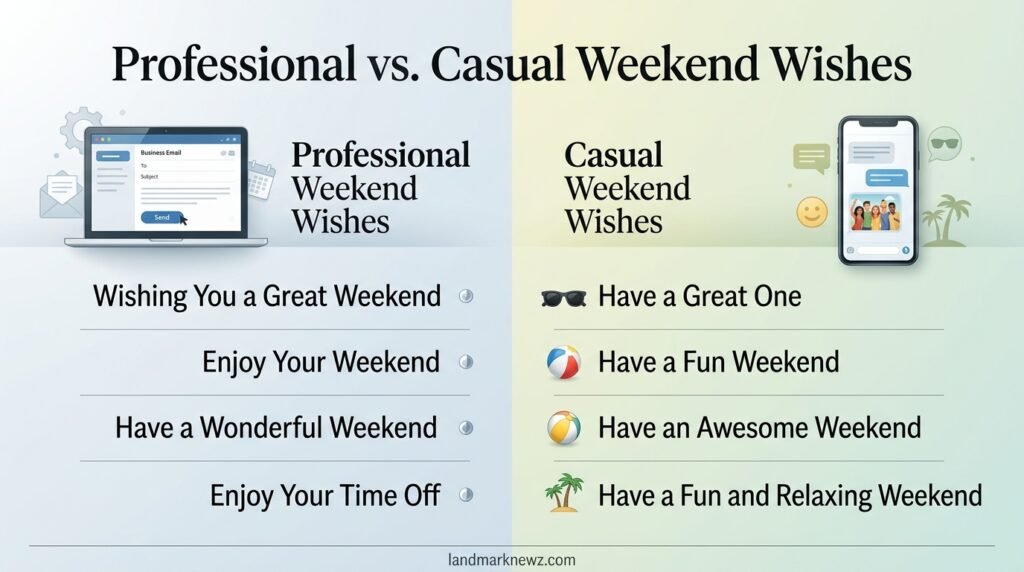
| Alternative | Best Used In | Tone |
| Enjoy Your Time Off | Workplace emails and conversations | Professional, Friendly |
| Have a Wonderful One | Friends and casual conversations | Warm, Casual |
| Hope You Have a Relaxing Break | Supportive messages | Warm, Polite |
| Enjoy the Time Away | Work and personal messages | Friendly, Polite |
| Wishing You a Wonderful Break | Business emails | Formal, Warm |
| Hope You Have Some Time to Relax | Personal and workplace messages | Warm, Friendly |
| Have a Fun One | Texts and casual conversations | Casual, Cheerful |
| Enjoy the Break | Workplace and everyday communication | Friendly, Simple |
| Have a Great One | Casual conversations | Friendly, Relaxed |
| Take Some Time for Yourself | Supportive personal messages | Warm, Caring |
Common Mistakes
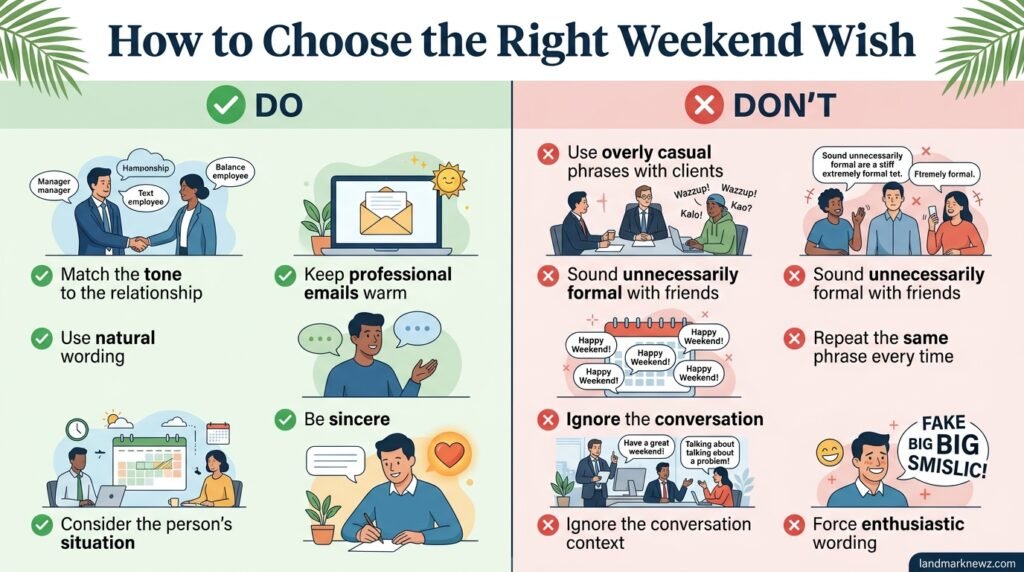
1. Using Casual Phrases in Professional Emails
A phrase such as “Have a fun one!” may sound perfectly natural with a close coworker but can feel too relaxed when addressing a client or senior business contact.
2. Choosing Overly Formal Language
You do not need an elaborate expression to sound professional. In many cases, a simple phrase such as “Enjoy your time off” feels more natural than a stiff or overly formal closing.
3. Repeating the Same Phrase
Using identical wording in every message can make your communication feel routine. A few natural alternatives give you more flexibility without making your writing sound forced.
4. Forgetting the Context
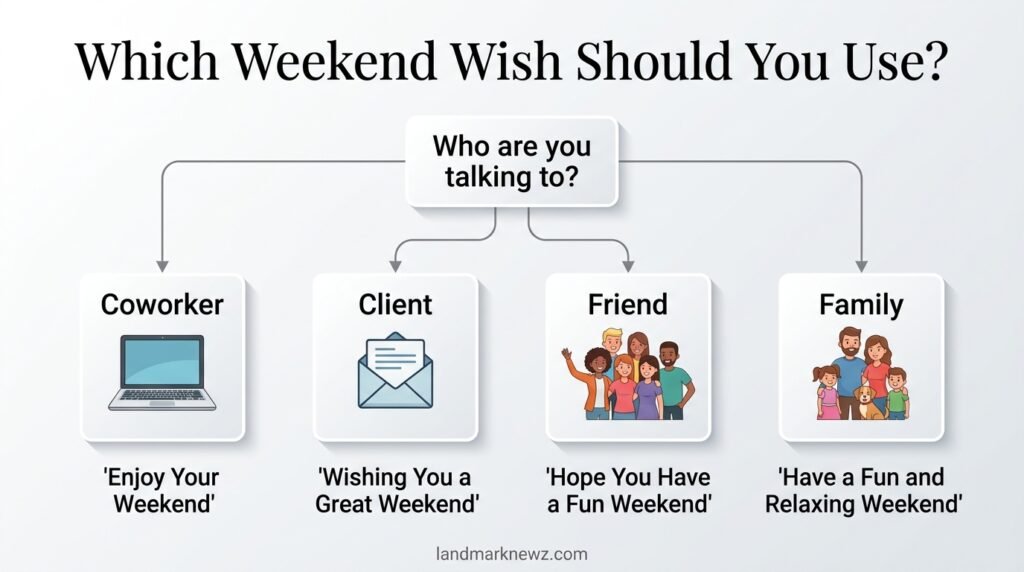
Think about the recipient and the situation before choosing your closing. A message to a friend, a customer, and a manager may need different wording even when the basic meaning remains the same.
5. Sounding Insincere
Avoid exaggerated enthusiasm if it does not match your normal communication style. A short, genuine message usually creates a better impression than wording that sounds copied or overly enthusiastic.
Frequently Asked Questions
What is a professional alternative to “Have a Great Weekend”?
“Enjoy your time off” is one of the safest professional choices. It sounds friendly without becoming too casual. “Wishing you a wonderful break” also works well in business emails, especially when communicating with clients, managers, or other professional contacts.
What is a casual alternative?
“Have a fun one” and “Have a great one” are natural choices for casual conversations. They work well in texts, chats, and conversations with friends or close coworkers. The shorter wording feels relaxed while still communicating a positive goodbye.
How do you end a professional email before the weekend?
You can use a closing such as “Enjoy your time off,” “Wishing you a wonderful break,” or “Hope you have some time to relax.” Choose one based on your relationship with the recipient and the overall tone of the email.
Is “Enjoy your time off” professional?
Yes. “Enjoy your time off” is professional, clear, and friendly. It works especially well when the recipient is leaving work for a few days. The expression is warm enough for everyday workplace communication without sounding overly familiar.
How do you wish a coworker well before Monday?
A simple message such as “Enjoy your time off. See you Monday!” sounds natural and friendly. If you want a slightly warmer option, you could say, “Hope you have some time to relax. See you next week!”
What is a warm way to say goodbye?
“Take some time for yourself” and “Hope you have some time to relax” are warm choices. Both expressions go beyond a routine goodbye by showing that you care about the other person’s ability to rest and enjoy their free time.
Can you say “Have a Great Weekend” to a client?
Yes. The phrase is polite and generally appropriate for clients when the relationship is friendly and the company culture is relaxed. For a more polished business tone, “Wishing you a wonderful break” or “Enjoy your time off” may be a better fit.
Is “Have a Great One” professional?
“Have a great one” can work in a relaxed workplace, especially with coworkers you know well. However, it may be less suitable for formal client communication. When in doubt, choose “Enjoy your time off” for a safer professional tone.
Conclusion
There is no single best replacement for “Have a great weekend” in every situation. The right expression depends on your audience, relationship, and the tone you want to create.
For professional communication, “Enjoy your time off” is a reliable choice, while “Wishing you a wonderful break” adds a more polished touch. Choosing the right professional email closing can also help you match your tone to the recipient and situation.
The most important thing is to choose wording that fits the situation rather than forcing a different phrase just for variety. A short, sincere closing can make any message feel warmer and more natural.

Professional Writing & Workplace Communication Expert
Marcus Hale is a business communication specialist with 11 years of experience in corporate training and professional writing. He has worked with mid-sized companies and remote teams to improve clarity in emails, reports, performance reviews, and client-facing messages.
Marcus focuses on polished, professional alternatives that help readers sound confident without sounding stiff. His guides cover workplace phrases, resume language, leadership communication, and formal-to-natural transitions. He holds a background in business administration and technical writing, and has led workshops on effective professional English.
At LandmarkNewz, Marcus creates practical synonym lists and phrasing tips that professionals can apply immediately in emails, meetings, and career documents.