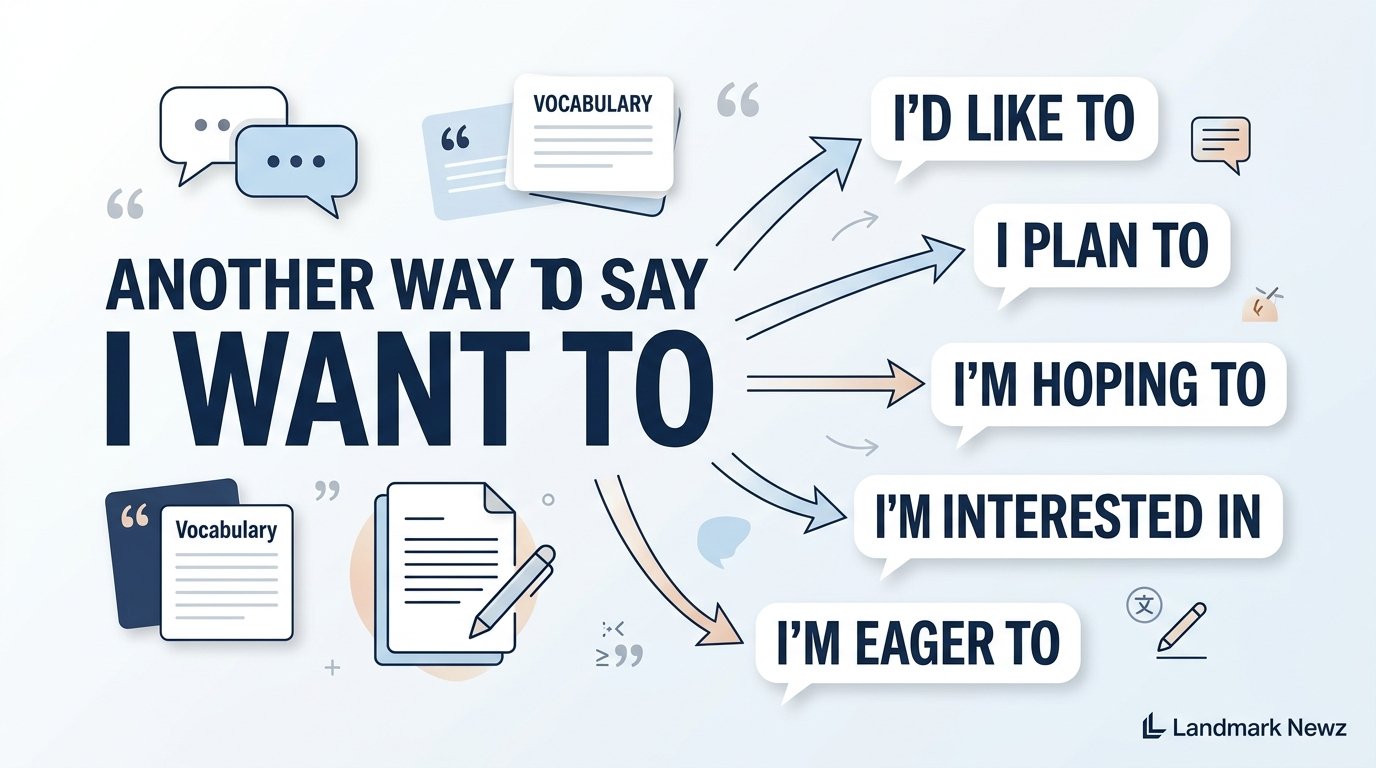
“Another way to say I want to” means finding a different phrase that communicates a desire, intention, plan, interest, or willingness to do something. People often search for alternatives when they want their writing to sound more natural, professional, polite, or varied.
For example, instead of saying, “I want to discuss this opportunity,” you could write, “I’d like to discuss this opportunity” or “I’m interested in discussing this opportunity.”
The right alternative depends on what you actually mean. Some phrases show a strong desire, while others communicate a future plan, polite request, or general interest.
Why Use Other Ways to Say “I Want To”?
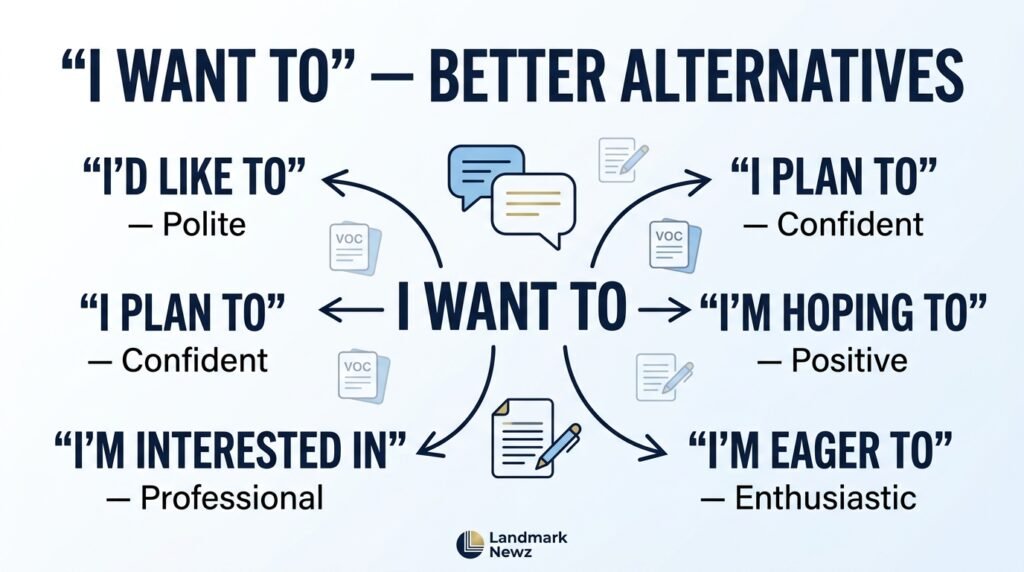
Although “I want to” is grammatically correct, repeating it can make your writing sound basic or overly direct. Using suitable alternatives gives you more control over your tone.
Other expressions can help you:
- Avoid repeating the same phrase.
- Sound more natural and polished.
- Communicate politely in professional settings.
- Show the difference between a desire and a firm plan.
- Make emails, applications, and conversations more engaging.
- Express interest without sounding too demanding.
10 Best Other Ways to Say “I Want To”
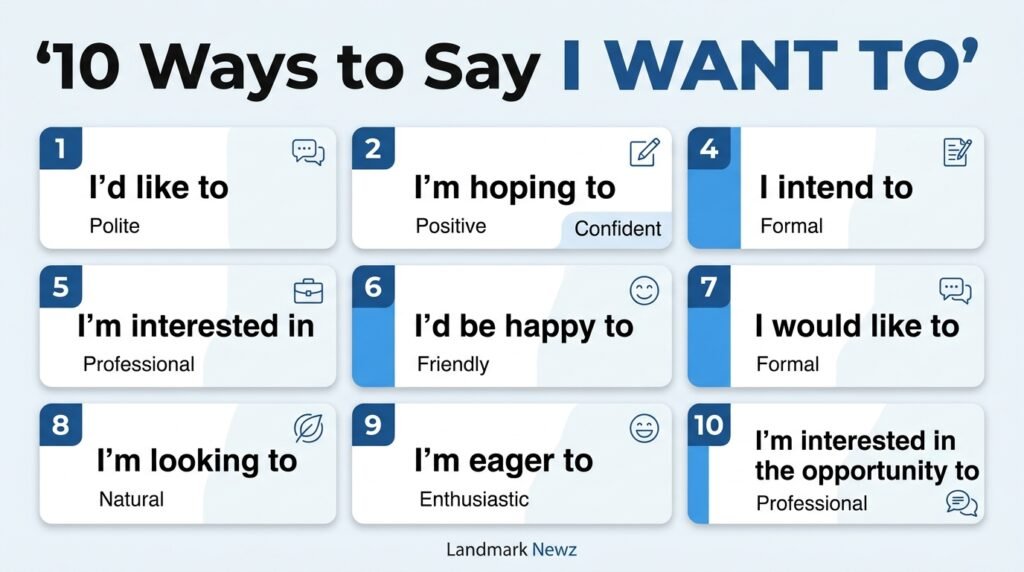
1. I’d Like To
Meaning
“I’d like to” is one of the most useful alternatives to “I want to.” It expresses a desire politely and works in both professional and everyday communication.
Best For
- Professional
- Formal
- Polite
- Friendly
Example 1
I’d like to schedule a meeting to discuss the project timeline.
Example 2
I’d like to learn more about the position before submitting my application.
Quick Tip
Use “I’d like to” when you want to express a desire without sounding demanding.
2. I’m Hoping To
Meaning
“I’m hoping to” expresses a desired outcome or future action. It sounds softer than “I want to” and suggests that the result may depend on circumstances.
Best For
- Friendly
- Warm
- Polite
- Casual
Example 1
I’m hoping to finish the report before Friday.
Example 2
I’m hoping to visit California later this year.
Quick Tip
Choose this phrase when your plan is a goal rather than something completely certain.
3. I Plan To
Meaning
“I plan to” shows that you have a specific intention or future course of action. It sounds more definite than “I’m hoping to.”
Best For
- Professional
- Formal
- Casual
Example 1
I plan to submit the proposal by the end of the week.
Example 2
We plan to expand our services next year.
Quick Tip
Use “I plan to” when you have already decided what you intend to do.
4. I Intend To
Meaning
“I intend to” communicates a firm intention. It is more formal than “I want to” and is especially useful in professional, academic, and official writing.
Best For
- Formal
- Professional
Example 1
I intend to complete the required training before the deadline.
Example 2
The company intends to improve its customer support process.
Quick Tip
Because it sounds formal and deliberate, use this phrase when your intention is serious or clearly established.
5. I’m Interested in
Meaning
“I’m interested in” expresses curiosity, willingness, or a desire to explore something. Unlike “I want to,” it often sounds less forceful.
Best For
- Professional
- Polite
- Friendly
Example 1
I’m interested in learning more about your internship program.
Example 2
I’m interested in discussing possible partnership opportunities.
Quick Tip
Use “I’m interested in” when you want to express interest without making a strong demand.
6. I’d Be Happy To
Meaning
“I’d be happy to” communicates willingness and a positive attitude toward doing something. It is particularly effective when responding to requests or offering assistance.
Best For
- Professional
- Friendly
- Warm
- Polite
Example 1
I’d be happy to answer any questions you may have.
Example 2
I’d be happy to help you review the document.
Quick Tip
Use this expression when you want to sound cooperative and approachable.
7. I Would Like To
Meaning
“I would like to” is the full form of “I’d like to.” It expresses a polite desire and is appropriate when you want your wording to sound clear and professional.
Best For
- Formal
- Professional
- Polite
Example 1
I would like to request additional information about the program.
Example 2
I would like to discuss the results with the research team.
Quick Tip
Choose the full form in formal letters, applications, and official communication.
8. I’m Looking to
Meaning
“I’m looking to” commonly expresses an intention or goal, especially when discussing work, business, purchases, or personal plans. It is natural and conversational.
Best For
- Casual
- Professional
- Friendly
Example 1
I’m looking to improve my writing skills this year.
Example 2
We’re looking to hire an experienced customer service representative.
Quick Tip
This phrase works well in conversational professional English but may sound less formal than “I intend to.”
9. I’m Eager to
Meaning
“I’m eager to” shows strong enthusiasm and genuine interest in doing something. It communicates more excitement than the neutral phrase “I want to.”
Best For
- Professional
- Warm
- Friendly
Example 1
I’m eager to contribute my experience to your team.
Example 2
She’s eager to begin working on the new project.
Quick Tip
Use “I’m eager to” when enthusiasm is important, such as in job applications or professional introductions.
10. I’m Interested in the Opportunity to
Meaning
“I’m interested in the opportunity to” is a polished way to express a desire to take part in an activity, role, or experience. It is especially useful in professional and application writing.
Best For
- Professional
- Formal
- Polite
Example 1
I’m interested in the opportunity to contribute to your organization.
Example 2
I’m interested in the opportunity to work with a team that values innovation.
Quick Tip
Use this phrase in cover letters, networking messages, and applications when you want to emphasize both interest and the value of the opportunity.
Comparison Table
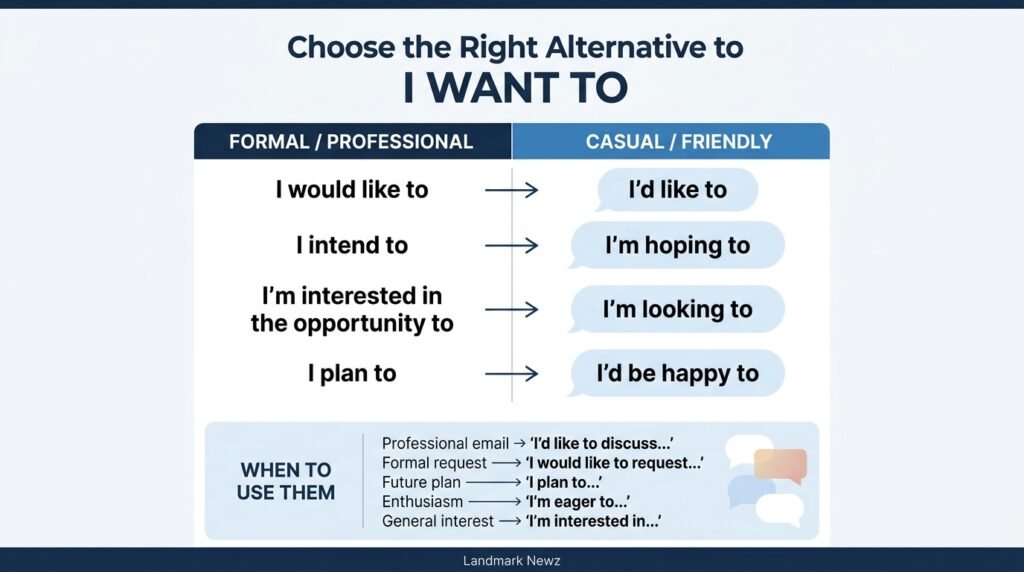
| Alternative | Best Used In | Tone |
| I’d like to | Emails, conversations | Polite, professional |
| I’m hoping to | Goals, personal plans | Warm, positive |
| I plan to | Future plans | Confident, direct |
| I intend to | Official or formal writing | Formal, firm |
| I’m interested in | Opportunities, discussions | Polite, neutral |
| I’d be happy to | Offers and responses | Warm, cooperative |
| I would like to | Formal requests | Professional, polite |
| I’m looking to | Goals, work, business | Natural, conversational |
| I’m eager to | Applications, introductions | Enthusiastic |
| I’m interested in the opportunity to | Applications, professional writing | Formal, positive |
Common Mistakes
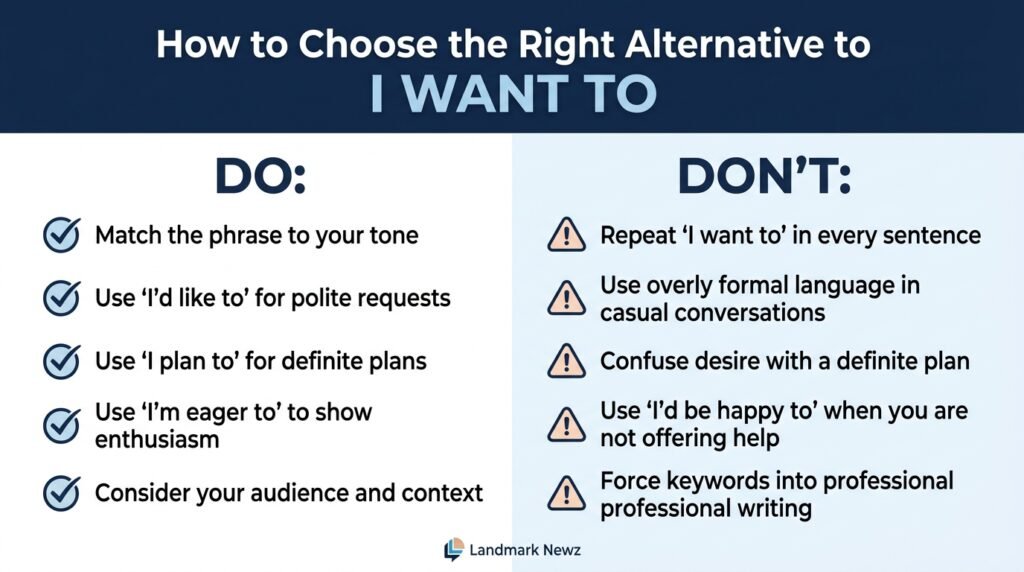
1. Using “I Want To” in Every Sentence
“I want to” is perfectly acceptable, but repeating it can make your writing sound repetitive. Vary your wording when the context allows it.
2. Choosing an Alternative That Changes the Meaning
Not every alternative means exactly the same thing. For example, “I plan to” suggests a decision, while “I’m hoping to” suggests a goal that may not be certain.
3. Sounding Too Formal
Words such as “I intend to” can feel overly formal in casual conversations. Match your vocabulary to the relationship and setting.
4. Using “I’d Be Happy To” Incorrectly
“I’d be happy to” communicates willingness, not simply desire. It is most natural when offering to do something or agreeing to a request.
5. Ignoring the Context
A phrase that works well in a cover letter may sound strange in a text message. Always consider your audience, purpose, and level of formality.
Frequently Asked Questions
What is a professional way to say “I want to”?
“I’d like to” is usually the safest professional alternative. It sounds polite, natural, and confident without being too formal. For example, instead of saying, “I want to discuss the proposal,” you can write, “I’d like to discuss the proposal.” This works well in emails, meetings, applications, and workplace conversations.
What is a polite way to say “I want to”?
“I’d like to” and “I would like to” are both polite choices. The first sounds natural in everyday professional communication, while the second can feel slightly more formal. For example, “I would like to request an appointment” is appropriate for an official email or formal request.
How can I say “I want to” in a cover letter?
In a cover letter, phrases such as “I’m eager to,” “I’m interested in the opportunity to,” and “I’d like to” work well. They can communicate enthusiasm without sounding demanding. For example, “I’m eager to contribute my customer service experience to your team” sounds more polished than “I want to work for your company.”
What is another way to say “I want to learn”?
You can say “I’d like to learn,” “I’m interested in learning,” “I’m hoping to learn,” or “I’m eager to learn.” The best option depends on your tone. “I’m eager to learn” emphasizes enthusiasm, while “I’m interested in learning” sounds more neutral and professional.
Is “I’m looking to” professional?
Yes, “I’m looking to” can be professional, especially in modern workplace communication. It is common when discussing goals, hiring, career plans, or business objectives. However, “I plan to” or “I intend to” may be better when you need a more formal or precise tone.
What is a stronger alternative to “I want to”?
“I intend to” is a strong alternative because it communicates a clear and serious intention. “I plan to” also sounds confident while remaining natural. For example, “I intend to complete the project by June” communicates a firmer commitment than “I’m hoping to complete the project by June.”
Can I use “I’d like to” in an email?
Yes. “I’d like to” is one of the most versatile phrases for professional emails. You can use it to make requests, introduce a topic, express interest, or suggest an action. For example, “I’d like to schedule a call next week” sounds polite and direct without being overly formal.
Which alternative to “I want to” sounds the most natural?
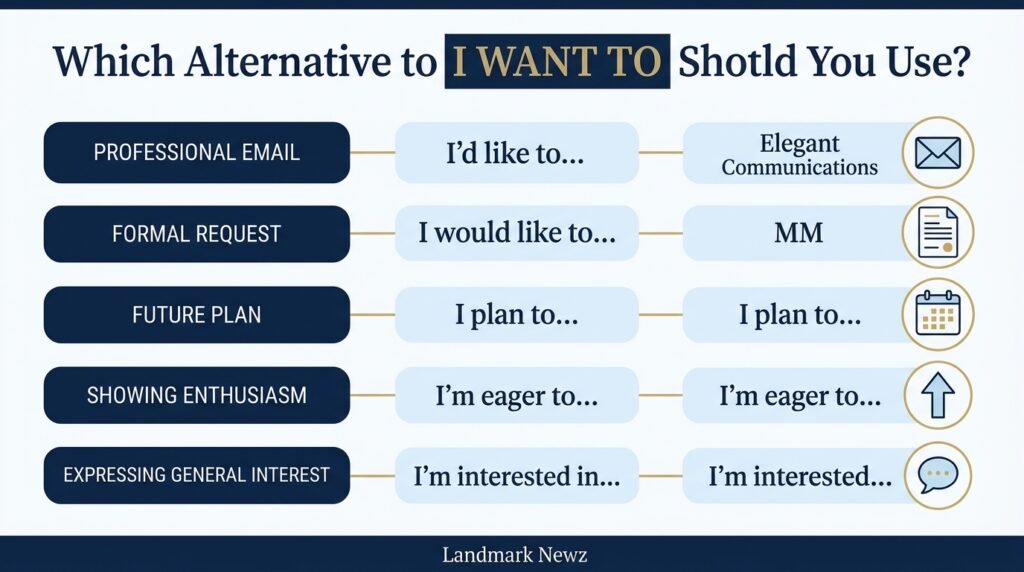
“I’d like to” is generally the most natural all-purpose alternative. However, the best phrase depends on your meaning. Use “I plan to” for a definite plan, “I’m hoping to” for an intended goal, “I’m eager to” for enthusiasm, and “I’m interested in” for general interest.
Conclusion
Finding another way to say “I want to” can make your writing more precise, natural, and appropriate for the situation. While “I’d like to” is the best all-purpose choice, other expressions can communicate different shades of meaning.
Use “I plan to” when you have made a decision, “I’m hoping to” when you are working toward a goal, and “I intend to” when you want a firm and formal tone. For professional applications, “I’m eager to” or “I’m interested in the opportunity to” can show enthusiasm without sounding demanding.
The key is to choose the phrase that matches your real intention. A small wording change can make an email, cover letter, conversation, or application sound much more polished.

Language & Everyday Communication Specialist
Elena Voss is a language enthusiast and communication coach with over 9 years of experience helping people express themselves more naturally in English. She previously worked as an ESL instructor and corporate language trainer, guiding professionals and students on clearer everyday conversations, polite alternatives, and natural phrasing.
Elena specializes in practical synonym guides and “another way to say…” content that feels conversational rather than textbook. Her writing focuses on real-life situations — emails to friends, casual workplace chat, social media, and daily interactions. She believes the best language advice is simple, useful, and easy to remember.
When she’s not creating content for LandmarkNewz, Elena enjoys analyzing modern slang trends and testing new phrases in real conversations.