
Finding another way to say easy to work with can help you sound more precise and professional. Although the original phrase is friendly and natural, it can feel vague when used repeatedly in a resume, performance review, recommendation, or professional email.
The right alternative can show why someone is easy to work with. Maybe they communicate clearly, adapt to changes, support teammates, meet deadlines, or handle disagreements calmly.
What Does “Easy to Work With” Mean?

“Easy to work with” means that someone is pleasant, cooperative, reliable, and uncomplicated to work alongside. It often suggests that the person communicates well, respects others, handles responsibilities, and contributes to a positive working relationship.
The phrase is commonly used for coworkers, managers, employees, clients, contractors, and business partners. You might hear it in workplace feedback, job recommendations, performance reviews, networking conversations, or everyday discussions.
For example:
“Sarah is easy to work with and always communicates clearly.”
Depending on the situation, you can replace “easy to work with” with a more specific word such as collaborative, cooperative, or flexible.
Why Use Other Ways to Say “Easy to Work With”?
Using alternatives allows you to communicate the same general idea with greater accuracy. Instead of relying on one broad phrase, you can highlight the specific quality that makes someone effective to work with.
Other benefits include:
- Avoiding repetitive language in professional writing
- Making resumes and recommendations more specific
- Matching your tone to the situation
- Highlighting communication or teamwork skills
- Making compliments sound more thoughtful
- Describing workplace strengths with greater precision
For example, “easy to work with” and “highly collaborative” are similar, but they do not communicate exactly the same thing. “Collaborative” focuses more strongly on teamwork, while “easy to work with” gives a broader impression.
10 Best Other Ways to Say “Easy to Work With”
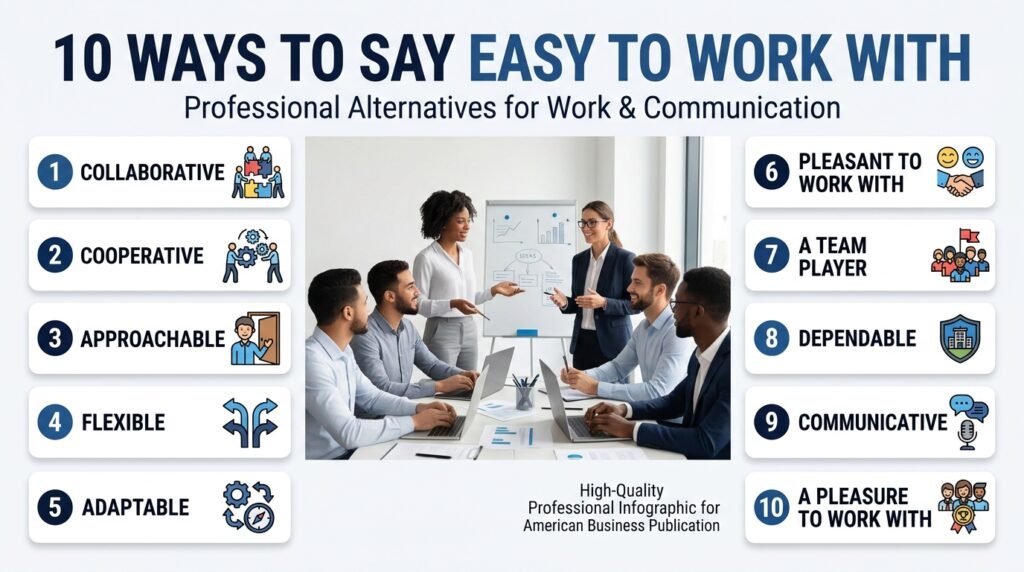
1. Collaborative
Meaning
“Collaborative” describes someone who works effectively with other people toward a shared goal. It suggests teamwork, communication, cooperation, and a willingness to contribute ideas.
Best For
- Professional
- Formal
- Friendly
Example 1
“Marcus is highly collaborative and works well with teams across different departments.”
Example 2
“She takes a collaborative approach when solving complex customer issues.”
Quick Tip
Use “collaborative” on resumes and performance reviews when you want to emphasize teamwork.
2. Cooperative
Meaning
“Cooperative” means willing to work with others, share responsibilities, and help reach a common goal. It is a direct and professional alternative to “easy to work with.”
Best For
- Professional
- Formal
- Polite
Example 1
“James has always been cooperative when coordinating projects with our sales team.”
Example 2
“The client was cooperative throughout the entire planning process.”
Quick Tip
Choose “cooperative” when you want to emphasize willingness and a positive attitude.
3. Approachable
Meaning
“Approachable” describes someone who is friendly and comfortable to communicate with. It can suggest that coworkers or clients feel comfortable asking questions, raising concerns, or sharing ideas.
Best For
- Professional
- Friendly
- Warm
Example 1
“Our new manager is approachable and always makes time for employee questions.”
Example 2
“Her approachable personality helped new team members feel welcome.”
Quick Tip
Use “approachable” when communication and interpersonal skills are the main qualities you want to highlight.
4. Flexible
Meaning
“Flexible” describes someone who can adapt to changing needs, schedules, priorities, or circumstances. It implies that the person does not create unnecessary difficulties when plans change.
Best For
- Professional
- Formal
- Polite
Example 1
“Daniel is flexible when project requirements change unexpectedly.”
Example 2
“The vendor was flexible enough to accommodate our revised timeline.”
Quick Tip
“Flexible” is especially useful when describing someone who handles changes calmly.
5. Adaptable
Meaning
“Adaptable” means able to adjust effectively to new situations or changing demands. It presents someone as capable, practical, and comfortable with change.
Best For
- Professional
- Formal
Example 1
“An adaptable team member can respond quickly when priorities shift.”
Example 2
“Lauren proved highly adaptable during the company’s transition to a new system.”
Quick Tip
Use “adaptable” when you want to describe a person’s ability to succeed despite changing circumstances.
6. Pleasant to Work With
Meaning
“Pleasant to work with” is a warm and straightforward way to say that someone creates a positive working relationship. It focuses on personality, attitude, and everyday interactions.
Best For
- Friendly
- Warm
- Polite
Example 1
“Tom is pleasant to work with and treats everyone on the team with respect.”
Example 2
“Our contractor was professional, responsive, and pleasant to work with.”
Quick Tip
This phrase works particularly well in recommendations, testimonials, and personal feedback.
7. A Team Player
Meaning
“A team player” describes someone who supports colleagues and contributes positively to group goals. It emphasizes cooperation, reliability, and a willingness to help others succeed.
Best For
- Professional
- Friendly
- Casual
Example 1
“Emily is a dependable team player who always helps colleagues meet important deadlines.”
Example 2
“He quickly became a valuable team player during the product launch.”
Quick Tip
This is a useful resume phrase, but strengthen it with a specific example or achievement when possible.
8. Dependable
Meaning
“Dependable” means reliable and trustworthy. A dependable person follows through on responsibilities and gives others confidence that they can count on them.
Best For
- Professional
- Formal
- Polite
Example 1
“Kevin is dependable and consistently delivers his assignments on time.”
Example 2
“Clients appreciate her dependable communication and consistent follow-through.”
Quick Tip
Choose “dependable” when reliability is the main reason someone is easy to work with.
9. Communicative
Meaning
“Communicative” describes someone who shares information clearly and keeps others informed. Strong communication often makes collaboration smoother and prevents misunderstandings.
Best For
- Professional
- Formal
Example 1
“Rachel is communicative and keeps stakeholders informed throughout each project.”
Example 2
“Our account manager is highly communicative, which makes project coordination much easier.”
Quick Tip
Use this option when clear updates, responsiveness, and information sharing are important.
10. A Pleasure to Work With
Meaning
“A pleasure to work with” is a warm compliment that expresses strong appreciation for someone’s attitude and behavior. It suggests that working with the person was enjoyable, productive, and positive.
Best For
- Friendly
- Warm
- Polite
Example 1
“David was a pleasure to work with from the beginning of the project.”
Example 2
“Maria is knowledgeable, professional, and a pleasure to work with.”
Quick Tip
This phrase is excellent for client testimonials, recommendations, thank-you messages, and professional reviews.
Comparison Table
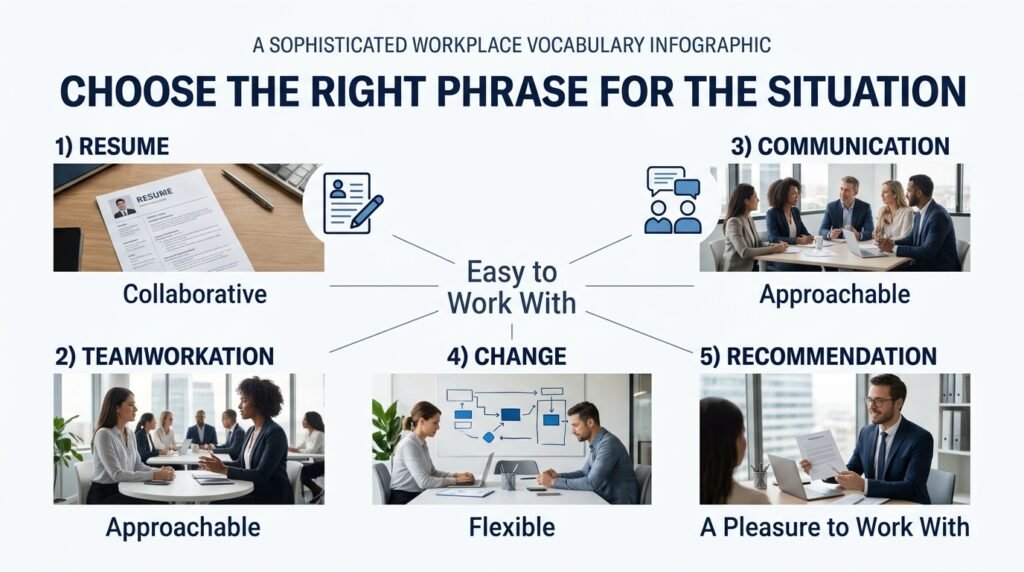
| Alternative | Best Used In | Tone |
| Collaborative | Resume, workplace feedback | Professional |
| Cooperative | Workplace, business communication | Professional |
| Approachable | Reviews, leadership feedback | Friendly |
| Flexible | Resume, workplace communication | Professional |
| Adaptable | Resume, performance review | Formal |
| Pleasant to Work With | Reviews, recommendations | Warm |
| A Team Player | Resume, team feedback | Professional |
| Dependable | Resume, recommendations | Trustworthy |
| Communicative | Resume, performance review | Professional |
| A Pleasure to Work With | Testimonials, recommendations | Warm |
Common Mistakes
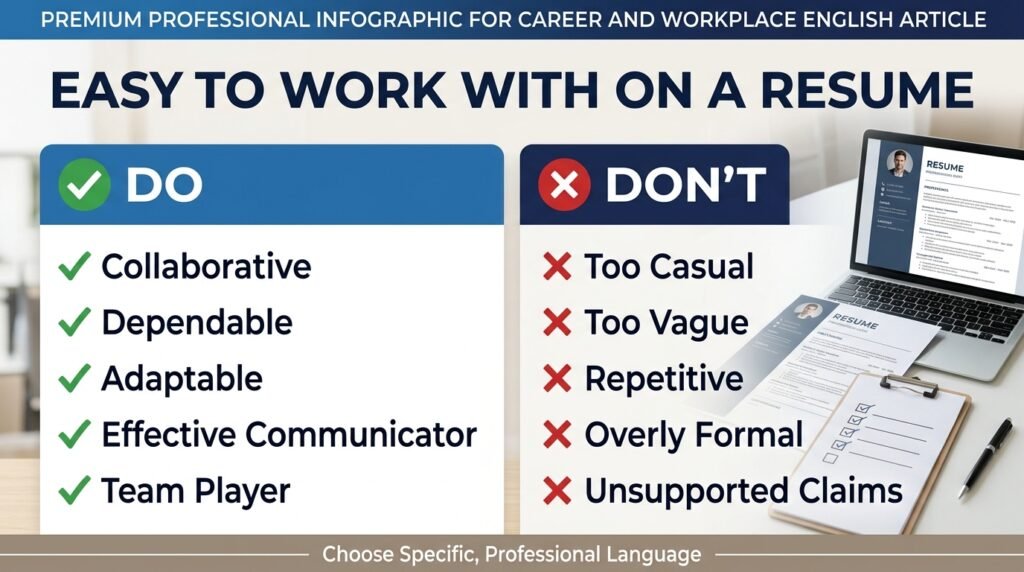
1. Using the same phrase repeatedly
Repeating “easy to work with” can make professional writing sound basic or repetitive. Choose a more specific alternative when possible.
2. Using overly formal language
Words such as “cooperative” and “adaptable” work well professionally, but they may sound stiff in a casual conversation. Match the wording to your audience.
3. Ignoring the actual quality
Not every alternative means exactly the same thing. Use “dependable” for reliability, “approachable” for communication, and “flexible” for adaptability.
4. Using vague praise on a resume
Simply calling yourself “easy to work with” does not show much evidence. Instead, describe the behavior behind the quality, such as collaborating across departments or supporting teammates.
5. Sounding insincere
Strong compliments should fit the situation. If you call someone “a pleasure to work with,” make sure the surrounding message supports that positive impression.
Frequently Asked Questions
What is a professional way to say “easy to work with”?
“Collaborative,” “cooperative,” “dependable,” and “adaptable” are strong professional alternatives. The best choice depends on the quality you want to emphasize. For example, “collaborative” highlights teamwork, while “dependable” focuses on reliability. On a resume, a specific example is usually stronger than a general compliment.
What is another way to say “easy to work with” on a resume?
For a resume, consider phrases such as “collaborative team member,” “dependable professional,” “adaptable employee,” or “effective communicator.” These alternatives sound more specific and professional. Whenever possible, connect the phrase to a measurable achievement or workplace behavior instead of using it as a standalone claim.
How do you describe someone who is easy to work with?
You can describe them as collaborative, cooperative, approachable, flexible, adaptable, dependable, or pleasant to work with. Choose the word that best explains their behavior. If they communicate clearly, “communicative” may be ideal; if they adjust well to changes, “flexible” or “adaptable” may be more accurate.
Is “easy to work with” professional?
Yes, “easy to work with” is professional and commonly understood, especially in conversational workplace communication. However, it is somewhat broad. In formal writing, a more specific word such as “collaborative” or “dependable” can communicate the person’s strengths more clearly.
What is a positive way to say someone is easy to work with?
“A pleasure to work with” is a warm and positive option. “Collaborative,” “cooperative,” and “approachable” are also positive choices. The best phrase depends on what you appreciate about the person, such as their teamwork, communication, flexibility, reliability, or friendly attitude.
What is another way to say “easy to work with” in a recommendation?
In a recommendation, you could say someone is “a pleasure to work with,” “highly collaborative,” “dependable,” or “professional and approachable.” These phrases sound natural while giving the reader a clearer sense of the person’s workplace qualities and interpersonal style.
Can I use “team player” instead of “easy to work with”?
Yes. “Team player” is appropriate when the person’s strength comes from supporting coworkers and contributing to group goals. However, it is not a perfect replacement in every situation. Someone can be easy to work with because they are flexible or dependable even if teamwork is not the main issue.
What is the best synonym for “easy to work with”?
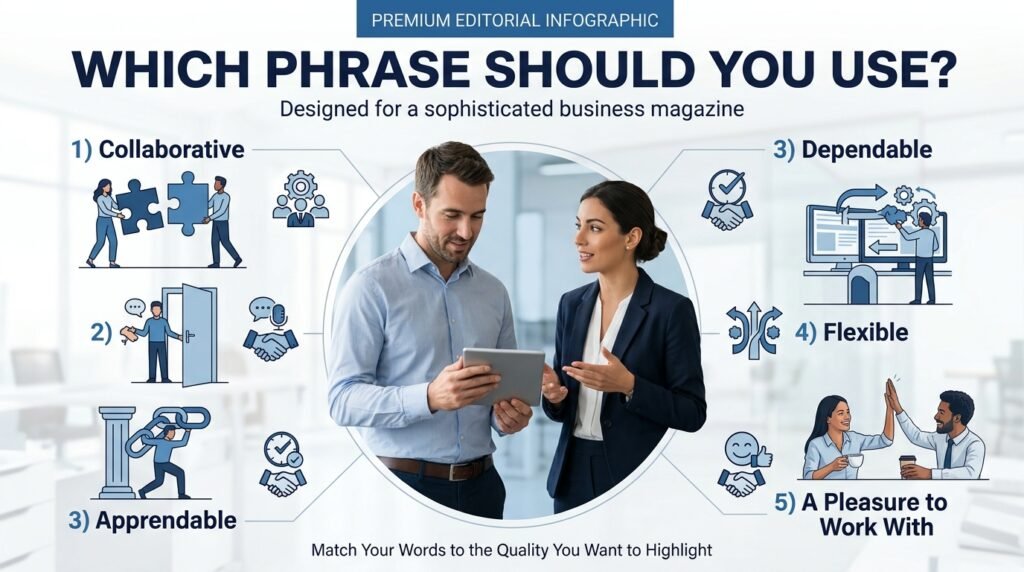
There is no single best synonym for every situation. “Collaborative” is excellent for professional and resume writing, “approachable” works well for communication, and “a pleasure to work with” is ideal for warm recommendations. Select the alternative that describes the specific quality you want readers to notice.
Conclusion
Knowing another way to say easy to work with gives you more precise options for professional and everyday communication. While the original phrase is perfectly natural, alternatives can reveal the specific quality behind it.
Choose collaborative when teamwork matters, cooperative when willingness to help is important, and dependable when reliability stands out. Use approachable for strong interpersonal communication and flexible or adaptable when someone handles change well. For recommendations and testimonials, pleasant to work with or a pleasure to work with adds a warmer touch.
The key is to match the phrase to the situation rather than simply replacing one expression with another. The most effective wording tells readers exactly why someone is easy to work with and can strengthen teamwork and collaboration in the workplace.

Professional Writing & Workplace Communication Expert
Marcus Hale is a business communication specialist with 11 years of experience in corporate training and professional writing. He has worked with mid-sized companies and remote teams to improve clarity in emails, reports, performance reviews, and client-facing messages.
Marcus focuses on polished, professional alternatives that help readers sound confident without sounding stiff. His guides cover workplace phrases, resume language, leadership communication, and formal-to-natural transitions. He holds a background in business administration and technical writing, and has led workshops on effective professional English.
At LandmarkNewz, Marcus creates practical synonym lists and phrasing tips that professionals can apply immediately in emails, meetings, and career documents.