
Sometimes, “thank you for the kind words” feels too familiar or repetitive. Whether someone praised your work, complimented you, offered encouragement, or sent a thoughtful message, choosing the right response can make your gratitude sound more genuine.
The good news is that you have many natural alternatives. Some are professional enough for a workplace email, while others work better with friends, family, or people who have offered personal encouragement.
What Does “Another Way to Say Thank You for the Kind Words” Mean?
The phrase “another way to say thank you for the kind words” refers to alternative expressions used to show appreciation when someone says something positive, supportive, or complimentary about you.
People commonly search for alternatives when writing emails, replying to compliments, responding to social media comments, or thanking someone for encouragement. The goal is usually to sound sincere without repeating the same phrase.
For example, instead of saying “Thank you for the kind words,” you could say, “I truly appreciate your thoughtful message” or “That means so much to me.”
Why Use Other Ways to Say “Thank You for the Kind Words”?
Using different expressions can make your communication feel more natural and appropriate to the situation. The right wording also helps you show the exact level of warmth, professionalism, or emotion you want.
Here are a few reasons to use alternatives:
- Avoid repeating the same expression.
- Make your response sound more personal.
- Match the tone to the relationship.
- Communicate professionally in workplace situations.
- Express deeper gratitude when the message was meaningful.
- Respond naturally to compliments and encouragement.
10 Best Other Ways to Say “Thank You for the Kind Words”
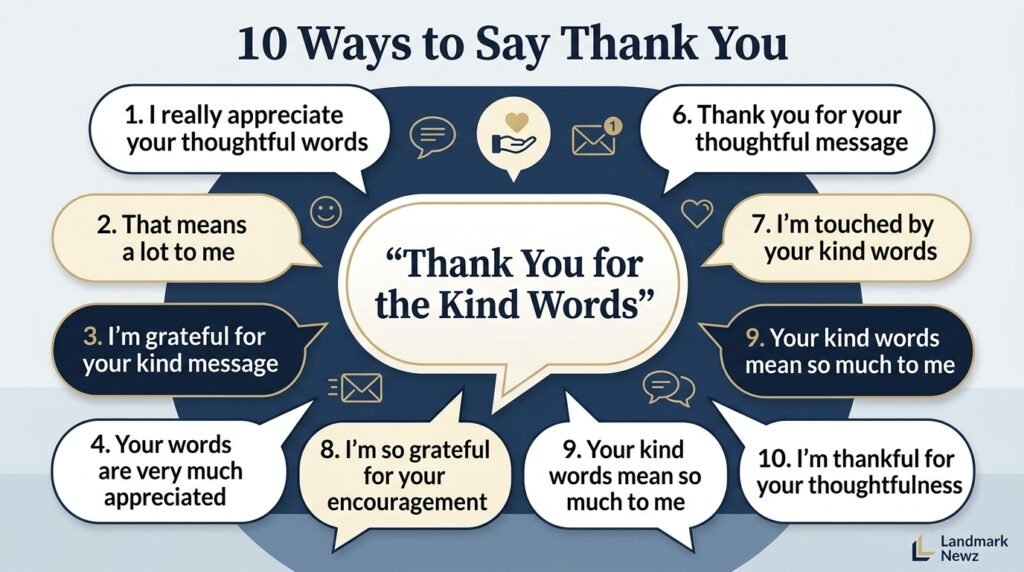
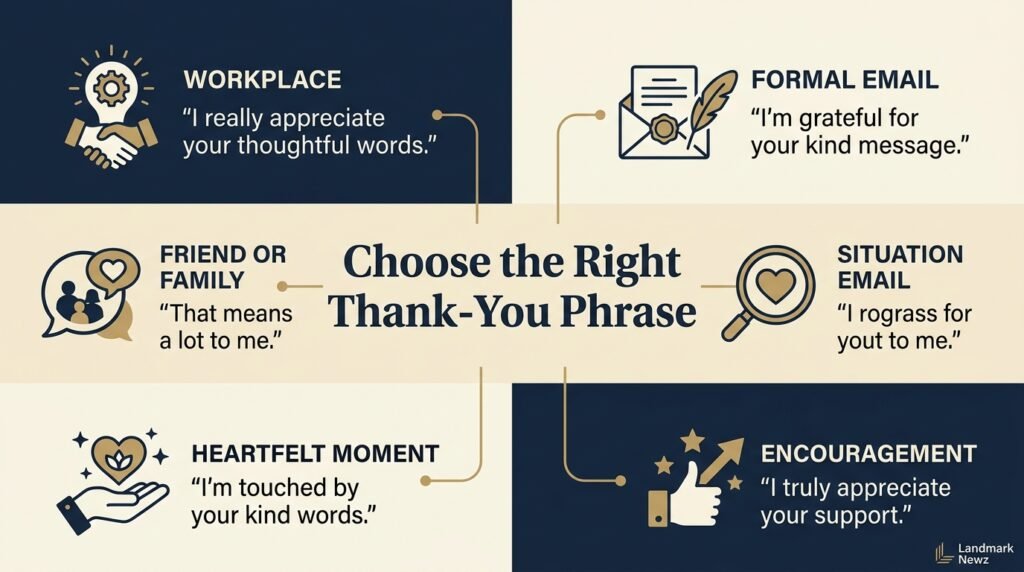
1. I Really Appreciate Your Thoughtful Words
Meaning
This phrase expresses sincere gratitude for someone’s supportive or complimentary comments. “Thoughtful” adds a personal touch and suggests that the person’s words genuinely mattered to you.
Best For
- Professional
- Formal
- Warm
- Polite
Example 1
“I really appreciate your thoughtful words about the presentation.”
Example 2
“Thank you for taking the time to share such thoughtful words with me.”
Quick Tip
Use this option when you want to sound appreciative while keeping your response polished and professional.
2. That Means a Lot to Me
Meaning
“That means a lot to me” communicates genuine emotional appreciation. It works especially well when someone’s compliment, encouragement, or support had a personal impact.
Best For
- Casual
- Friendly
- Warm
- Polite
Example 1
“Your encouragement during this difficult project means a lot to me.”
Example 2
“That compliment means a lot to me, especially coming from someone I respect.”
Quick Tip
Choose this phrase when you want your gratitude to sound heartfelt rather than formal.
3. I’m Grateful for Your Kind Message
Meaning
This expression directly acknowledges someone’s message and shows sincere appreciation. It has a slightly more heartfelt tone than a simple “thank you.”
Best For
- Formal
- Professional
- Warm
- Polite
Example 1
“I’m grateful for your kind message after the announcement.”
Example 2
“I’m truly grateful for your kind message and continued support.”
Quick Tip
This is an excellent choice for emails, cards, sympathy messages, and other meaningful communications.
4. Your Words Are Very Much Appreciated
Meaning
This phrase emphasizes that the other person’s comments were noticed and valued. It sounds respectful and works particularly well when responding to praise or professional recognition.
Best For
- Professional
- Formal
- Polite
Example 1
“Your words are very much appreciated as we begin this new chapter.”
Example 2
“Your words are very much appreciated, and I’m glad the effort made a difference.”
Quick Tip
Use this expression when you want a formal response without sounding overly emotional.
5. I Truly Appreciate Your Support
Meaning
This alternative shifts the focus from the person’s words to the support behind them. It is useful when someone has offered encouragement, reassurance, or praise during an important moment.
Best For
- Professional
- Friendly
- Warm
- Polite
Example 1
“I truly appreciate your support as I take on this new role.”
Example 2
“Your encouragement helped me stay focused, and I truly appreciate your support.”
Quick Tip
Use this when the person did more than compliment you and actively encouraged you.
6. Thank You for Your Thoughtful Message
Meaning
This phrase is simple, natural, and versatile. It acknowledges that the person’s message was considerate without sounding overly formal or emotional.
Best For
- Professional
- Friendly
- Warm
- Polite
Example 1
“Thank you for your thoughtful message about my recent achievement.”
Example 2
“Thank you for your thoughtful message; I was happy to hear from you.”
Quick Tip
This is one of the safest choices when you are unsure how formal your response should be.
7. I’m Touched by Your Kind Words
Meaning
“I’m touched by your kind words” communicates stronger emotion than a standard thank-you. It tells the other person that their message had a meaningful effect on you.
Best For
- Friendly
- Warm
- Polite
Example 1
“I’m touched by your kind words and grateful that you reached out.”
Example 2
“Your support throughout the process meant so much, and I’m touched by your kind words.”
Quick Tip
Reserve this phrase for situations where you genuinely feel moved or emotionally affected.
8. I’m So Grateful for Your Encouragement
Meaning
This response focuses on encouragement rather than the words themselves. It is particularly appropriate when someone helped you feel confident during a challenging or important period.
Best For
- Casual
- Friendly
- Warm
- Polite
Example 1
“I’m so grateful for your encouragement before the interview.”
Example 2
“Knowing you believed in me made a difference, and I’m so grateful for your encouragement.”
Quick Tip
Use this alternative when the person’s words motivated, reassured, or inspired you.
9. Your Kind Words Mean So Much to Me
Meaning
This expression combines appreciation with emotional warmth. It clearly communicates that the person’s compliment or message was personally meaningful.
Best For
- Friendly
- Warm
- Polite
Example 1
“Your kind words mean so much to me after everything we’ve worked through.”
Example 2
“Your kind words mean so much to me, and I’m thankful you took the time to reach out.”
Quick Tip
This phrase is best for personal messages rather than highly formal business correspondence.
10. I’m Thankful for Your Thoughtfulness
Meaning
This phrase recognizes not only what someone said but also the care behind their actions. It sounds gracious and sincere without being overly emotional.
Best For
- Formal
- Friendly
- Warm
- Polite
Example 1
“I’m thankful for your thoughtfulness and the encouragement you shared with our team.”
Example 2
“I’m thankful for your thoughtfulness during such an important time in my life.”
Quick Tip
Choose this expression when you want to recognize someone’s consideration as well as their kind words.
Comparison Table
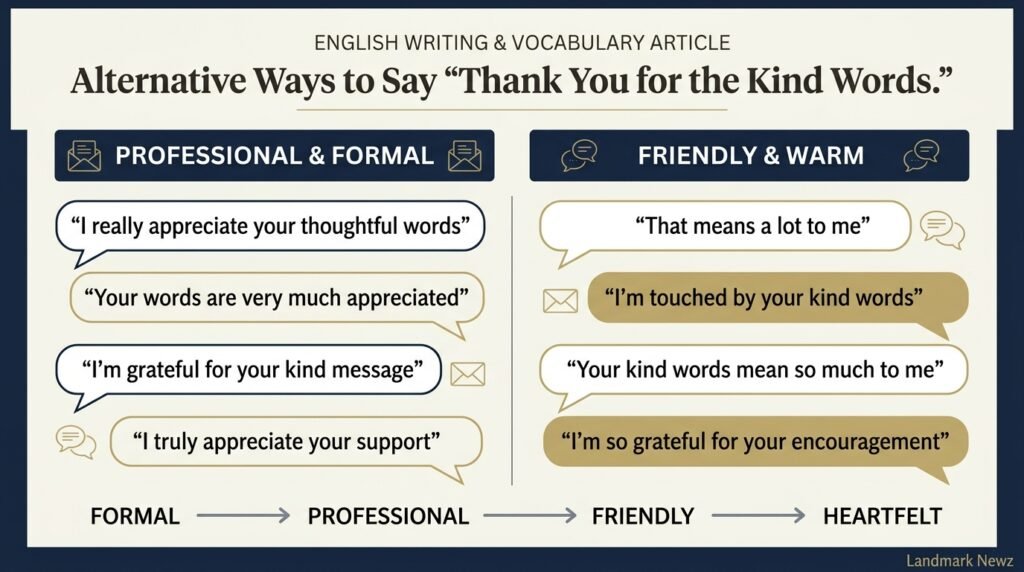
| Alternative | Best Used In | Tone |
| I Really Appreciate Your Thoughtful Words | Work, emails | Professional and warm |
| That Means a Lot to Me | Personal conversations | Warm and sincere |
| I’m Grateful for Your Kind Message | Emails, cards | Formal and heartfelt |
| Your Words Are Very Much Appreciated | Workplace communication | Formal and polite |
| I Truly Appreciate Your Support | Professional and personal | Warm and respectful |
| Thank You for Your Thoughtful Message | General communication | Polite and natural |
| I’m Touched by Your Kind Words | Personal messages | Heartfelt |
| I’m So Grateful for Your Encouragement | Friends, family, mentors | Warm and personal |
| Your Kind Words Mean So Much to Me | Personal situations | Emotional and sincere |
| I’m Thankful for Your Thoughtfulness | Personal and professional | Gracious and warm |
Common Mistakes
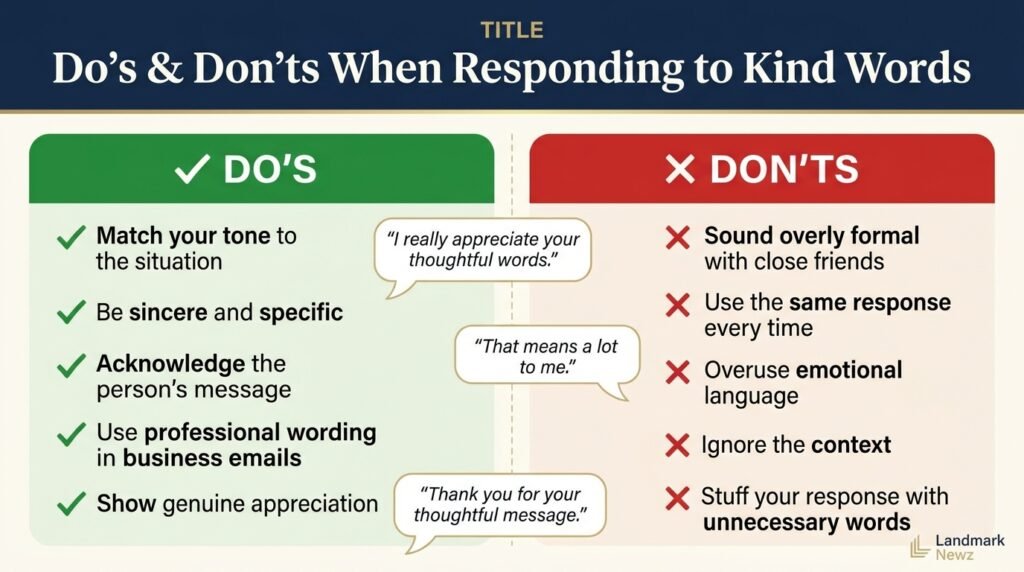
1. Using Casual Phrases in Professional Emails
Expressions such as “That’s so sweet!” may sound natural with friends but can feel too casual in a business setting. Choose a polished phrase such as “I really appreciate your thoughtful words.”
2. Choosing Language That Is Too Formal
A highly formal response can sound distant when someone close to you offers a compliment. For personal situations, “That means a lot to me” often sounds more genuine.
3. Repeating the Same Phrase
Using “thank you for the kind words” in every email or message can make your responses feel automatic. Rotate your wording based on the person’s message and your relationship.
4. Forgetting the Context
A response should reflect what the person actually said. If they offered encouragement, thank them for their support; if they praised your work, acknowledge their thoughtful feedback.
5. Sounding Insincere
Avoid adding dramatic language simply to appear grateful. A short, honest response usually feels more meaningful than an exaggerated statement.
Frequently Asked Questions
What is a professional way to say “thank you for the kind words”?
“I really appreciate your thoughtful words” is a strong professional alternative. It sounds courteous without being overly formal. You can also say, “Your words are very much appreciated” when responding to praise from a manager, colleague, client, or professional contact.
What is another way to say “thank you for your kind words” in an email?
“Thank you for your thoughtful message” is a natural choice for most emails. If the message was especially meaningful, you can write, “I’m grateful for your kind message.” Both options sound polished while still showing genuine appreciation.
How do you respond to someone who compliments you?
A simple and sincere response works best. You could say, “I really appreciate that,” “That means a lot to me,” or “Thank you for saying that.” In professional situations, “I truly appreciate your feedback” can be more appropriate.
What is a heartfelt way to say thank you for kind words?
“Your kind words mean so much to me” is a heartfelt option. Another strong choice is “I’m touched by your kind words.” Both phrases communicate that the person’s message had a genuine emotional impact.
How do you say thank you for kind words professionally?
For a professional response, try “I really appreciate your thoughtful words” or “Your words are very much appreciated.” These expressions acknowledge the compliment respectfully without becoming too personal or informal.
Can I say “That means a lot to me” professionally?
Yes, depending on the situation. “That means a lot to me” can work well when a colleague, manager, client, or mentor gives meaningful praise. However, for formal business correspondence, “I truly appreciate your thoughtful feedback” may sound more polished.
What is a warm response to a compliment?
“That means a lot to me” and “I’m so grateful for your encouragement” are warm, natural choices. They work particularly well with friends, family members, mentors, and people who have offered meaningful support.
Is “I appreciate your kind words” grammatically correct?
Yes. “I appreciate your kind words” is grammatically correct and widely used in American English. It is concise, polite, and appropriate in both personal and professional communication. You can make it warmer by saying, “I truly appreciate your kind words.”
Conclusion
Finding another way to say “thank you for the kind words” can make your response sound more natural, personal, and appropriate for the situation. The best phrase depends on who you are speaking to and how meaningful their message was.
For professional communication, “I really appreciate your thoughtful words” and “Your words are very much appreciated” are reliable choices. For personal conversations, “That means a lot to me” and “Your kind words mean so much to me” feel warmer and more sincere.
If someone offered encouragement, “I truly appreciate your support” may express your feelings better than a standard thank-you. When the message genuinely moved you, “I’m touched by your kind words” adds the right emotional depth.
The key is simple: match your response to the relationship, setting, and feeling behind the message. A thoughtful phrase will always sound better when it reflects genuine appreciation. Learning how to express gratitude in an email can also help you choose wording that feels sincere and appropriate for the situation.

About Dr. Priya Nair
Dr. Priya Nair is a passionate Writer & Blogger at LandMarkNewz.com, dedicated to creating informative, engaging, and easy-to-understand content for readers. With a strong interest in research, current trends, lifestyle, and everyday topics, she focuses on presenting useful information in a clear and reader-friendly way.
Through her writing, Priya aims to help readers discover valuable insights, understand complex topics more easily, and stay informed about subjects that matter to them. Her approach combines thoughtful research with a simple and engaging writing style.
At LandMarkNewz.com, she contributes original articles designed to inform, educate, and provide practical value to readers.