What Does “Another Way to Say Look Forward to Meeting You” Mean?
“Look forward to meeting you” is a polite expression used when you expect to meet someone in the future and feel positive about the occasion. It is especially common in professional emails, interviews, networking messages, introductions, and appointment confirmations.
For example, you might write, “I look forward to meeting you next Tuesday” after scheduling an interview. The phrase communicates anticipation without sounding overly casual or emotional.
People often search for another way to say “look forward to meeting you” because the original expression can feel repetitive. Choosing a suitable alternative can also help your message sound more personal, confident, or appropriate for the situation.
Why Use Other Ways to Say “Look Forward to Meeting You”?
Although the original phrase is perfectly correct, using different expressions can make your communication more natural and specific.
Other options can help you:
- Avoid repeating the same phrase in emails.
- Sound warmer or more enthusiastic.
- Match formal and casual situations.
- Make professional communication feel more natural.
- Show genuine interest in an upcoming meeting.
- Adjust your tone for clients, coworkers, recruiters, or friends.
The key is not to choose the most complicated synonym. Instead, select the phrase that sounds natural for the person and situation.
10 Best Other Ways to Say “Look Forward to Meeting You”
1. I’m Looking Forward to Meeting You
Meaning
This is one of the closest and most natural alternatives to the original expression. It communicates positive anticipation while remaining polite and professional.
Best For
- Professional
- Friendly
- Polite
- Warm
Example 1
I’m looking forward to meeting you during the conference next week.
Example 2
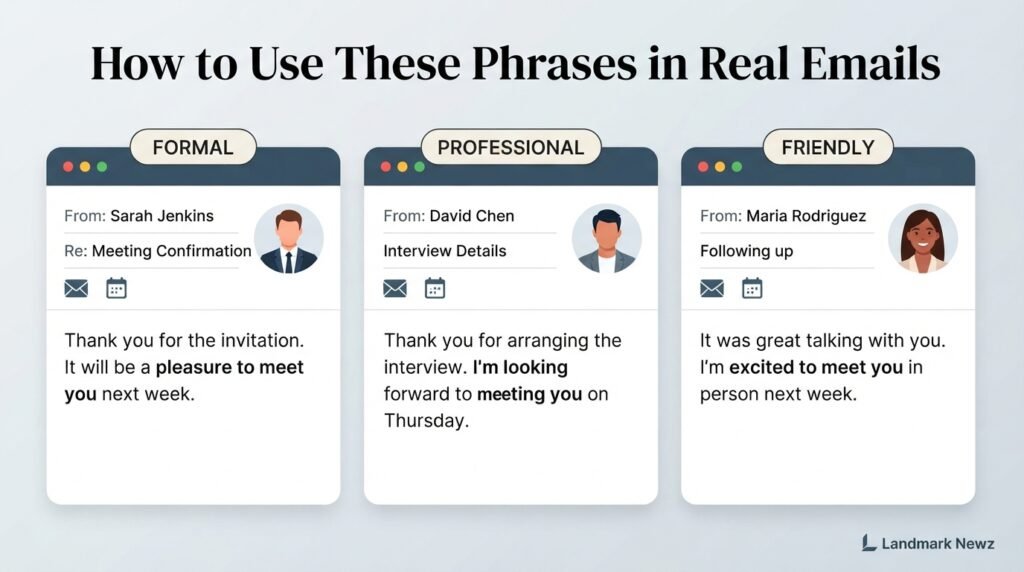
Thank you for arranging the interview. I’m looking forward to meeting you on Thursday.
Quick Tip
Use this version when you want a safe, natural choice for professional emails without sounding too formal.
2. I’m Excited to Meet You
Meaning
“I’m excited to meet you” expresses more enthusiasm than “I look forward to meeting you.” It works especially well when you genuinely feel eager about the upcoming introduction.
Best For
- Friendly
- Warm
- Casual
- Professional
Example 1
I’m excited to meet you and learn more about your work at the networking event.
Example 2
I’m excited to meet you in person after hearing so much about the project.
Quick Tip
Use this phrase when you want your message to sound energetic and personable, but avoid it if the situation requires a very formal tone.
3. It Will Be a Pleasure to Meet You
Meaning
This phrase conveys respect and courtesy. It is more formal than most alternatives and can make a professional message sound polished without being overly complicated.
Best For
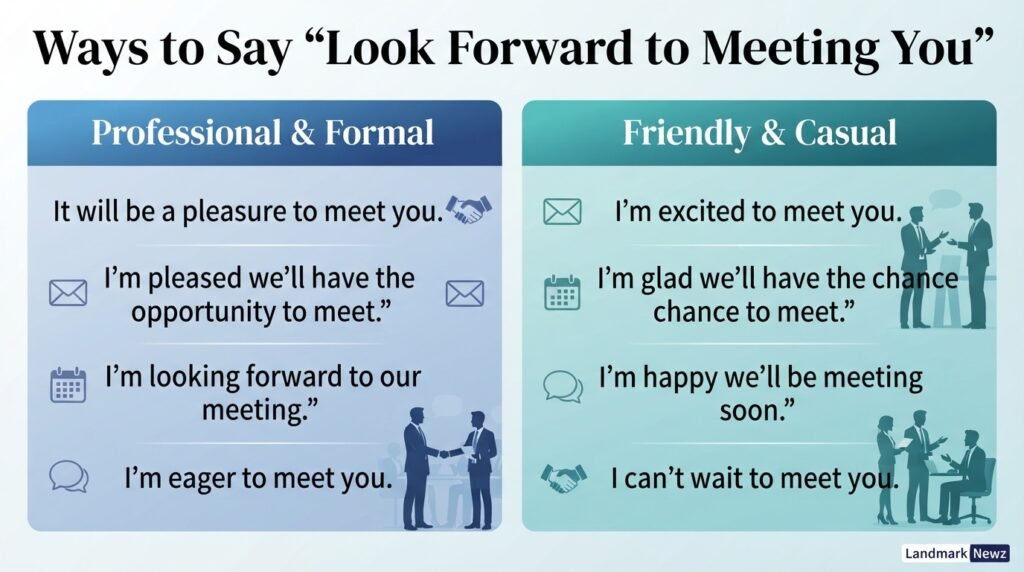
- Formal
- Professional
- Polite
Example 1
It will be a pleasure to meet you and discuss the position in greater detail.
Example 2
Thank you for the invitation. It will be a pleasure to meet you at the event.
Quick Tip
This is an excellent choice when writing to a senior professional, new client, or someone you want to address respectfully.
4. I’m Eager to Meet You
Meaning
“I’m eager to meet you” communicates strong interest and anticipation. It has a confident tone and can emphasize that you are genuinely interested in the upcoming conversation.
Best For
- Professional
- Formal
- Warm
Example 1
I’m eager to meet you and discuss how we can support your team.
Example 2
After reviewing your proposal, I’m eager to meet you and explore the next steps.
Quick Tip
Use “eager” when you want to communicate enthusiasm while keeping your language professional.
5. I’m Looking Forward to Our Meeting
Meaning
This option shifts the focus from meeting the person to the scheduled meeting itself. It sounds natural when both people already have a confirmed appointment.
Best For
- Professional
- Polite
- Formal
Example 1
I’m looking forward to our meeting and discussing the new marketing strategy.
Example 2
I appreciate your time and I’m looking forward to our meeting tomorrow morning.
Quick Tip
Choose this phrase when the meeting is already scheduled and you want to emphasize the upcoming discussion.
6. I’m Glad We’ll Have the Chance to Meet
Meaning
This wording sounds warm and sincere while avoiding the standard business-email formula. It suggests that you appreciate the opportunity to meet the person.
Best For
- Friendly
- Warm
- Professional
- Polite
Example 1
I’m glad we’ll have the chance to meet while you’re visiting our office.
Example 2
I’m glad we’ll have the chance to meet and talk about your experience with the program.
Quick Tip
Use this alternative when you want your message to feel more personal and conversational.
7. I’m Happy We’ll Be Meeting Soon
Meaning
This expression communicates a positive feeling about the upcoming meeting. It is less formal than some business alternatives and works well when you already have a friendly relationship.
Best For
- Casual
- Friendly
- Warm
Example 1
I’m happy we’ll be meeting soon to catch up on everything.
Example 2
I’m happy we’ll be meeting soon and can finally discuss the project face-to-face.
Quick Tip
This is best for friendly professional relationships rather than highly formal introductions.
8. I Can’t Wait to Meet You
Meaning
“I can’t wait to meet you” expresses strong excitement and anticipation. It is much more casual than “I look forward to meeting you,” so context matters.
Best For
- Casual
- Friendly
- Warm
Example 1
I can’t wait to meet you and see the new studio.
Example 2
We’ve talked online for months, so I can’t wait to meet you in person.
Quick Tip
Save this expression for casual or friendly communication. For formal business emails, choose a more restrained alternative.
9. I’m Pleased We’ll Have the Opportunity to Meet
Meaning
This polished expression communicates appreciation and positive anticipation. It is particularly useful when writing formal business correspondence or communicating with someone you have not met before.
Best For
- Formal
- Professional
- Polite
Example 1
I’m pleased we’ll have the opportunity to meet during your visit to Chicago.
Example 2
I’m pleased we’ll have the opportunity to meet and review the proposed partnership.
Quick Tip
Use this phrase when you want a formal alternative that sounds respectful without being stiff.
10. I’m Looking Forward to Connecting in Person
Meaning
This modern expression emphasizes personal interaction rather than simply meeting. It works particularly well after communicating by email, phone, or video call.
Best For
- Professional
- Friendly
- Warm
Example 1
We’ve covered the main details by email, and I’m looking forward to connecting in person.
Example 2
Thank you for coordinating the visit. I’m looking forward to connecting in person next month.
Quick Tip
Use “connecting in person” when you have already communicated remotely and are preparing to meet face-to-face.
Comparison Table
| Alternative | Best Used In | Tone |
| I’m Looking Forward to Meeting You | Emails, interviews, meetings | Professional, polite |
| I’m Excited to Meet You | Introductions, networking | Warm, enthusiastic |
| It Will Be a Pleasure to Meet You | Formal correspondence | Formal, respectful |
| I’m Eager to Meet You | Business discussions | Professional, confident |
| I’m Looking Forward to Our Meeting | Scheduled appointments | Professional, polite |
| I’m Glad We’ll Have the Chance to Meet | Personal or professional introductions | Warm, friendly |
| I’m Happy We’ll Be Meeting Soon | Friendly conversations | Casual, warm |
| I Can’t Wait to Meet You | Informal conversations | Casual, enthusiastic |
| I’m Pleased We’ll Have the Opportunity to Meet | Business correspondence | Formal, polished |
| I’m Looking Forward to Connecting in Person | Networking and remote communication | Professional, friendly |
Common Mistakes
1. Using Casual Phrases in Formal Emails
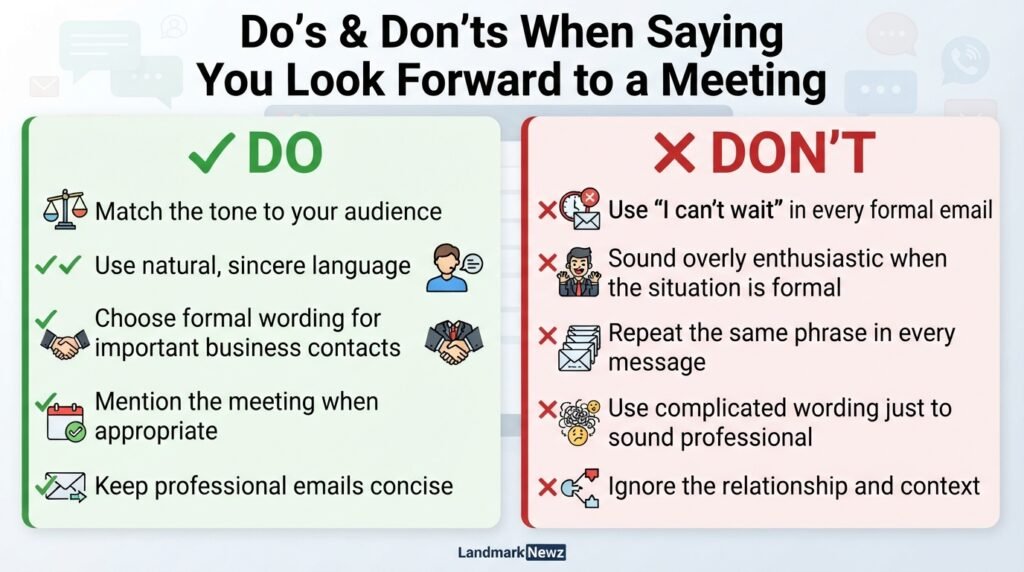
Expressions such as “I can’t wait to meet you” can sound too informal when writing to a hiring manager, executive, or new business client. Choose a more professional option when the relationship is formal.
2. Choosing Overly Formal Language
Not every situation requires wording such as “I’m pleased we’ll have the opportunity to meet.” With coworkers or familiar contacts, a simpler phrase may sound more natural.
3. Repeating the Same Phrase
Using “I look forward to meeting you” in every email can make your writing feel formulaic. Varying your wording when appropriate can make your communication more engaging.
4. Forgetting the Context
The best alternative depends on whether you are writing to a recruiter, client, friend, coworker, or new contact. Always consider your relationship with the recipient before choosing your wording.
5. Sounding Insincere
Avoid using highly enthusiastic expressions if they do not match your actual tone. Professional communication is strongest when your words sound genuine rather than exaggerated.
Frequently Asked Questions
What is a professional way to say “I look forward to meeting you”?
“I’m looking forward to meeting you” is one of the safest professional alternatives. You can also say, “I’m looking forward to our meeting” or “It will be a pleasure to meet you.” The best choice depends on how formal your relationship is and whether the meeting has already been scheduled.
How do you say “look forward to meeting you” in a formal way?
For a formal setting, try “It will be a pleasure to meet you” or “I’m pleased we’ll have the opportunity to meet.” These phrases sound respectful and polished, making them suitable for business correspondence, senior professionals, clients, interviews, and formal events.
What is a friendly way to say “I look forward to meeting you”?
“I’m excited to meet you” is a friendly and natural choice. “I’m glad we’ll have the chance to meet” is another warm option. Both communicate genuine enthusiasm without sounding overly formal, making them useful for networking, introductions, coworkers, and friendly professional relationships.
Is “I’m excited to meet you” professional?
Yes, “I’m excited to meet you” can be professional, especially in modern workplace communication. However, it sounds more enthusiastic and personal than “I look forward to meeting you.” For highly formal situations, a calmer option such as “It will be a pleasure to meet you” may be better.
Can I say “I can’t wait to meet you” in a business email?
You can, but it depends on the relationship and workplace culture. “I can’t wait to meet you” is casual and enthusiastic. If you are contacting a client, executive, recruiter, or someone you have never met, “I’m looking forward to meeting you” is usually a safer professional choice.
What is the best alternative for a job interview?
“I’m looking forward to meeting you” is an excellent choice for a job interview. You could also write, “I’m looking forward to our conversation” if you want to focus on the interview itself. Both sound confident, respectful, and appropriate for communication with a recruiter or hiring manager.
What can I say instead of “I look forward to meeting you in person”?
“I’m looking forward to connecting in person” is a natural alternative. You could also say, “I’m excited to meet you in person” if you want a warmer tone. These options work especially well when you have previously communicated through email, phone calls, or video meetings.
Is “looking forward to meeting you” grammatically correct?
Yes, “looking forward to meeting you” is grammatically correct. The verb “look forward to” is followed by a noun or gerund, so “meeting” is correct. For example, “I look forward to meeting you next week” is natural and standard English.
Conclusion
There are many natural ways to say “look forward to meeting you,” and the right choice depends on your audience and purpose. For most professional situations, “I’m looking forward to meeting you” remains a reliable and polished option.
If you want more enthusiasm, “I’m excited to meet you” works well. For formal correspondence, “It will be a pleasure to meet you” or “I’m pleased we’ll have the opportunity to meet” can sound more respectful. Meanwhile, “I can’t wait to meet you” is better suited to casual conversations.
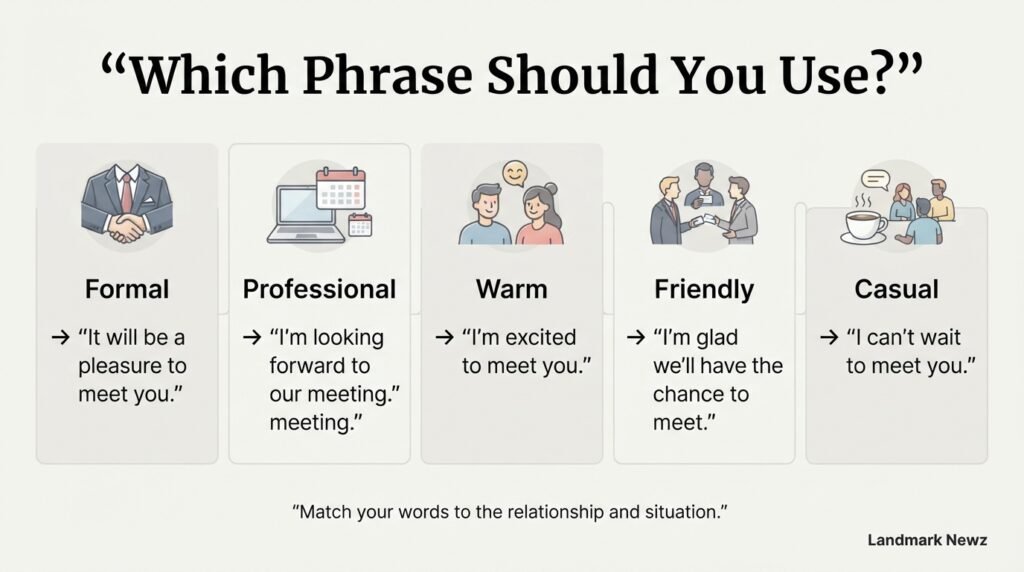
The most important rule is to match your wording to the relationship and setting. The most important rule is to match your wording to the relationship and setting. Consider the right email tone when choosing professional or casual language for your recipient.
Choose language that feels natural, sincere, and appropriate rather than simply trying to sound more sophisticated. Choose language that feels natural, sincere, and appropriate rather than simply trying to sound more sophisticated.

Language & Everyday Communication Specialist
Elena Voss is a language enthusiast and communication coach with over 9 years of experience helping people express themselves more naturally in English. She previously worked as an ESL instructor and corporate language trainer, guiding professionals and students on clearer everyday conversations, polite alternatives, and natural phrasing.
Elena specializes in practical synonym guides and “another way to say…” content that feels conversational rather than textbook. Her writing focuses on real-life situations — emails to friends, casual workplace chat, social media, and daily interactions. She believes the best language advice is simple, useful, and easy to remember.
When she’s not creating content for LandmarkNewz, Elena enjoys analyzing modern slang trends and testing new phrases in real conversations.