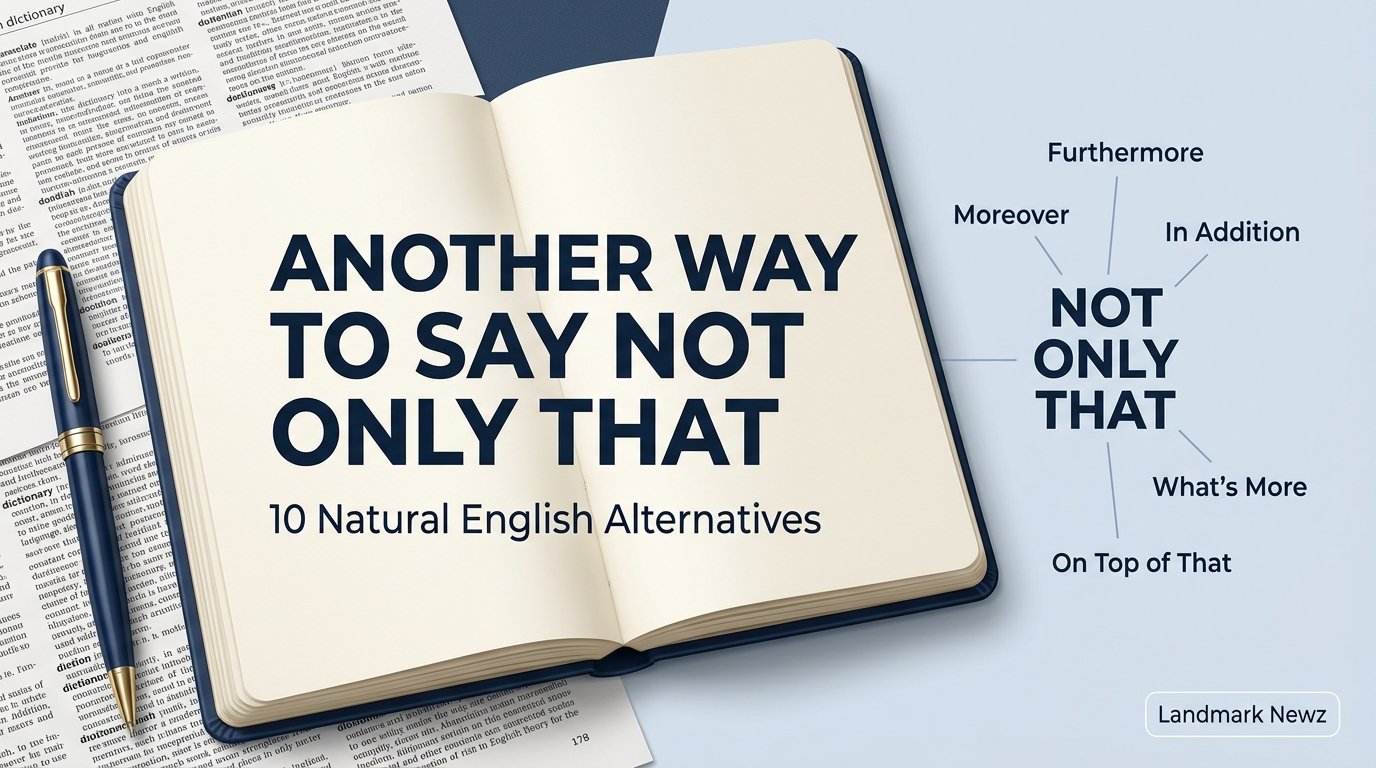
Finding another way to say “not only that” can make your writing smoother, more precise, and less repetitive. The phrase is useful when you want to add another fact, benefit, reason, or detail to something you have already mentioned. Knowing another way to say “not only that” can also help you avoid repetition and vary your writing style.
What Does “Another Way to Say Not Only That” Mean?
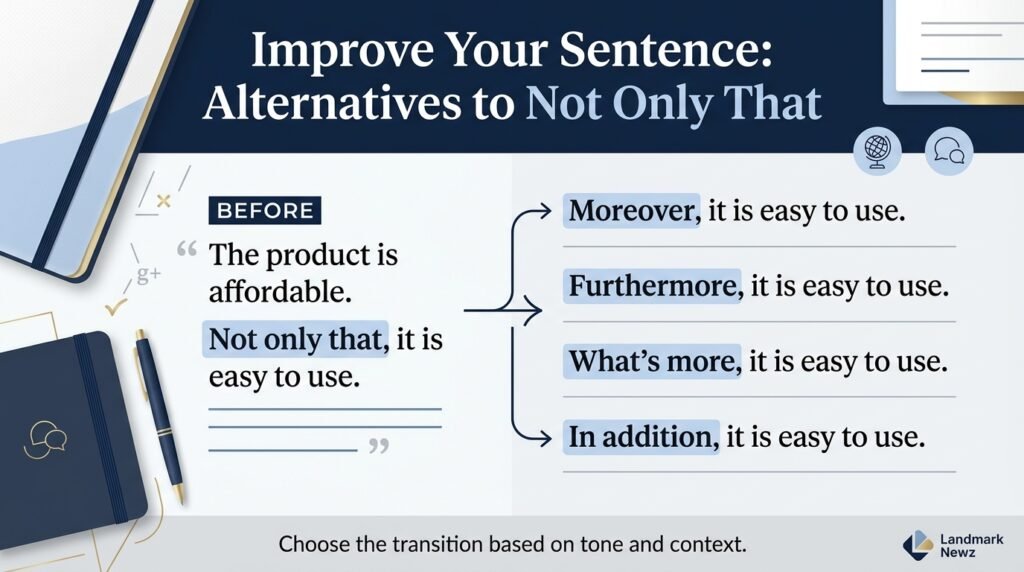
“Another way to say not only that” means you are looking for a different expression that adds another related point after making an initial statement.
For example:
The software is affordable. Not only that, it is easy to use.
You could rewrite it as:
The software is affordable. What’s more, it is easy to use.
The phrase “not only that” commonly appears in conversations, business writing, essays, reviews, presentations, and persuasive content. It signals that the next point provides additional information or makes the previous statement even stronger.
Why Use Other Ways to Say “Not Only That”?
Using alternatives gives you more control over your writing and helps you avoid repeating the same transition.
Other expressions can help you:
- Avoid repetitive sentence patterns.
- Sound more natural and confident.
- Match formal, professional, or casual situations.
- Improve transitions between ideas.
- Add emphasis to an important point.
- Make essays and business writing more polished.
The key is not to replace “not only that” automatically. Instead, choose an expression that fits the relationship between your ideas.
10 Best Other Ways to Say “Not Only That”
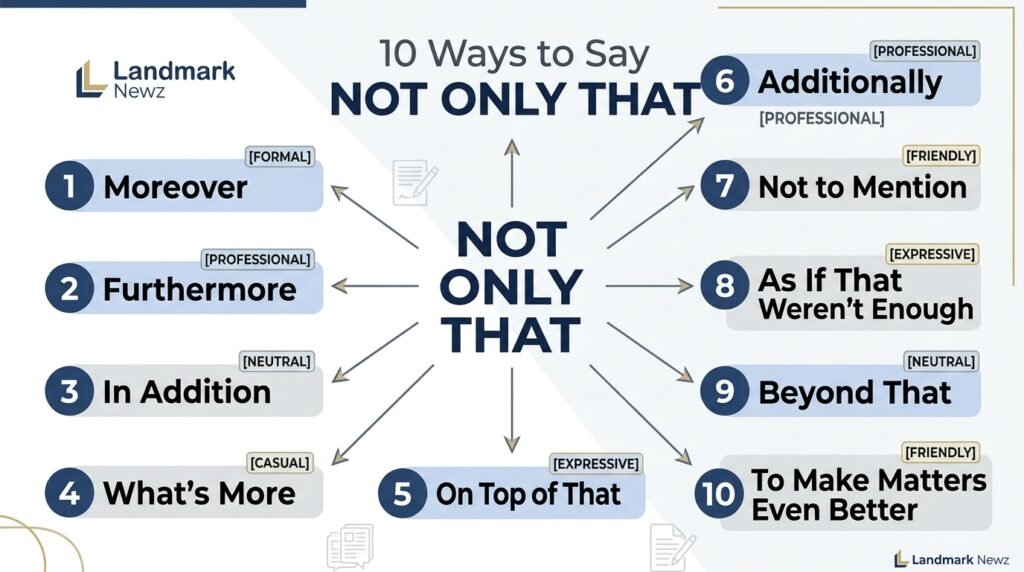
1. Moreover
Meaning
“Moreover” adds another supporting point and often suggests that the new information makes the previous statement even stronger. It has a polished, formal tone and works especially well in professional or academic writing.
Best For
- Professional
- Formal
Example 1
The proposal reduces operating costs. Moreover, it could improve customer satisfaction.
Example 2
The candidate has strong technical skills. Moreover, she has extensive experience managing teams.
Quick Tip
Use “moreover” when the second point strongly supports or reinforces the first.
2. Furthermore
Meaning
“Furthermore” introduces an additional fact, argument, or reason. It is slightly formal and works well when you want to build a logical sequence of ideas.
Best For
- Professional
- Formal
Example 1
The policy will reduce unnecessary expenses. Furthermore, it will simplify the approval process.
Example 2
The study provides useful data. Furthermore, it explains how the findings may affect future research.
Quick Tip
“Furthermore” is a strong choice for reports, essays, presentations, and formal business communication.
3. In Addition
Meaning
“In addition” simply tells the reader that another related point is being added. It is neutral, clear, and versatile, making it one of the safest alternatives to “not only that.”
Best For
- Professional
- Formal
- Polite
Example 1
The apartment has a spacious kitchen. In addition, it includes a private balcony.
Example 2
The course covers basic accounting. In addition, students receive practical exercises.
Quick Tip
Choose “in addition” when you want a clear transition without adding a strong emotional tone.
4. What’s More
Meaning
“What’s more” introduces another point that usually adds emphasis or makes the situation sound even better, worse, or more interesting. It feels more conversational than “moreover” or “furthermore.”
Best For
- Casual
- Friendly
- Professional
Example 1
The hotel is close to downtown. What’s more, breakfast is included.
Example 2
The new phone has an excellent camera. What’s more, its battery lasts all day.
Quick Tip
Use “what’s more” when you want your writing to sound natural and engaging without becoming too informal.
5. On Top of That
Meaning
“On top of that” adds another detail, often one that makes the situation more impressive, frustrating, surprising, or significant. It is common in everyday American English.
Best For
- Casual
- Friendly
Example 1
The flight was delayed for three hours. On top of that, my luggage was sent to another airport.
Example 2
The restaurant has great food. On top of that, the staff is incredibly friendly.
Quick Tip
Use this phrase mainly in conversations, informal emails, reviews, and relaxed writing rather than highly formal documents.
6. Additionally
Meaning
“Additionally” introduces another piece of information that relates directly to the previous statement. It has a professional, neutral tone and fits many types of written communication.
Best For
- Professional
- Formal
Example 1
Employees receive paid training. Additionally, they have access to career development programs.
Example 2
The device is lightweight. Additionally, it comes with a two-year warranty.
Quick Tip
“Additionally” works especially well when you need a concise transition in reports, instructions, and workplace writing.
7. Not to Mention
Meaning
“Not to mention” adds another point that deserves attention, often because it is an extra advantage, problem, or important detail. It can create emphasis without sounding overly formal.
Best For
- Casual
- Friendly
- Professional
Example 1
The house has a large backyard, not to mention a newly renovated kitchen.
Example 2
The commute is convenient, not to mention the lower cost of living in the area.
Quick Tip
Use “not to mention” when the added point feels like an important extra detail rather than simply another item on a list.
8. As If That Weren’t Enough
Meaning
“As if that weren’t enough” adds another detail after describing something significant. It often creates a sense of surprise, excitement, frustration, or emphasis.
Best For
- Casual
- Friendly
- Warm
Example 1
She won the scholarship. As if that weren’t enough, she also received an internship offer.
Example 2
We missed the train. As if that weren’t enough, it started raining on the way home.
Quick Tip
This phrase is best when the additional information feels especially surprising or noteworthy.
9. Beyond That
Meaning
“Beyond that” moves the discussion to an additional point or consideration. It is flexible and can work when you want to go beyond the first benefit, feature, or argument.
Best For
- Professional
- Formal
- Casual
Example 1
The position offers competitive pay. Beyond that, employees have flexible scheduling options.
Example 2
The plan addresses immediate concerns. Beyond that, it provides a framework for long-term growth.
Quick Tip
Use “beyond that” when the second point extends the discussion rather than simply repeating the same idea.
10. To Make Matters Even Better
Meaning
“To make matters even better” introduces an additional positive detail. It is useful when the new information improves an already favorable situation.
Best For
- Casual
- Friendly
- Warm
Example 1
We found a beautiful beach near the hotel. To make matters even better, it was almost completely empty.
Example 2
The store offered us a discount. To make matters even better, they included free delivery.
Quick Tip
Use this expression when the added information has a clearly positive effect on the situation.
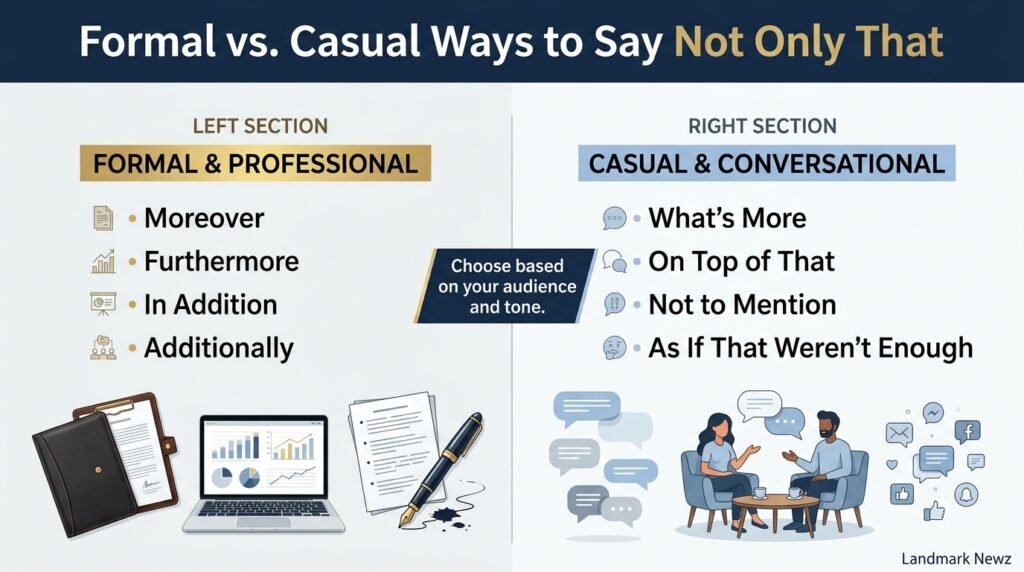
Comparison Table
| Alternative | Best Used In | Tone |
| Moreover | Essays, reports, business writing | Formal |
| Furthermore | Academic and professional writing | Formal |
| In addition | General and professional writing | Neutral |
| What’s more | Conversation, emails, articles | Conversational |
| On top of that | Everyday conversation | Casual |
| Additionally | Reports, workplace writing | Professional |
| Not to mention | Conversation, persuasive writing | Conversational |
| As if that weren’t enough | Stories and conversations | Expressive |
| Beyond that | Professional and general writing | Neutral |
| To Make Matters Even Better | Conversations and informal writing | Warm |
Common Mistakes
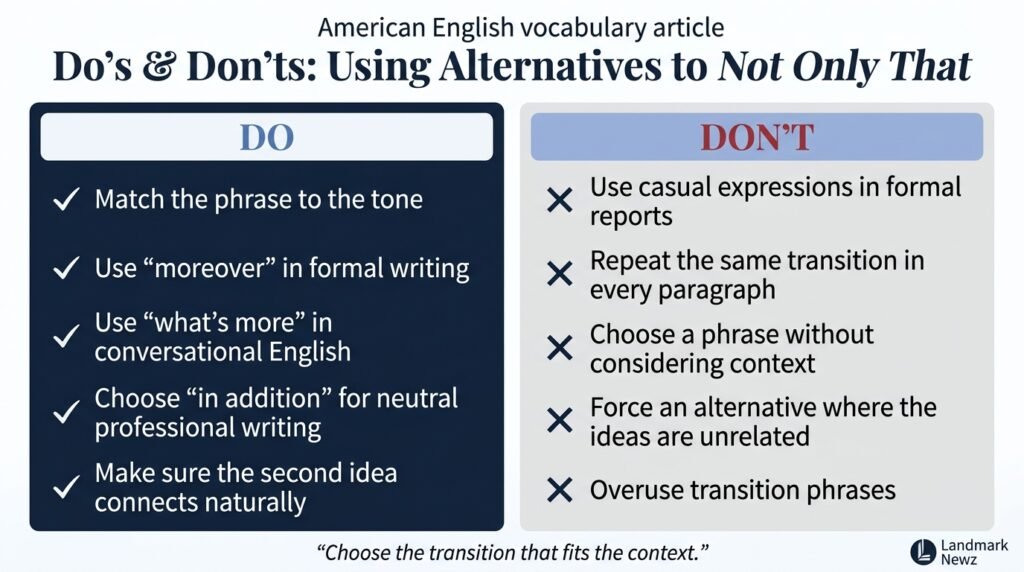
1. Using casual phrases in formal writing
Expressions such as “on top of that” can sound too conversational in academic papers or formal reports. Choose “moreover,” “furthermore,” or “in addition” when a polished tone matters.
2. Choosing overly formal language
The opposite problem can also make writing feel unnatural. Using “furthermore” in a casual text message may sound stiff when “what’s more” would feel more natural.
3. Repeating the same transition
Using “not only that” in every paragraph creates a predictable rhythm. Vary your transitions when the relationship between ideas allows it.
4. Forgetting context
Not every alternative means exactly the same thing. For example, “to make matters even better” suggests a positive development, while “as if that weren’t enough” can describe either a positive or negative situation.
5. Adding a weak or unrelated point
A transition does not automatically make two ideas connected. Make sure the information after your chosen phrase genuinely relates to the statement before it.
Frequently Asked Questions
What is the best formal alternative to “not only that”?
“Moreover” and “furthermore” are two of the strongest formal alternatives. Both introduce an additional point while strengthening the overall argument. “In addition” is another excellent choice when you want a neutral and professional transition without suggesting that the second point is more important than the first.
What is a casual way to say “not only that”?
“What’s more” and “on top of that” are natural casual alternatives. “What’s more” works in everyday conversations and informal writing, while “on top of that” often adds stronger emotion or emphasis. The right choice depends on whether you simply want to add information or emphasize an extra detail.
Can I use “moreover” instead of “not only that”?
Yes. “Moreover” can replace “not only that” when you are adding a related point, especially in formal or professional writing. However, “moreover” sounds more polished and academic, so it may feel less natural in casual conversation.
Is “furthermore” too formal for everyday English?
“Furthermore” can sound somewhat formal in everyday conversation, although it is grammatically correct. In relaxed speech, alternatives such as “what’s more,” “plus,” or “on top of that” often sound more natural and conversational.
What is the best alternative for a professional email?
“In addition,” “additionally,” “moreover,” and “furthermore” are all useful in professional emails. “In addition” is particularly versatile because it sounds polished without being excessively formal. Choose the phrase based on how strongly you want the second point to connect to the first.
Can “not to mention” replace “not only that”?
Sometimes. “Not to mention” works when you want to highlight an extra detail that deserves attention. It is not always a direct replacement because it often adds emphasis rather than simply introducing another equal point.
What can I say instead of “not only that” in an essay?
For an essay, try “moreover,” “furthermore,” “in addition,” or “additionally.” These transitions help connect supporting ideas clearly and maintain a formal academic tone. Avoid relying on one transition throughout the entire essay; vary your wording according to the relationship between your ideas.
Which alternative sounds the most natural?
“What’s more” is one of the most natural choices for conversational American English. For professional writing, “in addition” is a reliable option. If you want to emphasize a particularly important extra point, “not to mention” or “as if that weren’t enough” may work better.
Conclusion
There are many natural ways to say “not only that,” and the best choice depends on your audience and purpose. For formal or professional writing, moreover, furthermore, in addition, and additionally provide clear, polished transitions.For more guidance, explore these transition words and phrases to improve the flow of your writing.
For everyday conversations, what’s more and on top of that usually sound more relaxed. If you want to emphasize an extra detail, not to mention or as if that weren’t enough can add more personality and impact.
The goal is not simply to replace one phrase with another. Choose a transition that accurately shows how your second idea relates to the first. When you match the expression to the tone and context, your writing becomes clearer, smoother, and more natural.

Professional Writing & Workplace Communication Expert
Marcus Hale is a business communication specialist with 11 years of experience in corporate training and professional writing. He has worked with mid-sized companies and remote teams to improve clarity in emails, reports, performance reviews, and client-facing messages.
Marcus focuses on polished, professional alternatives that help readers sound confident without sounding stiff. His guides cover workplace phrases, resume language, leadership communication, and formal-to-natural transitions. He holds a background in business administration and technical writing, and has led workshops on effective professional English.
At LandmarkNewz, Marcus creates practical synonym lists and phrasing tips that professionals can apply immediately in emails, meetings, and career documents.