
What Does “Another Way to Say Stay on Top of” Mean?
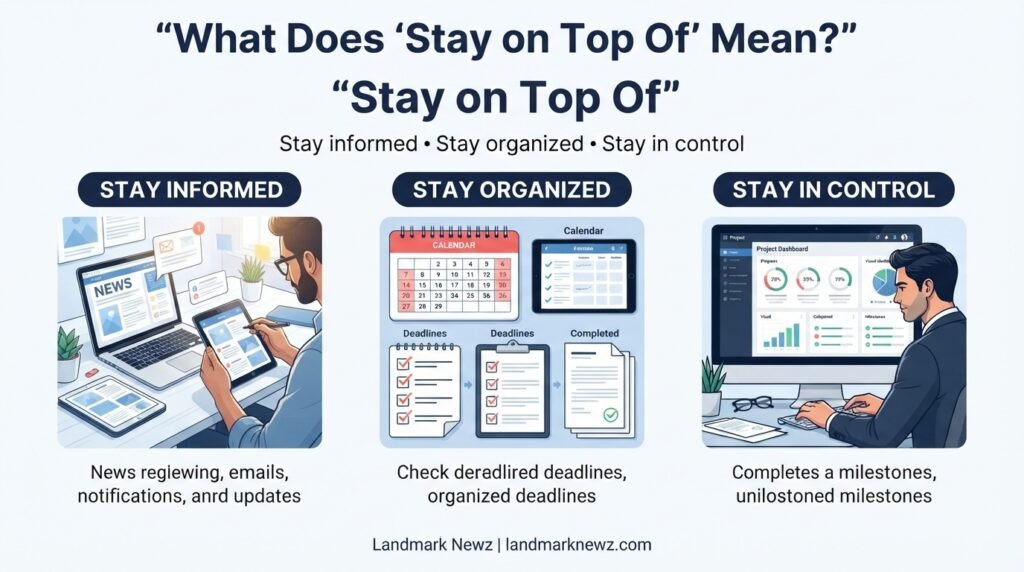
“Stay on top of” means to remain informed, organized, or in control of something. For example, if you “stay on top of your emails,” you regularly check and respond to messages so nothing important gets missed.
The phrase is common in workplace conversations, school, project management, personal organization, and everyday English. Because it can have several meanings, the best replacement depends on the context.
For instance, “monitor the situation” emphasizes observation, while “manage the project” emphasizes control and responsibility.
Why Use Other Ways to Say “Stay on Top of”?
Using another way to say “stay on top of” can make your writing more precise and less repetitive. It also helps you choose language that fits a particular professional, academic, or casual situation.
Here are some benefits:
- Avoid repeating the same expression.
- Make your meaning more specific.
- Sound more natural in different situations.
- Improve professional and workplace communication.
- Match the tone of an email, report, conversation, or resume.
- Show whether you mean awareness, organization, monitoring, or control.
10 Best Other Ways to Say “Stay on Top of”
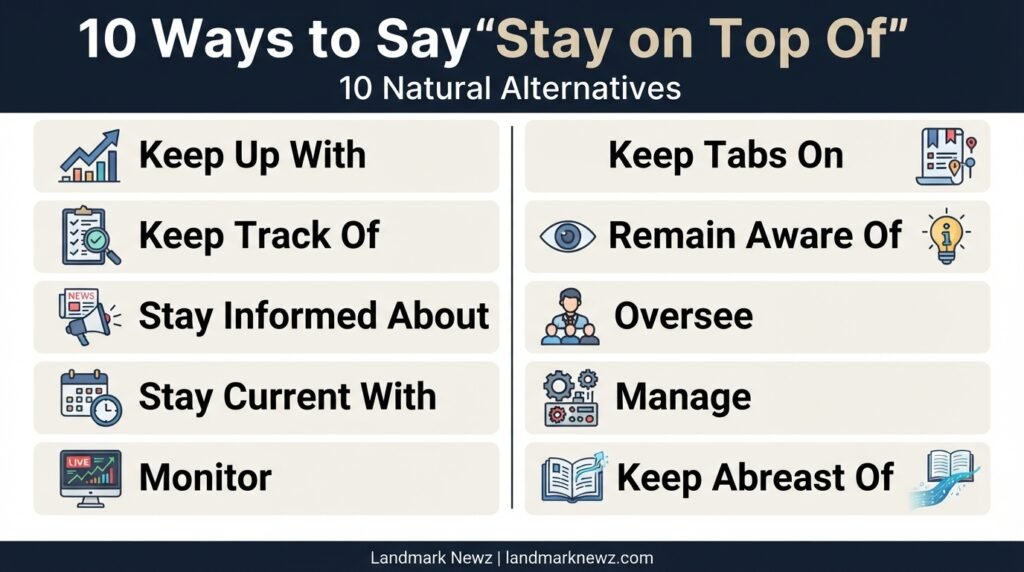
1. Keep Up With
Meaning
“Keep up with” means to remain informed about something or continue at the same pace as changes or developments. It is one of the most natural alternatives to “stay on top of” in everyday American English.
Best For
- Professional
- Casual
- Friendly
Example 1
I read industry newsletters each morning to keep up with the latest trends.
Example 2
She works hard to keep up with all the changes to the company policy.
Quick Tip
Use “keep up with” when you want a natural phrase for staying current with information, trends, tasks, or changes.
2. Keep Track of
Meaning
“Keep track of” means to monitor, record, or remember information about something. It works particularly well when you need to follow deadlines, expenses, schedules, tasks, or progress.
Best For
- Professional
- Casual
- Friendly
Example 1
Please keep track of the customer requests that come in this week.
Example 2
I use a spreadsheet to keep track of my monthly expenses.
Quick Tip
Choose this phrase when the idea involves recording or following specific details.
3. Stay Informed About
Meaning
“Stay informed about” means to make an effort to know about recent developments, changes, or important information. It sounds clear and professional without being overly formal.
Best For
- Professional
- Formal
- Polite
Example 1
Employees should stay informed about changes to workplace safety policies.
Example 2
Our team stays informed about developments in the local market.
Quick Tip
This is a strong choice when talking about news, policies, business developments, or important updates.
4. Stay Current With
Meaning
“Stay current with” means to remain up to date with information, technology, practices, or developments. It is especially useful in professional fields where knowledge changes regularly.
Best For
- Professional
- Formal
Example 1
Software developers need to stay current with new programming tools.
Example 2
She takes online courses to stay current with changes in digital marketing.
Quick Tip
Use this alternative when discussing skills, technology, professional knowledge, or industry developments.
5. Monitor
Meaning
“Monitor” means to watch, check, or observe something regularly to understand its condition or progress. It is more direct and concise than “stay on top of.”
Best For
- Professional
- Formal
Example 1
The manager monitors project progress throughout the quarter.
Example 2
We monitor customer feedback to identify recurring concerns.
Quick Tip
Use “monitor” when regular observation is more important than simply being informed.
6. Keep Tabs On
Meaning
“Keep tabs on” means to watch or follow someone or something closely. It is an informal expression that works well in conversations and relaxed workplace communication.
Best For
- Casual
- Friendly
Example 1
I’ll keep tabs on the shipment and let you know when it arrives.
Example 2
Can you keep tabs on the project while I’m out of the office?
Quick Tip
Because this expression is informal, avoid it in highly formal reports or official business documents.
7. Remain Aware Of
Meaning
“Remain aware of” means to continue knowing about or paying attention to something. It is useful when awareness is the main idea rather than active management.
Best For
- Professional
- Formal
- Polite
Example 1
Managers should remain aware of employee concerns throughout the transition.
Example 2
Drivers must remain aware of changing road conditions.
Quick Tip
Use this phrase when you want to emphasize awareness, attention, or understanding.
8. Oversee
Meaning
“Oversee” means to supervise or take responsibility for a process, activity, project, or group. It is a strong replacement when “stay on top of” means actively managing something.
Best For
- Professional
- Formal
Example 1
Maria will oversee the team’s new customer service initiative.
Example 2
The director oversees several projects across the department.
Quick Tip
Use “oversee” when the person has responsibility or authority, not merely awareness.
9. Manage
Meaning
“Manage” means to organize, control, or handle something effectively. It can replace “stay on top of” when the original phrase refers to keeping tasks, responsibilities, or projects under control.
Best For
- Professional
- Formal
- Casual
Example 1
He manages several client accounts while meeting strict deadlines.
Example 2
I created a weekly schedule to manage my workload more effectively.
Quick Tip
Choose “manage” when your meaning involves responsibility, organization, or control.
10. Keep Abreast Of
Meaning
“Keep abreast of” means to remain fully informed about the latest developments in a particular area. It is a polished expression, although it sounds more formal than most alternatives.
Best For
- Formal
- Professional
Example 1
Attorneys must keep abreast of changes to relevant regulations.
Example 2
The research team keeps abreast of new findings in the field.
Quick Tip
Use this phrase in formal or professional writing, but avoid overusing it in casual conversation.
Comparison Table
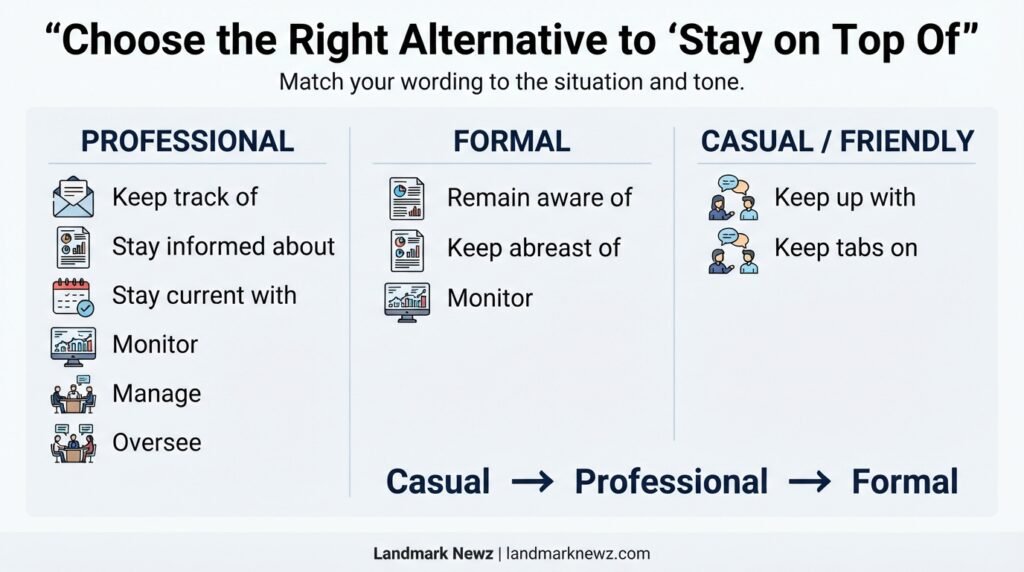
| Alternative | Best Used In | Tone |
| Keep up with | Conversations, emails, workplace writing | Natural |
| Keep track of | Tasks, records, schedules | Practical |
| Stay informed about | News, policies, updates | Professional |
| Stay current with | Technology, skills, industries | Professional |
| Monitor | Progress, data, situations | Direct |
| Keep tabs on | Casual conversations | Informal |
| Remain aware of | Professional communication | Formal |
| Oversee | Projects, teams, operations | Professional |
| Manage | Responsibilities, workloads, projects | Versatile |
| Keep abreast of | Formal and professional writing | Formal |
Common Mistakes
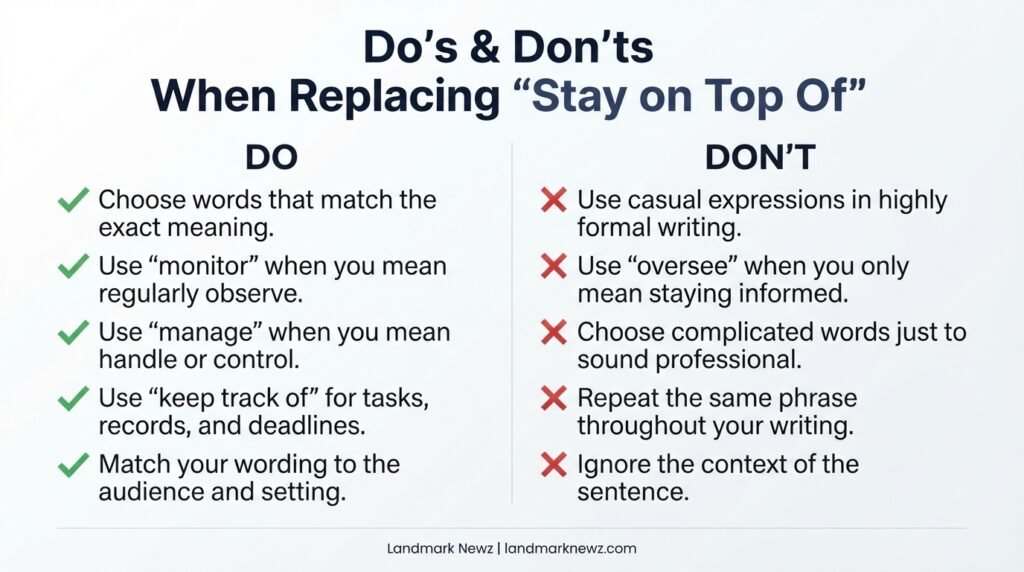
- Using casual phrases in formal writing: “Keep tabs on” may sound too relaxed for a formal report. Choose “monitor” or “remain aware of” instead.
- Choosing a phrase that changes the meaning: “Oversee” implies responsibility or supervision, while “stay informed about” only suggests awareness.
- Repeating “stay on top of”: Using the same phrase throughout an article, email, or report can make the writing feel repetitive.
- Ignoring context: “Keep up with” works naturally in conversation, but “keep abreast of” may be better suited to formal professional writing.
- Sounding more formal than necessary: A simple phrase such as “keep track of” can be clearer than a complicated expression when the audience does not require formal language.
Frequently Asked Questions
What is another way to say “stay on top of”?
Common alternatives include “keep up with,” “keep track of,” “stay informed about,” “monitor,” “stay current with,” “manage,” and “oversee.” The best option depends on what you mean. Use “stay informed about” for information, “monitor” for observation, and “manage” or “oversee” when responsibility and control are involved.
What is a professional way to say “stay on top of”?
“Stay informed about,” “monitor,” “stay current with,” “oversee,” and “keep track of” are professional alternatives. For example, instead of saying “I stay on top of client requests,” you could write, “I keep track of client requests and respond promptly.” This sounds clear, professional, and specific.
Is “keep up with” the same as “stay on top of”?
The phrases can have similar meanings, but they are not always interchangeable. “Keep up with” usually emphasizes staying current or maintaining pace, while “stay on top of” can also suggest organization and control. For example, you can keep up with industry news, but you can manage a workload to stay on top of your responsibilities.
What is another way to say “stay on top of things”?
You could say “keep things under control,” “manage everything effectively,” “keep track of everything,” or “stay organized.” The best choice depends on your intended meaning. “Stay organized” focuses on organization, while “keep things under control” suggests handling responsibilities successfully.
What is a formal way to say “stay on top of”?
Formal alternatives include “remain informed about,” “remain aware of,” “monitor,” “stay current with,” and “keep abreast of.” In professional writing, choose the phrase that describes the exact action. “Monitor” works for ongoing observation, while “keep abreast of” focuses on staying informed about developments.
Can I use “stay on top of” in a professional email?
Yes. “Stay on top of” is common and acceptable in many professional emails, especially when the tone is conversational. However, you can use “keep track of,” “monitor,” or “stay informed about” when you want a more precise or formal tone.
What is another way to say “stay on top of your work”?
Good alternatives include “keep up with your work,” “manage your workload,” “stay organized,” and “keep track of your tasks.” If you mean completing responsibilities on time, “manage your workload” is particularly useful in professional settings.
Which alternative to “stay on top of” sounds most natural?
“Keep up with” is usually the most natural replacement in everyday American English. However, “keep track of,” “monitor,” and “stay informed about” may be better when you need to express a specific meaning. Always choose the phrase that matches the action you want to describe.
Conclusion
There are many effective ways to say “stay on top of,” but the best alternative depends on what you actually mean. Keep up with is a natural choice for staying current, while keep track of works well for tasks, schedules, and information.
For professional writing, stay informed about, stay current with, and monitor offer clear and polished options. If you mean taking responsibility for a project or workload, manage and oversee are stronger choices. Meanwhile, keep tabs on is better suited to casual communication, and keep abreast of works well in formal contexts.
The key is to avoid choosing a synonym simply because it sounds sophisticated. Pick the expression that communicates your exact meaning, fits your audience, and sounds natural in the sentence. For more guidance, learn how to choose the right words for your audience when adjusting your language and tone.

Language & Everyday Communication Specialist
Elena Voss is a language enthusiast and communication coach with over 9 years of experience helping people express themselves more naturally in English. She previously worked as an ESL instructor and corporate language trainer, guiding professionals and students on clearer everyday conversations, polite alternatives, and natural phrasing.
Elena specializes in practical synonym guides and “another way to say…” content that feels conversational rather than textbook. Her writing focuses on real-life situations — emails to friends, casual workplace chat, social media, and daily interactions. She believes the best language advice is simple, useful, and easy to remember.
When she’s not creating content for LandmarkNewz, Elena enjoys analyzing modern slang trends and testing new phrases in real conversations.