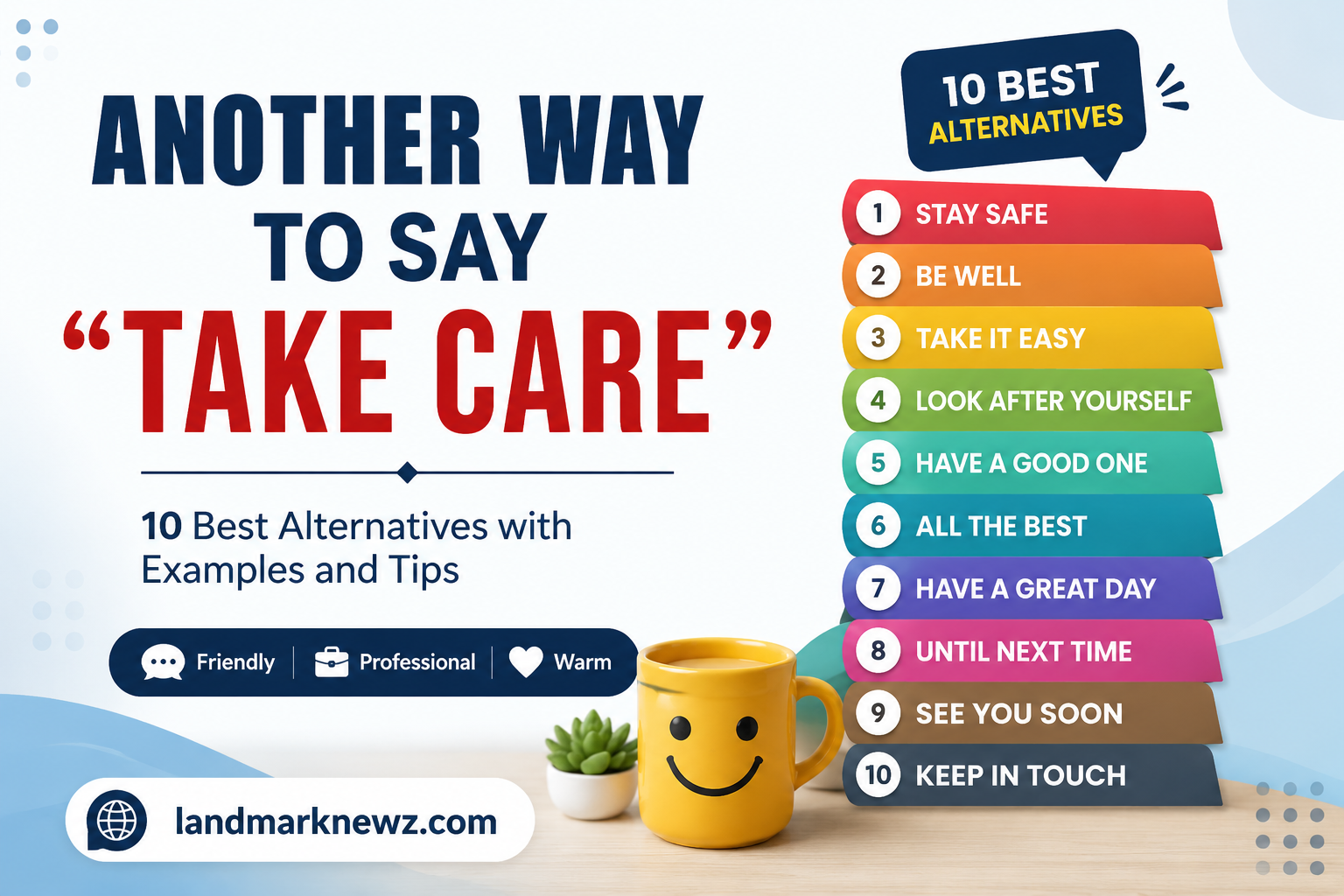
“Take care” is a common phrase used to show concern, kindness, or goodwill. While it works in many situations, using a different expression can make your message feel more personal, natural, or appropriate for the setting.
What Does “Another Way to Say Take Care” Mean?
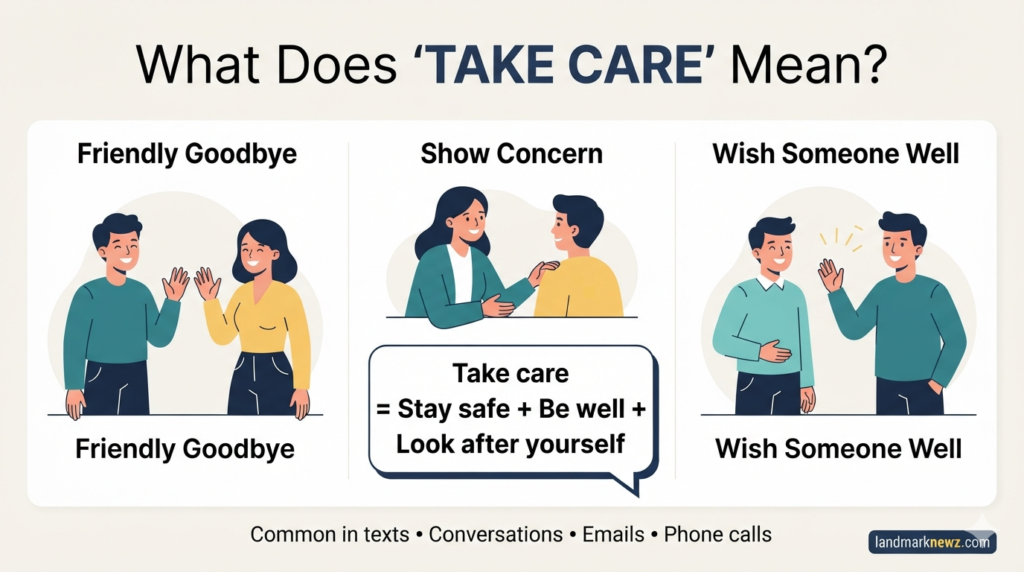
“Another way to say take care” refers to an alternative expression that communicates a similar idea. Depending on the context, “take care” can mean stay safe, look after yourself, be well, or have a good day.
People often use the phrase when ending a conversation, email, phone call, or text message. It can sound friendly and caring without being overly emotional.
The right alternative depends on who you are speaking to. For example, “stay safe” shows concern, while “have a good one” sounds more casual and upbeat.
Why Use Other Ways to Say “Take Care”?
Finding different ways to say “take care” helps you communicate with more variety and choose a tone that fits the situation.
You might use an alternative to:
- Avoid repeating the same farewell.
- Sound more natural in everyday conversations.
- Show concern more clearly.
- Make a professional message sound polished.
- Add warmth to a personal conversation.
- Match the relationship you have with the other person.
A thoughtful closing can leave the conversation on a positive note without sounding forced or overly formal.
10 Best Other Ways to Say “Take Care”
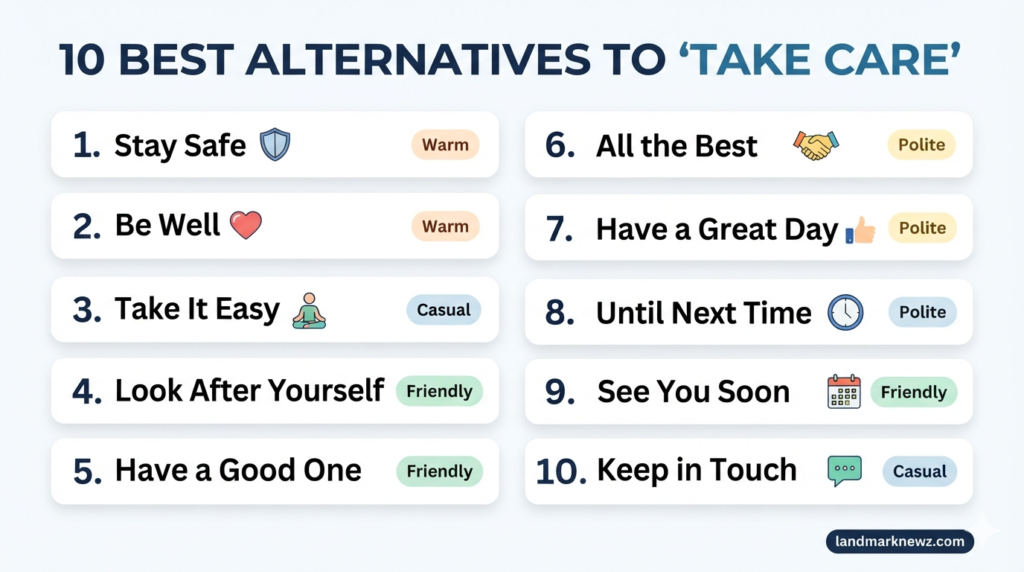
1]. Stay Safe
Meaning
“Stay safe” expresses genuine concern for someone’s well-being. It is especially appropriate when the person is traveling, heading somewhere late, dealing with difficult conditions, or doing something that carries some risk.
Best For
- Friendly
- Warm
- Casual
- Polite
Example 1
“Thanks for helping me with everything today. Stay safe on your drive home.”
Example 2
“It was great catching up with you. Stay safe, and text me when you get there.”
Quick Tip
Use “stay safe” when you want your farewell to communicate clear concern rather than simply ending the conversation.
2. Be Well
Meaning
“Be well” is a warm and thoughtful way to wish someone good health and well-being. It has a slightly more polished feel than “take care,” making it useful in both personal and professional communication.
Best For
- Professional
- Formal
- Warm
- Polite
Example 1
“Thank you for taking the time to speak with me today. Be well.”
Example 2
“I hope everything works out for you. Be well and enjoy the rest of your week.”
Quick Tip
Choose “be well” when you want to sound kind and sincere without being too casual.
3. Take It Easy
Meaning
“Take it easy” is a relaxed farewell that suggests the person should slow down, relax, or avoid unnecessary stress. It is common in casual American English and usually feels friendly and informal.
Best For
- Casual
- Friendly
- Warm
Example 1
“You’ve had a long week, so take it easy this weekend.”
Example 2
“I’ll see you tomorrow. Take it easy tonight.”
Quick Tip
Save this phrase for relaxed conversations with friends, family members, coworkers you know well, or other familiar people.
4. Look After Yourself
Meaning
“Look after yourself” tells someone to pay attention to their own health, safety, or well-being. It sounds caring and personal, particularly when someone is going through a challenging period or leaving for a while.
Best For
- Warm
- Friendly
- Polite
Example 1
“I’m sorry you’ve been dealing with so much lately. Look after yourself.”
Example 2
“Have a safe trip and look after yourself while you’re away.”
Quick Tip
Use this expression when you want your goodbye to feel more personal and caring than a standard farewell.
5. Have a Good One
Meaning
“Have a good one” is a casual American English farewell that usually means “have a good day” or “have a good rest of your day.” It is upbeat, simple, and easy to use in everyday interactions.
Best For
- Casual
- Friendly
- Polite
Example 1
“Thanks for stopping by. Have a good one!”
Example 2
“I’ve got to head out, but it was nice talking with you. Have a good one.”
Quick Tip
This is a great choice for everyday situations, but avoid it when you need a highly formal or traditional business closing.
6. All the Best
Meaning
“All the best” is a polite farewell that expresses good wishes. It works particularly well in professional emails, letters, and situations where you want to sound respectful without being stiff.
Best For
- Professional
- Formal
- Polite
- Warm
Example 1
“Thank you again for your help with the project. All the best.”
Example 2
“I enjoyed working with you and wish you continued success. All the best.”
Quick Tip
“All the best” is especially useful as an email closing when “take care” feels too personal or informal.
7. Have a Great Day
Meaning
“Have a great day” is a positive and universally understood way to end a conversation. It focuses on wishing someone a pleasant day rather than directly telling them to look after themselves.
Best For
- Professional
- Friendly
- Polite
- Casual
Example 1
“Thanks for calling today. Have a great day!”
Example 2
“I’ll send the updated document this afternoon. Have a great day.”
Quick Tip
Use this phrase when you want a cheerful, neutral closing that works with customers, coworkers, acquaintances, and friends.
8. Until Next Time
Meaning
“Until next time” suggests that you expect to speak with or see the person again. It gives a farewell a warm, slightly more memorable quality without sounding overly emotional.
Best For
- Friendly
- Warm
- Casual
- Polite
Example 1
“It was wonderful seeing everyone tonight. Until next time!”
Example 2
“Thanks for joining us today. Until next time, enjoy the rest of your weekend.”
Quick Tip
Choose this expression when you know or reasonably expect that another meeting or conversation will happen.
9. See You Soon
Meaning
“See you soon” is a friendly farewell that indicates you expect to see the person again in the near future. It sounds natural and positive, especially when another meeting or visit is already planned.
Best For
- Casual
- Friendly
- Warm
Example 1
“Thanks for coming over. See you soon!”
Example 2
“I’ll meet you at the restaurant Friday. See you soon.”
Quick Tip
Use “see you soon” only when another interaction is likely; otherwise, it may suggest a specific expectation that does not exist.
10. Keep in Touch
Meaning
“Keep in touch” encourages someone to stay connected after a conversation, meeting, move, or change in circumstances. It can express genuine warmth and is often used when you may not see the person regularly.
Best For
- Friendly
- Warm
- Polite
- Professional
Example 1
“I’m sorry you’re leaving the team. Keep in touch!”
Example 2
“It was great working with you on this project. Keep in touch, and let me know how things go.”
Quick Tip
Use “keep in touch” when maintaining the relationship matters, particularly after someone moves, changes jobs, or leaves a group.
Comparison Table
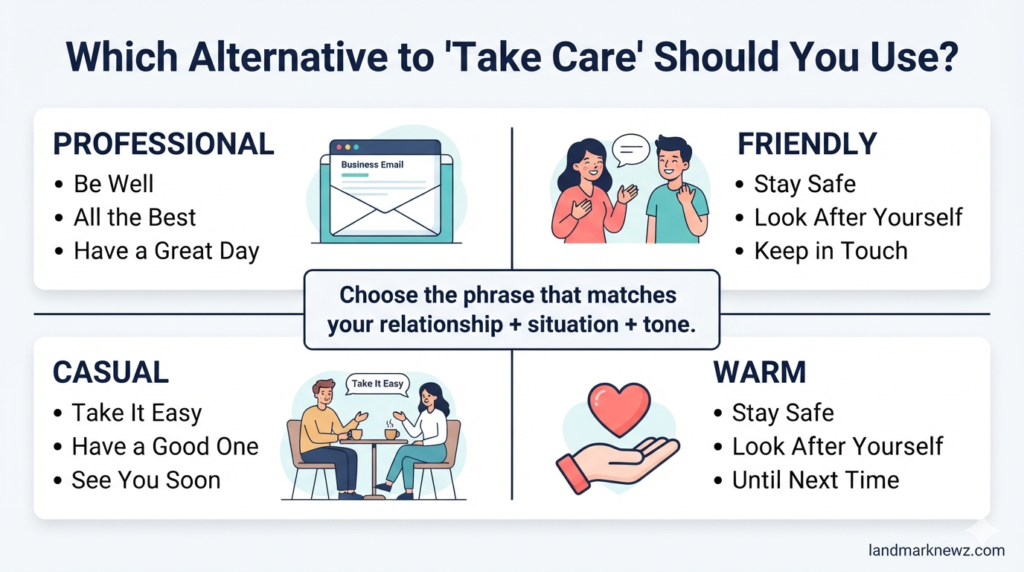
| Alternative | Best Used In | Tone |
| Stay safe | Personal conversations, travel | Caring, warm |
| Be well | Emails, professional conversations | Polished, warm |
| Take it easy | Friends, casual conversations | Relaxed, friendly |
| Look after yourself | Personal conversations | Caring, thoughtful |
| Have a good one | Everyday interactions | Casual, upbeat |
| All the best | Professional emails, farewells | Polite, professional |
| Have a great day | Work, customer service, everyday conversations | Positive, polite |
| Until next time | Social gatherings, recurring interactions | Warm, friendly |
| See you soon | Friends, family, planned meetings | Friendly, upbeat |
| Keep in touch | Departures, professional farewells | Warm, sincere |
Common Mistakes When Replacing “Take Care”
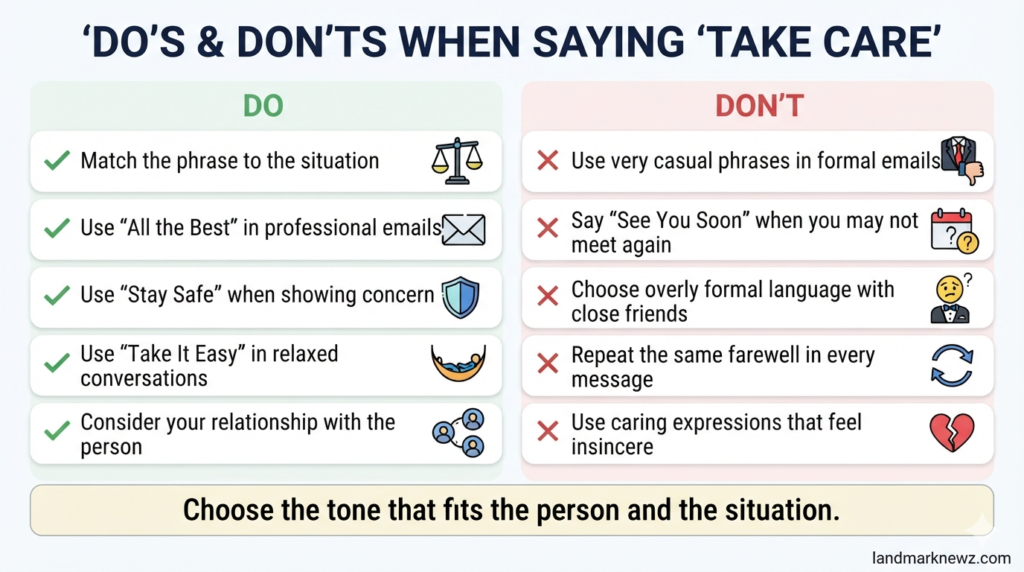
1. Using Casual Phrases in Formal Emails
Expressions such as “take it easy” and “have a good one” may sound too relaxed in a formal business email. Choose “all the best” or “be well” when a more professional tone is needed.
2. Choosing a Phrase That Does Not Match the Situation
“See you soon” suggests another meeting is likely. If you do not know when you will meet again, “all the best” or “be well” may be more accurate.
3. Sounding Overly Formal
Not every conversation needs a polished closing. Using “be well” in a quick text to a close friend may sound less natural than “take it easy” or “have a good one.”
4. Ignoring the Relationship
Think about your relationship with the person before choosing an alternative. A farewell to a customer should sound different from a message to your best friend.
5. Using a Caring Phrase Without Meaning It
Words such as “stay safe” and “look after yourself” can communicate genuine concern. Use them naturally rather than adding emotional language simply to make a message sound nicer.
Frequently Asked Questions
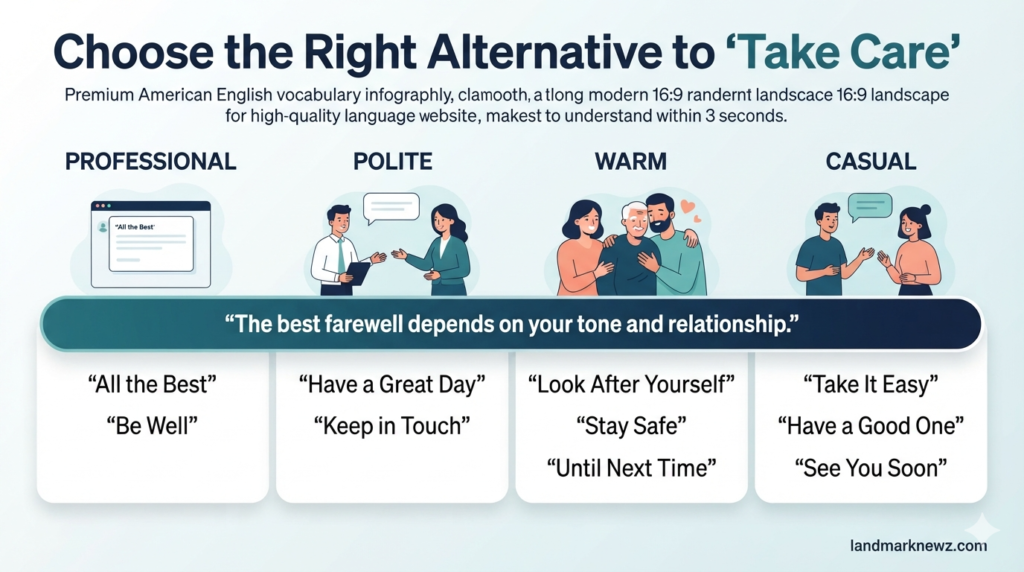
What is a professional way to say “take care”?
A professional alternative to “take care” is “all the best,” “be well,” or “have a great day.” These expressions work well in emails, workplace conversations, and customer communication. “All the best” is especially useful as an email closing because it sounds respectful, positive, and professional without feeling overly formal.
What is a friendly way to say “take care”?
Friendly alternatives include “stay safe,” “take it easy,” “have a good one,” and “see you soon.” Your choice depends on the situation. “Take it easy” feels relaxed, while “stay safe” sounds more caring. “See you soon” works best when you expect to see the person again.
Is “stay safe” another way to say “take care”?
Yes. “Stay safe” can be a natural alternative to “take care” when you want to express concern for someone’s safety or well-being. It is particularly appropriate when someone is traveling, driving, working late, or heading into a situation where safety is relevant.
Can I say “take care” in a professional email?
Yes, but the appropriateness depends on the relationship and tone of the email. “Take care” can sound friendly and genuine when you know the recipient well. For formal or first-time business communication, “all the best,” “best regards,” or “have a great day” may be a better fit.
What is a warm alternative to “take care”?
“Look after yourself” is one of the warmest alternatives. It directly communicates concern for someone’s well-being and can feel more personal than a simple goodbye. “Be well” is another good choice when you want warmth while keeping the message polished and respectful.
What can I say instead of “take care” in a text?
For a casual text, you can say “stay safe,” “take it easy,” “have a good one,” or “see you soon.” The best option depends on what you want to communicate. For example, “stay safe” shows concern, while “have a good one” is simply a cheerful goodbye.
Is “have a good one” the same as “take care”?
They can both be used as casual farewells, but their meanings are slightly different. “Take care” focuses more on the person’s well-being, while “have a good one” generally means “have a good day” or “enjoy the rest of your day.”
What is the best alternative to “take care”?
There is no single best alternative for every situation. “Stay safe” is excellent when expressing concern, “all the best” works well professionally, and “take it easy” fits relaxed conversations. Consider the relationship, setting, and emotion you want to communicate before choosing your farewell.
Conclusion
There are many natural ways to say “take care,” and the best choice depends on the situation. If you want to show genuine concern, “stay safe” or “look after yourself” works well. For professional communication, “be well,” “all the best,” or “have a great day” can sound more polished. In casual conversations, “take it easy,” “have a good one,” and “see you soon” feel natural and friendly.
The key is to match your words to the relationship and context. A thoughtful farewell does not need to be complicated. Choose the expression that sounds natural for you and accurately communicates what you want the other person to feel.

Professional Writing & Workplace Communication Expert
Marcus Hale is a business communication specialist with 11 years of experience in corporate training and professional writing. He has worked with mid-sized companies and remote teams to improve clarity in emails, reports, performance reviews, and client-facing messages.
Marcus focuses on polished, professional alternatives that help readers sound confident without sounding stiff. His guides cover workplace phrases, resume language, leadership communication, and formal-to-natural transitions. He holds a background in business administration and technical writing, and has led workshops on effective professional English.
At LandmarkNewz, Marcus creates practical synonym lists and phrasing tips that professionals can apply immediately in emails, meetings, and career documents.