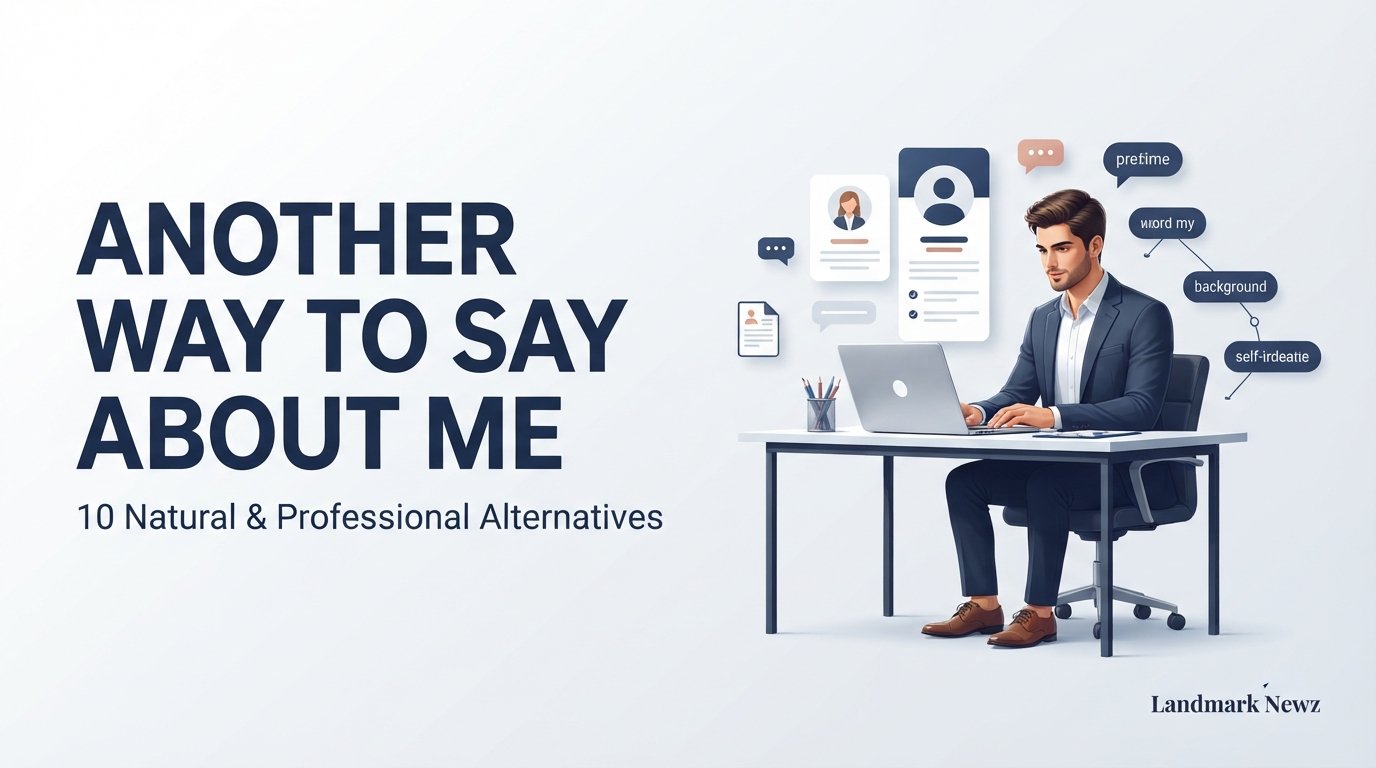
What Does “Another Way to Say About Me” Mean?
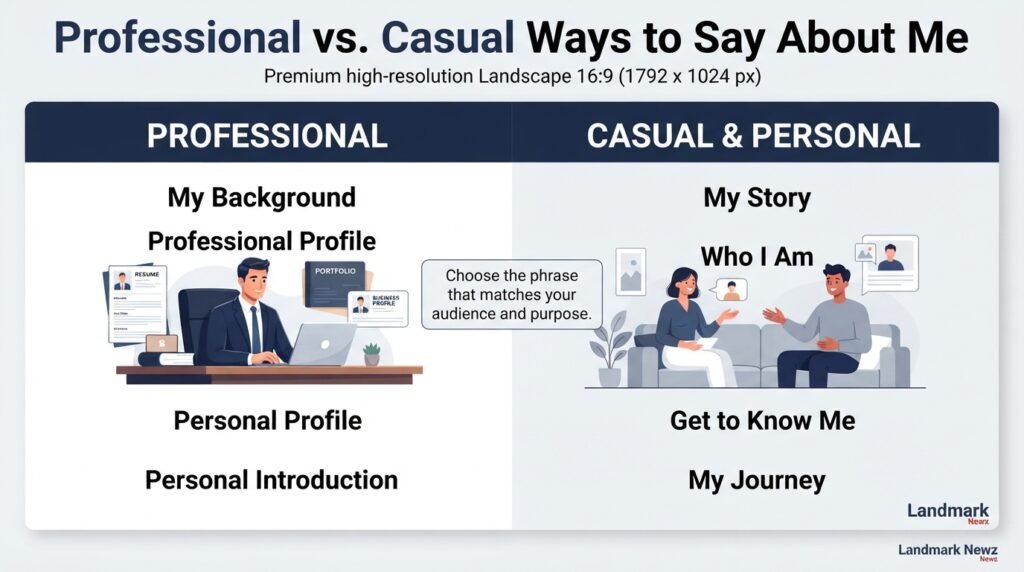
The phrase “another way to say about me” refers to different expressions you can use instead of “about me.” People usually search for alternatives when they want a heading, introduction, biography, or profile to sound more natural or professional.
“About Me” commonly appears on personal websites, resumes, portfolios, social media profiles, speaker bios, and introductions. While the phrase is clear and familiar, using a different expression can better match the purpose and tone of your content.
For example, a resume might use “Professional Profile,” while a personal website could use “My Story.” The meaning stays similar, but the tone changes.
Why Look for Another Way to Say About Me?
Using an alternative to “about me” can make your writing feel more specific and appropriate for its audience. A creative professional may want a warm heading, while a job seeker may need something more polished.
Other benefits include:
- Avoiding repetitive or generic wording
- Creating a stronger first impression
- Matching your audience and purpose
- Making professional communication more polished
- Giving your website or profile a distinct personality
- Making introductions sound more natural
The key is not to choose the fanciest phrase. Choose the expression that clearly tells readers what they will learn about you.
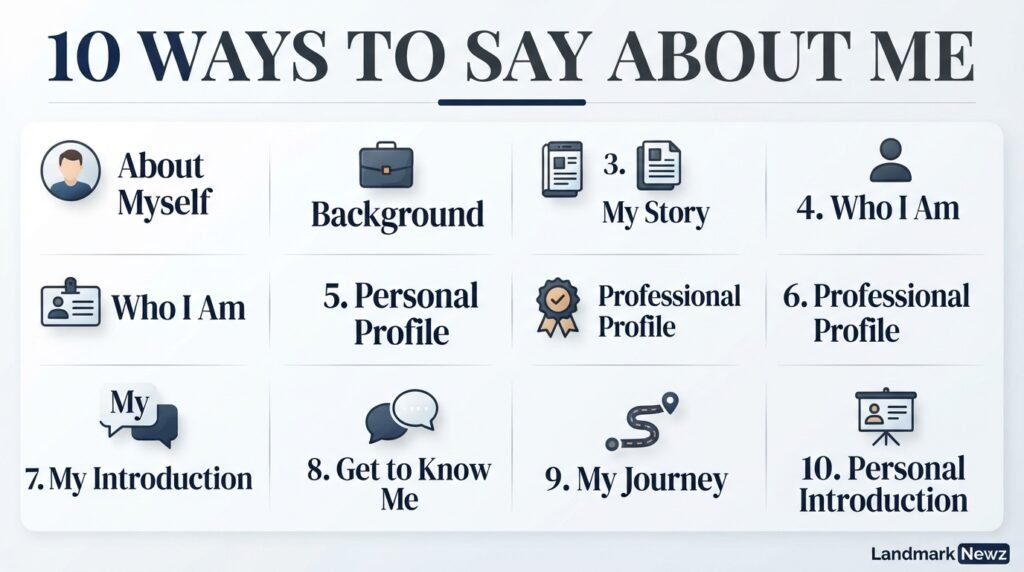
10 Best Other Ways to Say “About Me”
1. About Myself
Meaning
“About myself” is a direct alternative to “about me” that focuses on personal information, experiences, interests, or qualities. It works especially well when you are introducing yourself in a casual or educational setting.
Best For
- Casual
- Friendly
- Personal
Example 1
“Here is a little information about myself and my professional interests.”
Example 2
“I prepared a short presentation about myself for the new employee orientation.”
Quick Tip
Use “about myself” when you are talking or writing about your own experiences rather than labeling a highly formal professional section.
2. My Background
Meaning
“My background” highlights your experience, education, career history, skills, or personal journey. It is one of the strongest choices when you want to sound professional without being overly formal.
Best For
- Professional
- Formal
- Polite
Example 1
“Let me briefly explain my background before we discuss the project.”
Example 2
“My background in marketing has helped me understand customer behavior.”
Quick Tip
Choose this phrase when your introduction focuses mainly on education, work experience, skills, or qualifications.
3. My Story
Meaning
“My story” gives your introduction a more personal and engaging feel. It suggests that you are sharing experiences, challenges, achievements, or events that shaped who you are.
Best For
- Casual
- Friendly
- Warm
Example 1
“My story began when I started volunteering at a local community center.”
Example 2
“Read my story to learn how I turned a small idea into a growing business.”
Quick Tip
“My story” is particularly effective for personal websites, blogs, nonprofit profiles, and creative portfolios.
4. Who I Am
Meaning
“Who I am” is a natural and personal way to introduce information about your personality, values, interests, and experiences. It sounds conversational and invites readers to learn more about you.
Best For
- Casual
- Friendly
- Warm
Example 1
“This page explains who I am, what I value, and what motivates my work.”
Example 2
“Before we begin, I would like to share a little about who I am.”
Quick Tip
Use “who I am” when you want your introduction to feel human and conversational rather than like a formal résumé.
5. Personal Profile
Meaning
“Personal profile” describes a short section that summarizes who you are, your characteristics, interests, or relevant experiences. It sounds polished and organized.
Best For
- Professional
- Formal
- Polite
Example 1
“My personal profile highlights my interests, skills, and long-term goals.”
Example 2
“Please review my personal profile to learn more about my experience.”
Quick Tip
This works well when you need a neutral heading for a profile, application, portfolio, or professional document.
6. Professional Profile
Meaning
“Professional profile” focuses specifically on your career identity. It can include your experience, expertise, achievements, skills, and professional goals.
Best For
- Professional
- Formal
Example 1
“My professional profile reflects more than eight years of experience in digital marketing.”
Example 2
“Start with my professional profile to learn about my skills and recent projects.”
Quick Tip
Use this instead of “About Me” on a resume, LinkedIn-style profile, portfolio, or business website when career information is the main focus.
7. My Introduction
Meaning
“My introduction” clearly signals that the following section will introduce you to the reader. It is straightforward and useful when you want to explain your role, background, or purpose.
Best For
- Professional
- Casual
- Friendly
Example 1
“Welcome to my introduction, where you can learn more about my experience and interests.”
Example 2
“I’ll begin with a brief introduction so you can get to know me better.”
Quick Tip
This phrase is best when you are actually introducing yourself rather than presenting a detailed biography.
8. Get to Know Me
Meaning
“Get to know me” creates a welcoming and conversational tone. It suggests that readers will discover your personality, interests, experiences, and preferences.
Best For
- Casual
- Friendly
- Warm
Example 1
“Get to know me and discover what inspires my creative work.”
Example 2
“Get to know me through a few stories about my career and favorite hobbies.”
Quick Tip
This is a strong choice for personal websites, creator profiles, portfolios, and social media pages where personality matters.
9. My Journey
Meaning
“My journey” emphasizes progress and personal development over time. It works particularly well when you want to explain how your education, career, challenges, or experiences have shaped you.
Best For
- Friendly
- Warm
- Professional
Example 1
“My journey in technology started with a simple interest in building websites.”
Example 2
“Explore my journey from an entry-level designer to a creative director.”
Quick Tip
Use “my journey” when your content has a clear story of growth, change, learning, or achievement.
10. Personal Introduction
Meaning
“Personal introduction” is a clear, neutral alternative that tells readers they will learn basic information about you. It sounds more structured than “about me” while remaining approachable.
Best For
- Professional
- Formal
- Polite
Example 1
“I’ve included a personal introduction to help new clients understand my experience.”
Example 2
“My personal introduction covers my education, interests, and professional goals.”
Quick Tip
Choose this phrase for formal introductions, portfolios, applications, presentations, and professional documents.
Comparison Table
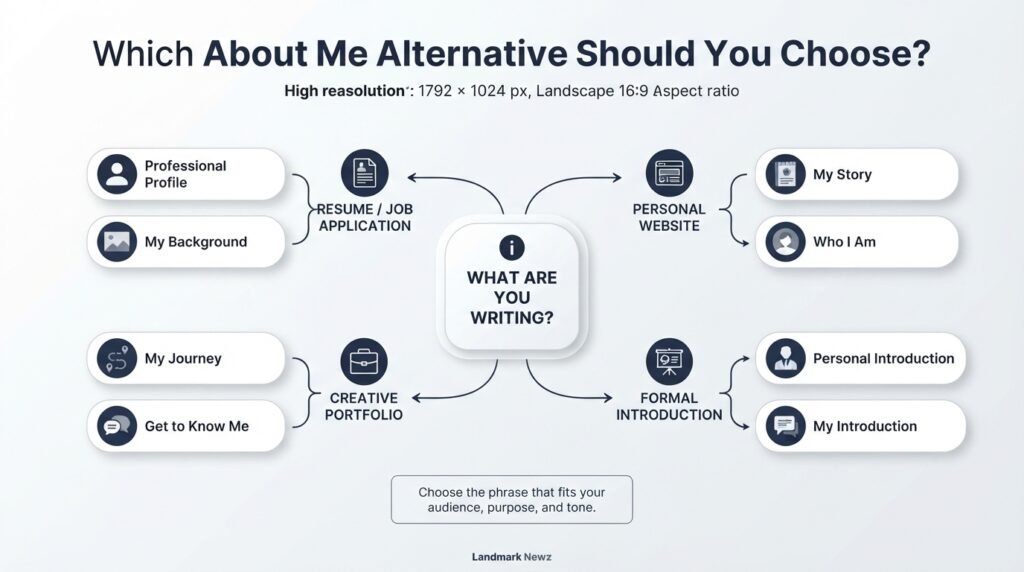
| Alternative | Best Used In | Tone |
| About Myself | Personal introductions | Casual, Friendly |
| My Background | Resumes, interviews, websites | Professional, Formal |
| My Story | Personal websites, blogs | Warm, Friendly |
| Who I Am | Personal pages, introductions | Casual, Warm |
| Personal Profile | Profiles, applications | Professional, Formal |
| Professional Profile | Resumes, portfolios | Professional, Formal |
| My Introduction | Presentations, profiles | Polite, Friendly |
| Get to Know Me | Personal websites, social profiles | Friendly, Casual |
| My Journey | Bios, portfolios, personal stories | Warm, Professional |
| Personal Introduction | Applications, presentations | Formal, Polite |
Common Mistakes
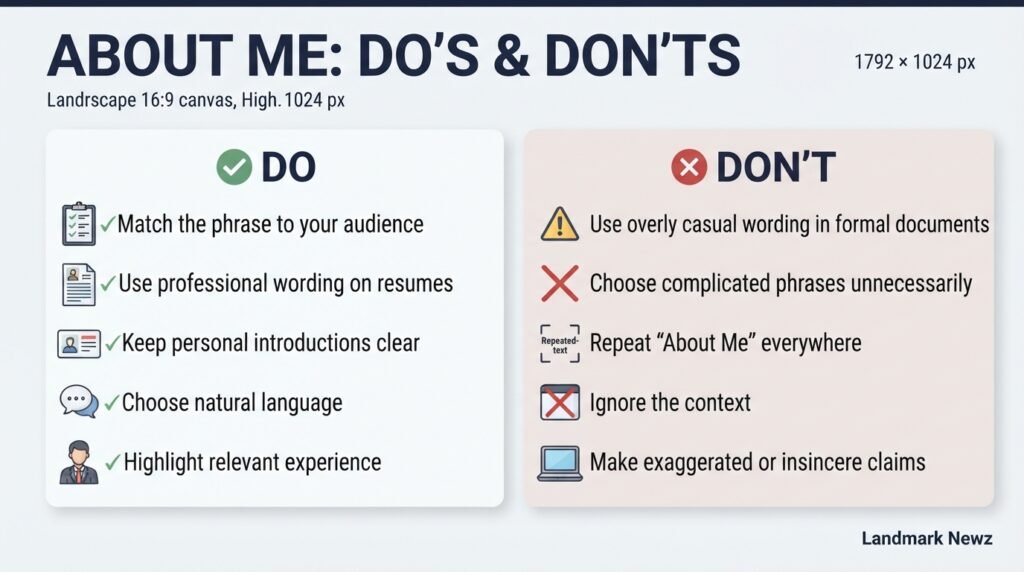
1. Using a casual phrase in a professional setting
“Get to know me” may sound friendly on a personal website, but it may feel too informal on a corporate resume. Match the heading to your audience.
2. Choosing overly formal language
A phrase does not become better simply because it sounds formal. If “My Background” communicates your experience clearly, there is no need to replace it with complicated wording.
3. Repeating “About Me” everywhere
Using the same heading on your resume, portfolio, website, and social profiles can make your content feel generic. Consider alternatives that better reflect each platform.
4. Forgetting the context
“My Story” and “Professional Profile” do not communicate exactly the same focus. Choose based on whether you want to highlight personality, career experience, achievements, or personal growth.
5. Making the introduction sound insincere
Avoid exaggerated claims simply to make your profile impressive. Clear, specific, and honest information creates a stronger impression than empty promotional language.
Frequently Asked Questions
What is a professional way to say “about me”?
“Professional Profile,” “My Background,” and “Personal Profile” are strong professional alternatives to “about me.” They work well on resumes, portfolios, business websites, applications, and professional biographies. Among these options, “Professional Profile” is best when the section focuses mainly on career experience, skills, qualifications, and accomplishments.
What can I use instead of “About Me” on a resume?
On a resume, consider using “Professional Summary,” “Professional Profile,” or “Career Profile.” These headings make it clear that the section focuses on your qualifications rather than general personal information. “Professional Summary” is especially useful when you want to briefly present your experience, strengths, and career goals.
What is another way to say “about myself”?
Common alternatives include “my background,” “my story,” “who I am,” “my personal profile,” and “my introduction.” The best option depends on your purpose. “My background” works well for professional writing, while “my story” and “who I am” sound more personal and conversational.
Is “my story” the same as “about me”?
“My story” and “about me” have similar purposes, but they create different impressions. “About me” is broad and neutral, while “my story” suggests a personal journey involving experiences, challenges, growth, or important life events. Choose “my story” when you want readers to connect with your experiences.
What is a good heading instead of “About Me” for a website?
Good website headings include “My Story,” “Who I Am,” “Get to Know Me,” “My Journey,” and “My Background.” For a business or professional website, “My Background” or “Professional Profile” may be more appropriate. For a creative or personal website, “My Story” can feel more engaging.
What is a formal way to introduce yourself?
For a formal introduction, phrases such as “My Background,” “Professional Profile,” “Personal Introduction,” or “Professional Summary” work well. You can then briefly explain your role, relevant experience, education, and goals. Keep the information focused on what your audience needs to know.
What is a friendly alternative to “About Me”?
“Get to Know Me,” “My Story,” “Who I Am,” and “My Journey” are friendly alternatives. These phrases sound less corporate and create a more personal connection with readers. They are especially suitable for personal blogs, creative portfolios, social profiles, and individual websites.
Can I use “About Me” on a professional website?
Yes. “About Me” is completely acceptable on a professional website because it is familiar and easy to understand. However, alternatives such as “My Background,” “Professional Profile,” or “My Story” can make the page feel more specific. The best choice depends on your industry, audience, and brand voice.
Conclusion
There are many natural alternatives to “about me.” The right choice depends on your audience and purpose. For career-focused content, “My Background” or “Professional Profile” works well. On a personal website, “My Story,” “Who I Am,” or “Get to Know Me” creates a warmer and more friendly tone.
For resumes and formal documents, choose a heading that highlights your professional value. Blogs, portfolios, and personal websites allow for more creative and conversational options.
In the end, you do not need a complex phrase to replace “about me.” Choose a heading that suits your audience and matches the content that follows. Simple, clear wording can make your introduction more engaging and effective. For more guidance on writing an effective About Me statement, see Indeed’s guide to creating an About Me statement.

Language & Everyday Communication Specialist
Elena Voss is a language enthusiast and communication coach with over 9 years of experience helping people express themselves more naturally in English. She previously worked as an ESL instructor and corporate language trainer, guiding professionals and students on clearer everyday conversations, polite alternatives, and natural phrasing.
Elena specializes in practical synonym guides and “another way to say…” content that feels conversational rather than textbook. Her writing focuses on real-life situations — emails to friends, casual workplace chat, social media, and daily interactions. She believes the best language advice is simple, useful, and easy to remember.
When she’s not creating content for LandmarkNewz, Elena enjoys analyzing modern slang trends and testing new phrases in real conversations.