
“I thought” is a common phrase in everyday English, but repeating it can make your writing sound less polished. Fortunately, there are many natural alternatives that can help you communicate the same idea while showing a different level of certainty, formality, or emotion.
Whether you are writing a professional email, having a casual conversation, explaining a misunderstanding, or sharing an opinion, the right alternative can make your message clearer and more natural.
What Does “Another Way to Say I Thought” Mean?
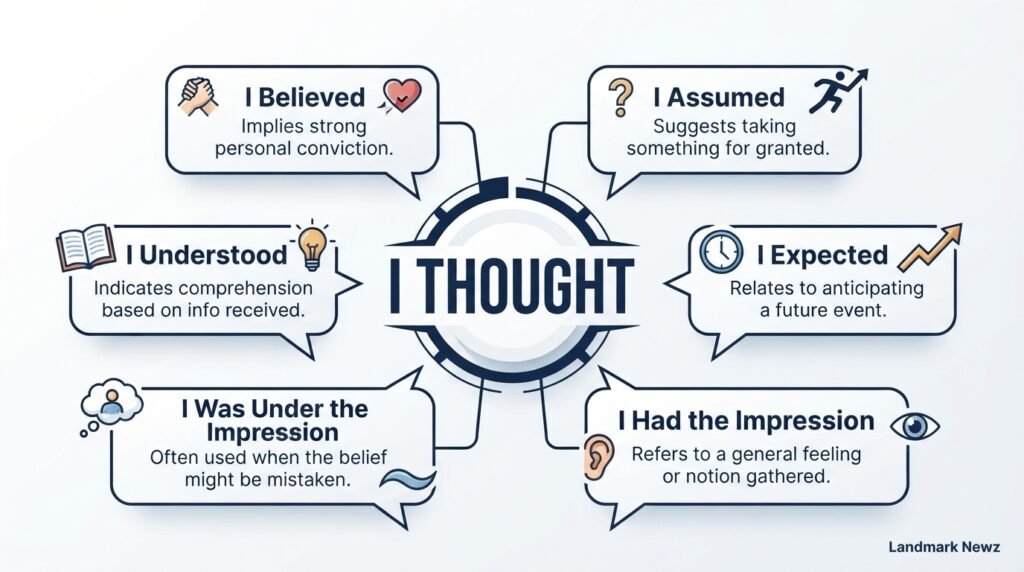
The phrase “another way to say I thought” refers to alternative expressions that communicate the idea of having previously believed, assumed, expected, or understood something.
For example, instead of saying, “I thought the meeting started at 10,” you could say, “I was under the impression that the meeting started at 10.”
The phrase “I thought” is commonly used when talking about a past belief or understanding. It can also introduce an expectation, assumption, or idea that later turned out to be different from reality.
Why Use Other Ways to Say “I Thought”?
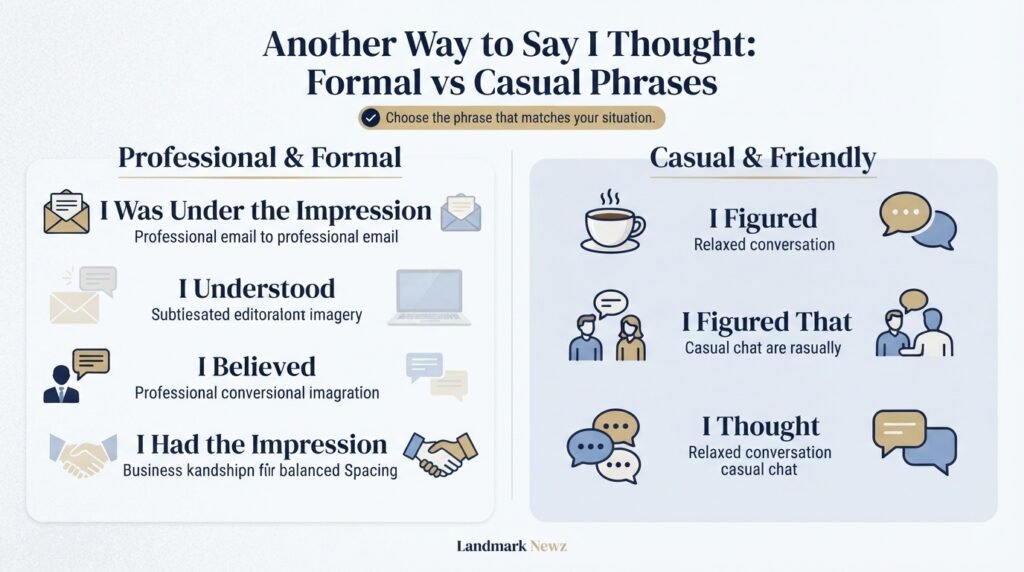
Using different expressions can make your speech and writing more precise. The best alternative depends on what you actually mean.
You may want to:
- Avoid repeating “I thought.”
- Sound more natural in conversation.
- Make professional writing more polished.
- Clearly show whether something was a belief or assumption.
- Communicate uncertainty without sounding unsure.
- Explain a misunderstanding in a polite way.
- Match your language to the situation and audience.
For example, “I assumed” suggests that you made a conclusion without having complete information, while “I believed” can sound more certain.
10 Best Other Ways to Say “I Thought”
1. I Believed
Meaning
“I believed” is one of the closest alternatives to “I thought.” It describes something you considered true or likely to be true in the past.
This phrase can sound slightly more formal and confident than “I thought,” making it useful in both professional and personal communication.
Best For
- Professional
- Formal
- Polite
Example 1
“I believed the revised proposal had already been sent to the client.”
Example 2
“At the time, I believed that the decision was final.”
Quick Tip
Use “I believed” when you want to emphasize that you genuinely accepted something as true rather than simply making a quick assumption.
2. I Assumed
Meaning
“I assumed” means you believed something was true without having complete confirmation. It is especially useful when explaining how you reached an incorrect conclusion.
The phrase is natural in everyday speech and professional communication, but it can sometimes suggest that you acted without checking the facts.
Best For
- Professional
- Casual
- Polite
Example 1
“I assumed you had already received the updated schedule.”
Example 2
“I assumed the store would remain open until 9 p.m.”
Quick Tip
Choose “I assumed” when your belief was based on what seemed reasonable rather than on confirmed information.
3. I Was Under the Impression
Meaning
“I was under the impression” is a polite and indirect way to explain that you previously believed something. It is particularly useful when there has been a misunderstanding.
This expression sounds more diplomatic than directly saying, “I thought you said…”
Best For
- Professional
- Formal
- Polite
Example 1
“I was under the impression that the deadline had been moved to Friday.”
Example 2
“I was under the impression that everyone had received the invitation.”
Quick Tip
Use this phrase when you want to correct or discuss a misunderstanding without making the other person feel blamed.
4. I Had the Impression
Meaning
“I had the impression” communicates that something seemed true based on the information or circumstances available at the time.
It is softer than saying “I knew” and works well when you want to avoid sounding overly certain.
Best For
- Professional
- Formal
- Polite
Example 1
“I had the impression that the project was nearly complete.”
Example 2
“I had the impression that Sarah would be joining us for dinner.”
Quick Tip
This is a good option when you want to express a past understanding while leaving room for the possibility that you were mistaken.
5. I Understood
Meaning
“I understood” focuses on what you believed or interpreted from information someone gave you. It is especially appropriate when discussing instructions, agreements, or expectations.
It can sound professional without being overly formal.
Best For
- Professional
- Formal
- Polite
Example 1
“I understood that the report was due by the end of the day.”
Example 2
“I understood that you wanted me to contact the supplier directly.”
Quick Tip
Use “I understood” when your belief came from something someone communicated to you.
6. I Figured
Meaning
“I figured” is an informal American English expression meaning “I thought,” “I assumed,” or “I concluded.” It often suggests that you made a reasonable guess based on the situation.
It sounds natural and conversational but is usually not the best choice for formal business writing.
Best For
- Casual
- Friendly
Example 1
“I figured you might want to grab lunch after the meeting.”
Example 2
“I figured the traffic would be lighter on Sunday morning.”
Quick Tip
Use “I figured” with friends, family, or coworkers you know well rather than in highly formal correspondence.
7. I Expected
Meaning
“I expected” is useful when “I thought” refers to something you believed would happen. It focuses more on anticipation than belief.
For example, “I thought you would call” can become “I expected you to call,” although the second version may sound stronger.
Best For
- Professional
- Formal
- Casual
Example 1
“I expected the package to arrive by Wednesday.”
Example 2
“I expected the presentation to take about an hour.”
Quick Tip
Choose “I expected” when the original meaning involves an anticipated event or outcome.
8. I Was Certain
Meaning
“I was certain” expresses a high level of confidence in a past belief. It is much stronger than the neutral phrase “I thought.”
Because it communicates strong confidence, use it only when you genuinely felt sure about something.
Best For
- Formal
- Professional
- Warm
Example 1
“I was certain that I had saved the final version of the document.”
Example 2
“I was certain we had discussed this issue during last week’s meeting.”
Quick Tip
Do not use “I was certain” simply to replace “I thought.” It changes the strength of your original meaning.
9. I Figured That
Meaning
“I figured that” is another conversational alternative that often means you reached a conclusion based on circumstances. It can make your speech sound relaxed and natural.
The phrase is common in American English and works especially well in casual conversations.
Best For
- Casual
- Friendly
Example 1
“I figured that you would be home by now.”
Example 2
“I figured that we could finish the project together tomorrow.”
Quick Tip
This expression works best when you are casually explaining what you expected or assumed would happen.
10. I Was Expecting
Meaning
“I was expecting” describes something you believed would happen or were prepared to receive. It can also communicate mild surprise when reality differs from your expectation.
The phrase is useful in conversations, emails, and workplace situations.
Best For
- Professional
- Casual
- Polite
Example 1
“I was expecting an email from the accounting department this morning.”
Example 2
“I was expecting the meeting to begin at two o’clock.”
Quick Tip
Use “I was expecting” when the main idea is anticipation rather than simply having an opinion or belief.
Comparison Table
| Alternative | Best Used In | Tone |
| I believed | Professional, formal writing | Confident |
| I assumed | Work, everyday conversation | Neutral |
| I was under the impression | Professional communication | Diplomatic |
| I had the impression | Formal and professional situations | Polite |
| I understood | Instructions and workplace communication | Clear |
| I figured | Casual conversations | Relaxed |
| I expected | Expectations and predictions | Neutral |
| I was certain | Strongly held beliefs | Confident |
| I figured that | Informal conversations | Friendly |
| I was expecting | Anticipated events | Neutral |
Common Mistakes
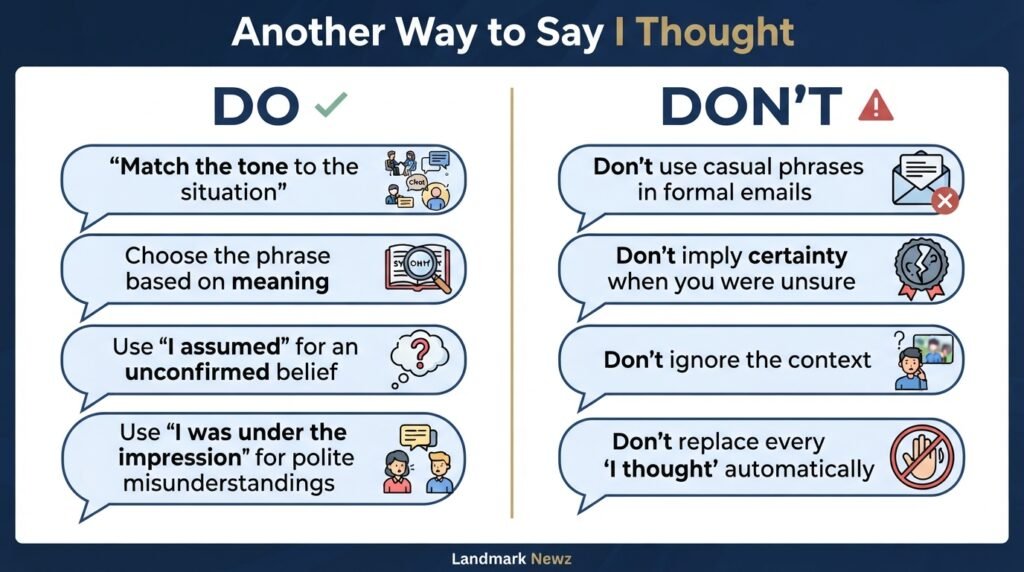
1. Using a Casual Phrase in a Formal Email
Expressions such as “I figured” may sound too informal in a business email. Choose “I understood,” “I believed,” or “I was under the impression” when the situation calls for a professional tone.
2. Changing the Meaning by Using Too Much Certainty
“I thought” does not always mean you were completely certain. Replacing it with “I was certain” can make your statement much stronger than intended.
3. Using “I Assumed” When You Mean “I Knew”
“I assumed” suggests that you made a conclusion without full confirmation. If you had verified the information, “I understood” or “I knew” may be more accurate.
4. Ignoring the Context
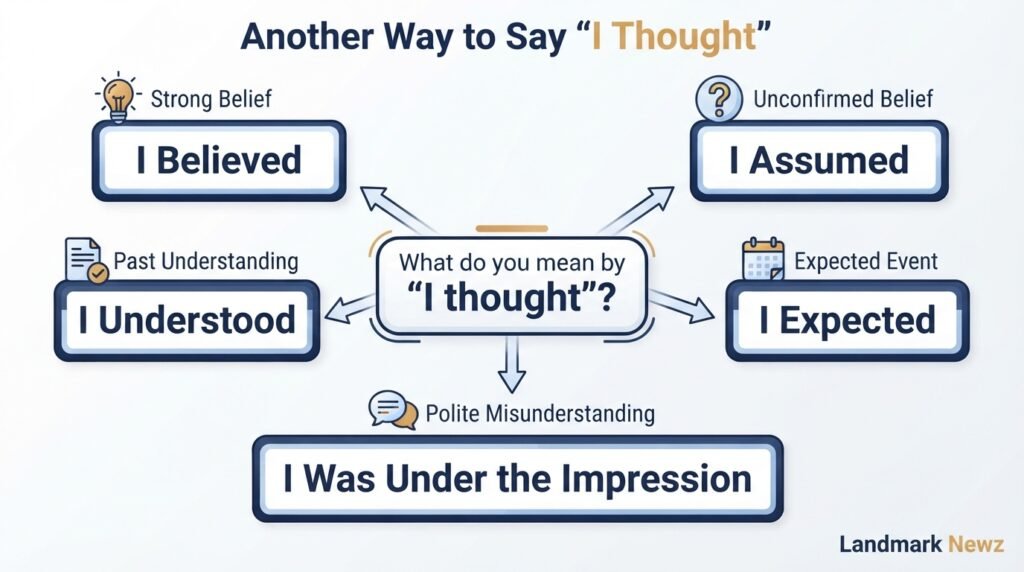
The best alternative depends on what “I thought” means in the sentence. If you are discussing an expectation, “I expected” may work better than “I believed.”
5. Sounding More Formal Than Necessary
Not every sentence needs sophisticated wording. In a casual conversation, simple expressions such as “I figured” can sound much more natural than formal alternatives.
Frequently Asked Questions
What is a professional way to say “I thought”?
“I was under the impression” is one of the most useful professional alternatives to “I thought.” It sounds polite and diplomatic, especially when discussing a misunderstanding. “I understood” and “I believed” are also strong choices when you want a clear and professional tone.
What is a polite way to say “I thought”?
“I was under the impression” is a particularly polite option because it explains your previous understanding without directly blaming another person. For example, “I was under the impression that the meeting was scheduled for Friday” sounds softer than “I thought you said Friday.”
What is another way to say “I thought” in an email?
In a professional email, you can use “I understood,” “I believed,” “I assumed,” or “I was under the impression.” Your choice should depend on the meaning. Use “I understood” for instructions, “I assumed” for an unconfirmed belief, and “I was under the impression” for misunderstandings.
What is a casual way to say “I thought”?
“I figured” is a natural casual alternative in American English. For example, “I figured you were busy” sounds relaxed and conversational. “I thought you were busy” is equally natural, but “I figured” can make the statement feel more informal and less direct.
Is “I assumed” the same as “I thought”?
“I assumed” and “I thought” can mean the same thing. However, they are not always interchangeable. “I assumed” means you believed something without checking it first. “I thought” is more general. It can show a belief, opinion, expectation, or idea.
How do I say “I thought” without sounding rude?
Use a softer expression such as “I was under the impression” or “I understood.” These phrases are useful when correcting a misunderstanding because they focus on your own understanding instead of implying that someone else made a mistake.
What is a formal synonym for “I thought”?
“I believed” is a formal and direct alternative, while “I was under the impression” provides a more diplomatic option. “I had the impression” can also work when you want to communicate a previous understanding without suggesting complete certainty.
What can I say instead of “I thought you said”?
Depending on the situation, you could say, “I understood you to say,” “I was under the impression you said,” or “I believed you said.” In professional communication, “I understood you to say” is especially useful because it sounds clear and avoids unnecessary blame.
Conclusion
There are many natural ways to say “I thought,” but the best choice depends on exactly what you mean. If you are describing a firm belief, “I believed” works well. If you made a conclusion without confirmation, “I assumed” is more precise.
For professional or sensitive situations, “I was under the impression” and “I understood” can help you communicate a misunderstanding politely. Meanwhile, “I figured” and “I figured that” are better suited to relaxed conversations.
The key is not simply to replace “I thought” with a more complicated phrase. Instead, choose an expression that matches your intended meaning, level of certainty, audience, and tone. When you do that, your writing will sound clearer, more natural, and more effective. For more guidance on choosing the right words for clarity, tone, and meaning, see Purdue OWL’s guide to diction.

About Dr. Priya Nair
Dr. Priya Nair is a passionate Writer & Blogger at LandMarkNewz.com, dedicated to creating informative, engaging, and easy-to-understand content for readers. With a strong interest in research, current trends, lifestyle, and everyday topics, she focuses on presenting useful information in a clear and reader-friendly way.
Through her writing, Priya aims to help readers discover valuable insights, understand complex topics more easily, and stay informed about subjects that matter to them. Her approach combines thoughtful research with a simple and engaging writing style.
At LandMarkNewz.com, she contributes original articles designed to inform, educate, and provide practical value to readers.