
“Be there or be square” is a playful expression used to encourage someone to attend an event. The phrase suggests that people who show up will be part of the fun, while those who stay away may miss something enjoyable.
The expression is usually casual and humorous. You might see it in invitations to parties, school events, social gatherings, reunions, game nights, or other informal occasions.
Because “be there or be square” has a distinctly playful tone, it may not work well in every situation. When you want a friendlier, clearer, or more modern invitation, choosing another phrase can make your message sound more natural.
Why Use Other Ways to Say “Be There or Be Square”?
There are several reasons to replace this familiar expression with something more specific. The right alternative can make your invitation feel warmer, more professional, or more exciting.
- Avoid repetition: Use fresh wording instead of the same familiar expression.
- Sound more natural: Some alternatives fit everyday American English better.
- Match the occasion: A work event may call for different wording than a birthday party.
- Adjust the tone: Choose language that feels casual, warm, polite, or professional.
- Make your invitation clearer: Direct phrases can tell readers exactly what you want them to do.
10 Best Other Ways to Say “Be There or Be Square”
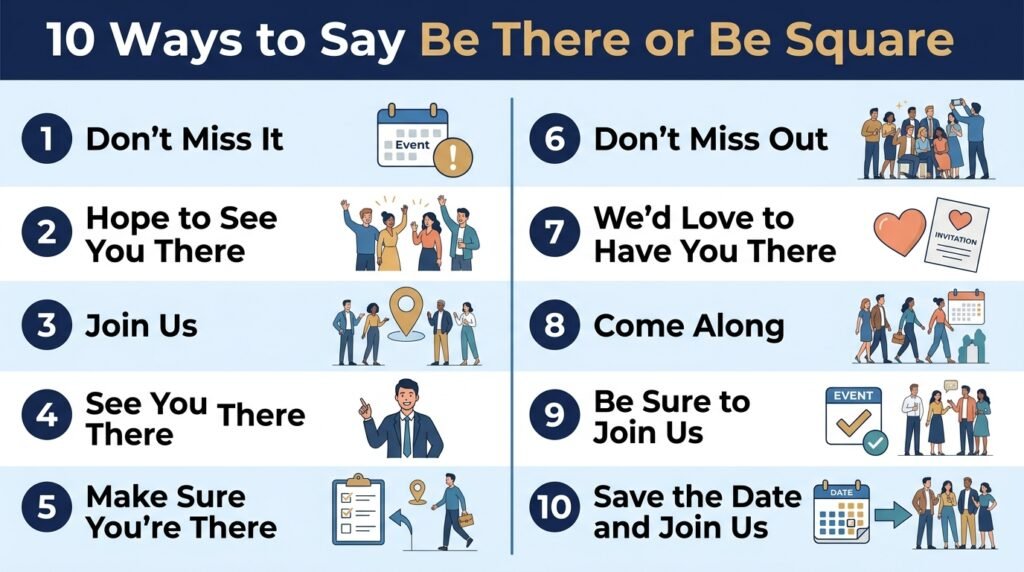
1. Don’t Miss It
Meaning
“Don’t miss it” is a simple and energetic way to encourage someone to attend. It focuses on the idea that the event will be worth attending without using a rhyme or joke.
Best For
- Casual
- Friendly
- Warm
Example 1
Don’t miss it—we’re celebrating Sarah’s promotion this Friday!
Example 2
The concert starts at 7, so don’t miss it!
Quick Tip
Use “Don’t miss it” when you want your invitation to sound enthusiastic without being overly formal.
2. Hope to See You There
Meaning
“Hope to see you there” is warmer and more personal than a direct command. It shows that the person’s presence would be appreciated.
Best For
- Friendly
- Warm
- Polite
- Professional
Example 1
We’re having a small team celebration next Thursday and hope to see you there.
Example 2
The reunion should be a lot of fun. Hope to see you there!
Quick Tip
This is an excellent choice when you want to invite someone without making the message sound demanding.
3. Join Us
Meaning
“Join us” is short, welcoming, and versatile. It directly invites someone to become part of an event, activity, or gathering.
Best For
- Professional
- Casual
- Friendly
- Polite
Example 1
Join us for dinner after the awards ceremony.
Example 2
We’re meeting at the park Saturday morning, so join us if you can.
Quick Tip
Use “Join us” when you want a concise invitation that works in both personal and professional settings.
4. See You There
Meaning
“See you there” sounds confident and friendly. It works especially well when attendance has already been discussed or when you want to end an invitation on an upbeat note.
Best For
- Casual
- Friendly
- Warm
Example 1
The game starts at six—see you there!
Example 2
Thanks for confirming your RSVP. See you there on Saturday!
Quick Tip
Use this phrase when you expect the person to attend rather than when you are making a highly formal invitation.
5. Make Sure You’re There
Meaning
“Make sure you’re there” keeps the encouraging spirit of “be there or be square” while sounding more direct. It emphasizes that the event is important or especially enjoyable.
Best For
- Casual
- Friendly
- Warm
Example 1
We’re revealing the new project at Friday’s meeting, so make sure you’re there.
Example 2
It’s Jake’s last day with the team—make sure you’re there for the send-off!
Quick Tip
This phrase works best when you have a friendly relationship with the person and a strong reason for encouraging attendance.
6. Don’t Miss Out
Meaning
“Don’t miss out” highlights the opportunity or experience someone could lose by staying away. It creates a little excitement without sounding as playful as the original expression.
Best For
- Casual
- Friendly
- Warm
Example 1
We’re bringing in a food truck for lunch tomorrow, so don’t miss out!
Example 2
There will be live music and games at the fundraiser. Don’t miss out!
Quick Tip
Use this phrase when you want to create excitement around an event or activity.
7. We’d Love to Have You There
Meaning
“We’d love to have you there” makes the invitation personal and welcoming. Instead of simply telling someone to attend, it communicates that their presence would genuinely matter.
Best For
- Friendly
- Warm
- Polite
- Formal
Example 1
We’re celebrating our anniversary next month, and we’d love to have you there.
Example 2
Our department is hosting a retirement luncheon, and we’d love to have you there.
Quick Tip
Choose this option when warmth and personal connection matter more than humor.
8. Come Along
Meaning
“Come along” is a relaxed invitation to join an activity or event. It sounds informal and friendly, making it a natural choice for plans with friends, relatives, or familiar coworkers.
Best For
- Casual
- Friendly
Example 1
We’re heading to the street festival Saturday afternoon. Come along!
Example 2
A few of us are grabbing coffee after work, so come along if you’re free.
Quick Tip
Because it is informal, save “come along” for relaxed conversations rather than formal invitations.
9. Be Sure to Join Us
Meaning
“Be sure to join us” is a polished way to encourage attendance while remaining welcoming. It has more structure than “come along” but still feels approachable.
Best For
- Professional
- Formal
- Polite
- Friendly
Example 1
Be sure to join us for the annual employee appreciation dinner.
Example 2
Be sure to join us online for Thursday’s customer Q&A session.
Quick Tip
This phrase is particularly useful for workplace announcements, community events, newsletters, and public invitations.
10. Save the Date and Join Us
Meaning
“Save the date and join us” combines a reminder with an invitation. It encourages readers to reserve time for an upcoming event and makes the invitation feel organized.
Best For
- Professional
- Formal
- Friendly
- Polite
Example 1
Save the date and join us for our annual company picnic on August 15.
Example 2
Save the date and join us as we celebrate the opening of our new location.
Quick Tip
Use this wording for events that are scheduled well in advance, especially weddings, conferences, fundraisers, and company celebrations.
Comparison Table
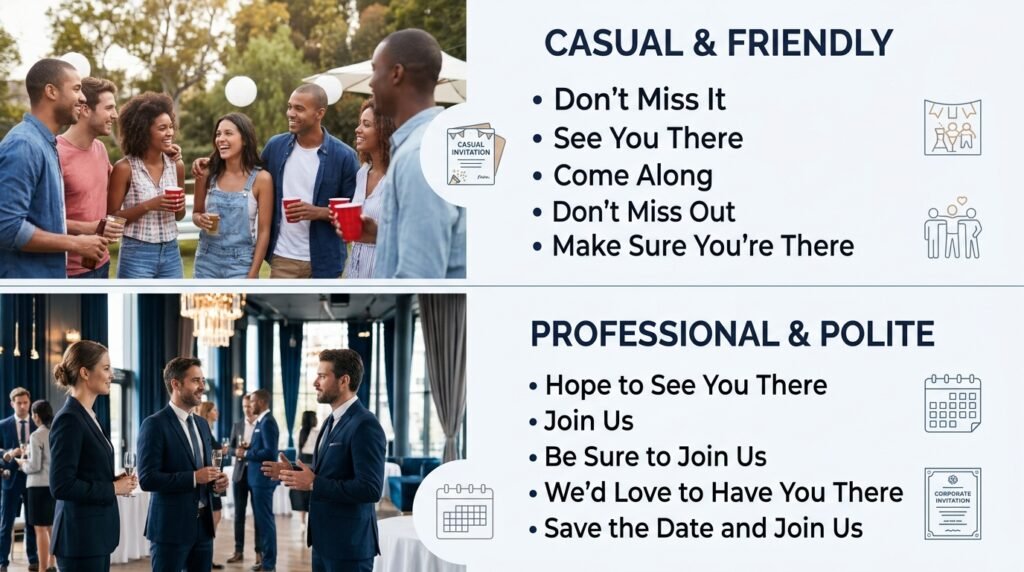
| Alternative | Best Used In | Tone |
| Don’t Miss It | Parties, events, casual invitations | Friendly, energetic |
| Hope to See You There | Personal and professional invitations | Warm, polite |
| Join Us | General invitations | Welcoming, versatile |
| See You There | Casual plans and confirmed events | Friendly, confident |
| Make Sure You’re There | Important social events | Direct, friendly |
| Don’t Miss Out | Fun activities and events | Casual, enthusiastic |
| We’d Love to Have You There | Personal celebrations | Warm, sincere |
| Come Along | Informal plans | Casual, relaxed |
| Be Sure to Join Us | Workplace and public events | Polished, polite |
| Save the Date and Join Us | Planned events | Formal, welcoming |
Common Mistakes
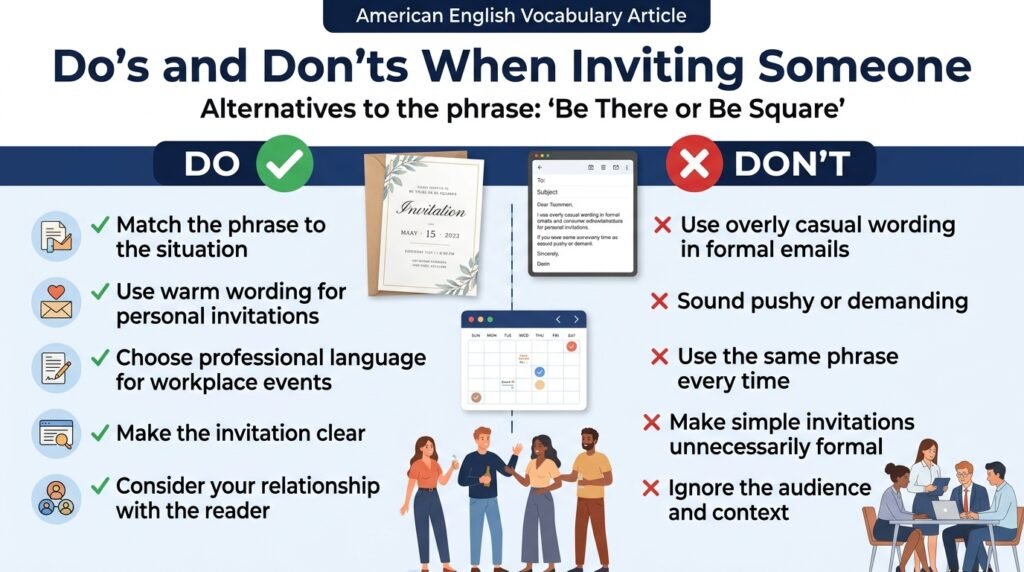
1. Using a Casual Phrase in a Formal Invitation
“Be there or be square” and “come along” can sound too relaxed for certain professional events. For formal occasions, phrases such as “We’d love to have you there” or “Be sure to join us” are usually better.
2. Making Every Invitation Sound the Same
Repeating one expression can make your writing feel predictable. Rotate between direct, warm, and enthusiastic alternatives based on the occasion.
3. Choosing Overly Formal Language
Not every invitation needs polished corporate language. Saying “We cordially request your presence” to a close friend can sound stiff when “Hope to see you there!” would feel more natural.
4. Ignoring the Relationship With the Reader
Think about who will receive the invitation. A phrase that works perfectly with your friends may not be appropriate for a manager, customer, client, or professional contact.
5. Sounding Too Pushy
An invitation should make people feel welcome rather than pressured. If attendance is optional, “Hope to see you there” can be more considerate than “Make sure you’re there.”
Frequently Asked Questions
What is another way to say “be there or be square”?
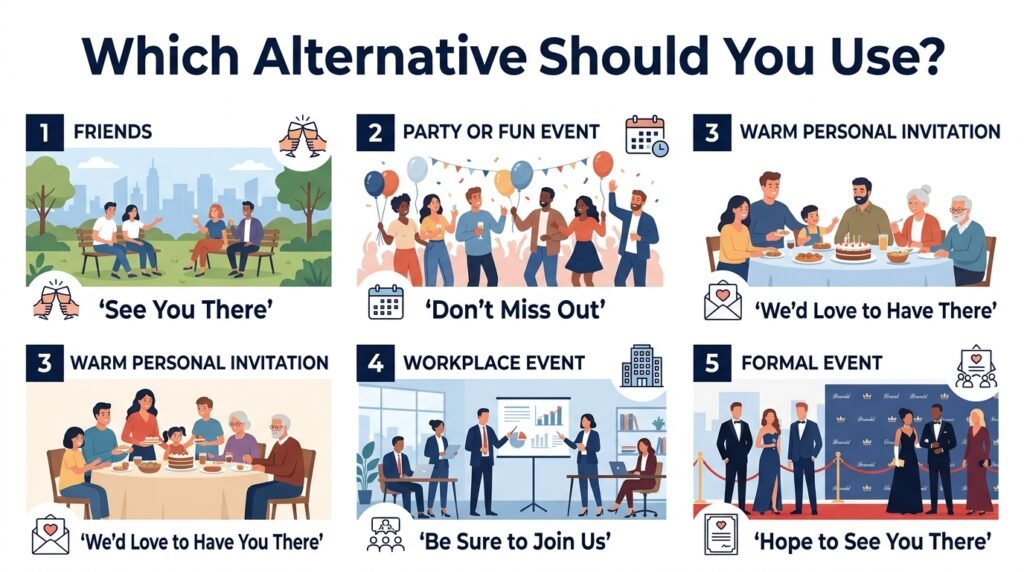
Some natural alternatives include “Don’t miss it,” “Hope to see you there,” “Join us,” “See you there,” and “Don’t miss out.” The best choice depends on your audience and the event. For a playful invitation, “Don’t miss out” works well, while “Hope to see you there” sounds warmer and more polite.
What does “be there or be square” mean?
“Be there or be square” means that someone should attend an event or risk missing out on the fun. It is a playful expression rather than a serious warning. The phrase uses rhyme to make an invitation memorable and humorous, so it is most common in casual conversations and informal event invitations.
Is “be there or be square” still commonly used?
Yes, people still understand “be there or be square,” but it has a distinctly playful and somewhat old-fashioned feel. Many speakers now choose simpler expressions such as “Don’t miss it” or “See you there.” These alternatives can sound more natural, especially when writing for a mixed-age audience.
Is “don’t miss it” a good alternative to “be there or be square”?
Yes. “Don’t miss it” is one of the easiest replacements because it communicates the same basic idea without the rhyme. It works especially well for parties, concerts, celebrations, sporting events, and other activities where you want to create excitement without sounding overly formal.
What is a professional way to say “be there or be square”?
For professional communication, try “Be sure to join us,” “We hope you can join us,” or “We’d love to have you there.” These options encourage attendance while maintaining a polished tone. They are suitable for workplace events, business meetings, networking events, conferences, and company celebrations.
What is a funny way to say “be there or be square”?
If you want to keep the playful spirit, you could say “Don’t miss out,” “You better be there,” or “Come join the fun.” These phrases are humorous or energetic without relying on the exact rhyme. Use them with people who are comfortable with casual language.
Can I use “be there or be square” in an email?
You can use it in a casual email, especially when writing to friends or familiar coworkers. However, it may sound too informal for clients, executives, customers, or formal business communication. In those cases, “Hope to see you there” or “Be sure to join us” is usually a safer choice.
What is the warmest alternative to “be there or be square”?
“We’d love to have you there” is one of the warmest alternatives. It tells the recipient that their presence is personally valued instead of simply asking them to attend. It works particularly well for family celebrations, reunions, retirement parties, weddings, and other meaningful gatherings.
Conclusion
“Be there or be square” is a fun, memorable way to encourage someone to attend an event, but it is not the best choice for every situation. If you want a simple and energetic option, “Don’t miss it” or “Don’t miss out” works well. For a warm invitation, try “Hope to see you there” or “We’d love to have you there.”
For workplace events, “Be sure to join us” offers a polished middle ground. Meanwhile, “Join us,” “See you there,” and “Come along” work well for casual plans.
The key is to match your wording to the audience, relationship, and event. Instead of relying on one expression, choose the alternative that makes your invitation sound natural, welcoming, and appropriate. Using the right event invitation wording can also help you communicate the purpose of the event and encourage people to attend.
About Dr. Priya Nair
Dr. Priya Nair is a passionate Writer & Blogger at LandMarkNewz.com, dedicated to creating informative, engaging, and easy-to-understand content for readers. With a strong interest in research, current trends, lifestyle, and everyday topics, she focuses on presenting useful information in a clear and reader-friendly way.
Through her writing, Priya aims to help readers discover valuable insights, understand complex topics more easily, and stay informed about subjects that matter to them. Her approach combines thoughtful research with a simple and engaging writing style.
At LandMarkNewz.com, she contributes original articles designed to inform, educate, and provide practical value to readers.