
Saying “goodbye” is simple, but it is not always the best way to end a conversation. Sometimes you want to sound warmer, more professional, more casual, or more personal.
Fortunately, English offers many natural alternatives. The right phrase can make a quick departure feel friendly, a business conversation feel polished, or a meaningful farewell feel more sincere.
What Does “Another Way to Say Good Bye” Mean?
“Another way to say good bye” means looking for a different phrase that communicates the same basic idea as “goodbye.” People often search for alternatives when they want to avoid repetition or choose words that better match a specific situation.
Common alternatives include “see you later,” “take care,” “farewell,” and “until next time.” These expressions are used in conversations, emails, text messages, workplace settings, social events, and personal farewells.
The spelling “goodbye” is normally written as one word in standard American English, although the search phrase “good bye” is also common.
Why Use Other Ways to Say “Good Bye”?
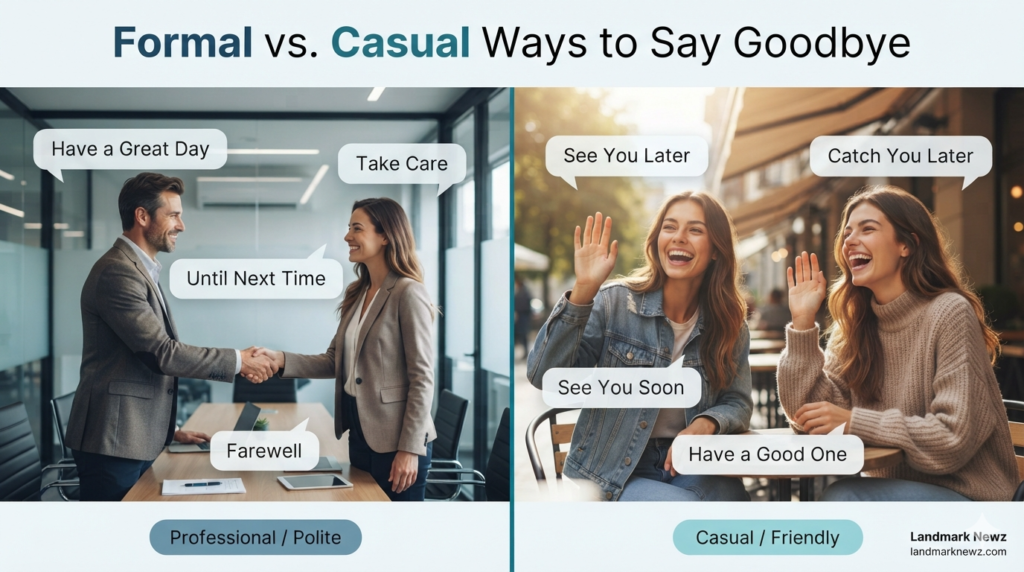
Using different farewell expressions helps you communicate with more precision. “Goodbye” is perfectly acceptable, but another phrase may better reflect your relationship or the mood of the moment.
Other options can help you:
- Avoid repeating the same expression.
- Sound more natural in everyday conversations.
- Match professional or casual situations.
- Show warmth, respect, or friendliness.
- Make a farewell feel more personal.
- Communicate whether you expect to meet again.
10 Best Other Ways to Say “Good Bye”

1. See You Later
Meaning
“See you later” is one of the most natural alternatives to “goodbye.” It suggests that you expect to see the person again, although “later” does not necessarily mean the same day.
Best For
- Casual
- Friendly
- Polite
Example 1
“Thanks for stopping by. See you later!”
Example 2
“I have to head home now, but I’ll see you later at the office.”
Quick Tip
Use this phrase when you expect another interaction. It feels relaxed and natural without being overly familiar.
2. Take Care
Meaning
“Take care” is a warm and thoughtful way to end a conversation. It expresses goodwill and suggests that you hope the other person stays safe or well.
Best For
- Friendly
- Warm
- Polite
- Casual
Example 1
“It was great catching up with you. Take care!”
Example 2
“Thanks for your help today, and take care on your way home.”
Quick Tip
“Take care” works especially well when you want your farewell to sound considerate rather than purely routine.
3. Farewell
Meaning
“Farewell” is a formal and traditional alternative to “goodbye.” It can sound more serious or emotional, so it is less common in ordinary casual conversations.
Best For
- Formal
- Warm
- Professional
Example 1
“Farewell, and I wish you success in your new position.”
Example 2
“After ten years with the company, the team gathered to bid her farewell.”
Quick Tip
Use “farewell” for significant departures rather than ordinary situations such as leaving a coffee shop.
4. Until Next Time
Meaning
“Until next time” suggests that you expect to meet or communicate again. It has a friendly, positive quality and can make a goodbye feel less final.
Best For
- Friendly
- Warm
- Polite
Example 1
“Thanks for a wonderful evening. Until next time!”
Example 2
“We’ve covered everything for today, so until next time, everyone.”
Quick Tip
This is a strong choice when you want to end on an optimistic note and emphasize the possibility of another meeting.
5. Have a Great Day
Meaning
“Have a great day” is a positive way to close a conversation. It does not directly mean “goodbye,” but Americans frequently use it as a natural closing when leaving or ending an interaction.
Best For
- Professional
- Polite
- Friendly
- Casual
Example 1
“Thank you for calling. Have a great day!”
Example 2
“I appreciate you meeting with me this morning. Have a great day.”
Quick Tip
This phrase is especially useful in customer service, workplace conversations, appointments, and everyday interactions.
6. Catch You Later
Meaning
“Catch you later” is a relaxed, informal expression that means you expect to see or speak with someone again. It has a distinctly conversational feel.
Best For
- Casual
- Friendly
Example 1
“I’m heading out to grab some lunch. Catch you later.”
Example 2
“Send me the details when you get a chance. Catch you later!”
Quick Tip
Save this expression for friends, coworkers you know well, or other informal situations. It may sound too casual in a formal email.
7. See You Soon
Meaning
“See you soon” communicates that you expect another meeting in the near future. It sounds warmer and more definite than a simple “goodbye.”
Best For
- Friendly
- Warm
- Casual
- Polite
Example 1
“Enjoy your vacation, and see you soon!”
Example 2
“I’m looking forward to our next meeting. See you soon.”
Quick Tip
Use it when another meeting or visit is reasonably likely. It works particularly well after making plans.
8. Have a Good One
Meaning
“Have a good one” is a casual American expression used to wish someone well as you part. “One” usually refers to the day, evening, or upcoming period.
Best For
- Casual
- Friendly
- Polite
Example 1
“Thanks for coming in. Have a good one!”
Example 2
“I’ll send the report this afternoon. Have a good one.”
Quick Tip
This phrase is natural in everyday American English but is generally better suited to casual workplace or social interactions than formal correspondence.
9. Until We Meet Again
Meaning
“Until we meet again” is a warm and somewhat formal farewell that emphasizes a future reunion. It can carry more emotion than ordinary expressions such as “see you later.”
Best For
- Formal
- Warm
- Friendly
Example 1
“Thank you for everything you’ve done for our team. Until we meet again.”
Example 2
“Enjoy your journey, and until we meet again, stay safe.”
Quick Tip
Because it sounds thoughtful and slightly dramatic, use it for meaningful farewells rather than routine departures.
10. Have a Safe Trip
Meaning
“Have a safe trip” is a practical and caring farewell for someone who is traveling. Rather than simply ending the conversation, it communicates genuine concern for the person’s journey.
Best For
- Warm
- Friendly
- Polite
Example 1
“Thanks for visiting us. Have a safe trip home!”
Example 2
“I’m glad we had a chance to catch up. Have a safe trip back to Chicago.”
Quick Tip
Choose this expression when travel is part of the situation. It feels more personal than simply saying “goodbye.”
Comparison Table
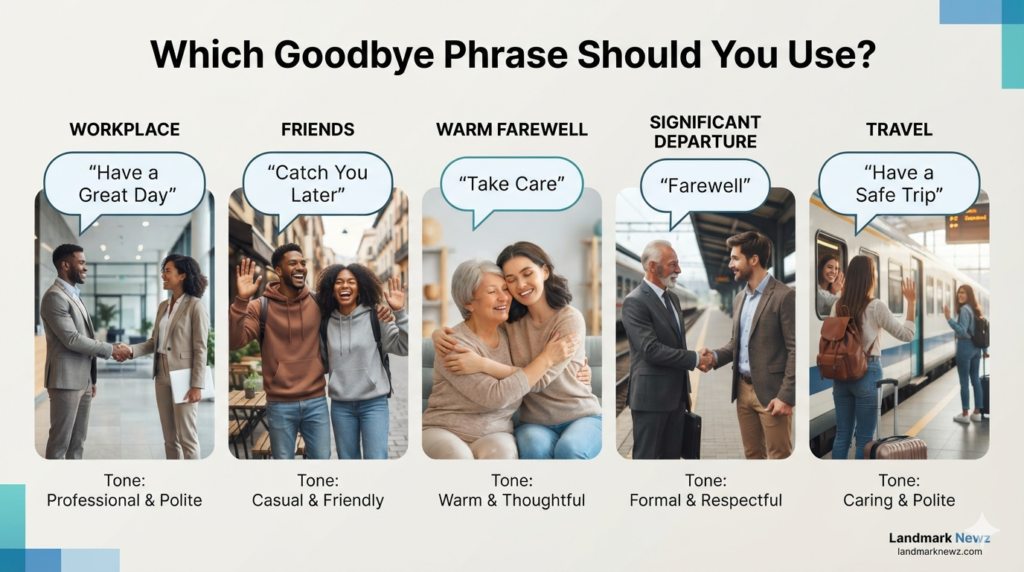
| Alternative | Best Used In | Tone |
| See you later | Everyday conversations | Casual, friendly |
| Take care | Personal and workplace conversations | Warm, polite |
| Farewell | Significant departures | Formal, respectful |
| Until next time | Meetings and social occasions | Friendly, warm |
| Have a great day | Work, customer service, daily interactions | Polite, positive |
| Catch you later | Friends and informal conversations | Casual |
| See you soon | Planned or expected reunions | Warm, friendly |
| Have a good one | Everyday American conversations | Casual, friendly |
| Until we meet again | Meaningful farewells | Warm, formal |
| Have a safe trip | Travel situations | Caring, polite |
Common Mistakes
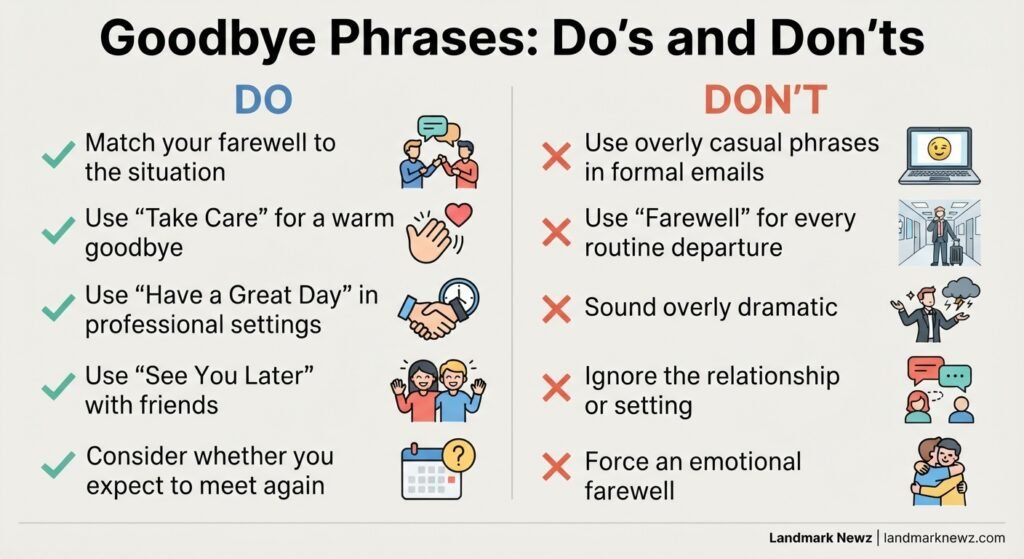
1. Using casual phrases in formal situations
Expressions such as “catch you later” may sound too relaxed for a formal business email or important professional meeting. Choose a polite closing that matches the setting.
2. Choosing language that feels overly dramatic
“Until we meet again” can sound emotional when used for a routine departure. Consider how significant the farewell actually is before choosing a more serious expression.
3. Repeating the same farewell constantly
Using “goodbye” in every conversation can make your language feel repetitive. Rotating between natural alternatives can make your communication more varied.
4. Forgetting the context
A phrase that works well with a close friend may not work equally well with a client, manager, or customer. Always consider your relationship with the person before choosing an alternative.
5. Sounding insincere
A warm phrase only works when it fits your actual tone. If you choose an emotional farewell for a simple everyday interaction, it can sound unnatural or forced.
Frequently Asked Questions
What is a good alternative to “goodbye”?
“See you later” is one of the best general alternatives because it sounds natural and friendly. “Take care” is another excellent choice when you want to show warmth. For formal situations, “farewell” may be more appropriate. Your best option depends on the relationship, setting, and reason for leaving.
What is a professional way to say goodbye?
Professional alternatives include “Have a great day,” “Take care,” “Until next time,” and “I look forward to speaking with you again.” In business communication, the goal is to remain courteous without sounding overly casual or emotional. “Have a great day” is particularly versatile for workplace conversations and customer interactions.
What is a casual way to say goodbye?
For casual conversations, try “See you later,” “Catch you later,” “See you soon,” or “Have a good one.” These phrases sound relaxed and natural in American English. They work well with friends, family members, classmates, and coworkers with whom you have a comfortable relationship.
What is a warm way to say goodbye?
“Take care,” “See you soon,” and “Until next time” are warm alternatives to “goodbye.” They communicate more than simply ending a conversation. For someone who is traveling, “Have a safe trip” can be especially thoughtful because it shows that you care about their well-being.
Is “farewell” more formal than “goodbye”?
Yes. “Farewell” generally sounds more formal, traditional, or significant than the everyday word “goodbye.” It is often associated with important departures or ceremonies. In ordinary conversation, “see you later” or “take care” will usually sound more natural and less serious.
How do you say goodbye without saying goodbye?
You can end a conversation with phrases such as “Have a great day,” “Take care,” “See you soon,” or “Until next time.” These expressions communicate that the interaction is ending without directly using the word “goodbye.” The best choice depends on whether you want to sound casual, professional, warm, or formal.
What can I say instead of goodbye in a text?
For a text message, “See you later,” “Talk soon,” “Take care,” and “Catch you later” are natural choices. If you already have plans to meet, “See you soon” works well. Choose a phrase that matches the relationship rather than making the message more formal than necessary.
What is a nice way to say goodbye to someone leaving?
A thoughtful farewell can be as simple as “Take care,” “Have a safe trip,” or “Until we meet again.” If the person is moving away or leaving permanently, you can add a sincere good wish, such as wishing them success or happiness in their next chapter.
Conclusion
There are many natural ways to say goodbye, and the best choice depends on the situation. For everyday conversations, “see you later” and “catch you later” sound relaxed and friendly. If you want to show warmth, “take care” or “see you soon” works well.
For professional settings, “have a great day” is polite and versatile, while “farewell” suits more meaningful or formal departures. If someone is traveling, “have a safe trip” adds a thoughtful personal touch.
The key is to match your words with the relationship, setting, and emotion behind the farewell. Instead of automatically saying “goodbye,” choose an expression that communicates exactly how you want the conversation to end. Following basic communication etiquette can also help you choose a closing that fits the situation.

Professional Writing & Workplace Communication Expert
Marcus Hale is a business communication specialist with 11 years of experience in corporate training and professional writing. He has worked with mid-sized companies and remote teams to improve clarity in emails, reports, performance reviews, and client-facing messages.
Marcus focuses on polished, professional alternatives that help readers sound confident without sounding stiff. His guides cover workplace phrases, resume language, leadership communication, and formal-to-natural transitions. He holds a background in business administration and technical writing, and has led workshops on effective professional English.
At LandmarkNewz, Marcus creates practical synonym lists and phrasing tips that professionals can apply immediately in emails, meetings, and career documents.