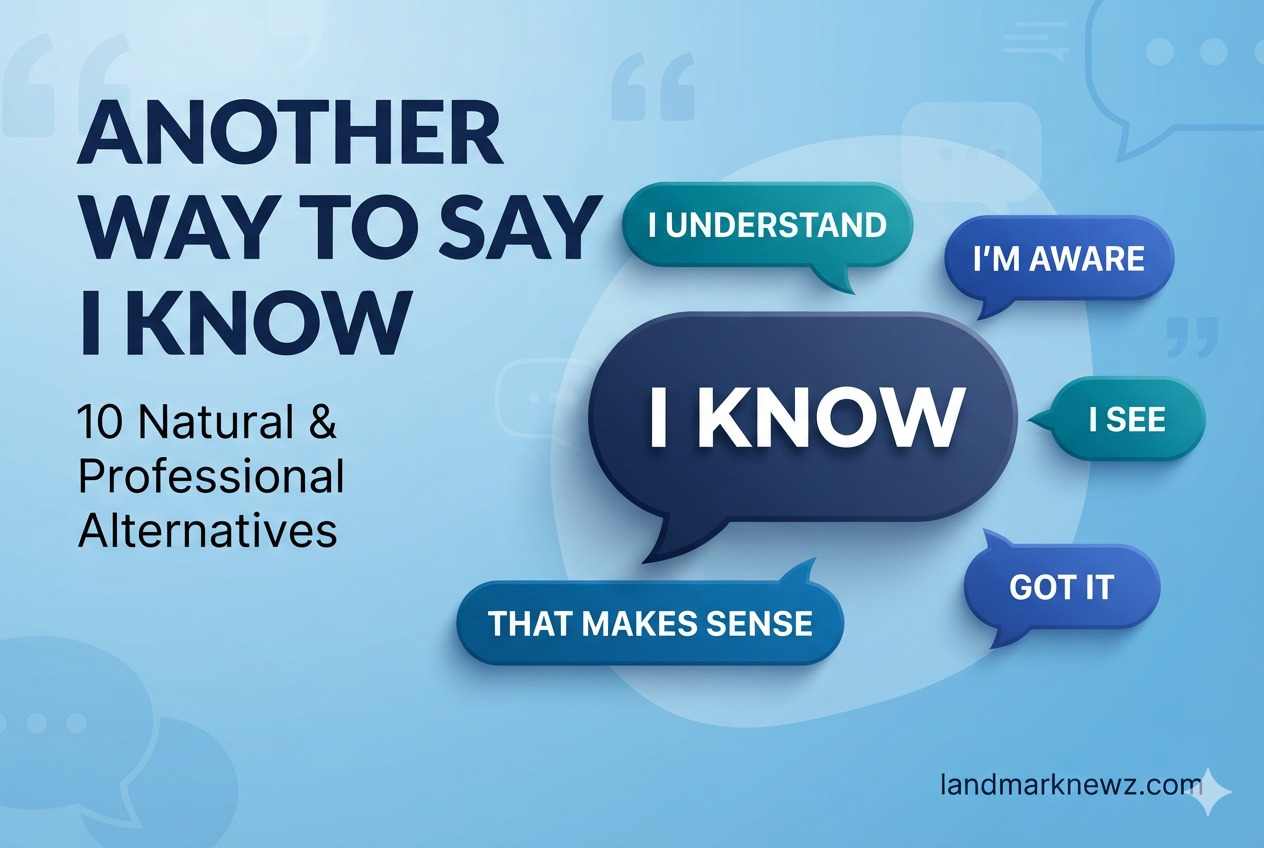
The phrase “another way to say I know” refers to different expressions you can use instead of the common phrase “I know.” People often search for alternatives because the original expression can become repetitive or may not communicate the exact feeling they intend.
“I know” can mean that you have information, understand someone’s point, recognize a fact, or are already familiar with something. For example, you might say “I know the answer,” “I know what you mean,” or simply “I know” in response to information.
The right alternative depends on the situation. A professional email may call for “I understand” or “I’m aware,” while a conversation with a friend may sound more natural with “Got it” or “I see.”
Why Use Other Ways to Say “I Know”?
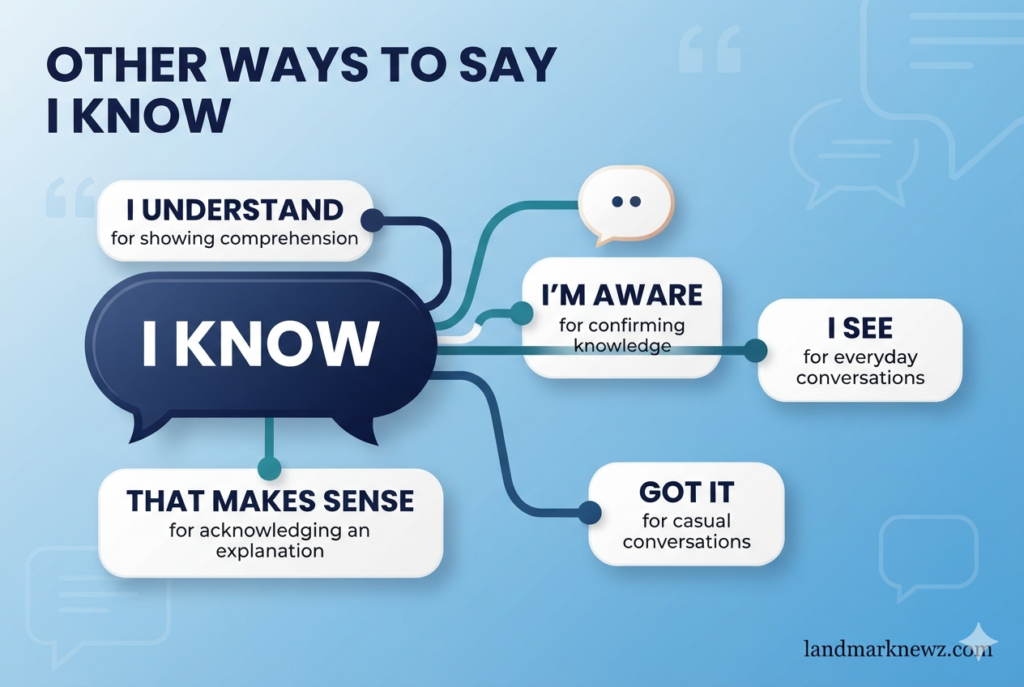
Using alternatives can make your communication more precise and natural. While “I know” is perfectly correct, repeating it too often can make your writing or speech sound flat.
Different expressions also communicate different shades of meaning.
- Avoid repetition: Keep conversations and writing varied.
- Sound more natural: Choose wording that fits the situation.
- Match the context: Use formal, professional, friendly, or casual language when appropriate.
- Show understanding: Some alternatives emphasize that you understand rather than simply possess information.
- Improve professional communication: Polished wording can make emails and workplace conversations sound more thoughtful.
10 Best Other Ways to Say “I Know”
1. I Understand
Meaning
“I understand” usually means that you comprehend someone’s explanation, situation, concern, or point of view. It is especially useful when you want to show that you are listening rather than simply stating that you possess information.
Best For
- Professional
- Formal
- Polite
- Warm
Example 1
“I understand your concern about the changes to the project timeline.”
Example 2
“I understand what you’re saying, and I’ll take that into consideration.”
Quick Tip
Use “I understand” when the goal is to acknowledge someone’s message with patience and respect.
2. I’m Aware
Meaning
“I’m aware” means that you already have knowledge of something. It sounds more professional and formal than “I know,” making it particularly useful in workplace communication.
Best For
- Professional
- Formal
- Polite
Example 1
“I’m aware of the issue and have already contacted the support team.”
Example 2
“I’m aware that the deadline was moved to Friday.”
Quick Tip
Use “I’m aware” when confirming that you already know about a fact, issue, or situation.
3. I See
Meaning
“I see” can mean that you understand or have just understood what someone is explaining. It is short, natural, and flexible, making it common in everyday conversations.
Best For
- Casual
- Friendly
- Polite
Example 1
“I see why you decided to take a different approach.”
Example 2
“Oh, I see. You were waiting for the updated schedule.”
Quick Tip
Use “I see” when you want to acknowledge new information without sounding overly formal.
4. That Makes Sense
Meaning
“That makes sense” tells someone that their explanation, reasoning, or decision is clear to you. It often sounds warmer and more encouraging than simply saying “I know.”
Best For
- Friendly
- Casual
- Professional
- Warm
Example 1
“That makes sense, especially since the client changed the requirements.”
Example 2
“That makes sense. I can see why you chose to postpone the meeting.”
Quick Tip
Choose this expression when you want to show both understanding and agreement with someone’s explanation.
5. I’m Familiar With That
Meaning
“I’m familiar with that” means you have some previous knowledge or experience with a subject. It is useful when you want to communicate knowledge without sounding too blunt or overly certain.
Best For
- Professional
- Formal
- Polite
Example 1
“I’m familiar with that software and can help you set it up.”
Example 2
“I’m familiar with the process, so you don’t need to explain every step.”
Quick Tip
Use this phrase when talking about a topic, system, process, tool, or subject you have encountered before.
6. I Understand What You Mean
Meaning
“I understand what you mean” directly acknowledges another person’s message or perspective. It can sound empathetic because it focuses on understanding the speaker rather than simply confirming knowledge.
Best For
- Friendly
- Warm
- Polite
- Professional
Example 1
“I understand what you mean about needing more time before making a decision.”
Example 2
“I understand what you mean, even though I see the situation a little differently.”
Quick Tip
Use this expression when someone is explaining an opinion, concern, or personal perspective.
7. Got It
Meaning
“Got it” is a short, conversational way to say that you understand or have received information. It is common in everyday American English but can sound too casual for some formal situations.
Best For
- Casual
- Friendly
Example 1
“Got it. I’ll send you the revised document this afternoon.”
Example 2
“Got it! We’ll meet outside the restaurant at seven.”
Quick Tip
“Got it” works well in texts, chats, and casual workplace conversations, but consider a more formal alternative for important business emails.
8. I Realize That
Meaning
“I realize that” communicates awareness or recognition of a fact, situation, or consequence. It can also show that you understand the importance of something.
Best For
- Professional
- Formal
- Polite
Example 1
“I realize that this change may require additional preparation.”
Example 2
“I realize that you have a busy schedule, so I appreciate your time.”
Quick Tip
Use “I realize that” when you want to acknowledge a fact thoughtfully rather than simply say you know it.
9. I Recognize That
Meaning
“I recognize that” means you acknowledge or accept the importance, truth, or impact of something. It has a formal tone and can work well in professional or carefully worded communication.
Best For
- Professional
- Formal
- Polite
Example 1
“I recognize that the team has made significant progress this quarter.”
Example 2
“I recognize that this decision may affect several departments.”
Quick Tip
Use this phrase when you want to emphasize acknowledgment rather than simple knowledge.
10. I’m Aware of That
Meaning
“I’m aware of that” confirms that you already know about a particular fact or situation. It is more explicit than “I see” and generally sounds professional and controlled.
Best For
- Professional
- Formal
- Polite
Example 1
“I’m aware of that requirement and have included it in the proposal.”
Example 2
“I’m aware of that concern, and we’re working on a solution.”
Quick Tip
Use this phrase in professional settings when you need to clearly confirm that information has already reached you.
Comparison Table
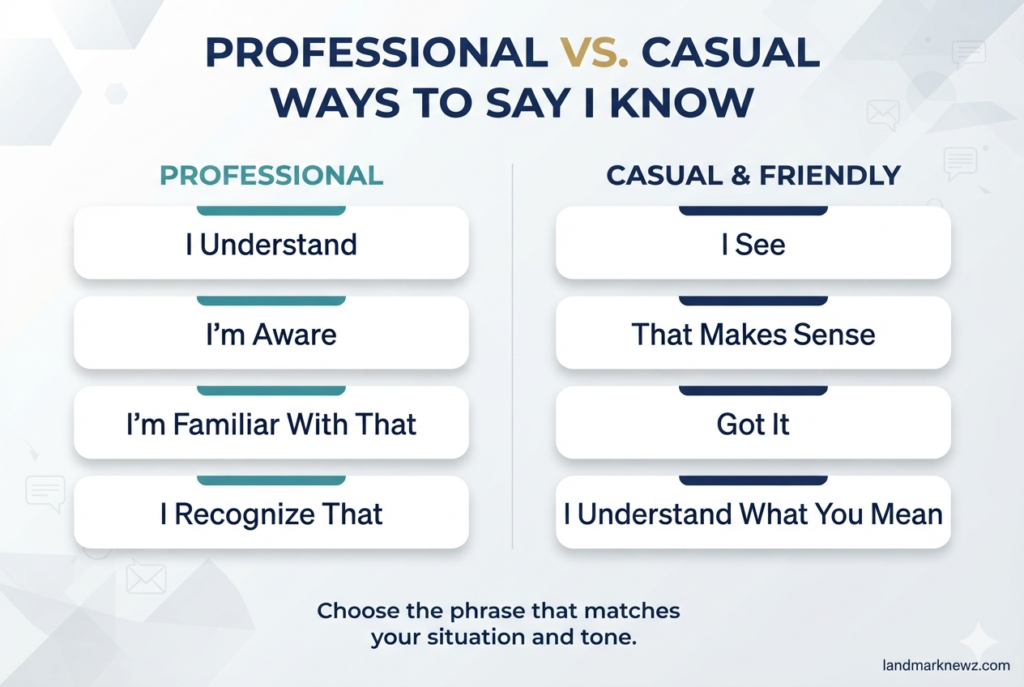
| Alternative | Best Used In | Tone |
| I understand | Work, serious conversations | Professional, warm |
| I’m aware | Emails, workplace communication | Formal, professional |
| I see | Everyday conversations | Casual, polite |
| That makes sense | Discussions and explanations | Friendly, warm |
| I’m familiar with that | Work, technical topics | Professional, formal |
| I understand what you mean | Personal and professional discussions | Warm, polite |
| Got it | Texts, chats, casual conversations | Casual, friendly |
| I realize that | Professional and thoughtful responses | Formal, polite |
| I recognize that | Formal acknowledgments | Professional, formal |
| I’m aware of that | Workplace communication | Professional, polite |
Common Mistakes
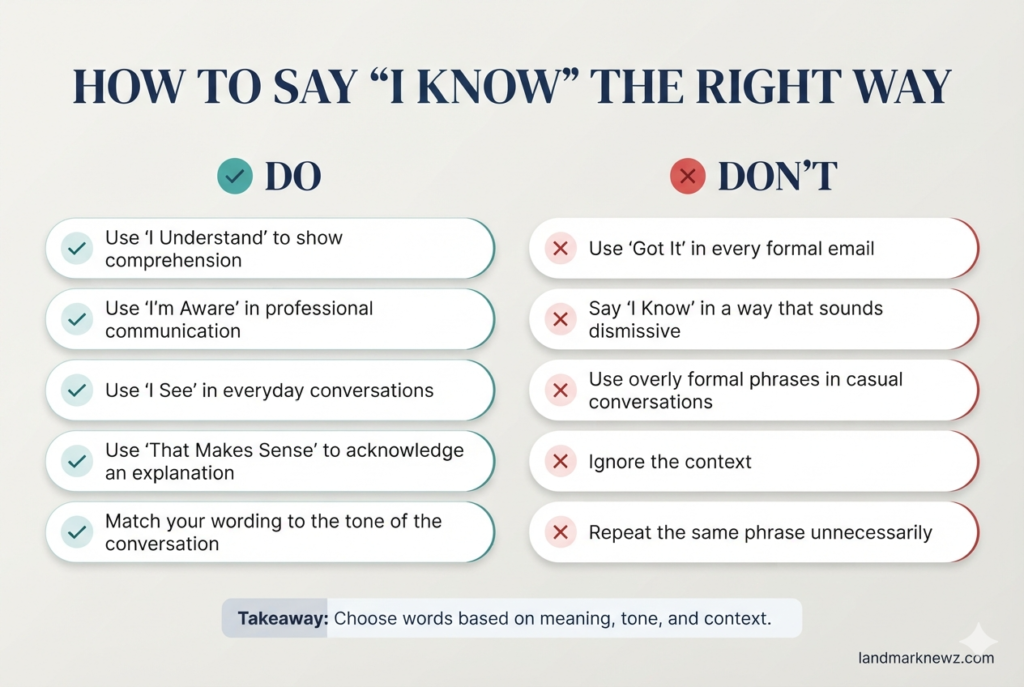
1. Using Casual Phrases in Formal Emails
Expressions such as “Got it” may be perfectly natural in a text but can sound too informal in a formal business email. Use “I understand” or “I’m aware” when professionalism matters.
2. Choosing Overly Formal Language
Not every conversation needs phrases such as “I recognize that.” In a friendly discussion, “I see” or “That makes sense” may sound much more natural.
3. Repeating “I Know” Too Often
Constantly using the same phrase can make your communication sound repetitive. Vary your wording when the context allows it.
4. Forgetting the Intended Meaning
“I know” can communicate knowledge, understanding, agreement, or awareness. Before choosing an alternative, decide what you actually want to express.
5. Sounding Dismissive
A quick “I know” can sometimes sound like you are cutting someone off or suggesting that they are telling you something obvious. “I understand” or “I see what you mean” can make the response feel more considerate.
Frequently Asked Questions
What is a professional way to say “I know”?
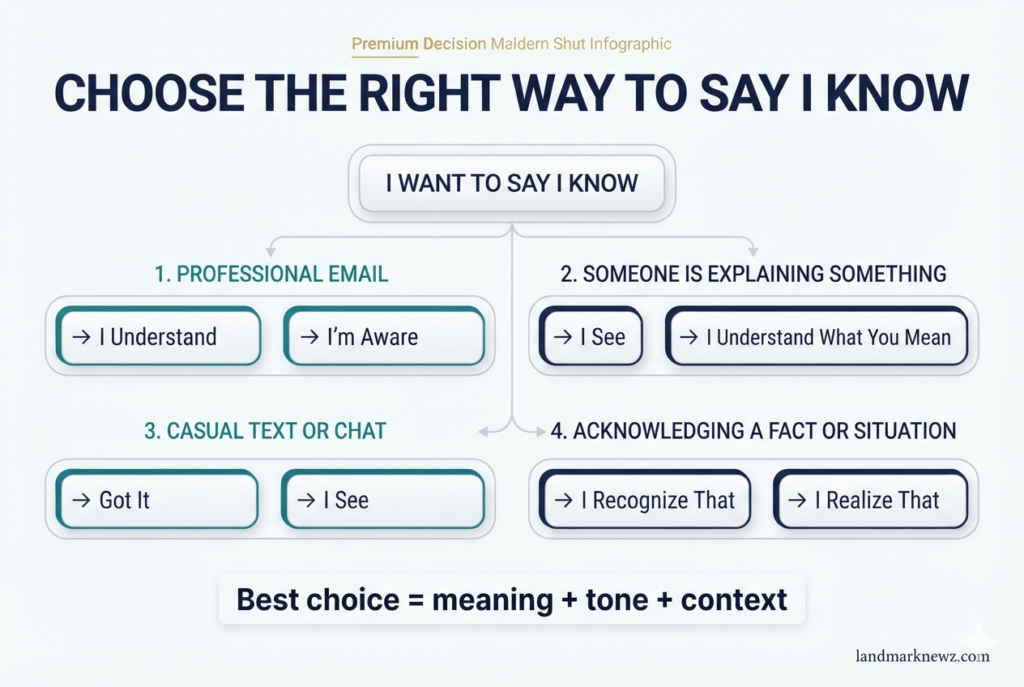
A professional way to say “I know” is “I understand,” “I’m aware,” or “I’m familiar with that.” “I understand” is best when acknowledging someone’s explanation, while “I’m aware” works well when confirming that you already have information about a situation.
What is another way to say “I know” politely?
You can politely say “I understand,” “I see,” “I understand what you mean,” or “I’m aware of that.” These alternatives can sound more considerate because they acknowledge the other person’s message instead of giving a short response that might seem dismissive.
How do you say “I know” in a formal way?
For formal communication, try “I’m aware,” “I’m aware of that,” “I recognize that,” or “I understand.” The best choice depends on your meaning. “I’m aware” confirms knowledge, while “I recognize that” emphasizes acknowledgment of a fact or situation.
What can I say instead of “I know” in an email?
In a professional email, you could write “I understand,” “I’m aware of this,” “I’m familiar with the matter,” or “I recognize the situation.” These options sound more polished and can communicate your exact meaning without making the response feel abrupt.
What is a casual way to say “I know”?
“Got it,” “I see,” and “That makes sense” are natural casual alternatives. “Got it” is especially common in texts and quick conversations, while “I see” works well when someone is explaining something to you.
Is “I understand” better than “I know”?
Neither phrase is always better. “I know” emphasizes knowledge, while “I understand” emphasizes comprehension. If someone is explaining a concern or idea, “I understand” often sounds more empathetic. If you are simply confirming that you already possess information, “I know” or “I’m aware” may be more accurate.
How do you say “I know what you mean” differently?
You can say “I understand what you mean,” “I see your point,” “I understand where you’re coming from,” or “That makes sense.” These alternatives are useful when responding to someone’s opinion, explanation, concern, or personal experience.
Can “I know” sound rude?
Yes, depending on tone and context. A brief “I know” can sometimes sound impatient, dismissive, or as though you are interrupting someone. If you want to sound more considerate, try “I understand,” “I see what you mean,” or “I’m aware of that.”
Conclusion
There are many natural alternatives to “I know,” but the best choice depends on what you want to communicate. For professional emails, “I understand,” “I’m aware,” and “I’m familiar with that” are reliable options. In casual conversations, “I see,” “That makes sense,” and “Got it” feel more relaxed and natural.
If you want to show empathy, “I understand what you mean” is often stronger than a simple “I know.” When you need to acknowledge a fact formally, “I recognize that” can provide a more thoughtful tone.
The key is to match your words to the situation. Instead of automatically replacing “I know,” consider whether you mean understanding, awareness, familiarity, acknowledgment, or agreement. For more guidance on choosing the right tone for your audience, consider how your audience and purpose shape your word choice. That small distinction can make your communication clearer and more effective.

Language & Everyday Communication Specialist
Elena Voss is a language enthusiast and communication coach with over 9 years of experience helping people express themselves more naturally in English. She previously worked as an ESL instructor and corporate language trainer, guiding professionals and students on clearer everyday conversations, polite alternatives, and natural phrasing.
Elena specializes in practical synonym guides and “another way to say…” content that feels conversational rather than textbook. Her writing focuses on real-life situations — emails to friends, casual workplace chat, social media, and daily interactions. She believes the best language advice is simple, useful, and easy to remember.
When she’s not creating content for LandmarkNewz, Elena enjoys analyzing modern slang trends and testing new phrases in real conversations.