
“Hope to see you there” expresses a friendly desire to meet someone at a particular event, gathering, meeting, or location. It usually appears at the end of an invitation or message and suggests that the sender would be happy if the recipient attended.
The phrase has a warm and positive tone without sounding overly formal. You might use it in an event invitation, work message, party announcement, email, or text to someone you expect may attend.
Why Use Other Ways to Say “Hope to See You There”?
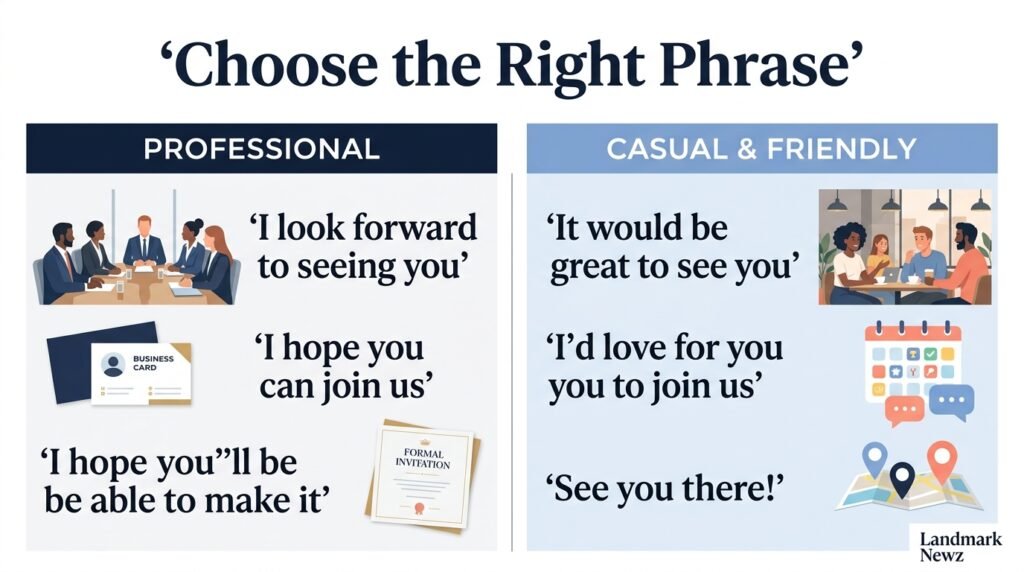
Although “hope to see you there” is natural, using different expressions can help you match the situation more precisely. A professional email may need a polished phrase, while a message to a friend can sound more relaxed.
Other alternatives can help you:
- Avoid repeating the same closing phrase.
- Make an invitation sound more personal.
- Choose a professional or casual tone.
- Express enthusiasm about someone’s attendance.
- Sound more natural in emails and messages.
- Show warmth without sounding overly familiar.
10 Best Other Ways to Say “Hope to See You There”
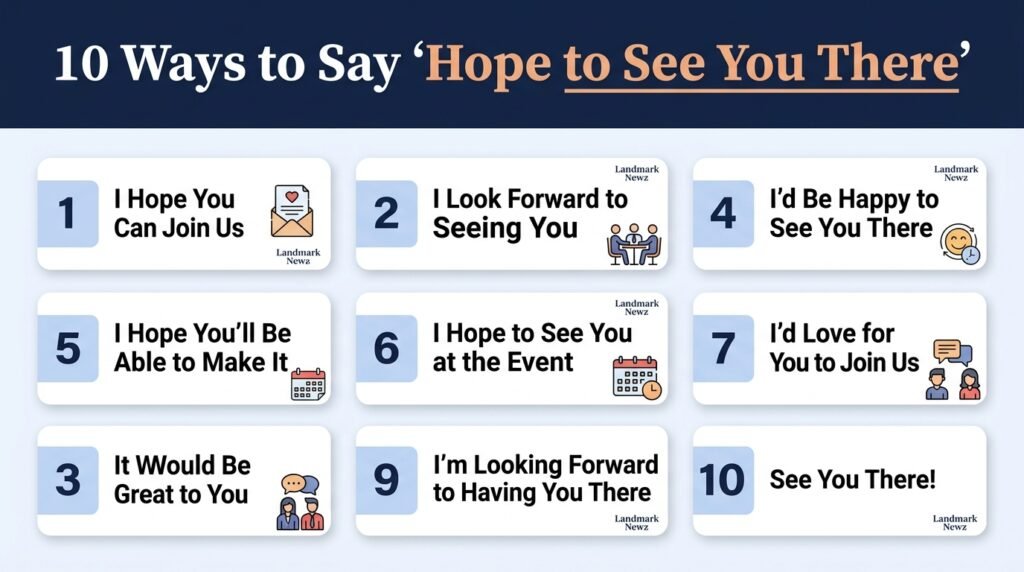
1. I Hope You Can Join Us
Meaning
“I hope you can join us” is a warm and direct way to invite someone to attend an event or gathering. It focuses on their participation rather than simply saying that you expect to see them.
Best For
- Professional
- Friendly
- Warm
- Polite
Example 1
We’re hosting the annual team dinner next Friday, and I hope you can join us.
Example 2
The community meeting starts at 6 p.m., and I hope you can join us for the discussion.
Quick Tip
Use this phrase when you want to make the invitation itself feel welcoming.
2. I Look Forward to Seeing You
Meaning
“I look forward to seeing you” sounds polished and confident while still being friendly. It works especially well when you already have plans to meet or when attendance is likely.
Best For
- Professional
- Formal
- Polite
- Warm
Example 1
Thank you for confirming your attendance. I look forward to seeing you at the conference.
Example 2
I appreciate you making time for the meeting and look forward to seeing you next Tuesday.
Quick Tip
This is one of the strongest choices for professional emails and business events.
3. It Would Be Great to See You
Meaning
“It would be great to see you” communicates genuine enthusiasm without putting pressure on the other person. It feels personal and welcoming, making it useful for both social and semi-professional situations.
Best For
- Friendly
- Warm
- Casual
- Polite
Example 1
We’re getting everyone together for dinner Saturday, and it would be great to see you.
Example 2
If you’re attending the workshop, it would be great to see you there.
Quick Tip
Choose this option when you want your message to feel sincere and personable.
4. I’d Be Happy to See You There
Meaning
“I’d be happy to see you there” clearly expresses that the person’s presence would be welcome. It has a warm tone and can sound slightly more personal than a standard invitation closing.
Best For
- Friendly
- Warm
- Polite
Example 1
We’ll be celebrating the store’s anniversary on Saturday, and I’d be happy to see you there.
Example 2
If you decide to come to the fundraiser, I’d be happy to see you there.
Quick Tip
Use this when you want to emphasize that the person is genuinely welcome.
5. I Hope You’ll Be Able to Make It
Meaning
“I hope you’ll be able to make it” politely expresses a desire for someone to attend. It recognizes that the person may have other commitments, so it does not sound demanding.
Best For
- Professional
- Friendly
- Warm
- Polite
Example 1
We’re having a small reception after the ceremony, and I hope you’ll be able to make it.
Example 2
The team will meet for lunch after the presentation, and I hope you’ll be able to make it.
Quick Tip
This is especially useful when attendance is optional.
6. I Hope to See You at the Event
Meaning
“I hope to see you at the event” keeps the original meaning while making the location or occasion more specific. It is clear, natural, and suitable for invitations and event-related messages.
Best For
- Professional
- Formal
- Friendly
- Polite
Example 1
Thank you for registering for our seminar. I hope to see you at the event.
Example 2
We’re expecting a great turnout at the fundraiser, and I hope to see you at the event.
Quick Tip
Mention the event when several gatherings have been discussed and you want to avoid confusion.
7. It Would Be Wonderful to Have You There
Meaning
“It would be wonderful to have you there” places emphasis on how much the person’s presence would mean. It is warmer and more enthusiastic than a simple invitation.
Best For
- Formal
- Friendly
- Warm
- Polite
Example 1
This is an important milestone for our team, and it would be wonderful to have you there.
Example 2
We’re celebrating my parents’ anniversary next month, and it would be wonderful to have you there.
Quick Tip
Use this phrase for meaningful occasions when you want to show genuine appreciation for someone’s presence.
8. I’d Love for You to Join Us
Meaning
“I’d love for you to join us” is friendly, enthusiastic, and personal. It clearly communicates that you want the person to attend while keeping the invitation relaxed.
Best For
- Casual
- Friendly
- Warm
Example 1
We’re having a barbecue this Sunday, and I’d love for you to join us.
Example 2
A few of us are going to the concert after work, and I’d love for you to join us.
Quick Tip
This phrase is ideal for friends, family, and people you know well.
9. I’m Looking Forward to Having You There
Meaning
“I’m looking forward to having you there” communicates positive anticipation about someone’s attendance. It sounds welcoming and can work well when the person has already accepted the invitation.
Best For
- Professional
- Formal
- Warm
- Polite
Example 1
Thank you for accepting the invitation. I’m looking forward to having you there.
Example 2
We’re excited about the ceremony and looking forward to having you there with us.
Quick Tip
Use this after someone has confirmed that they plan to attend.
10. See You There!
Meaning
“See you there!” is the shortest and most casual alternative. It sounds confident, upbeat, and natural when you expect the person to attend.
Best For
- Casual
- Friendly
Example 1
The game starts at seven, so see you there!
Example 2
Thanks for signing up for the volunteer event. See you there Saturday morning!
Quick Tip
Avoid this in highly formal business correspondence unless the relationship and context are already informal.
Comparison Table
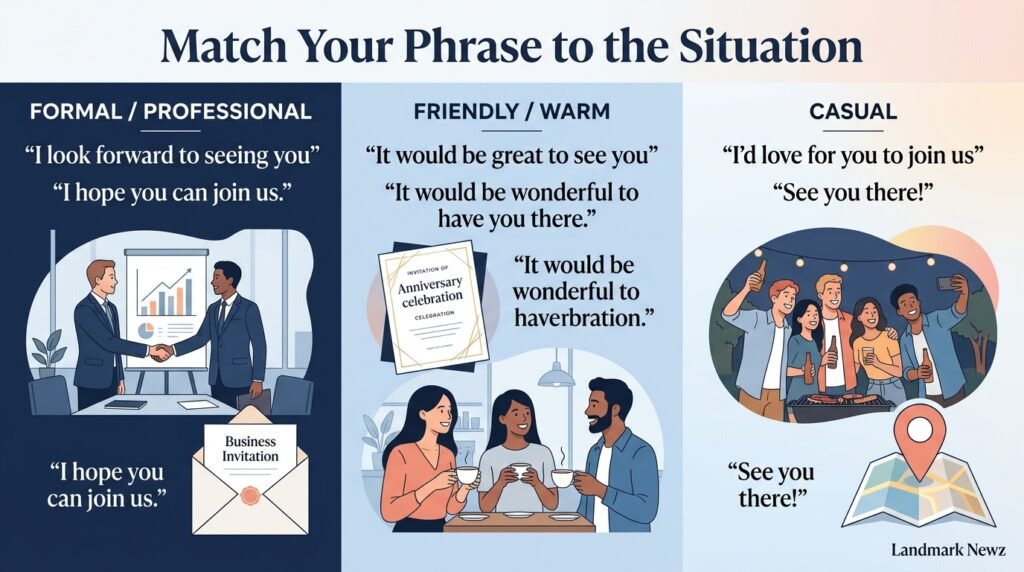
| Alternative | Best Used In | Tone |
| I Hope You Can Join Us | Invitations, events | Warm and polite |
| I Look Forward to Seeing You | Business emails, meetings | Professional |
| It Would Be Great to See You | Social events, friendly messages | Warm and casual |
| I’d Be Happy to See You There | Personal invitations | Friendly and warm |
| I Hope You’ll Be Able to Make It | Optional events | Polite and considerate |
| I Hope to See You at the Event | Event emails and invitations | Clear and professional |
| It Would Be Wonderful to Have You There | Special occasions | Warm and enthusiastic |
| I’d Love for You to Join Us | Friends and social events | Friendly and enthusiastic |
| I’m Looking Forward to Having You There | Confirmed attendance | Warm and positive |
| See You There! | Casual messages | Upbeat and casual |
Common Mistakes
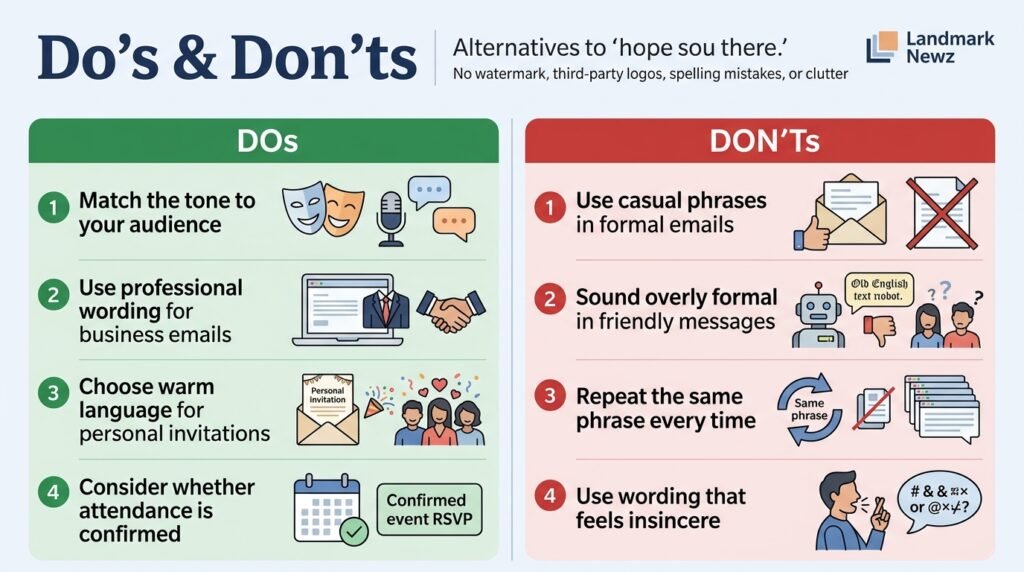
1. Using a Casual Phrase in a Formal Email
“See you there!” may sound too relaxed for a formal business invitation. Choose “I look forward to seeing you” when communicating with clients, executives, or professional contacts.
2. Choosing Overly Formal Language
Not every invitation requires a formal closing. Saying “It would be our utmost pleasure to welcome your attendance” can feel stiff when a simple “I hope you can join us” would sound more natural.
3. Ignoring the Relationship
Consider who will receive the message. A close friend may appreciate “I’d love for you to join us,” while a business contact may respond better to “I look forward to seeing you.”
4. Repeating the Same Phrase
Using “hope to see you there” in every invitation can make your writing feel predictable. Rotate your wording when appropriate, but only choose alternatives that genuinely fit the situation.
5. Sounding Insincere
Avoid overly enthusiastic wording if you do not actually have a close relationship with the recipient. Your phrase should match the level of warmth you genuinely want to communicate.
Frequently Asked Questions
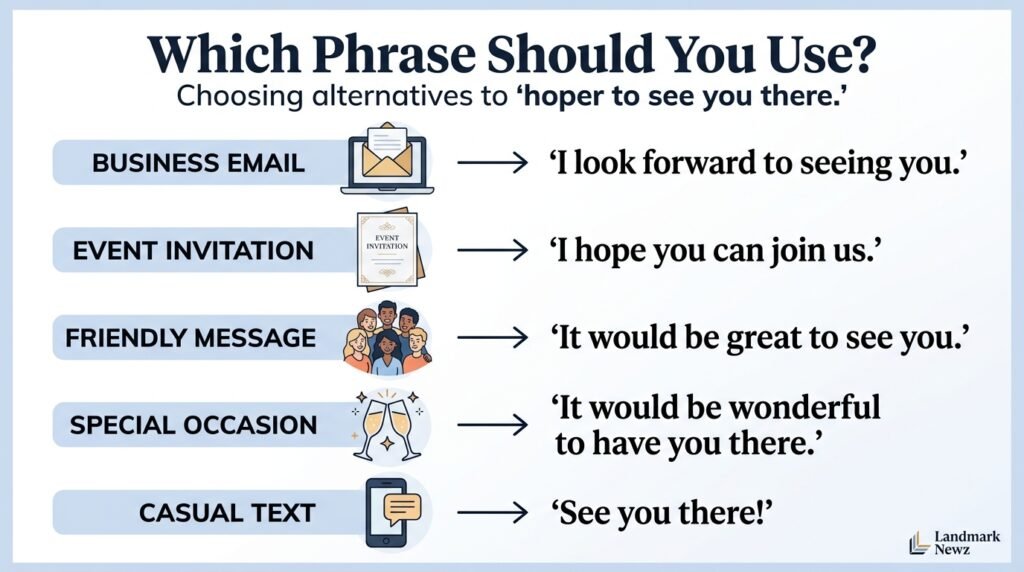
What is a professional way to say “hope to see you there”?
“I look forward to seeing you” is one of the best professional alternatives. It sounds polished without being cold or overly formal. You can use it in business emails, meeting invitations, conferences, networking events, and other professional settings when you expect or hope the recipient will attend.
What is a friendly way to say “hope to see you there”?
“It would be great to see you” is a natural friendly alternative. For close friends or family, “I’d love for you to join us” also works well. Both phrases express genuine enthusiasm while keeping the message relaxed and conversational.
Can I say “I look forward to seeing you” in an invitation?
Yes. “I look forward to seeing you” is appropriate when the recipient has confirmed attendance or when you want to close a professional invitation warmly. If attendance is uncertain, “I hope you can join us” may be a better choice because it leaves room for the person to decide.
Is “See you there” too casual for an email?
It depends on the recipient and context. “See you there” is perfectly natural for friends, coworkers you know well, and informal events. For clients, formal business communication, or unfamiliar contacts, “I look forward to seeing you” is usually a safer choice.
What can I say instead of “hope to see you there” at work?
For workplace communication, consider “I look forward to seeing you,” “I hope you can join us,” or “I hope you’ll be able to make it.” These options sound professional while still showing that you value the person’s attendance.
How do I say “hope to see you there” in a formal invitation?
For a formal invitation, “We hope you can join us” or “We look forward to seeing you at the event” works well. The best choice depends on whether you are inviting someone or confirming an expected appearance.
Is “I hope to see you there” grammatically correct?
Yes. “I hope to see you there” is grammatically correct and natural American English. The phrase uses “hope” followed by an infinitive, “to see,” and “there” identifies the place or event where you expect to meet the person.
What is the difference between “hope to see you there” and “look forward to seeing you”?
“Hope to see you there” expresses a desire to see someone, but attendance may be uncertain. “I look forward to seeing you” sounds more confident and often suggests that meeting is expected or already arranged, making it particularly useful in professional communication.
Conclusion
There are many natural ways to say “hope to see you there,” and the best option depends on your audience and situation. For professional emails, “I look forward to seeing you” is polished and reliable. For invitations, “I hope you can join us” sounds welcoming without creating pressure.
If you’re writing to friends or family, warmer choices such as “I’d love for you to join us” or “It would be great to see you” feel more personal. For casual messages, “See you there!” keeps things short and upbeat.
The key is to match your wording to the relationship, event, and level of certainty about attendance. For more guidance on choosing appropriate wording and responding to invitations, see this guide to invitation etiquette. A simple phrase can make an invitation feel more professional, welcoming, or sincere when you choose it carefully.

About Dr. Priya Nair
Dr. Priya Nair is a passionate Writer & Blogger at LandMarkNewz.com, dedicated to creating informative, engaging, and easy-to-understand content for readers. With a strong interest in research, current trends, lifestyle, and everyday topics, she focuses on presenting useful information in a clear and reader-friendly way.
Through her writing, Priya aims to help readers discover valuable insights, understand complex topics more easily, and stay informed about subjects that matter to them. Her approach combines thoughtful research with a simple and engaging writing style.
At LandMarkNewz.com, she contributes original articles designed to inform, educate, and provide practical value to readers.