
Finding another way to say “learning experience” can make your writing more specific, natural, and engaging. Although the original phrase works in many situations, repeating it can make a resume, email, essay, or professional statement sound predictable.
The best alternative depends on what you want to emphasize. You might want to highlight education, personal growth, professional development, a practical opportunity, or an important lesson.
What Does “Another Way to Say Learning Experience” Mean?
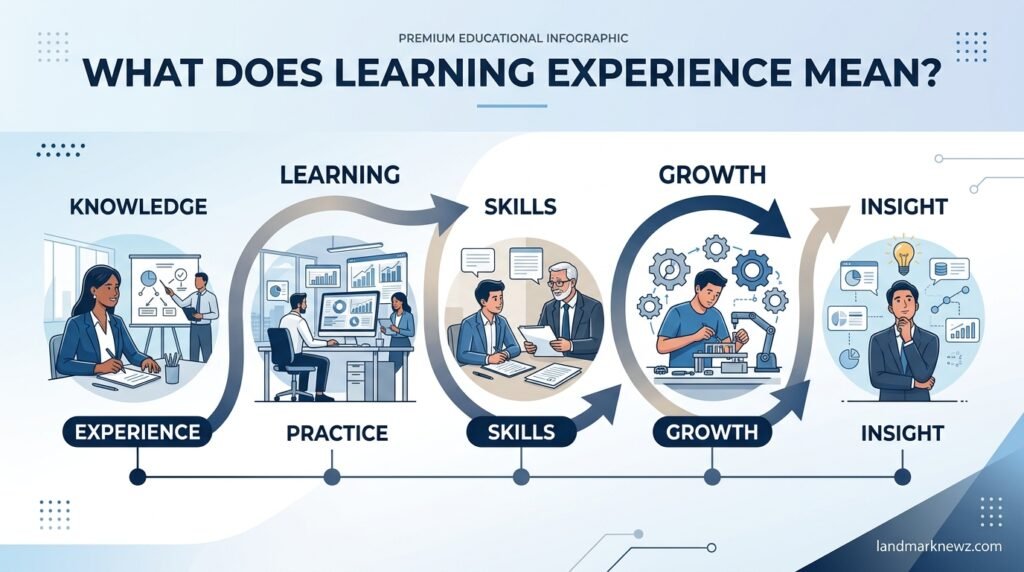
“Learning experience” refers to an activity, situation, or period of time that helps someone gain knowledge, develop skills, or understand something more clearly.
People commonly use the phrase in education, professional development, resumes, interviews, training programs, and personal reflections. For example, completing an internship can be a learning experience because it provides practical knowledge that may not come from classroom study alone.
Looking for another way to say “learning experience” usually means finding a synonym or related expression that better matches the specific situation.
Why Use Other Ways to Say “Learning Experience”?
Using different expressions can make your writing clearer and less repetitive. More importantly, the right alternative can show exactly what kind of learning took place.
Consider using an alternative to:
- Avoid repeating the same phrase.
- Make professional writing more precise.
- Highlight personal or career growth.
- Describe practical knowledge more naturally.
- Match the tone of a resume, email, essay, or conversation.
- Explain the value of a particular experience.
10 Best Other Ways to Say “Learning Experience”
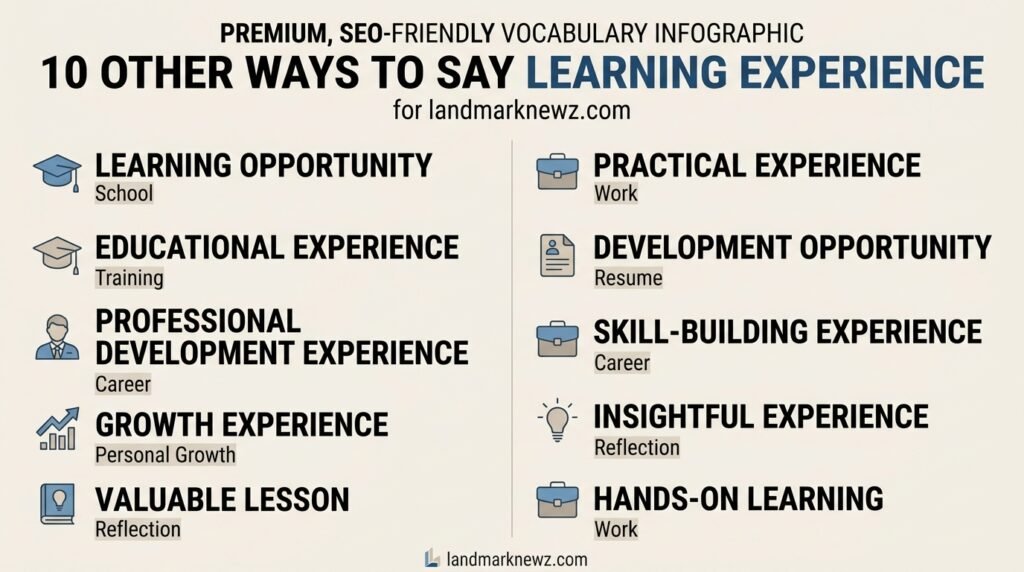
1. Learning Opportunity
Meaning
“Learning opportunity” describes a situation that gives someone a chance to gain knowledge or develop a skill. It sounds positive and focuses on the potential for improvement rather than simply describing what happened.
Best For
- Professional
- Formal
- Friendly
- Polite
Example 1
The internship gave me an excellent learning opportunity in digital marketing.
Example 2
Working with an experienced mentor was a valuable learning opportunity.
Quick Tip
Use “learning opportunity” when you want to emphasize the chance to learn, especially in professional or educational contexts.
2. Educational Experience
Meaning
“Educational experience” refers to something that contributes to a person’s education or understanding. It works particularly well when discussing school, training, courses, workshops, or other structured forms of learning.
Best For
- Professional
- Formal
Example 1
The field trip was an educational experience that helped students understand local history.
Example 2
My graduate program provided a strong educational experience focused on research and analysis.
Quick Tip
Choose this phrase when the learning is connected to formal education or organized instruction.
3. Professional Development Experience
Meaning
“Professional development experience” focuses on learning that improves workplace knowledge, skills, or career abilities. It is more specific than “learning experience” and sounds polished in career-related writing.
Best For
- Professional
- Formal
Example 1
Leading the workshop became an important professional development experience for me.
Example 2
The certification program provided valuable professional development experience in project management.
Quick Tip
This is an excellent choice for resumes, cover letters, LinkedIn profiles, and performance reviews.
4. Growth Experience
Meaning
“Growth experience” highlights how an event helped someone improve, mature, or develop. It can describe personal, academic, or professional growth without sounding overly formal.
Best For
- Professional
- Friendly
- Warm
Example 1
Moving to a new city was a major growth experience that taught me to become more independent.
Example 2
Managing the project on my own became an important growth experience.
Quick Tip
Use this phrase when the main result was personal or professional development, rather than simply gaining information.
5. Valuable Lesson
Meaning
“Valuable lesson” focuses on the knowledge or insight gained from a particular event. It often suggests that the experience changed your thinking or taught you something important.
Best For
- Professional
- Casual
- Friendly
- Warm
Example 1
The failed launch taught our team a valuable lesson about testing new products.
Example 2
That conversation gave me a valuable lesson about the importance of listening.
Quick Tip
Choose “valuable lesson” when you want to emphasize what you learned, not the experience itself.
6. Practical Experience
Meaning
“Practical experience” refers to knowledge gained through doing something rather than simply studying it. It is especially useful when discussing jobs, internships, training, projects, and hands-on activities.
Best For
- Professional
- Formal
Example 1
The internship gave me practical experience using customer relationship management software.
Example 2
Students gain practical experience by working on real-world engineering projects.
Quick Tip
Use this alternative when hands-on skills or real-world application are important.
7. Development Opportunity
Meaning
“Development opportunity” describes a chance to improve knowledge, abilities, or professional skills. It has a polished tone and works well when discussing career advancement or workplace training.
Best For
- Professional
- Formal
Example 1
The leadership program was an excellent development opportunity for emerging managers.
Example 2
Taking responsibility for the new account became a valuable development opportunity.
Quick Tip
This phrase works best when the focus is on improving abilities or preparing for future responsibilities.
8. Skill-Building Experience
Meaning
“Skill-building experience” emphasizes the development of specific abilities through practice or participation. It is more precise than “learning experience” when you want to show exactly what someone gained.
Best For
- Professional
- Friendly
- Formal
Example 1
Volunteering at the community center was a useful skill-building experience.
Example 2
The summer program provided students with valuable skill-building experience in public speaking.
Quick Tip
Use it when the experience helped develop identifiable skills such as communication, leadership, organization, or technical ability.
9. Insightful Experience
Meaning
“Insightful experience” describes an event that provides a deeper understanding of a subject, person, or situation. It works well when learning involves reflection or a change in perspective.
Best For
- Formal
- Professional
- Warm
Example 1
Speaking with patients was an insightful experience that changed how I viewed healthcare.
Example 2
The conference was an insightful experience that introduced me to new approaches to design.
Quick Tip
Choose this phrase when the experience gave you new perspective or deeper understanding.
10. Hands-On Learning
Meaning
“Hands-on learning” describes learning through direct participation and practice. It is common in education, job training, workshops, technical fields, and other settings where people learn by doing.
Best For
- Professional
- Casual
- Friendly
Example 1
The training program combines classroom instruction with hands-on learning.
Example 2
Students benefit from hands-on learning when they build and test their own projects.
Quick Tip
Use “hands-on learning” when practical participation is the key part of the experience.
Comparison Table
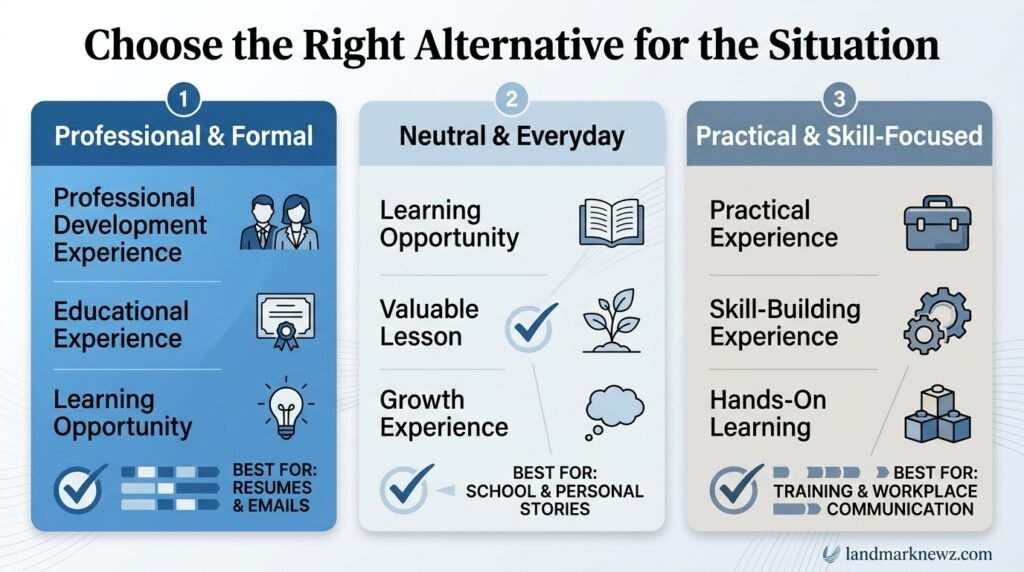
| Alternative | Best Used In | Tone |
| Learning Opportunity | Work, school, emails | Professional, positive |
| Educational Experience | School, courses, training | Formal, academic |
| Professional Development Experience | Resumes, careers, workplace | Professional, polished |
| Growth Experience | Personal or career reflection | Warm, positive |
| Valuable Lesson | Reflections, stories, conversations | Natural, thoughtful |
| Practical Experience | Resumes, internships, training | Professional, direct |
| Development Opportunity | Workplace, career planning | Formal, professional |
| Skill-Building Experience | Training, education, resumes | Professional, specific |
| Insightful Experience | Essays, reflections, discussions | Thoughtful, formal |
| Hands-On Learning | Training, education, technical work | Practical, friendly |
Common Mistakes
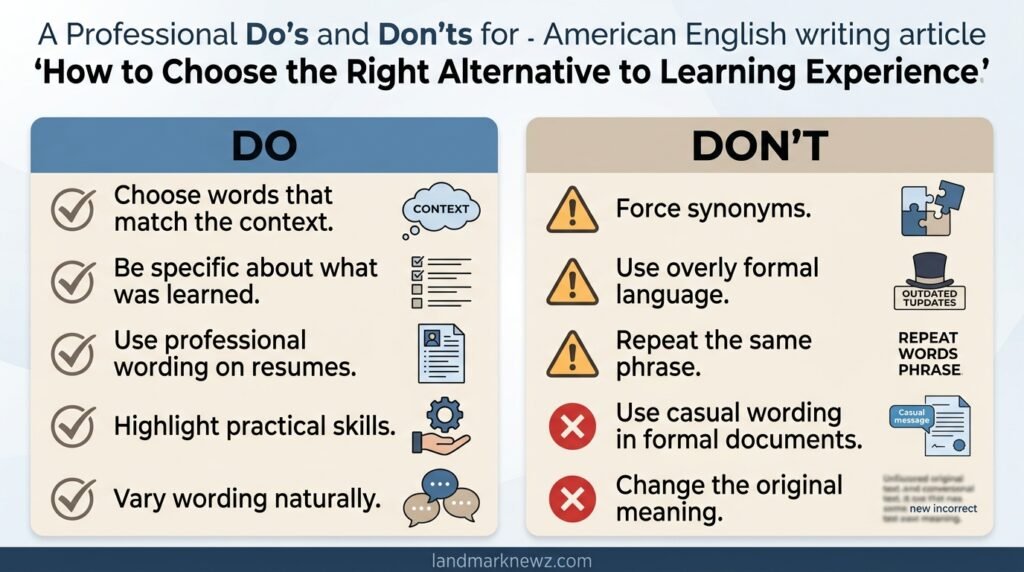
1. Using a Casual Phrase in a Professional Setting
Not every alternative works equally well on a resume or in a formal report. For professional documents, “practical experience” or “professional development experience” usually sounds stronger than a very conversational expression.
2. Choosing an Alternative That Changes the Meaning
Related phrases are not always exact synonyms. “Valuable lesson” emphasizes what you learned, while “hands-on learning” emphasizes how you learned it.
3. Repeating “Learning Experience” Too Often
Using the same phrase throughout an essay or professional document can make your writing feel repetitive. Replace it only when the alternative accurately reflects the intended meaning.
4. Ignoring the Context
Think about where the phrase will appear before choosing an alternative. A resume may need precise career language, while a personal story may sound better with “valuable lesson” or “growth experience.”
5. Making the Language Sound Too Formal
Professional writing does not need complicated vocabulary. If “learning opportunity” communicates your meaning clearly, there is no need to replace it with a longer or more technical expression.
Frequently Asked Questions
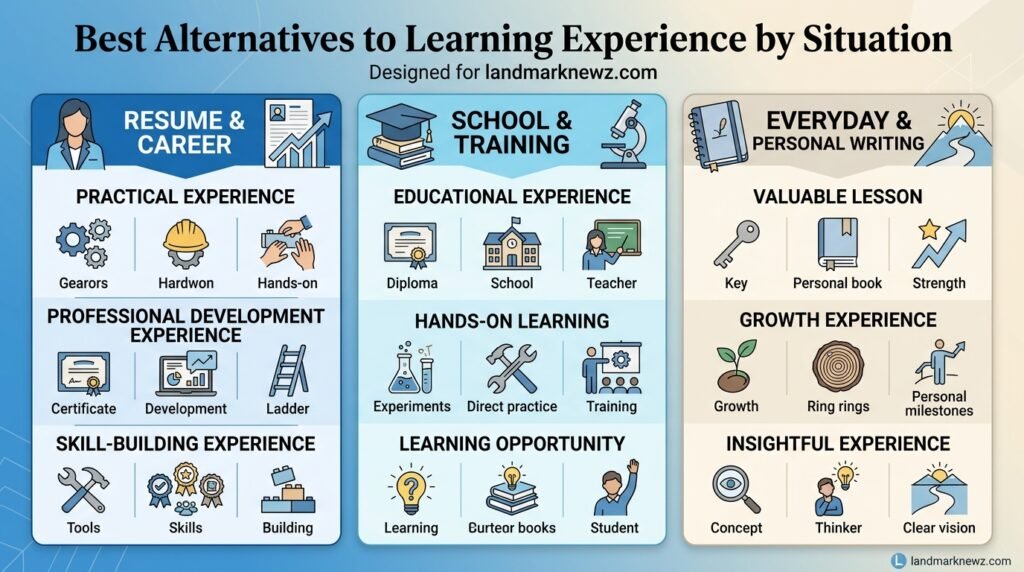
What is a professional way to say “learning experience”?
“Professional development experience” is a strong choice when discussing career-related learning. “Practical experience” also works well when you gained skills through actual work or projects. For a resume, choose the phrase that explains what you learned or accomplished rather than simply replacing “learning experience” with a generic synonym.
What is another word for “learning experience” on a resume?
Useful resume-friendly alternatives include “practical experience,” “professional development experience,” “skill-building experience,” and “hands-on learning.” The best choice depends on the accomplishment. Whenever possible, connect the phrase to a specific skill, responsibility, or result so the experience demonstrates your value to an employer.
Is “learning opportunity” the same as “learning experience”?
The two phrases are closely related but have slightly different meanings. A “learning opportunity” focuses on the chance to learn, while a “learning experience” generally describes the actual event or process of learning. For example, an internship can provide a learning opportunity and become a valuable learning experience after you complete it.
How do you say “learning experience” in a formal way?
For formal writing, consider “educational experience,” “professional development experience,” or “development opportunity.” The appropriate choice depends on the setting. “Educational experience” fits academic contexts, while “professional development experience” is better for workplace training, career documents, and professional reports.
What is a good alternative to “learning experience” in an essay?
“Valuable lesson,” “insightful experience,” and “growth experience” can work well in essays. Your choice should reflect the point of the paragraph. If the experience changed your perspective, “insightful experience” may be more accurate; if it helped you mature, “growth experience” may be a better fit.
What can I say instead of “great learning experience”?
Instead of “great learning experience,” try a more specific phrase such as “valuable learning opportunity,” “meaningful growth experience,” “practical experience,” or “insightful experience.” Specific wording is usually stronger because it tells the reader what made the experience useful rather than relying on the general adjective “great.”
What is the best phrase for hands-on learning?
“Practical experience” and “hands-on learning” are both effective. “Practical experience” is especially useful for resumes and professional documents because it highlights the skills gained through real work. “Hands-on learning” is more natural when discussing education, training, workshops, or activities where participants learn by actively doing something.
Can “personal growth” replace “learning experience”?
Sometimes. “Personal growth” is appropriate when an experience helped you become more mature, confident, independent, or self-aware. However, it does not always mean gaining knowledge or technical skills. If the main point is skill development, “skill-building experience” or “practical experience” may communicate the idea more accurately.
Conclusion
There are many effective ways to say “learning experience,” but the best alternative depends on what you want to communicate. “Learning opportunity” is versatile and positive, while “practical experience” is ideal for resumes and hands-on work.
If you want to emphasize career development, choose “professional development experience.” For personal reflection, “growth experience” or “valuable lesson” may sound more natural.
The key is to avoid replacing a phrase simply for the sake of variety. Choose words that show whether you gained knowledge, developed skills, changed your perspective, or grew personally through professional development.. When your wording matches the actual experience, your writing becomes clearer, more credible, and more meaningful.

Language & Everyday Communication Specialist
Elena Voss is a language enthusiast and communication coach with over 9 years of experience helping people express themselves more naturally in English. She previously worked as an ESL instructor and corporate language trainer, guiding professionals and students on clearer everyday conversations, polite alternatives, and natural phrasing.
Elena specializes in practical synonym guides and “another way to say…” content that feels conversational rather than textbook. Her writing focuses on real-life situations — emails to friends, casual workplace chat, social media, and daily interactions. She believes the best language advice is simple, useful, and easy to remember.
When she’s not creating content for LandmarkNewz, Elena enjoys analyzing modern slang trends and testing new phrases in real conversations.