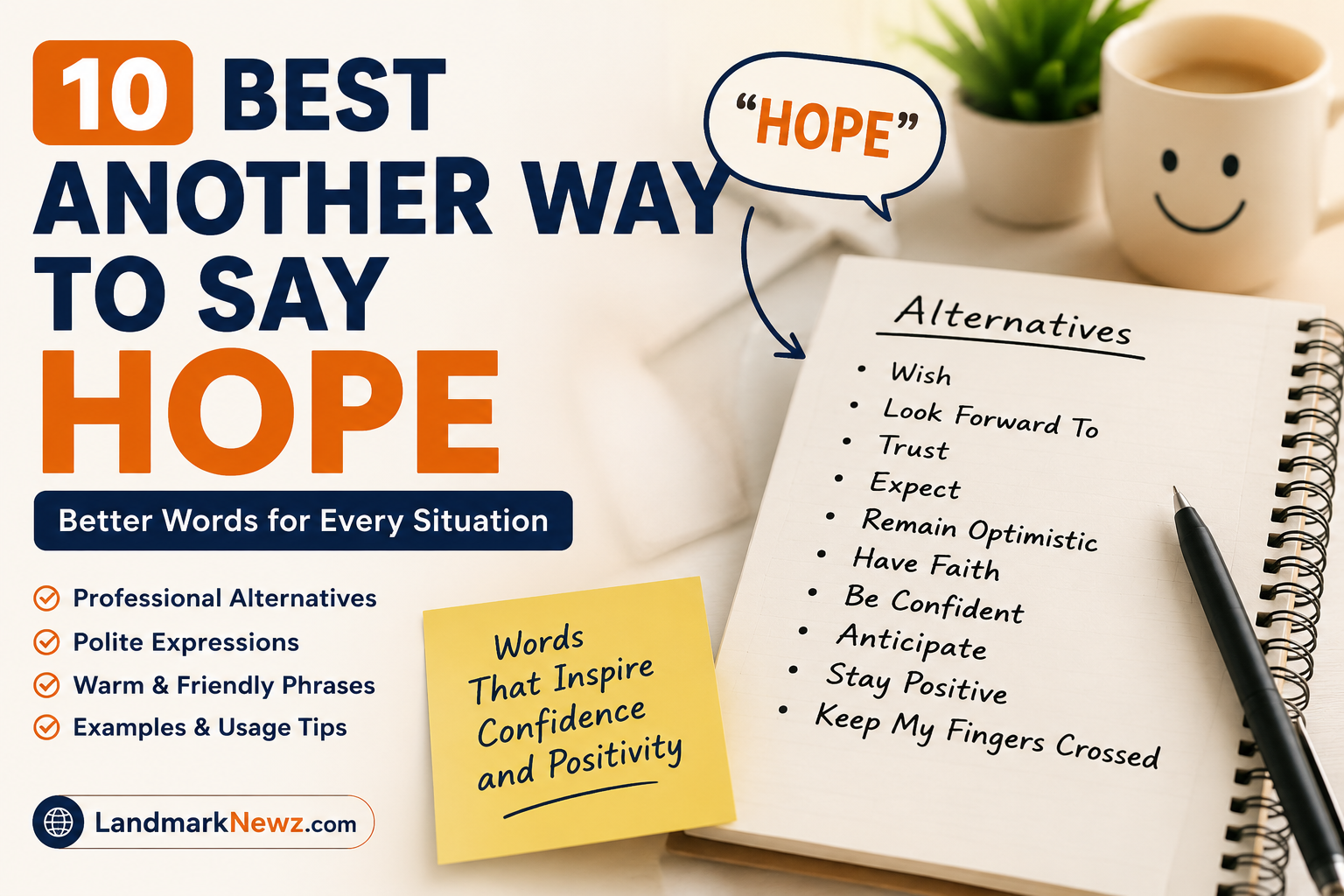
Finding another way to say hope can make your writing more precise and natural. Although “hope” is a common and useful word, repeating it can make emails, messages, resumes, and everyday conversations sound predictable.
The right alternative can also change the meaning slightly. Some options express confidence, while others communicate a personal wish, positive expectation, or sincere encouragement.
What Does “Another Way to Say Hope” Mean?
The phrase “another way to say hope” refers to finding a synonym or alternative expression that communicates a similar idea. Depending on the context, “hope” can mean wanting something positive to happen, believing something is possible, or remaining optimistic about the future.
For example, you might say, “I hope everything goes well,” in a casual message. In a professional email, “I trust everything goes well” or “I look forward to a positive outcome” may sound more polished.
People commonly search for alternatives to “hope” when writing emails, messages, applications, professional correspondence, speeches, or supportive notes.
Why Use Other Ways to Say “Hope”?
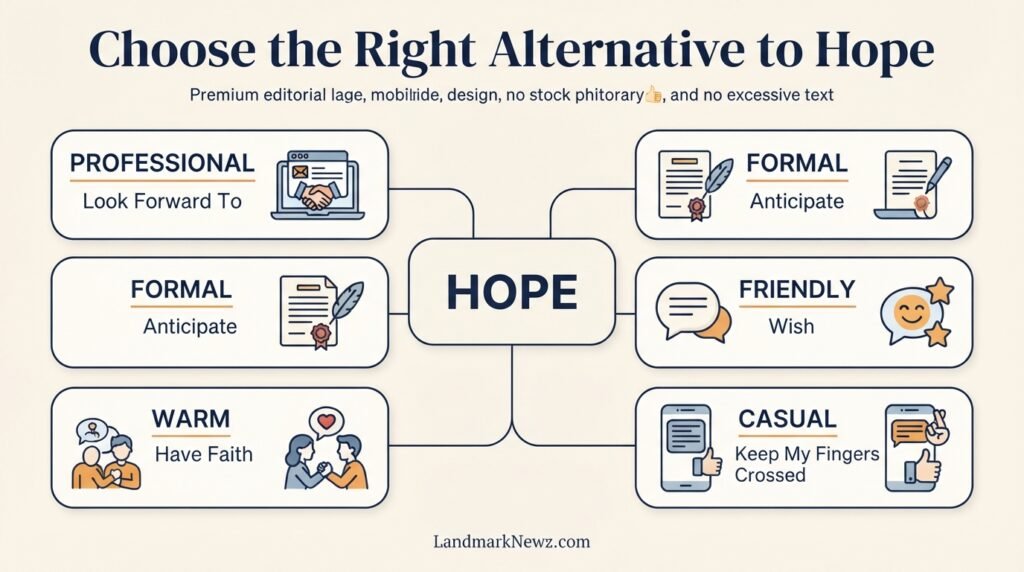
Using different expressions can make your communication more accurate and engaging. Instead of using “hope” repeatedly, choose a phrase that reflects exactly what you mean.
- Avoid repetition: Keep your writing fresh and varied.
- Sound more natural: Choose expressions that fit everyday American English.
- Match different situations: Use professional, casual, warm, or formal wording as needed.
- Improve professional communication: Make emails and workplace messages more polished.
- Express emotion clearly: Show optimism, confidence, encouragement, or personal desire.
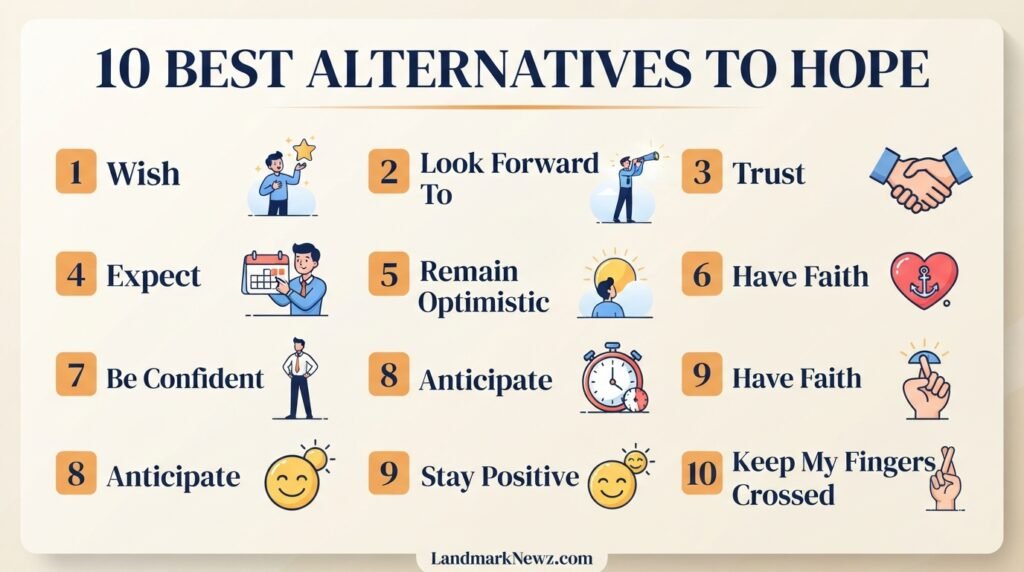
10 Best Other Ways to Say “Hope”
1. Wish
Meaning
“Wish” expresses a desire for something to happen or be true. It often focuses more on what you want rather than your expectation that it will happen.
Best For
- Casual
- Friendly
- Warm
- Polite
Example 1
I wish you the best as you start your new position.
Example 2
We wish you a safe and enjoyable trip.
Quick Tip
Use “wish” for personal messages, congratulations, good wishes, and situations where the outcome may be uncertain.
2. Look Forward To
Meaning
“Look forward to” expresses positive anticipation about something expected to happen. It is especially natural when you are talking about a future meeting, event, opportunity, or outcome.
Best For
- Professional
- Formal
- Friendly
- Polite
Example 1
I look forward to hearing your thoughts on the proposal.
Example 2
We look forward to welcoming you to our team.
Quick Tip
This is one of the strongest alternatives for professional emails because it sounds positive without being overly emotional.
3. Trust
Meaning
“Trust” communicates confidence that something is true, reliable, or likely to happen. It can sound more confident than “hope,” making it useful in professional correspondence.
Best For
- Professional
- Formal
- Polite
Example 1
I trust you had a pleasant weekend.
Example 2
We trust that the information provided will answer your questions.
Quick Tip
Use “trust” when you want to sound confident and courteous rather than uncertain.
4. Expect
Meaning
“Expect” suggests that you believe something is likely to happen. Unlike “hope,” it can imply a stronger level of certainty or anticipation.
Best For
- Professional
- Formal
Example 1
We expect the project to be completed by Friday.
Example 2
I expect the updated documents will arrive later today.
Quick Tip
Be careful with “expect” because it can sound demanding when directed at another person.
5. Remain Optimistic
Meaning
“Remain optimistic” means continuing to have a positive outlook despite uncertainty or challenges. It emphasizes an attitude of confidence and positivity.
Best For
- Professional
- Formal
- Warm
Example 1
We remain optimistic about reaching an agreement soon.
Example 2
She remains optimistic about the company’s future.
Quick Tip
This phrase works well when discussing uncertain outcomes, long-term goals, or challenging circumstances.
6. Have Faith
Meaning
“Have faith” means maintaining confidence or belief that things will work out. It often carries a supportive, encouraging, or emotional tone.
Best For
- Friendly
- Warm
- Casual
Example 1
Have faith that your hard work will pay off.
Example 2
He encouraged her to have faith during the difficult period.
Quick Tip
Use this expression when offering emotional support or encouragement, especially to someone facing a challenge.
7. Be Confident
Meaning
“Be confident” expresses a positive belief in a person, situation, or future result. It is more direct than “hope” and often sounds encouraging.
Best For
- Professional
- Friendly
- Warm
- Polite
Example 1
Be confident that your preparation has made a difference.
Example 2
You can be confident that our team will support you throughout the process.
Quick Tip
Choose “be confident” when you want to encourage someone rather than simply express your own desire.
8. Anticipate
Meaning
“Anticipate” means to expect or look ahead to something. It is more formal than “hope” and is often used in business, academic, and professional writing.
Best For
- Professional
- Formal
Example 1
We anticipate a strong response to the new service.
Example 2
The company anticipates completing the expansion next year.
Quick Tip
Use “anticipate” in formal writing when you want to communicate a reasonable expectation about a future event.
9. Stay Positive
Meaning
“Stay positive” encourages someone to maintain an optimistic attitude. It is less about predicting an outcome and more about encouraging a healthy mindset.
Best For
- Casual
- Friendly
- Warm
Example 1
Stay positive while you wait for the interview results.
Example 2
Things may take time, but stay positive and keep moving forward.
Quick Tip
This phrase is best for supportive conversations rather than formal business emails.
10. Keep My Fingers Crossed
Meaning
“Keep my fingers crossed” is a casual expression used when you strongly wish for a positive result. It communicates friendly optimism and a little uncertainty.
Best For
- Casual
- Friendly
- Warm
Example 1
I’m keeping my fingers crossed that you get the apartment.
Example 2
We’ll keep our fingers crossed for good weather on Saturday.
Quick Tip
Save this expression for informal conversations, texts, and friendly messages because it can sound too casual in professional writing.
Comparison Table
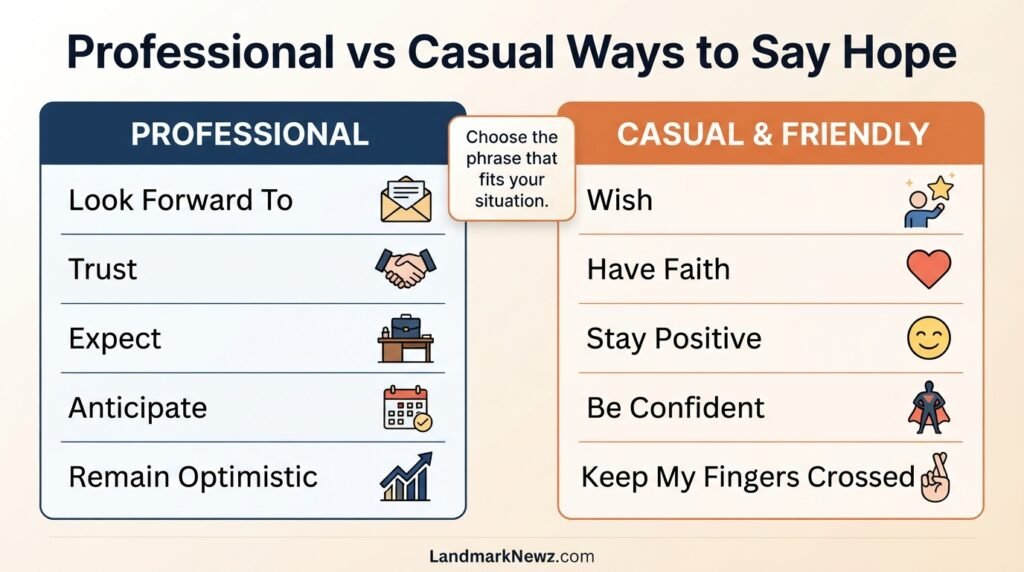
| Alternative | Best Used In | Tone |
| Wish | Personal messages, good wishes | Warm, friendly |
| Look Forward To | Emails, business communication | Professional, positive |
| Trust | Professional correspondence | Polite, confident |
| Expect | Business and formal writing | Direct, confident |
| Remain Optimistic | Challenges and uncertain outcomes | Positive, formal |
| Have Faith | Encouragement and support | Warm, emotional |
| Be Confident | Advice and encouragement | Positive, reassuring |
| Anticipate | Business and academic writing | Formal, professional |
| Stay Positive | Personal support and texts | Friendly, encouraging |
| Keep My Fingers Crossed | Casual conversations | Informal, hopeful |
Common Mistakes
1. Using Casual Phrases in Professional Emails
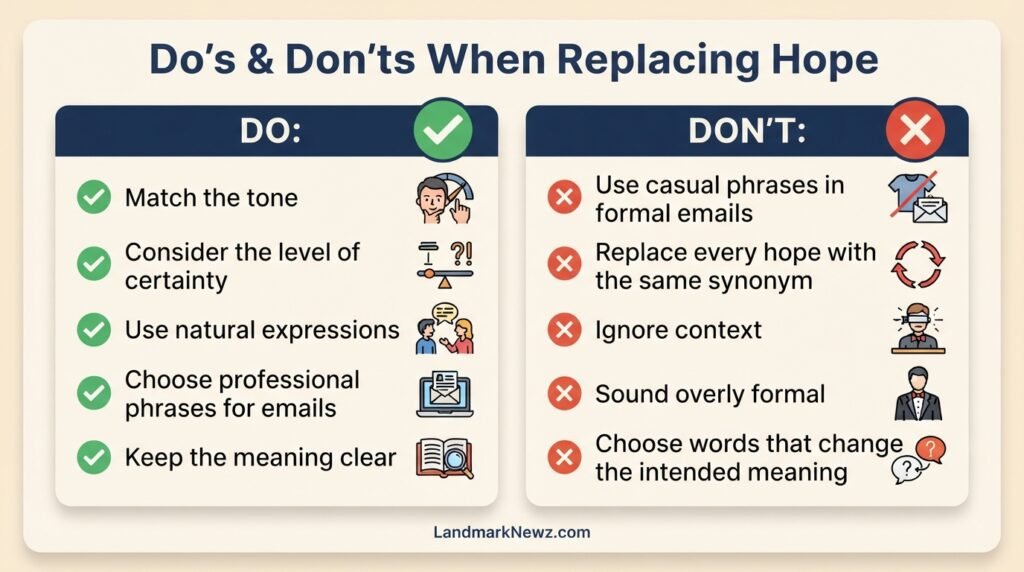
Expressions such as “keep my fingers crossed” can sound too informal in workplace communication. Choose “look forward to,” “trust,” or “anticipate” when writing professionally.
2. Choosing Overly Formal Language
Not every situation requires sophisticated wording. Using “anticipate” in a casual text may sound unnatural when a simple “hope” or “wish” would be clearer.
3. Ignoring the Level of Certainty
“Hope,” “expect,” and “trust” do not communicate exactly the same level of confidence. Choose your wording carefully when the difference matters.
4. Repeating the Same Expression
Replacing every instance of “hope” with one synonym can create a different kind of repetition. Select alternatives based on the actual meaning of each sentence.
5. Sounding Insincere
Some phrases can feel distant if they do not match your relationship with the reader. A warm message may benefit from “wish” or “have faith,” while a business email may need a more neutral expression.
Frequently Asked Questions
What is another way to say “I hope”?
You can say “I wish,” “I trust,” “I look forward to,” or “I’m optimistic,” depending on the context. For example, “I hope you have a great weekend” can become “I wish you a great weekend.” In professional communication, “I trust you’re doing well” is another natural option.
What is a professional way to say “hope”?
“I look forward to” and “I trust” are strong professional alternatives. For example, instead of “I hope to hear from you soon,” you can write, “I look forward to hearing from you.” The second version sounds polished, positive, and appropriate for business emails.
What is a better word for hope in an email?
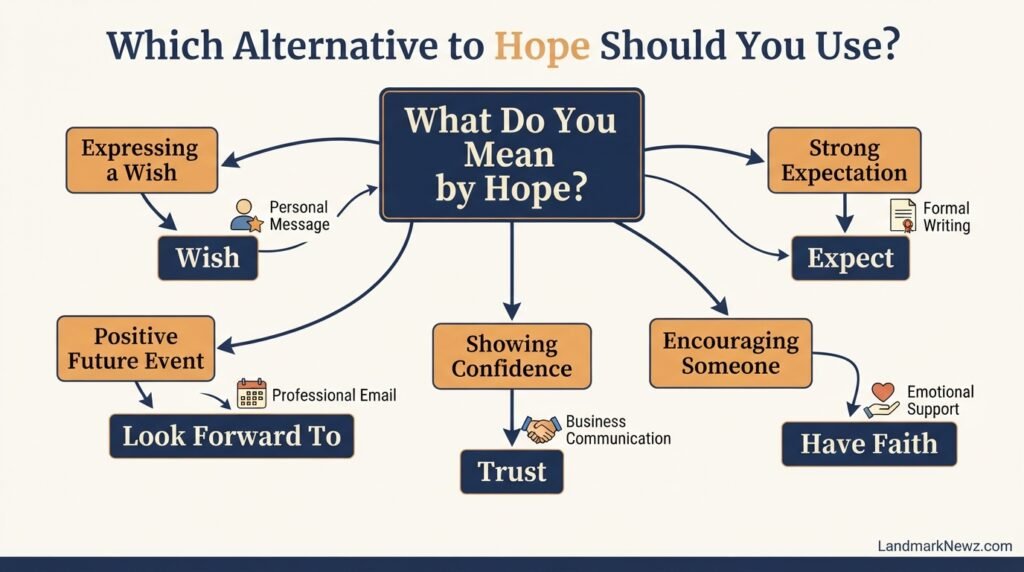
The best word depends on your intended meaning. “Trust” works when expressing confidence, “look forward to” works for positive anticipation, and “wish” works for good wishes. Avoid choosing a synonym simply to sound sophisticated; clarity should remain your main goal.
What is another way to say “I hope you are doing well”?
You can say “I trust you’re doing well,” “I hope all is well,” or “I trust everything is going well.” In professional emails, “I trust you’re doing well” sounds courteous and slightly more polished while keeping the message warm and approachable.
What is another word for hope in a positive way?
Words and phrases such as “optimism,” “confidence,” “expectation,” “faith,” and “positive outlook” can express hope from different angles. “Optimism” focuses on a positive attitude, while “confidence” suggests stronger belief in a favorable outcome.
Can “wish” replace “hope”?
Sometimes, but not always. “Wish” usually expresses a desire, while “hope” often suggests that you believe something is possible. For example, “I hope you get the job” suggests a possible outcome, while “I wish you success” expresses a positive desire for someone.
What is a formal synonym for hope?
“Anticipate,” “expect,” “trust,” and “remain optimistic” can work as formal alternatives, depending on the sentence. However, these words are not exact replacements in every situation because each carries a slightly different meaning and level of certainty.
What is a casual way to say hope?
Casual alternatives include “wish,” “keep my fingers crossed,” “stay positive,” and “have faith.” Among these, “keep my fingers crossed” is particularly informal and friendly. It works well in texts and conversations but is usually not appropriate for formal business communication.
Conclusion
Finding another way to say hope is useful when you want your writing to sound more natural, precise, or appropriate for a particular situation. The best choice depends on what you actually want to communicate. For a clearer understanding of what “hope” means and how it is used in English, see the hope definition and usage in Cambridge Dictionary.
Use “wish” for personal good wishes, “look forward to” for professional anticipation, and “trust” when you want to express confidence. For formal writing, “anticipate” can work well, while “have faith” and “stay positive” are better suited to encouragement and emotional support.
Remember that these alternatives are not perfect substitutes in every sentence. Before replacing “hope,” consider the meaning, tone, relationship, and level of certainty you want to convey. The most effective wording is the one that sounds natural and accurately reflects your message.

Professional Writing & Workplace Communication Expert
Marcus Hale is a business communication specialist with 11 years of experience in corporate training and professional writing. He has worked with mid-sized companies and remote teams to improve clarity in emails, reports, performance reviews, and client-facing messages.
Marcus focuses on polished, professional alternatives that help readers sound confident without sounding stiff. His guides cover workplace phrases, resume language, leadership communication, and formal-to-natural transitions. He holds a background in business administration and technical writing, and has led workshops on effective professional English.
At LandmarkNewz, Marcus creates practical synonym lists and phrasing tips that professionals can apply immediately in emails, meetings, and career documents.