What Does “Another Way to Say Lack of Communication” Mean?
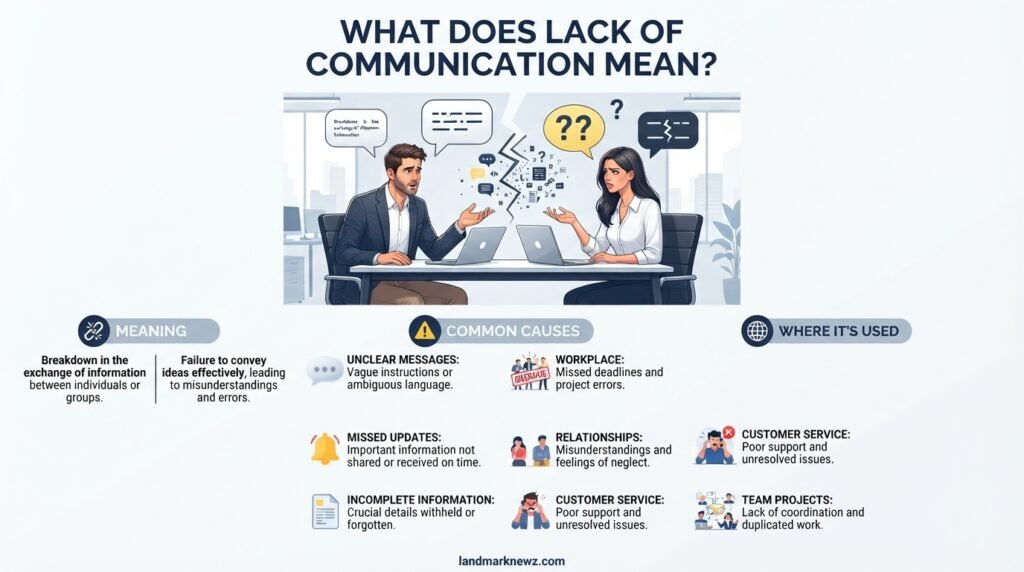
The phrase “lack of communication” describes a situation where people do not share enough information, ideas, expectations, or concerns with one another. It can also describe communication that is unclear, incomplete, delayed, or ineffective.
People often use this phrase when discussing problems at work, in relationships, customer service, education, or team projects. For example, “The project was delayed because of a lack of communication” means important information was not shared effectively.
Looking for another way to say “lack of communication” can help you make your writing more precise. Different alternatives can show whether the problem involves silence, unclear information, misunderstandings, or a complete failure to communicate.
Why Use Other Ways to Say “Lack of Communication”?
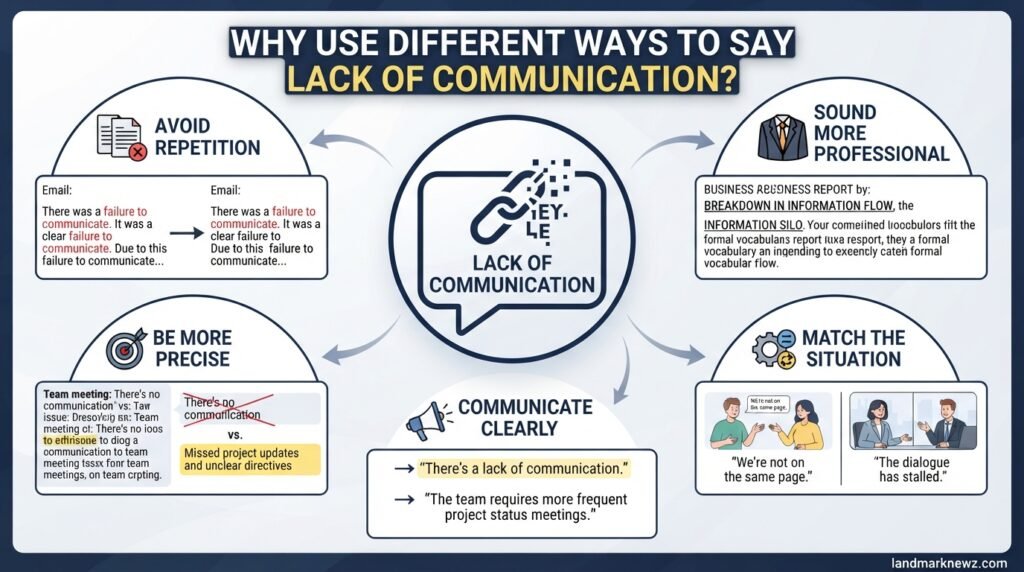
Repeating “lack of communication” can make your writing sound predictable. A more specific phrase can explain exactly what went wrong and make your message easier to understand.
Using alternatives can help you:
- Avoid repeating the same expression.
- Sound more natural and professional.
- Describe the communication problem more accurately.
- Match the tone of an email, report, conversation, or workplace document.
- Explain whether the issue involves confusion, silence, or ineffective communication.
- Make professional writing more polished.
For example, “communication gap” sounds neutral and professional, while “failure to communicate” is more direct and can sound more critical.
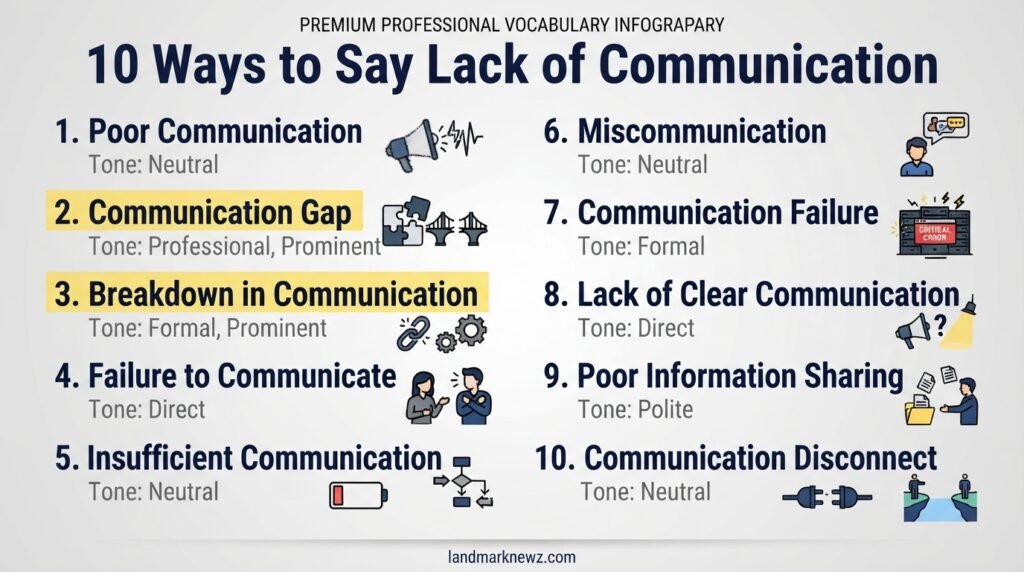
10 Best Other Ways to Say “Lack of Communication”
1. Poor Communication
Meaning
Poor communication is one of the simplest alternatives to “lack of communication.” It suggests that people are communicating, but the information may be unclear, incomplete, inconsistent, or ineffective.
Best For
- Professional
- Formal
- Casual
- Direct
Example 1
Poor communication between the departments caused several scheduling problems.
Example 2
Many workplace conflicts can be traced to poor communication.
Quick Tip
Use “poor communication” when you want a straightforward phrase without suggesting that communication completely stopped.
2. Communication Gap
Meaning
A communication gap refers to a situation where information, expectations, or understanding does not successfully move between people or groups. It is especially useful when two sides understand different parts of an issue.
Best For
- Professional
- Formal
- Polite
Example 1
There appears to be a communication gap between the sales and marketing teams.
Example 2
A communication gap between management and employees can create unnecessary frustration.
Quick Tip
Choose “communication gap” when you want to describe the problem in a neutral, non-blaming way.
3. Breakdown in Communication
Meaning
A breakdown in communication suggests that communication was expected to work but failed. It often describes misunderstandings, missed messages, or situations where people stopped exchanging useful information.
Best For
- Professional
- Formal
- Polite
Example 1
The deadline was missed because of a breakdown in communication.
Example 2
A breakdown in communication between the two teams led to duplicated work.
Quick Tip
This phrase is particularly useful when explaining the cause of a workplace problem without directly blaming one person.
4. Failure to Communicate
Meaning
Failure to communicate is a direct alternative that emphasizes someone’s inability or unwillingness to share important information. It can sound more critical than “communication gap.”
Best For
- Formal
- Professional
- Direct
Example 1
The failure to communicate the schedule change caused confusion among employees.
Example 2
The issue resulted from a failure to communicate important expectations clearly.
Quick Tip
Use this phrase when the missing information itself is the main problem and you want to be clear about responsibility.
5. Insufficient Communication
Meaning
Insufficient communication means that people communicated, but not enough information was exchanged to handle the situation effectively. It has a formal and objective tone.
Best For
- Professional
- Formal
Example 1
The review identified insufficient communication during the early stages of the project.
Example 2
Insufficient communication with customers may result in unrealistic expectations.
Quick Tip
This is a strong choice for reports, evaluations, policies, and other formal workplace writing.
6. Miscommunication
Meaning
Miscommunication occurs when information is communicated but understood incorrectly. Unlike “lack of communication,” this word focuses on a misunderstanding rather than complete silence.
Best For
- Professional
- Casual
- Friendly
- Polite
Example 1
A simple miscommunication about the meeting time caused everyone to arrive at different times.
Example 2
The disagreement was caused by a miscommunication rather than an intentional mistake.
Quick Tip
Use “miscommunication” only when information was actually exchanged but interpreted incorrectly.
7. Communication Failure
Meaning
Communication failure describes a serious problem in the way information is exchanged. It can refer to unclear messages, missed updates, incorrect information, or a complete inability to communicate effectively.
Best For
- Professional
- Formal
- Direct
Example 1
The investigation found a communication failure between the field team and headquarters.
Example 2
The emergency response was affected by a communication failure.
Quick Tip
This phrase works well when the communication problem had a noticeable or serious result.
8. Lack of Clear Communication
Meaning
Lack of clear communication is more specific than the original phrase. It indicates that people may have communicated, but their messages were vague, confusing, or incomplete.
Best For
- Professional
- Formal
- Polite
Example 1
The employee was frustrated by the lack of clear communication from management.
Example 2
The project suffered from a lack of clear communication about individual responsibilities.
Quick Tip
Use this phrase when the problem is clarity rather than the total absence of communication.
9. Poor Information Sharing
Meaning
Poor information sharing focuses on the failure to provide relevant information to the people who need it. It is especially appropriate for organizations, teams, and business processes.
Best For
- Professional
- Formal
Example 1
Poor information sharing between departments slowed the approval process.
Example 2
The team improved its workflow by addressing poor information sharing.
Quick Tip
This is a useful alternative when your topic specifically involves documents, updates, data, or important business information.
10. Communication Disconnect
Meaning
A communication disconnect describes a situation where people are not fully aligned in their understanding or expectations. It often suggests that different people or teams are working from different information.
Best For
- Professional
- Casual
- Polite
Example 1
There was a communication disconnect between the client and the design team.
Example 2
The communication disconnect became obvious when both departments submitted different versions of the plan.
Quick Tip
Use “communication disconnect” when you want a modern, conversational expression for a workplace or team setting.
Comparison Table
| Alternative | Best Used In | Tone |
| Poor communication | General, workplace, casual | Direct |
| Communication gap | Workplace, business | Neutral |
| Breakdown in communication | Workplace, reports | Professional |
| Failure to communicate | Formal discussions | Direct |
| Insufficient communication | Reports, business writing | Formal |
| Miscommunication | Everyday and workplace situations | Neutral |
| Communication failure | Business, serious situations | Formal |
| Lack of clear communication | Workplace, customer service | Polite |
| Poor information sharing | Business and team settings | Professional |
| Communication disconnect | Workplace and team discussions | Conversational |
Common Mistakes
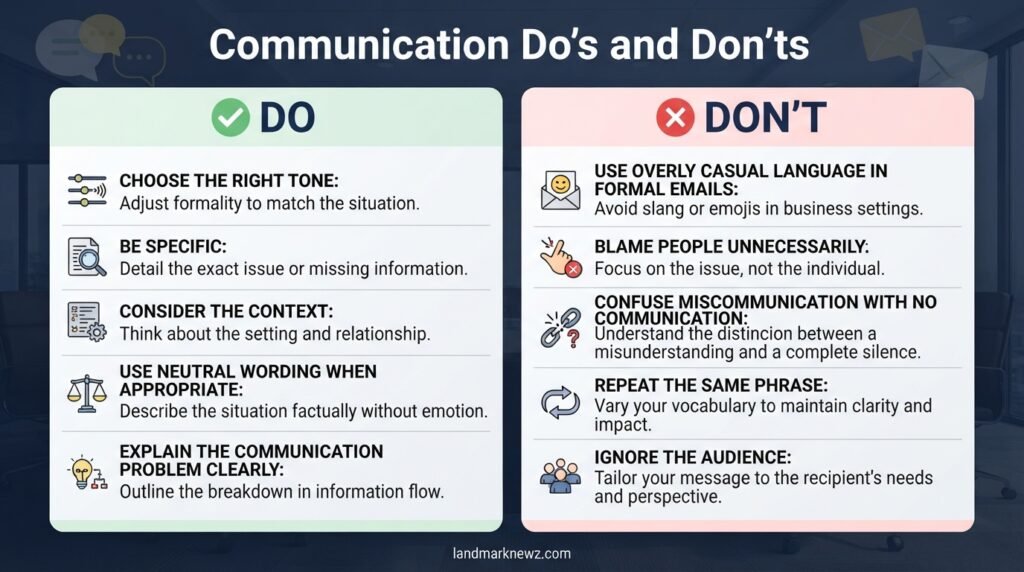
1. Using a Casual Phrase in a Formal Email
Some expressions may sound too conversational in a business report or formal email. Choose terms such as “insufficient communication” or “communication gap” when a professional tone matters.
2. Treating “Miscommunication” and “Lack of Communication” as Identical
These phrases are related but not interchangeable in every situation. “Miscommunication” means information was misunderstood, while “lack of communication” can mean that information was never shared.
3. Choosing Overly Harsh Language
“Communication failure” or “failure to communicate” can sound strongly critical. If you want to avoid blame, “communication gap” is often a better choice.
4. Ignoring the Context
The best alternative depends on what actually happened. If people received confusing instructions, use “lack of clear communication.” If two teams were not sharing updates, “poor information sharing” may be more precise.
5. Repeating the Same Alternative
Replacing “lack of communication” with “poor communication” does not solve repetition if you use “poor communication” throughout the entire article or report. Vary your wording naturally when the meaning changes.
Frequently Asked Questions
What is another way to say “lack of communication”?
Common alternatives include poor communication, communication gap, breakdown in communication, insufficient communication, communication failure, and failure to communicate. The best choice depends on the situation. “Communication gap” is usually neutral, while “failure to communicate” sounds more direct and can imply responsibility.
What is a professional way to say “lack of communication”?
A professional way to say “lack of communication” is communication gap, insufficient communication, or breakdown in communication. These expressions work well in workplace emails, reports, performance reviews, and business discussions because they describe the issue without automatically blaming a specific person.
What is a polite way to say “lack of communication”?
“Communication gap” and “lack of clear communication” are polite alternatives. They focus on the situation rather than assigning blame. For example, instead of saying, “You didn’t communicate with us,” you could say, “There seems to be a communication gap between the teams.”
Is “miscommunication” the same as “lack of communication”?
No. Miscommunication usually means people exchanged information but misunderstood it. “Lack of communication” is broader and can mean that people did not exchange enough information at all. Choosing the correct phrase makes your writing more accurate.
What is another way to say “lack of communication” at work?
At work, useful alternatives include communication gap, breakdown in communication, poor communication, insufficient communication, and communication disconnect. “Communication gap” is especially useful when you want to describe a workplace issue without making the statement sound overly critical.
How do you describe poor communication professionally?
You can describe poor communication as a communication gap, breakdown in communication, or lack of clear communication. These phrases sound more objective than simply saying someone “communicated badly.” In formal writing, explain the specific result, such as missed deadlines, unclear responsibilities, or duplicated work.
What is a formal synonym for lack of communication?
Insufficient communication is one of the most formal alternatives. Other suitable choices include communication failure, breakdown in communication, and failure to communicate. However, the tone differs, so choose based on whether you want to remain neutral or emphasize the seriousness of the problem.
What is the best alternative to “lack of communication”?
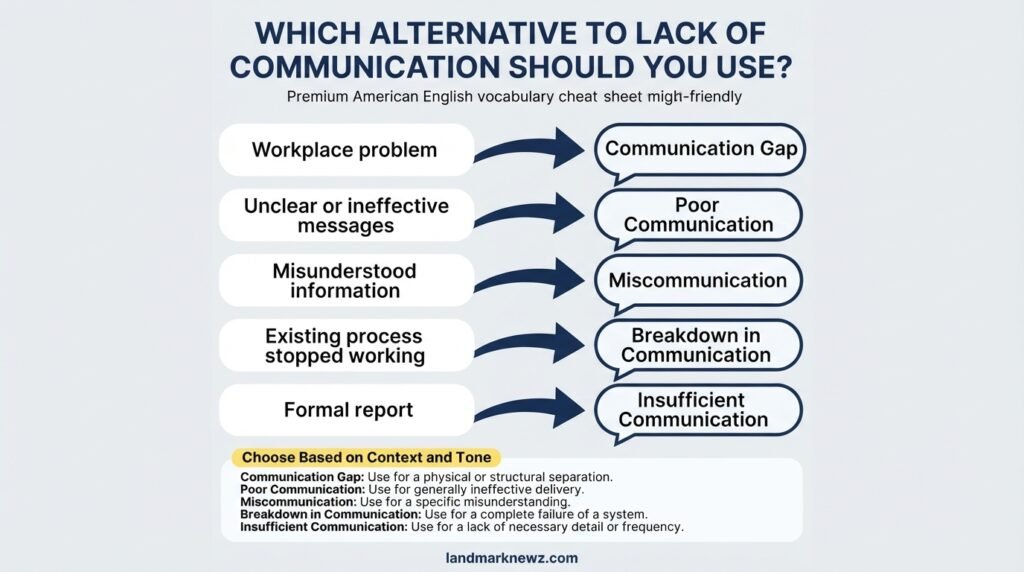
There is no single best alternative for every situation. Communication gap is a strong all-purpose option because it sounds natural, professional, and neutral. However, “miscommunication” is better for misunderstandings, while “breakdown in communication” works well when an established communication process stops working.
Conclusion
Knowing another way to say “lack of communication” can make your writing clearer, more professional, and more precise. The right alternative depends on what actually happened and how strongly you want to describe the problem.
For a neutral workplace expression, communication gap is an excellent choice. Use poor communication for a simple and direct statement, miscommunication when people misunderstood one another, and breakdown in communication when an existing communication process failed. For formal reports, insufficient communication can provide a more objective tone.
The key is to match the phrase to the situation rather than simply replacing one expression with another. When your wording accurately describes the communication problem, your message becomes easier to understand and more effective. For professional writing, it also helps to choose the right tone for your audience so your message is clear and appropriate.

Professional Writing & Workplace Communication Expert
Marcus Hale is a business communication specialist with 11 years of experience in corporate training and professional writing. He has worked with mid-sized companies and remote teams to improve clarity in emails, reports, performance reviews, and client-facing messages.
Marcus focuses on polished, professional alternatives that help readers sound confident without sounding stiff. His guides cover workplace phrases, resume language, leadership communication, and formal-to-natural transitions. He holds a background in business administration and technical writing, and has led workshops on effective professional English.
At LandmarkNewz, Marcus creates practical synonym lists and phrasing tips that professionals can apply immediately in emails, meetings, and career documents.