
Missing a phone call happens all the time. However, simply saying “sorry I missed your call” may not always fit the situation, especially when you are responding to a client, coworker, friend, family member, or potential employer.
The right alternative can make your message sound more natural, professional, warm, or casual. Below are useful ways to respond while keeping your message clear and appropriate.
What Does “Another Way to Say Sorry I Missed Your Call” Mean?
The phrase “another way to say sorry I missed your call” refers to alternative expressions you can use when you were unable to answer someone’s phone call.
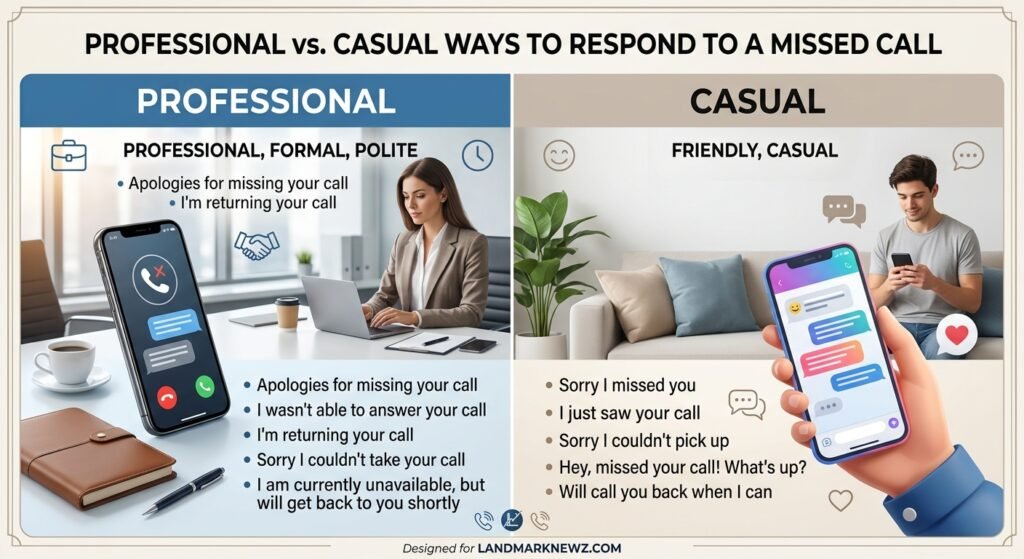
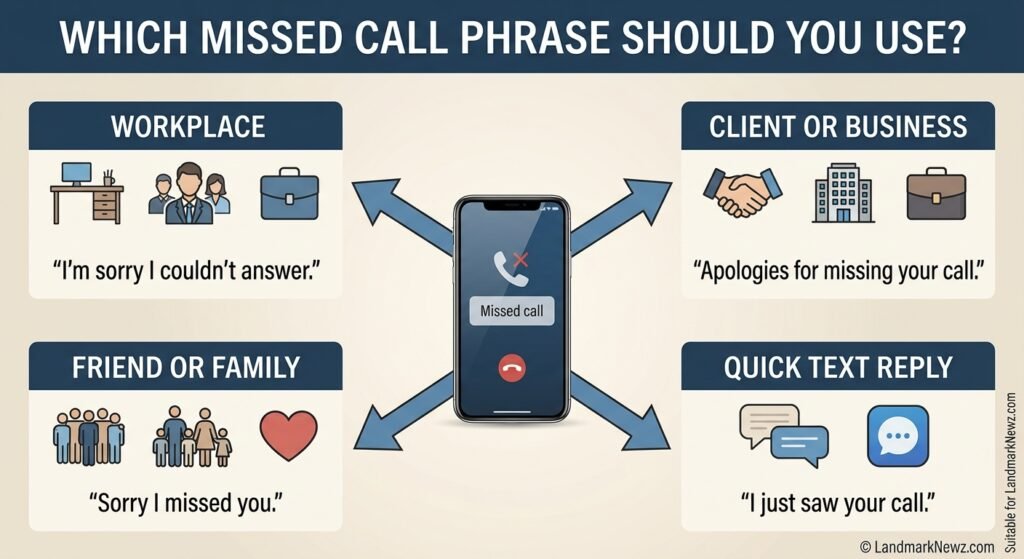
People search for these alternatives because they want to avoid repetition or choose wording that better matches the situation. For example, a business email may call for “Apologies for missing your call,” while a text to a friend could simply say, “Sorry I missed you.”
These phrases commonly appear in text messages, emails, workplace communication, voicemail responses, and everyday conversations.
Why Use Other Ways to Say “Sorry I Missed Your Call”?
Using different expressions gives you more control over your tone and helps you communicate naturally.
You may want another way to say sorry I missed your call to:
- Avoid repeating the same phrase.
- Sound more professional in workplace communication.
- Make a casual text feel more natural.
- Show politeness without over-apologizing.
- Acknowledge someone’s attempt to reach you.
- Encourage the person to call or message again.
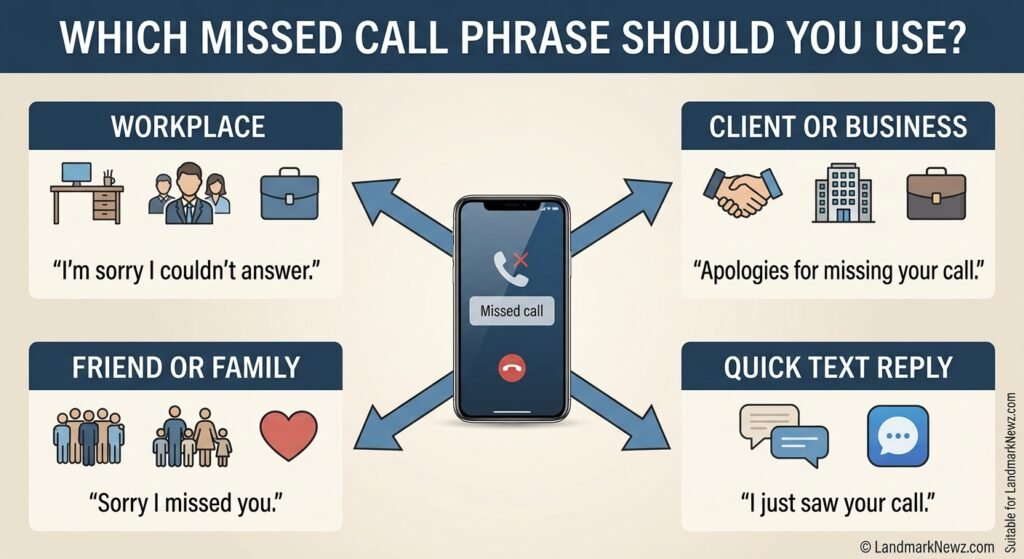
The best choice depends on who called, why they called, and how formal your relationship is.
10 Best Other Ways to Say “Sorry I Missed Your Call”
Meaning
This is one of the most natural alternatives to “sorry I missed your call.” It clearly explains that you were unable to answer without suggesting that you intentionally ignored the caller.
Best For
- Professional
- Friendly
- Polite
- Casual
Example 1
“I’m sorry I couldn’t answer earlier. Is everything okay?”
Example 2
“I’m sorry I couldn’t answer when you called. I’m available now if you’d like to talk.”
Quick Tip
Use this option when you want a simple, sincere response that works in almost any situation.
2. Apologies for Missing Your Call
Meaning
“Apologies for missing your call” has a more professional tone than the original phrase. It works especially well in emails, workplace messages, and conversations with clients.
Best For
- Professional
- Formal
- Polite
Example 1
“Apologies for missing your call. Please let me know when you’re available to speak.”
Example 2
“Apologies for missing your call this morning. I’d be happy to discuss the project later today.”
Quick Tip
Choose this phrase when you want to sound polished without making your response overly formal.
3. Sorry I Couldn’t Take Your Call
Meaning
This phrase directly communicates that you were unable to answer the phone. It sounds natural and conversational while still being polite.
Best For
- Casual
- Friendly
- Professional
- Polite
Example 1
“Sorry I couldn’t take your call earlier. I was in a meeting.”
Example 2
“Sorry I couldn’t take your call. Can we catch up this evening?”
Quick Tip
Add a brief reason when it helps the other person understand why you were unavailable.
4. I Wasn’t Able to Answer Your Call
Meaning
“I wasn’t able to answer your call” is neutral and straightforward. It avoids excessive apology while clearly acknowledging the missed call.
Best For
- Professional
- Formal
- Polite
Example 1
“I wasn’t able to answer your call, but I’d be glad to speak with you now.”
Example 2
“I wasn’t able to answer your call earlier because I was away from my phone.”
Quick Tip
This is a good choice when you want a professional tone without sounding too apologetic.
5. Sorry I Missed You
Meaning
“Sorry I missed you” is shorter and warmer than “sorry I missed your call.” It works particularly well when the caller is someone you know or when you want your response to feel friendly.
Best For
- Casual
- Friendly
- Warm
Example 1
“Sorry I missed you earlier. Give me a call when you have a chance.”
Example 2
“Sorry I missed you! I was grabbing lunch when you called.”
Quick Tip
Use this with friends, family, and familiar contacts rather than in highly formal business communication.
6. I’m Sorry I Wasn’t Available
Meaning
This phrase focuses on your availability rather than the missed call itself. It sounds courteous and can work well when you do not want to give a specific reason for being unavailable.
Best For
- Professional
- Formal
- Polite
- Warm
Example 1
“I’m sorry I wasn’t available when you called. Please feel free to reach me this afternoon.”
Example 2
“I’m sorry I wasn’t available earlier. I’d be happy to return your call.”
Quick Tip
Use this when privacy matters and you prefer not to explain exactly why you could not answer.
7. Thanks for Calling
Meaning
“Thanks for calling” changes the focus from apologizing to appreciating the person’s effort to reach you. It can sound positive and confident when paired with an invitation to reconnect.
Best For
- Professional
- Friendly
- Warm
- Polite
Example 1
“Thanks for calling. I just saw your message and can talk now.”
Example 2
“Thanks for calling earlier. Let me know a convenient time to connect.”
Quick Tip
This is especially useful when you want to sound appreciative rather than overly apologetic.
8. I Just Saw Your Call
Meaning
“I just saw your call” is a casual, direct way to explain that you noticed the missed call after it happened. It works naturally in texts and quick messages.
Best For
- Casual
- Friendly
Example 1
“I just saw your call. Everything okay?”
Example 2
“I just saw your call—sorry I missed it. Can I call you back?”
Quick Tip
Use this when you have only just noticed the missed call and want to respond quickly.
9. I’m Sorry I Couldn’t Get to the Phone
Meaning
This expression suggests that you were temporarily unavailable when the phone rang. It sounds natural and conversational, especially when you have a reasonable explanation for not answering.
Best For
- Casual
- Friendly
- Polite
Example 1
“I’m sorry I couldn’t get to the phone while I was driving.”
Example 2
“I’m sorry I couldn’t get to the phone earlier. I was helping my kids with homework.”
Quick Tip
Use this phrase when you want to explain that answering the phone was not practical at the time.
10. I’m Returning Your Call
Meaning
“I’m returning your call” is direct and action-oriented. Instead of focusing on the missed call, it tells the person that you are now making an effort to reconnect.
Best For
- Professional
- Formal
- Polite
Example 1
“I’m returning your call regarding the appointment we discussed.”
Example 2
“I’m returning your call from earlier. Please let me know if now is a good time.”
Quick Tip
Use this when you are calling back rather than simply sending a message about the missed call.
Comparison Table
| Alternative | Best Used In | Tone |
| I’m sorry I couldn’t answer | Most situations | Polite, natural |
| Apologies for missing your call | Work emails and business | Formal, professional |
| Sorry I couldn’t take your call | Texts and everyday conversations | Friendly, polite |
| I wasn’t able to answer your call | Workplace communication | Neutral, professional |
| Sorry I missed you | Friends and familiar contacts | Warm, casual |
| I’m sorry I wasn’t available | Professional messages | Polite, formal |
| Thanks for calling | Work and personal messages | Appreciative, warm |
| I just saw your call | Quick texts | Casual, direct |
| I’m sorry I couldn’t get to the phone | Personal conversations | Friendly, conversational |
| I’m returning your call | Business and callbacks | Professional, direct |
Common Mistakes
1. Using Casual Phrases in Professional Emails
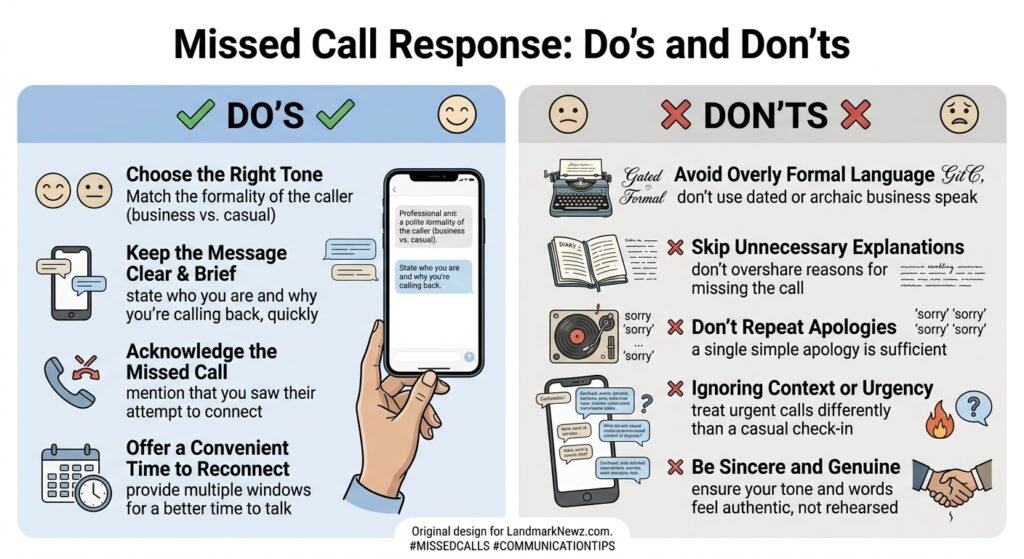
A phrase like “I just saw your call!” may sound too casual when communicating with a client or hiring manager. Choose a more polished option such as “Apologies for missing your call.”
2. Choosing Overly Formal Language
Not every missed call requires a formal apology. Saying “I sincerely regret my inability to answer your telephone call” can sound unnatural in everyday American English.
3. Repeating the Same Phrase
Using “sorry I missed your call” in every message can make your communication feel repetitive. Keep several natural alternatives available so you can match the situation.
4. Forgetting the Context
The best phrase depends on who contacted you. A friend may appreciate “Sorry I missed you,” while a customer may respond better to “I’m sorry I couldn’t answer.”
5. Sounding Insincere
Avoid giving an exaggerated apology for a simple missed call. A short, genuine response is usually more effective than several sentences explaining why you could not answer.
Frequently Asked Questions
What is a professional way to say “sorry I missed your call”?
A professional option is “Apologies for missing your call.” You can also say, “I’m sorry I couldn’t answer your call” or “I wasn’t able to answer your call.” These phrases acknowledge the missed call while maintaining a respectful workplace tone.
What is a casual way to say “sorry I missed your call”?
For a casual conversation, try “Sorry I missed you,” “I just saw your call,” or “Sorry I couldn’t take your call.” These options sound natural in texts and messages to friends, relatives, and people you know well.
How do you say “sorry I missed your call” without saying sorry?
You can say, “Thanks for calling,” “I just saw your call,” or “I’m returning your call.” These alternatives acknowledge the person’s attempt to reach you without using an apology. They work particularly well when the missed call was accidental and does not require a formal apology.
What should I text someone after missing their call?
Keep the message short and clear. For example, you could write, “I just saw your call. Can I call you back?” If you are not available yet, say, “I just saw your call. I’ll get back to you this afternoon.”
What is the best phrase for a missed call from a client?
“I’m sorry I couldn’t answer your call” is a safe professional choice. You can make it more helpful by adding a next step, such as, “I’m sorry I couldn’t answer your call. Please let me know a convenient time to reconnect.”
Is “sorry I missed you” the same as “sorry I missed your call”?
They are similar, but “sorry I missed you” sounds warmer and more personal. It can refer broadly to missing an opportunity to speak with someone. “Sorry I missed your call” specifically identifies the phone call as the missed interaction.
How can I apologize for missing a call without giving a reason?
You do not need to provide a reason. Try, “I’m sorry I wasn’t available,” “I’m sorry I couldn’t answer,” or “Apologies for missing your call.” These expressions acknowledge the situation without requiring you to explain what you were doing.
Should I apologize for every missed call?
Not necessarily. A missed call is a normal part of everyday communication, so a simple acknowledgment may be enough. In professional situations, a brief apology can show courtesy, especially when the call was important or the person needs a timely response.
Conclusion
There are many natural ways to say “sorry I missed your call,” and the best choice depends on the person and situation. For everyday conversations, “Sorry I couldn’t take your call” and “Sorry I missed you” sound friendly and natural. For professional communication, “Apologies for missing your call” and “I wasn’t able to answer your call” create a more polished impression.
You can also skip the apology entirely when appropriate. Phrases such as “Thanks for calling,” “I just saw your call,” and “I’m returning your call” focus on reconnecting instead of explaining the missed call.
The key is to keep your response genuine, brief, and suited to the relationship. When possible, add a clear next step so the other person knows when or how you can reconnect. Knowing how to follow up after a missed call can help you communicate professionally while keeping the conversation moving.

About Dr. Priya Nair
Dr. Priya Nair is a passionate Writer & Blogger at LandMarkNewz.com, dedicated to creating informative, engaging, and easy-to-understand content for readers. With a strong interest in research, current trends, lifestyle, and everyday topics, she focuses on presenting useful information in a clear and reader-friendly way.
Through her writing, Priya aims to help readers discover valuable insights, understand complex topics more easily, and stay informed about subjects that matter to them. Her approach combines thoughtful research with a simple and engaging writing style.
At LandMarkNewz.com, she contributes original articles designed to inform, educate, and provide practical value to readers.