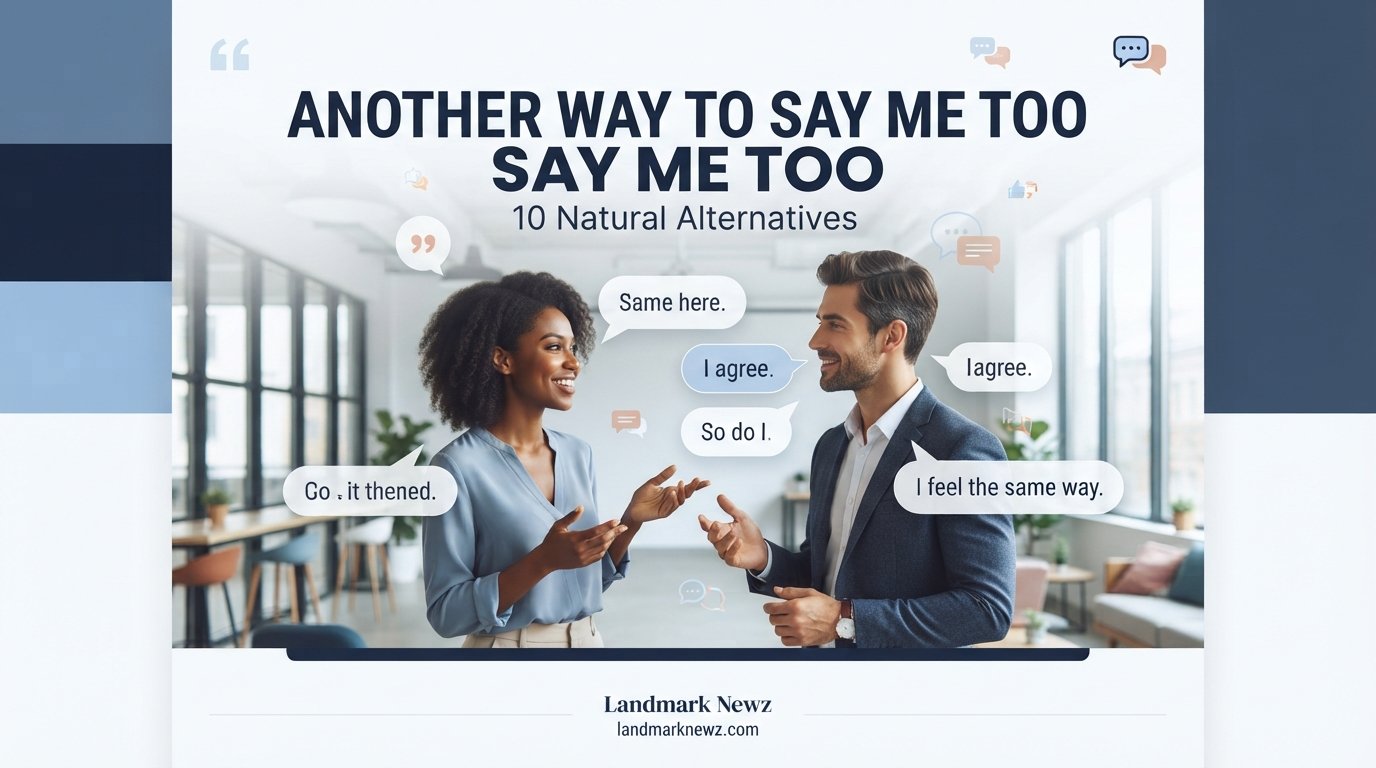
Finding another way to say me too can make your conversations sound more natural, specific, and engaging. Although “me too” is perfectly correct, repeating it can sometimes feel predictable or too informal.
The right alternative can help you show agreement, share an experience, or express a similar feeling without sounding repetitive.
What Does “Another Way to Say Me Too” Mean?
“Another way to say me too” refers to different expressions that communicate the same basic idea: you have the same feeling, opinion, experience, or response as someone else.
For example, if a friend says, “I love this movie,” you could respond, “Me too,” “Same here,” or “I feel the same way.” Each response shows agreement, but the tone can be slightly different.
You may look for alternatives when writing emails, talking with coworkers, chatting with friends, or simply trying to make your English sound more varied.
Why Use Other Ways to Say “Me Too”?
Using different expressions allows you to match your response to the situation instead of relying on the same phrase every time.
Here are some benefits:
- Avoid repetition: Keep conversations from sounding repetitive.
- Sound natural: Use expressions that fit everyday American English.
- Match the situation: Choose language appropriate for work, friends, or formal settings.
- Show stronger agreement: Some phrases communicate more than simple agreement.
- Express shared feelings: Certain alternatives make your response warmer or more personal.
10 Best Other Ways to Say “Me Too”
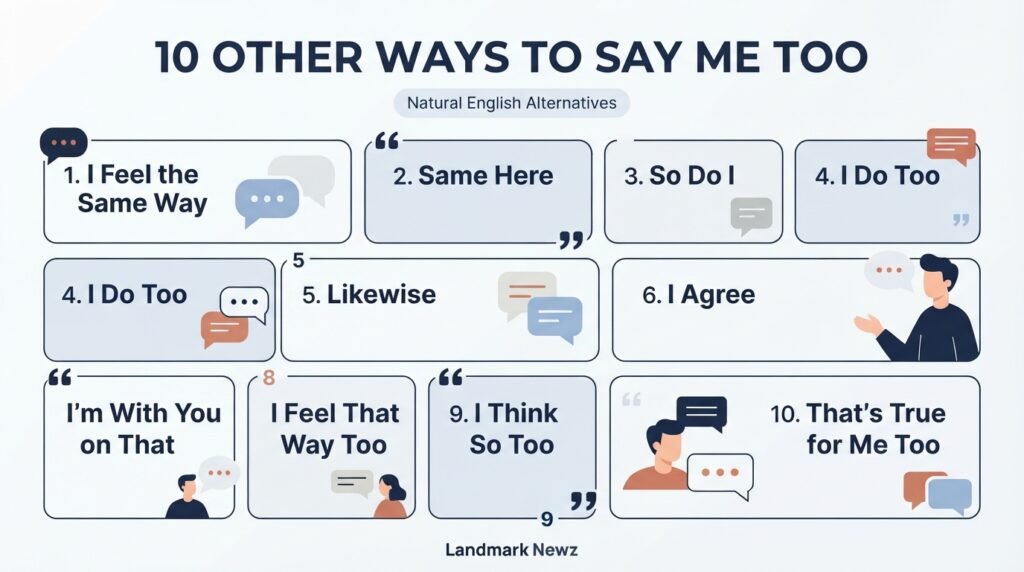
1. I Feel the Same Way
Meaning
“I feel the same way” means that you share the other person’s feelings or opinion. It sounds slightly more thoughtful than “me too” and works especially well when discussing emotions, preferences, or personal views.
Best For
- Professional
- Friendly
- Warm
- Polite
Example 1
“I feel the same way about how important clear communication is.”
Example 2
“You’re right that the weekend went by too quickly. I feel the same way.”
Quick Tip
Use this phrase when responding to someone’s feelings or opinions, especially when you want your response to sound sincere.
2. Same Here
Meaning
“Same here” is a relaxed way to say that you have the same experience, feeling, or situation. It is very common in casual American English and sounds natural in everyday conversations.
Best For
- Casual
- Friendly
- Warm
Example 1
“I haven’t had breakfast yet.”
“Same here.”
Example 2
“I’m looking forward to the concert.”
“Same here!”
Quick Tip
“Same here” is excellent for friendly conversations, but choose a more professional alternative for formal business communication.
3. So Do I
Meaning
“So do I” expresses agreement with a positive statement involving an action or general preference. It often sounds a little more polished than “me too” while remaining natural and conversational.
Best For
- Professional
- Formal
- Friendly
- Polite
Example 1
“I enjoy working with this team.”
“So do I.”
Example 2
“She thinks we should start earlier.”
“So do I.”
Quick Tip
Use “so do I” when the original statement uses a present-tense verb such as “like,” “enjoy,” “think,” or “want.”
4. I Do Too
Meaning
“I do too” directly confirms that you share the same action, preference, or feeling. It is clear, conversational, and slightly more complete than simply saying “me too.”
Best For
- Casual
- Friendly
- Warm
- Polite
Example 1
“I really appreciate everything you’ve done.”
“I do too.”
Example 2
“I miss having everyone together.”
“I do too.”
Quick Tip
“I do too” is especially useful when you want to emphasize that you genuinely share the same feeling.
5. Likewise
Meaning
“Likewise” means “the same applies to me” or “the same is true for me.” It can sound polished and concise, making it useful in professional conversations as well as polite everyday exchanges.
Best For
- Professional
- Formal
- Polite
Example 1
“I appreciate your help with the project.”
“Likewise.”
Example 2
“It was a pleasure speaking with you today.”
“Likewise.”
Quick Tip
“Likewise” works best when the two statements are closely related, such as mutual appreciation, respect, or a shared experience.
6. I Agree
Meaning
“I agree” clearly shows that you share someone’s opinion or position. Unlike “me too,” it focuses more on agreement with an idea than on having the same personal experience.
Best For
- Professional
- Formal
- Polite
Example 1
“I agree that we should review the proposal before Friday.”
Example 2
“You make a good point about improving customer service. I agree.”
Quick Tip
Choose “I agree” when you are responding to an opinion, argument, suggestion, or decision rather than simply sharing an experience.
7. I’m With You on That
Meaning
“I’m with you on that” is a friendly way to show strong agreement with someone’s opinion or choice. It sounds supportive and conversational without being overly formal.
Best For
- Casual
- Friendly
- Warm
Example 1
“I think we should spend the afternoon at the beach.”
“I’m with you on that.”
Example 2
“Working from home saves me a lot of time.”
“I’m with you on that.”
Quick Tip
Use this expression with friends, coworkers you know well, or people you have a relaxed relationship with.
8. I Feel That Way Too
Meaning
“I feel that way too” directly communicates that you share someone’s emotional response. It is warmer and more personal than a simple “I agree.”
Best For
- Friendly
- Warm
- Polite
Example 1
“I’m really grateful for everything our parents taught us.”
“I feel that way too.”
Example 2
“I’m nervous about starting the new job.”
“I feel that way too.”
Quick Tip
This is a strong choice when someone shares an emotion, such as excitement, concern, gratitude, sadness, or nervousness.
9. I Think So Too
Meaning
“I think so too” indicates that you agree with someone’s thought, belief, or prediction. It is softer than “I agree,” so it can sound less forceful when you do not want to appear overly certain.
Best For
- Casual
- Friendly
- Polite
Example 1
“I think this restaurant will be busy tonight.”
“I think so too.”
Example 2
“She’ll probably finish the assignment today.”
“I think so too.”
Quick Tip
Use this phrase when you want to agree while leaving some room for uncertainty.
10. That’s True for Me Too
Meaning
“That’s true for me too” emphasizes that the same statement applies to your own situation. It is useful when someone describes an experience, habit, or circumstance that you also have.
Best For
- Professional
- Friendly
- Polite
- Warm
Example 1
“I find it easier to concentrate when I work in the morning.”
“That’s true for me too.”
Example 2
“I usually need some quiet time after a busy day.”
“That’s true for me too.”
Quick Tip
Use this alternative when you want to make it clear that the other person’s statement specifically applies to your own circumstances.
Comparison Table
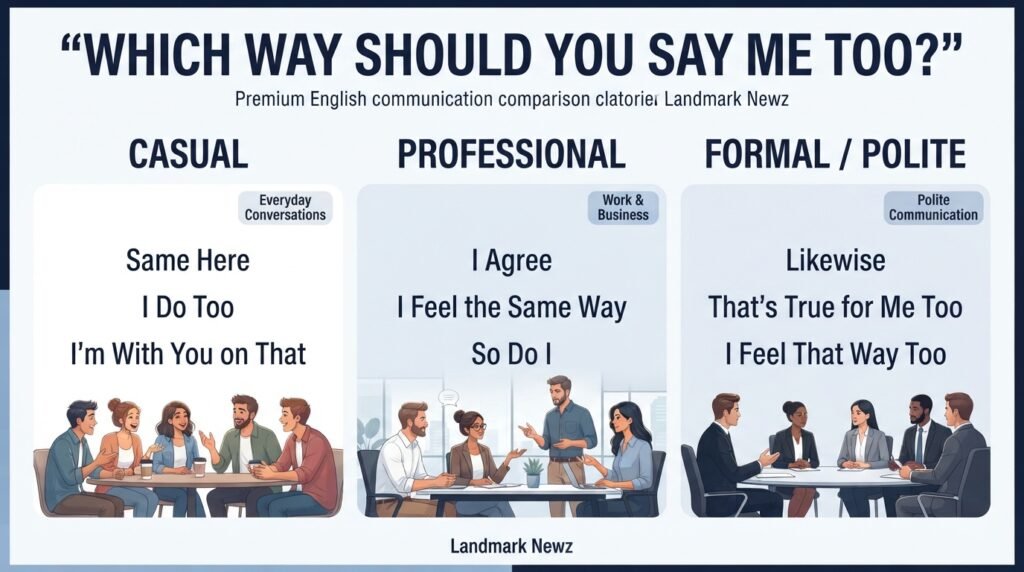
| Alternative | Best Used In | Tone |
| I Feel the Same Way | Work, personal conversations | Warm, sincere |
| Same Here | Everyday conversations | Casual, friendly |
| So Do I | Work and everyday conversations | Polished, natural |
| I Do Too | Personal conversations | Friendly, warm |
| Likewise | Professional and polite exchanges | Formal, polished |
| I Agree | Meetings and discussions | Professional, direct |
| I’m With You on That | Informal conversations | Friendly, supportive |
| I Feel That Way Too | Emotional conversations | Warm, empathetic |
| I Think So Too | Opinions and predictions | Casual, thoughtful |
| That’s True for Me Too | Shared experiences | Polite, conversational |
Common Mistakes
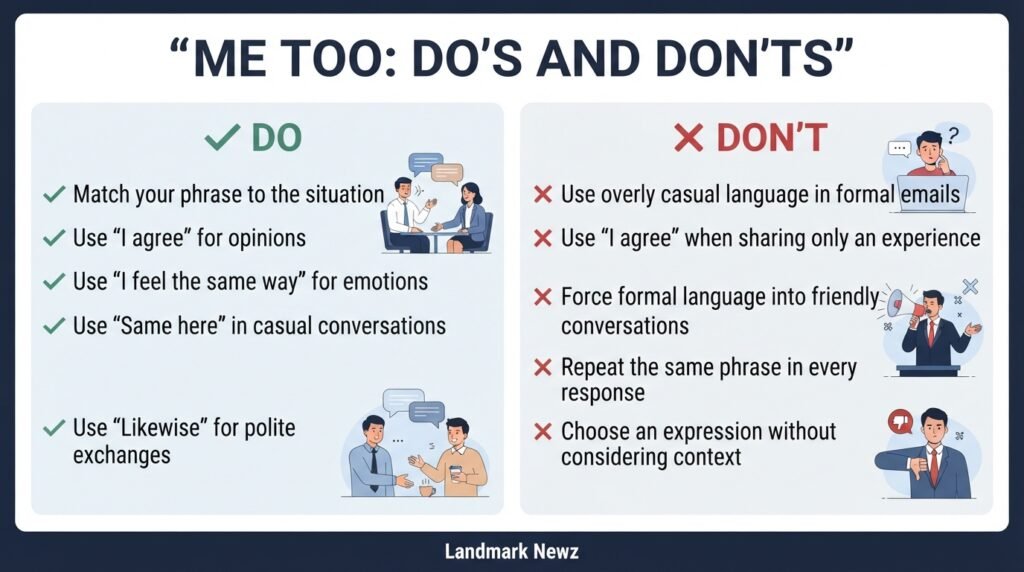
1. Using Casual Phrases in Professional Emails
Expressions such as “Same here” can sound too relaxed in a formal email. For workplace communication, “I agree,” “I feel the same way,” or “Likewise” may be more appropriate.
2. Choosing a Phrase That Does Not Match the Statement
Not every alternative works in every situation. For example, “I agree” fits an opinion, while “I feel that way too” is better when someone is discussing an emotion.
3. Repeating the Same Alternative
Replacing “me too” with “same here” every time does not really solve the problem of repetition. Keep several natural expressions available so your responses fit the conversation.
4. Sounding Too Formal
“Likewise” is useful, but it may feel stiff in some casual conversations. If you’re talking with a close friend, “Same here” may sound much more natural.
5. Using an Expression Without Adding Value
Sometimes a simple “me too” is exactly right. Don’t force a longer phrase just to sound sophisticated; choose the expression that communicates your response clearly and naturally.
Frequently Asked Questions
What is another way to say “me too” in a professional setting?
In professional situations, good alternatives include “I agree,” “I feel the same way,” “Likewise,” and “So do I.” The best choice depends on what you’re agreeing with. “I agree” works well for opinions and suggestions, while “Likewise” is particularly useful for mutual appreciation or polite statements.
What is a casual way to say “me too”?
“Same here” is one of the most natural casual alternatives to “me too.” You can also say “I do too” or “I feel that way too,” depending on the conversation. These expressions work well when talking with friends, family members, classmates, or coworkers you know well.
Can I say “likewise” instead of “me too”?
Yes, you can use “likewise” in many situations, particularly when someone expresses a positive sentiment toward you. For example, if someone says, “It was great working with you,” replying “Likewise” means you feel the same. However, it may sound more polished or formal than “me too.”
What is another way to say “me too” in an email?
For professional emails, “I agree,” “I feel the same way,” or “Likewise” are strong choices. For example, if a coworker says, “I think the proposal needs more detail,” you can respond with “I agree. Adding more detail would make the proposal stronger.”
Is “same here” the same as “me too”?
“Same here” and “me too” have very similar meanings. Both show that you share someone’s experience, feeling, or opinion. The main difference is tone: “same here” often sounds more casual and conversational, while “me too” is broadly useful in both casual and neutral situations.
How do you say “me too” without sounding repetitive?
You can vary your response based on the context. Try “I feel the same way” for emotions, “I agree” for opinions, “So do I” for actions or preferences, and “Same here” for casual conversations. Choosing a phrase that matches the meaning makes your response sound more natural.
What is a polite way to say “me too”?
“I feel the same way,” “Likewise,” and “I agree” are polite alternatives. “Likewise” is especially useful when responding to compliments, greetings, appreciation, or positive comments. For example, if someone says, “I really enjoyed our conversation,” you can politely reply, “Likewise.”
Is “I agree” always a good replacement for “me too”?
No. “I agree” specifically communicates agreement with an idea, opinion, or statement. It does not always mean that you share someone’s personal experience or emotion. If someone says, “I’m exhausted,” “I feel the same way” is more natural than “I agree.”
Conclusion
Knowing another way to say “me too” gives you more flexibility in everyday conversations, emails, and professional discussions. While “me too” remains completely natural, alternatives can help you communicate with greater precision and avoid unnecessary repetition.
For casual conversations, “Same here” is simple and friendly. When discussing emotions, “I feel the same way” or “I feel that way too” can sound more sincere. In professional settings, “I agree,” “Likewise,” and “So do I” are often stronger choices.
The key is to match your wording to the situation rather than choosing the most complicated expression. A natural response should sound like something you would actually say. When in doubt, choose the phrase that clearly shows whether you share someone’s opinion, feeling, action, or experience. For professional communication, consider these guidelines for choosing the right tone in business writing to make sure your wording fits your audience and purpose.

Professional Writing & Workplace Communication Expert
Marcus Hale is a business communication specialist with 11 years of experience in corporate training and professional writing. He has worked with mid-sized companies and remote teams to improve clarity in emails, reports, performance reviews, and client-facing messages.
Marcus focuses on polished, professional alternatives that help readers sound confident without sounding stiff. His guides cover workplace phrases, resume language, leadership communication, and formal-to-natural transitions. He holds a background in business administration and technical writing, and has led workshops on effective professional English.
At LandmarkNewz, Marcus creates practical synonym lists and phrasing tips that professionals can apply immediately in emails, meetings, and career documents.