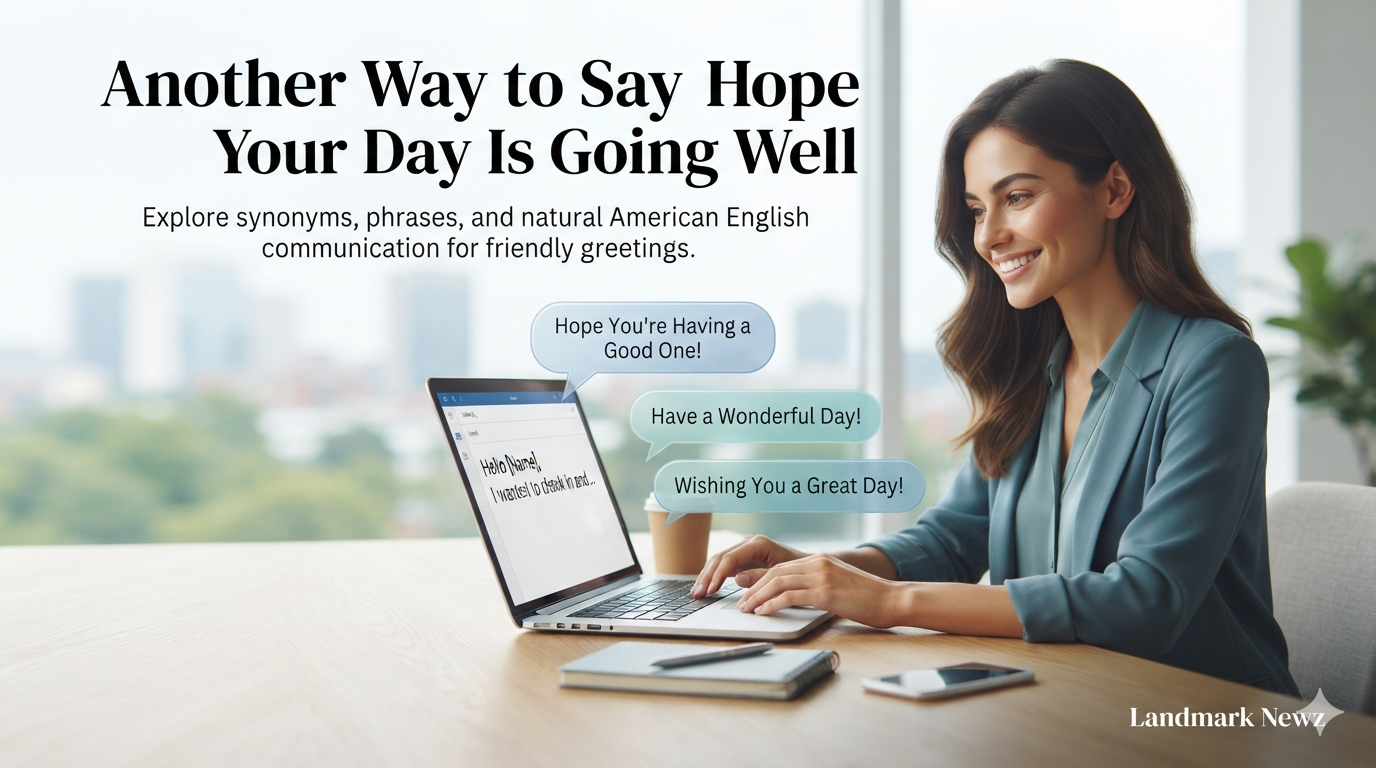
What Does “Hope Your Day Is Going Well” Mean?
“Hope your day is going well” is a friendly expression that shows consideration for another person’s well-being. It communicates a simple positive wish without becoming too personal or formal.
People commonly use this phrase at the beginning of emails, texts, direct messages, and everyday conversations. It can appear before the main purpose of a message, such as asking a question, following up on a project, or checking in with someone.
The expression is popular because it feels courteous and positive. It acknowledges the other person before moving into the main topic.
Why Use Other Ways to Express This?
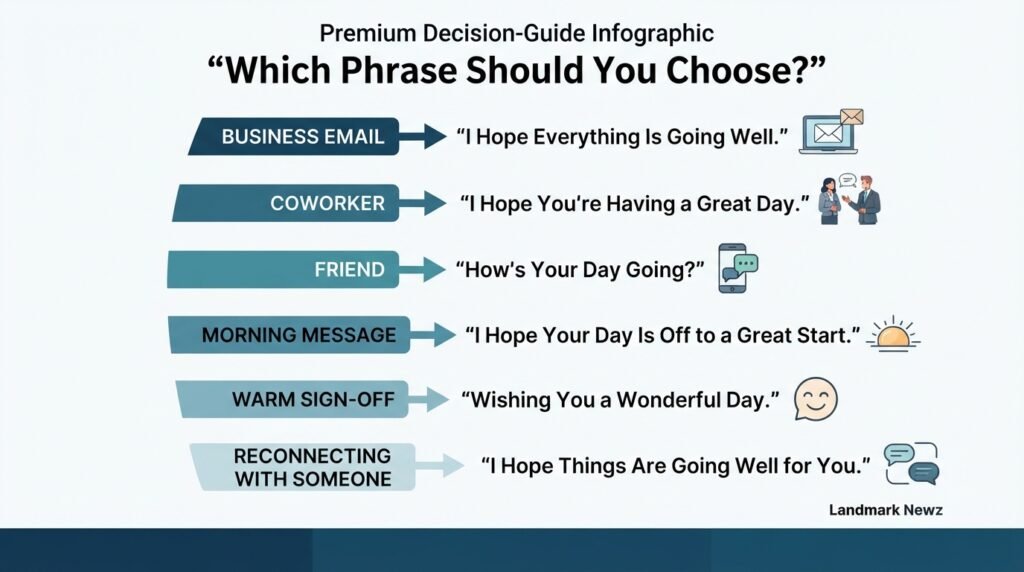
Repeating the same greeting can make emails and messages feel predictable. Using different wording allows you to sound more natural while choosing an expression that fits your audience.
Alternative expressions can help you:
- Avoid repetitive greetings.
- Make workplace emails sound more polished.
- Create a warmer personal message.
- Start a conversation naturally.
- Match formal and informal situations.
- Show genuine interest in someone.
You do not need to replace the original wording every time. Instead, choose a variation that fits the relationship and purpose of your message.
10 Best Alternatives
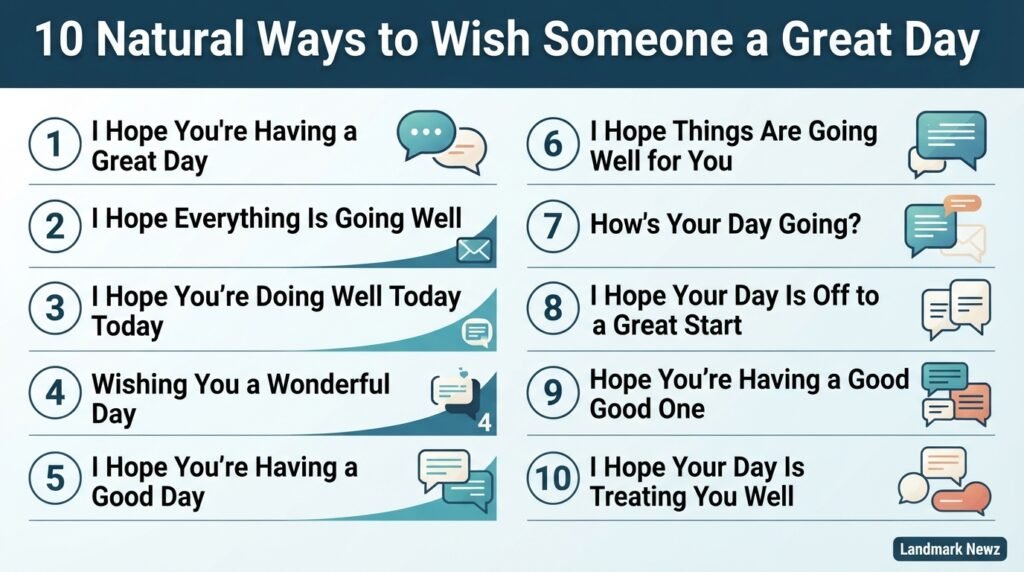
1. I Hope You’re Having a Great Day
Meaning
This is one of the most versatile ways to wish someone well. It sounds positive and friendly without being overly casual, making it suitable for both personal and professional communication.
Best For
- Professional
- Friendly
- Warm
- Polite
Example 1
I hope you’re having a great day. I wanted to follow up on our conversation from yesterday.
Example 2
Hi Sarah, I hope you’re having a great day and enjoying the beautiful weather.
Quick Tip
Choose this option when you want a safe, natural greeting that works in almost any setting.
2. I Hope Everything Is Going Well
Meaning
This expression focuses on someone’s overall situation rather than only their current day. It works particularly well when you are contacting a coworker, client, or business contact.
Best For
- Professional
- Formal
- Polite
Example 1
I hope everything is going well with the new project.
Example 2
Hello Mark, I hope everything is going well on your end.
Quick Tip
Use this wording when you want to sound courteous and professional without becoming too formal.
3. I Hope You’re Doing Well Today
Meaning
This phrase is simple, considerate, and slightly personal. It works nicely when you want to acknowledge the recipient before introducing the purpose of your message.
Best For
- Professional
- Friendly
- Warm
- Polite
Example 1
I hope you’re doing well today. I wanted to ask about your availability next week.
Example 2
Hey Lisa, I hope you’re doing well today and getting some time to relax.
Quick Tip
This is a strong choice for emails where you want a warm opening followed by a direct question or request.
4. Wishing You a Wonderful Day
Meaning
Rather than describing how the person’s day might be going, this phrase expresses a direct positive wish for the rest of their day. It sounds thoughtful and upbeat.
Best For
- Formal
- Friendly
- Warm
- Polite
Example 1
Thank you for your help, and wishing you a wonderful day.
Example 2
I appreciate you taking the time to speak with me. Wishing you a wonderful day ahead.
Quick Tip
This phrase is especially effective as an email closing or friendly sign-off.
5. I Hope You’re Having a Good Day
Meaning
This is a straightforward variation that keeps the original idea while using slightly different wording. It feels familiar, natural, and appropriate for everyday communication.
Best For
- Casual
- Friendly
- Professional
- Polite
Example 1
Hi James, I hope you’re having a good day. Do you have a few minutes to chat?
Example 2
I hope you’re having a good day so far. I just wanted to check in about Friday.
Quick Tip
Use this when you want a simple greeting that does not sound overly polished or formal.
6. I Hope Things Are Going Well for You
Meaning
This option refers to a person’s broader circumstances rather than focusing only on today. It can sound especially thoughtful when you are reconnecting after some time apart.
Best For
- Professional
- Friendly
- Warm
- Polite
Example 1
It’s been a while since we last spoke. I hope things are going well for you.
Example 2
I hope things are going well for you and that you’re settling into your new role.
Quick Tip
Use this when contacting an old colleague, client, classmate, or acquaintance.
7. How’s Your Day Going?
Meaning
This expression turns the well-wish into a question, giving the other person an opportunity to respond. It feels more conversational than a standard email greeting.
Best For
- Casual
- Friendly
- Warm
Example 1
Hey Tom, how’s your day going? Are you free for lunch?
Example 2
How’s your day going so far? I heard you had a busy morning.
Quick Tip
This is best for people you know because it naturally invites a longer conversation.
8. I Hope Your Day Is Off to a Great Start
Meaning
This phrase works best early in the day. It expresses optimism and lets the recipient know that you hope their morning has started positively.
Best For
- Professional
- Friendly
- Warm
- Polite
Example 1
Good morning, I hope your day is off to a great start. I have a quick question about the report.
Example 2
I hope your day is off to a great start and that everything is running smoothly.
Quick Tip
Use this in morning emails rather than later in the afternoon or evening.
9. Hope You’re Having a Good One
Meaning
This is a relaxed conversational expression. Here, “a good one” refers to the person’s day and gives the message a casual, friendly feel.
Best For
- Casual
- Friendly
- Warm
Example 1
Hey Alex, hope you’re having a good one! Let me know when you’re free.
Example 2
Thanks again for your help today. Hope you’re having a good one!
Quick Tip
Keep this option for texts, chats, and informal messages rather than formal business correspondence.
10. I Hope Your Day Is Treating You Well
Meaning
This is a more expressive and personable variation. It gives the greeting a slightly playful quality while still communicating a genuine positive wish.
Best For
- Casual
- Friendly
- Warm
Example 1
Hey Emily, I hope your day is treating you well. Want to grab coffee later?
Example 2
I hope your day is treating you well despite the busy schedule.
Quick Tip
Use this with friends or familiar contacts when you want your message to feel more personal.
Comparison Table
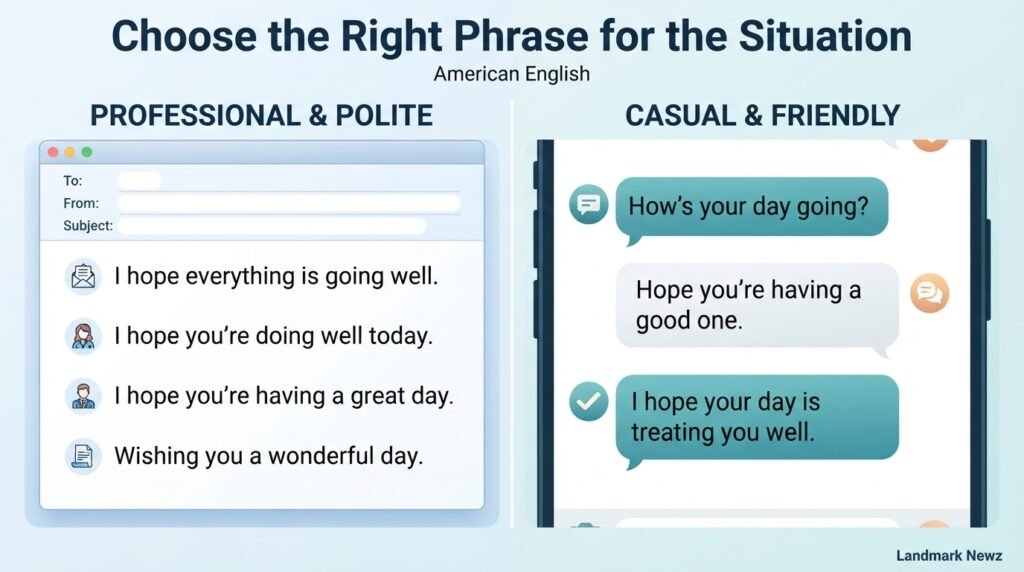
| Alternative | Best Used In | Tone |
| I hope you’re having a great day | Emails and everyday messages | Warm and versatile |
| I hope everything is going well | Workplace communication | Professional and polite |
| I hope you’re doing well today | Emails and messages | Warm and courteous |
| Wishing you a wonderful day | Sign-offs and well-wishes | Positive and thoughtful |
| I hope you’re having a good day | Everyday communication | Friendly and natural |
| I hope things are going well for you | Reconnecting with someone | Thoughtful and warm |
| How’s your day going? | Texts and conversations | Casual and engaging |
| I hope your day is off to a great start | Morning communication | Positive and friendly |
| Hope you’re having a good one | Casual texts and chats | Relaxed and friendly |
| I hope your day is treating you well | Personal conversations | Warm and expressive |
Common Mistakes
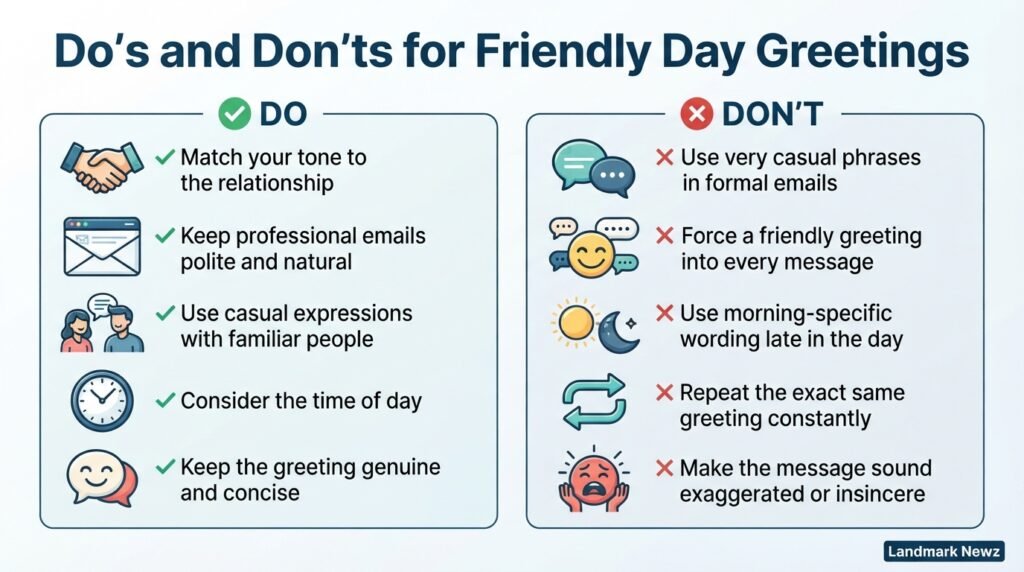
1. Using Casual Language in Formal Emails
A phrase such as “Hope you’re having a good one” may feel too relaxed when writing to a new client or senior executive. In formal situations, choose a straightforward and professional greeting.
2. Making the Greeting Too Formal
Professional does not mean complicated. Simple expressions often sound more confident and natural than elaborate greetings.
3. Repeating the Same Opening
Using identical greetings in every email can make your communication feel formulaic. Keep several suitable options available and select one based on the context.
4. Ignoring the Time of Day
Some expressions are time-specific. For example, wishing someone a great start makes sense in the morning but may sound strange when sent near the end of the workday.
5. Adding a Greeting That Feels Forced
A positive opening should sound genuine. If the message is urgent or highly transactional, getting directly to the point may sometimes be more appropriate.
Frequently Asked Questions
What is another way to say hope your day is going well?
Natural options include “I hope you’re having a great day,” “I hope everything is going well,” and “I hope you’re doing well today.” For informal conversations, “How’s your day going?” is more engaging. Your choice should depend on the recipient, communication channel, and level of formality.
What is a professional way to express this sentiment?
“I hope everything is going well” is a reliable professional option. “I hope you’re doing well today” also works in workplace emails and client communication. Both expressions are polite without sounding stiff, making them suitable when you want to create a positive opening before discussing business.
How can I start an email warmly?
A short, genuine greeting is usually enough. You can write “I hope you’re doing well,” “I hope you’re having a great day,” or “I hope everything is going well.” After the greeting, move naturally into the reason for contacting the recipient rather than adding unnecessary small talk.
Is “I hope you’re having a great day” professional?
Yes, it can be professional, especially when communicating with a familiar coworker, customer, or business contact. However, the level of formality matters. For a highly formal message, a simpler expression such as “I hope you’re doing well” may be a better fit.
What is a casual way to check in with someone?
“How’s your day going?” is an excellent casual choice because it encourages the person to respond. “Hope you’re having a good one” is another relaxed option for texts and chats. Both sound natural among friends, family members, and familiar coworkers.
How do I avoid repeating the same greeting?
Keep a small selection of greetings and match each one to the situation. For example, use a professional expression for clients, a warm option for colleagues, and a conversational question for friends. You can also skip a greeting when a direct opening makes more sense.
Is “hope you’re having a good one” appropriate for work?
It depends on your workplace and relationship with the recipient. The expression is informal and usually works best with coworkers you know well. For clients, managers, or formal business communication, choose a more conventional greeting to maintain a professional tone.
What is a warm way to wish someone a good day?
“Wishing you a wonderful day” is a warm and thoughtful choice. You could also say “I hope your day is treating you well” when speaking with someone familiar. For professional situations, “I hope you’re having a great day” offers warmth while remaining appropriate.
Conclusion
Finding the right expression can make an email, text, or conversation sound more natural. While the original wording is perfectly acceptable, having several alternatives allows you to adjust your message to the person and situation.
For professional communication, “I hope everything is going well” and “I hope you’re doing well today” are dependable choices. For friends and familiar coworkers, conversational options such as “How’s your day going?” can feel more genuine and inviting.
If you want a warm sign-off, “Wishing you a wonderful day” is an easy choice. The most important factor is context: consider your relationship with the recipient, the communication channel, and how formal you need to sound. For more guidance on choosing the right tone and wording, see this guide to professional email etiquette. A short, sincere greeting is usually more effective than an overly complicated one.

Language & Everyday Communication Specialist
Elena Voss is a language enthusiast and communication coach with over 9 years of experience helping people express themselves more naturally in English. She previously worked as an ESL instructor and corporate language trainer, guiding professionals and students on clearer everyday conversations, polite alternatives, and natural phrasing.
Elena specializes in practical synonym guides and “another way to say…” content that feels conversational rather than textbook. Her writing focuses on real-life situations — emails to friends, casual workplace chat, social media, and daily interactions. She believes the best language advice is simple, useful, and easy to remember.
When she’s not creating content for LandmarkNewz, Elena enjoys analyzing modern slang trends and testing new phrases in real conversations.