
What Does “Another Way to Say Let Me Know What You Think” Mean?
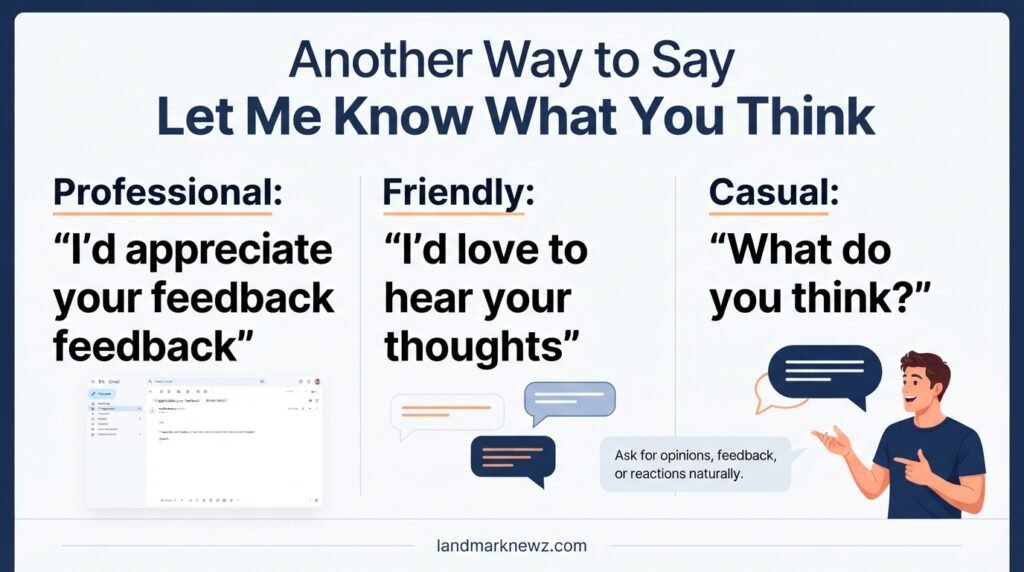
“Let me know what you think” is a common way to ask someone for their opinion, reaction, or feedback. People often use it after sharing an idea, document, proposal, plan, design, or personal thought.
The expression works well because it sounds open and conversational without putting too much pressure on the other person. You might use it in a work email, text message, group chat, meeting, or everyday conversation.
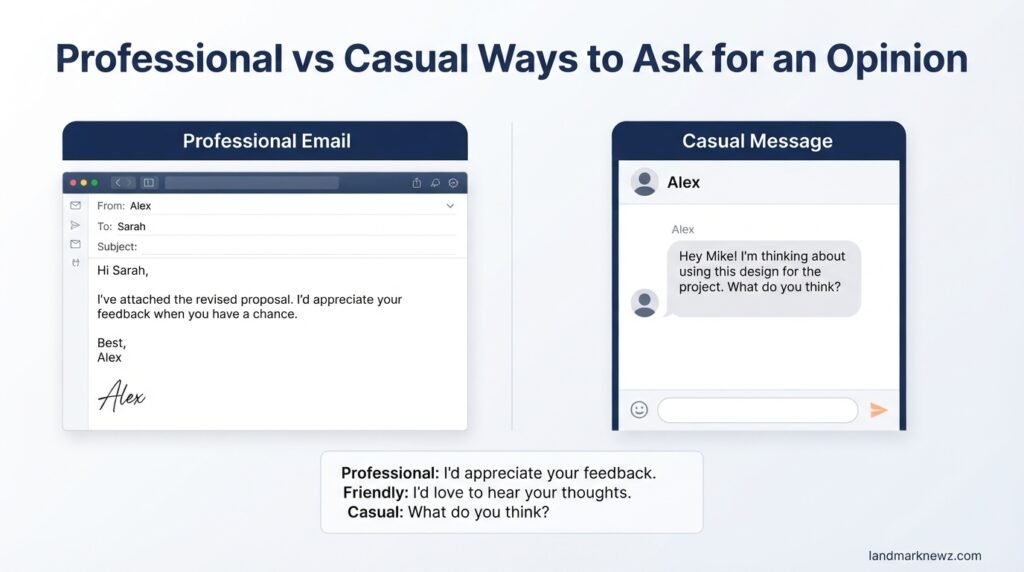
However, the best alternative depends on context. For example, “I’d appreciate your feedback” sounds more professional, while “What do you think?” feels more casual and direct.
Why Use Other Ways to Say “Let Me Know What You Think”?
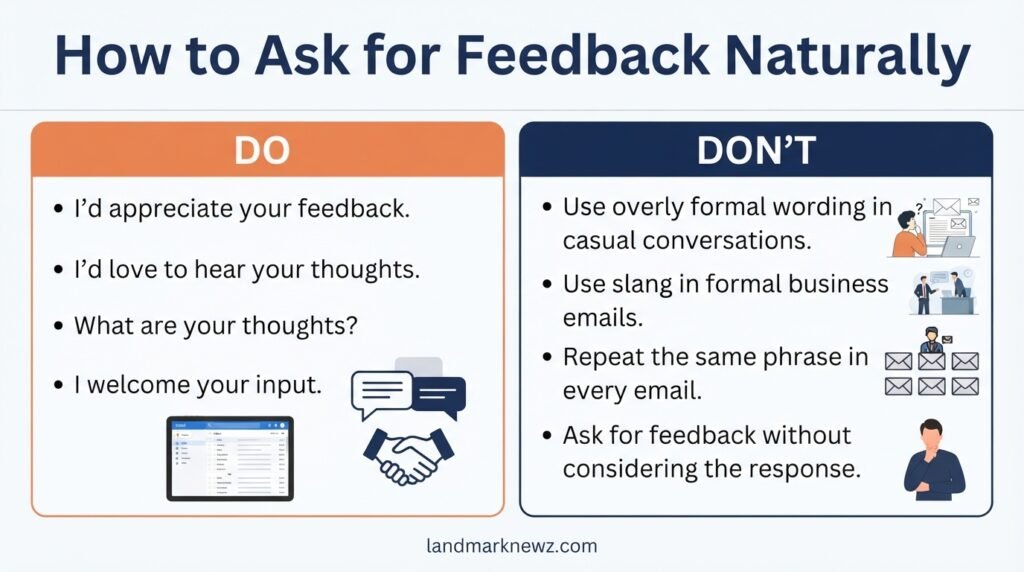
Although the original phrase is perfectly natural, repeating it in every email or conversation can make your writing feel predictable. Choosing a different expression can also help you match the tone to your audience.
Other alternatives can help you:
- Avoid repeating the same phrase.
- Sound more natural and conversational.
- Make professional emails more polished.
- Ask for feedback more directly.
- Show that you genuinely value someone’s opinion.
- Adjust your tone for friends, coworkers, clients, or managers.
10 Best Other Ways to Say “Let Me Know What You Think”
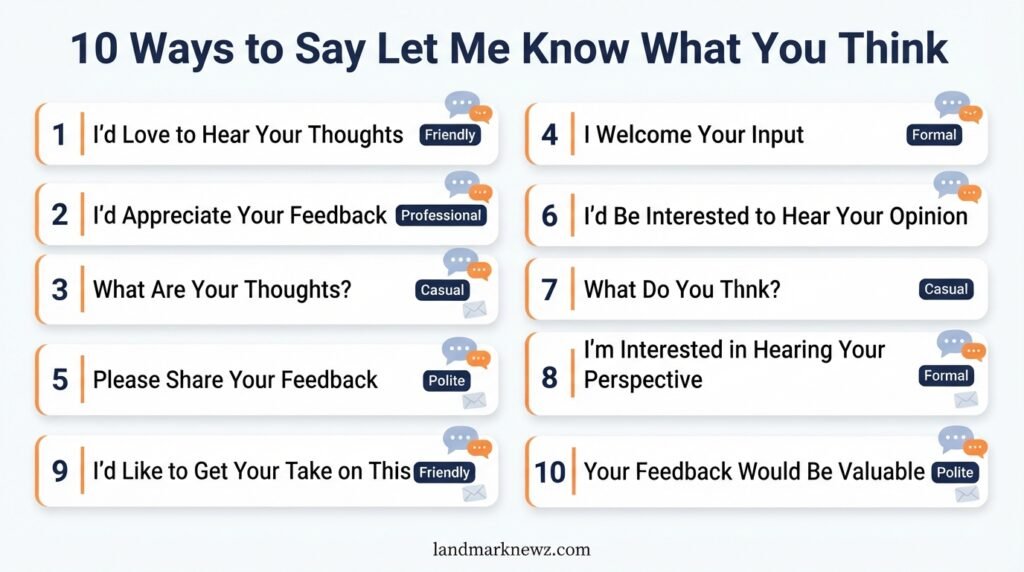
1. I’d Love to Hear Your Thoughts
Meaning
“I’d love to hear your thoughts” is a warm and inviting way to ask someone for an opinion. It shows that you are genuinely interested in their perspective rather than simply requesting a response.
Best For
- Friendly
- Warm
- Professional
- Polite
Example 1
I’ve attached the first draft of the presentation, and I’d love to hear your thoughts.
Example 2
We’re considering a few locations for the event, so I’d love to hear your thoughts before we decide.
Quick Tip
Use this when you want your request for feedback to feel personal and welcoming.
2. I’d Appreciate Your Feedback
Meaning
“I’d appreciate your feedback” is one of the strongest professional alternatives. It clearly communicates that you value the other person’s opinion and would like constructive comments.
Best For
- Professional
- Formal
- Polite
Example 1
I’ve updated the proposal based on our discussion and would appreciate your feedback.
Example 2
When you have a moment, I’d appreciate your feedback on the revised budget.
Quick Tip
This is an excellent choice for emails to clients, supervisors, coworkers, and business partners.
3. What Are Your Thoughts?
Meaning
“What are your thoughts?” is a simple, direct way to invite someone to share an opinion. It sounds natural without being overly formal or casual.
Best For
- Professional
- Friendly
- Casual
- Polite
Example 1
We could move the meeting to Thursday. What are your thoughts?
Example 2
I’m thinking about adding another section to the report. What are your thoughts?
Quick Tip
Use this when you want a short and flexible phrase that works in both professional and personal conversations.
4. I Welcome Your Input
Meaning
“I welcome your input” communicates that someone’s ideas or suggestions are valued. It is particularly useful when collaboration or decision-making is involved.
Best For
- Professional
- Formal
- Polite
Example 1
This is still an early draft, and I welcome your input before we finalize it.
Example 2
I welcome your input on how we can improve the customer experience.
Quick Tip
Choose this phrase when you want to encourage suggestions, ideas, or practical recommendations.
5. Please Share Your Feedback
Meaning
“Please share your feedback” is clear and courteous. Unlike some softer alternatives, it directly tells the reader that you want comments or an evaluation.
Best For
- Professional
- Formal
- Polite
Example 1
Please review the attached document and share your feedback by Friday.
Example 2
After trying the new process, please share your feedback with the team.
Quick Tip
This phrase works especially well when you need actionable feedback by a specific time.
6. I’d Be Interested to Hear Your Opinion
Meaning
This expression politely signals that you are interested in another person’s perspective. It has a slightly more formal feel than “What do you think?”
Best For
- Professional
- Formal
- Polite
Example 1
I’d be interested to hear your opinion on the proposed changes.
Example 2
Before we move forward, I’d be interested to hear your opinion about the new approach.
Quick Tip
Use this when you want to sound thoughtful and respectful without sounding overly stiff.
7. What Do You Think?
Meaning
“What do you think?” is one of the simplest alternatives to “let me know what you think.” It is direct, natural, and extremely common in everyday American English.
Best For
- Casual
- Friendly
- Warm
Example 1
I’m thinking about painting the room a lighter color. What do you think?
Example 2
I found a restaurant near the theater. What do you think?
Quick Tip
Use it with friends, family, and familiar coworkers, but choose a more polished option for formal correspondence.
8. I’m Interested in Hearing Your Perspective
Meaning
“I’m interested in hearing your perspective” emphasizes the value of someone’s personal viewpoint or experience. It works particularly well when discussing an issue that may have several reasonable opinions.
Best For
- Professional
- Formal
- Polite
Example 1
You’ve worked on similar projects before, so I’m interested in hearing your perspective.
Example 2
Given your experience with the industry, I’m interested in hearing your perspective on this proposal.
Quick Tip
This is a strong choice when the person’s experience or expertise makes their opinion especially useful.
9. I’d Like to Get Your Take on This
Meaning
“I’d like to get your take on this” is a natural, conversational expression for asking someone’s opinion. “Your take” means the person’s view, interpretation, or reaction.
Best For
- Casual
- Friendly
- Professional
Example 1
I’m not sure which headline works best, so I’d like to get your take on this.
Example 2
We have two possible strategies, and I’d like to get your take on this before the meeting.
Quick Tip
This phrase is relaxed enough for everyday conversations but can also work with familiar colleagues.
10. Your Feedback Would Be Valuable
Meaning
“Your feedback would be valuable” makes the request more appreciative by emphasizing the importance of the person’s opinion. It can sound especially respectful when addressing someone with relevant experience.
Best For
- Professional
- Formal
- Polite
Example 1
Your feedback would be valuable as we prepare the final version of the proposal.
Example 2
Because of your experience with similar projects, your feedback would be valuable to our team.
Quick Tip
Use this when you want to make the recipient feel that their specific knowledge or experience matters.
Comparison Table
| Alternative | Best Used In | Tone |
| I’d Love to Hear Your Thoughts | Emails, conversations | Warm, friendly |
| I’d Appreciate Your Feedback | Work emails, reviews | Professional, polite |
| What Are Your Thoughts? | Discussions, emails | Direct, neutral |
| I Welcome Your Input | Collaboration, decisions | Professional, formal |
| Please Share Your Feedback | Reviews, projects | Polite, professional |
| I’d Be Interested to Hear Your Opinion | Business discussions | Formal, respectful |
| What Do You Think? | Everyday conversations | Casual, friendly |
| I’m Interested in Hearing Your Perspective | Professional discussions | Thoughtful, formal |
| I’d Like to Get Your Take on This | Informal work conversations | Casual, conversational |
| Your Feedback Would Be Valuable | Business communication | Professional, appreciative |
Common Mistakes
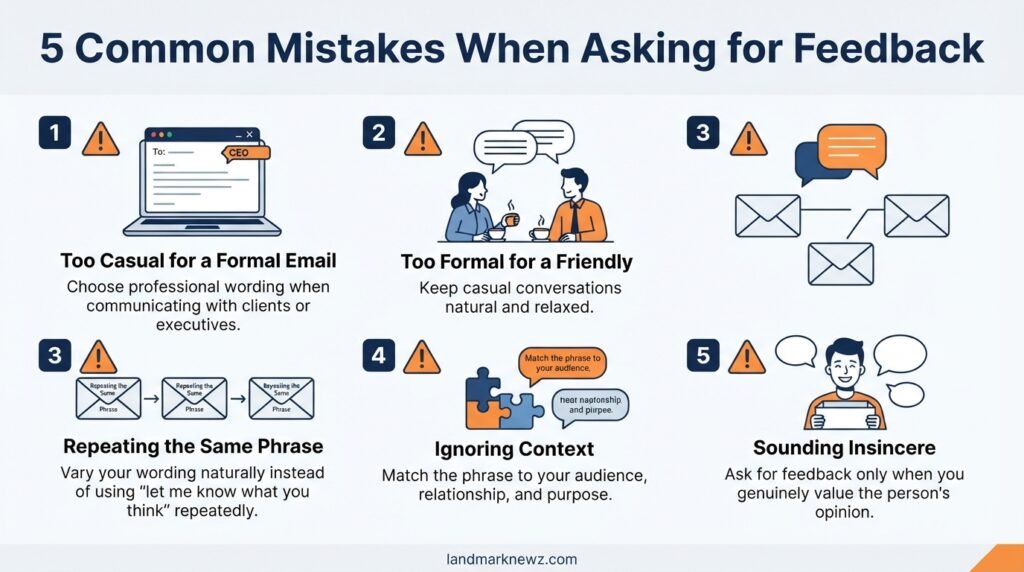
1. Using Casual Phrases in Formal Emails
Phrases such as “What do you think?” are natural, but they may sound too informal when writing to a senior executive, client, or unfamiliar professional. In these situations, “I’d appreciate your feedback” is usually a safer choice.
2. Choosing Overly Formal Language
Not every conversation needs formal wording. Saying “I would be interested in receiving your considered opinion” can sound unnecessarily stiff when a simple “What are your thoughts?” would work better.
3. Repeating the Same Phrase
Using “let me know what you think” in every email can make your writing repetitive. Rotate between natural alternatives based on your purpose and relationship with the reader.
4. Forgetting the Context
An expression that works with a coworker may not work as well with a close friend or customer. Always consider your audience, communication channel, and the level of formality required.
5. Sounding Insincere
Asking for an opinion means little if you have no intention of considering the response. Choose language that genuinely reflects how much you value the person’s feedback.
Frequently Asked Questions
What is a professional way to say “let me know what you think”?
A professional alternative is “I’d appreciate your feedback.” It is clear, respectful, and appropriate for emails, proposals, reports, presentations, and workplace discussions. “I welcome your input” and “your feedback would be valuable” are also useful when you want to emphasize collaboration or the importance of the recipient’s expertise.
What is a friendly way to say “let me know what you think”?
A friendly alternative is “I’d love to hear your thoughts.” It sounds warm and genuinely interested without being too formal. “What do you think?” is another natural option for friends, family members, and people you know well.
How do I say “let me know what you think” in an email?
For a professional email, try “I’d appreciate your feedback,” “I welcome your input,” or “What are your thoughts?” If you need a response by a certain date, add a clear deadline, such as “I’d appreciate your feedback by Thursday.”
Is “what are your thoughts?” professional?
Yes. “What are your thoughts?” is professional, natural, and widely used in workplace communication. It is slightly more conversational than “I’d appreciate your feedback,” which makes it useful for discussions with colleagues, managers, clients, and business partners.
Is “I’d love to hear your thoughts” formal?
“I’d love to hear your thoughts” is usually warm and conversational rather than highly formal. It can still work in professional settings, especially when communicating with colleagues or clients with whom you have an established relationship.
What is another way to ask for someone’s opinion?
You can say “What are your thoughts?”, “I’d appreciate your feedback,” “I welcome your input,” or “I’d like to get your take on this.” The best option depends on whether you want your request to sound professional, casual, direct, warm, or formal.
How can I ask for feedback without sounding demanding?
Use polite wording that gives the other person room to respond. Phrases such as “I’d appreciate your feedback when you have a chance” or “I’d love to hear your thoughts” sound less demanding while still making your request clear.
What is the best alternative for a business email?
“I’d appreciate your feedback” is one of the safest choices for a business email. It is professional, concise, and respectful. If you specifically want suggestions or ideas, “I welcome your input” may be even more appropriate.
Conclusion
There are many natural ways to say “let me know what you think,” and the best choice depends on your audience and purpose. For professional communication, “I’d appreciate your feedback,” “I welcome your input,” and “your feedback would be valuable” are polished choices. If you want to learn more about how to ask for feedback effectively, consider what type of response you need and who you are asking.
For a warmer tone, “I’d love to hear your thoughts” works well. In casual conversations, “What do you think?” and “I’d like to get your take on this” sound relaxed and natural.
The key is to match your wording to the situation rather than replacing the original phrase simply for variety. When your expression fits the relationship, message, and purpose, your communication will sound clearer, more genuine, and more effective.

About Dr. Priya Nair
Dr. Priya Nair is a passionate Writer & Blogger at LandMarkNewz.com, dedicated to creating informative, engaging, and easy-to-understand content for readers. With a strong interest in research, current trends, lifestyle, and everyday topics, she focuses on presenting useful information in a clear and reader-friendly way.
Through her writing, Priya aims to help readers discover valuable insights, understand complex topics more easily, and stay informed about subjects that matter to them. Her approach combines thoughtful research with a simple and engaging writing style.
At LandMarkNewz.com, she contributes original articles designed to inform, educate, and provide practical value to readers.