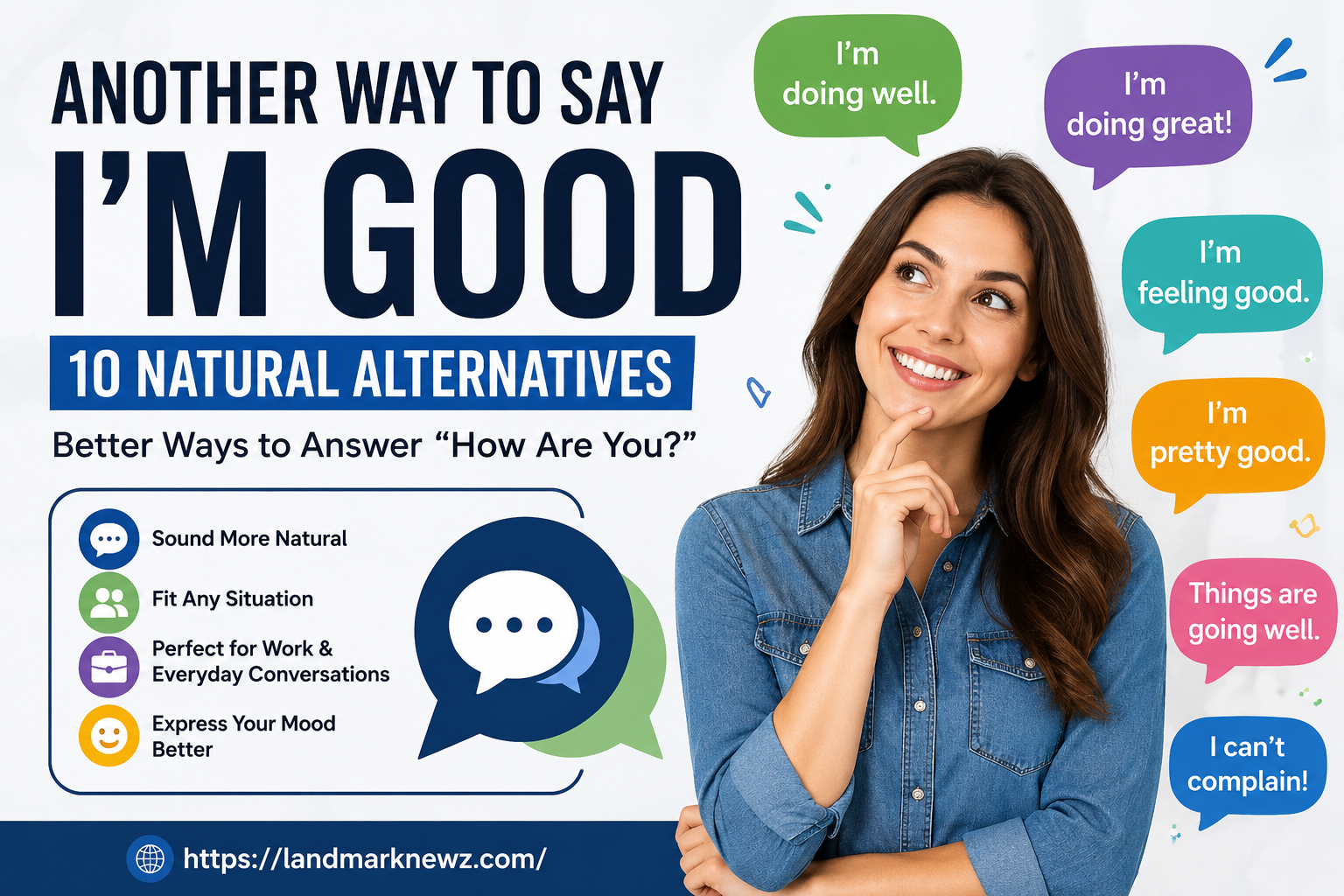
Looking for another way to say im good? There are plenty of natural alternatives you can use depending on the situation. While “I’m good” is common in American English, phrases such as “I’m doing well,” “I’m doing great,” and “I’m pretty good” can help you sound more natural and expressive.
What Does “Another Way to Say I’m Good” Mean?
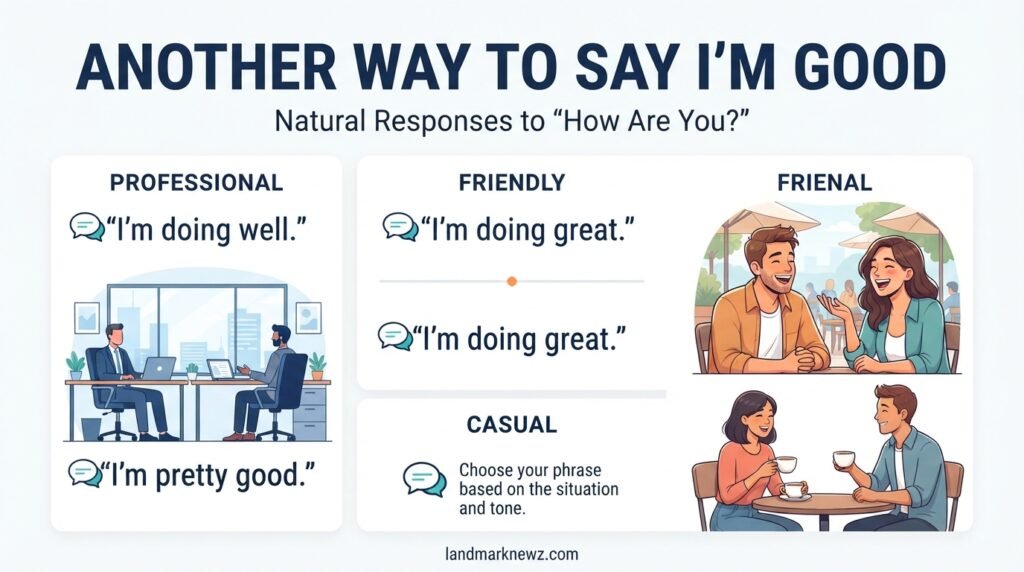
“Another way to say I’m good” refers to different expressions you can use instead of “I’m good” when someone asks how you are.
For example, you could say “I’m doing well,” “I’m doing great,” “I’m pretty good,” or “I’m doing fine.” These expressions are commonly used after questions such as “How are you?”, “How’s it going?”, or “How have you been?”
People look for alternatives because the best response depends on the situation. A conversation with a close friend may call for a relaxed phrase, while a workplace conversation may sound better with a more polished response.
Why Use Other Ways to Say “I’m Good”?
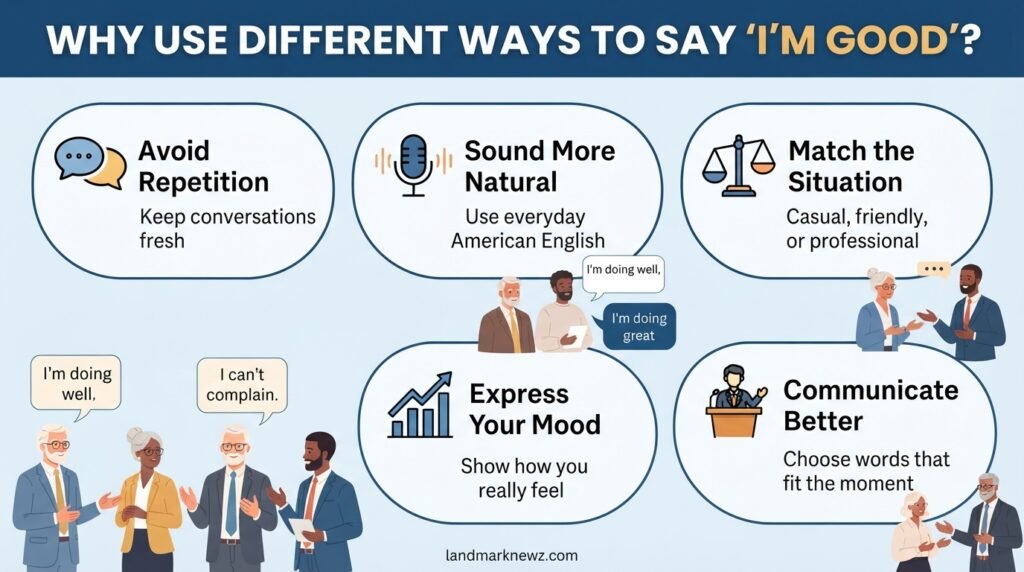
Using different expressions can help you communicate your mood and personality more clearly.
- Avoid repetition: Keep everyday conversations from sounding repetitive.
- Sound more natural: Choose wording that fits the conversation.
- Match the situation: Use casual, friendly, or professional language when appropriate.
- Show your mood: Let others know whether you feel great, okay, or somewhere in between.
- Improve communication: A specific response can make conversations warmer and more engaging.
10 Best Other Ways to Say “I’m Good”
1. I’m Doing Well
Meaning
“I’m doing well” is a polished and widely accepted alternative to “I’m good.” It communicates that things are going positively without sounding overly enthusiastic.
Best For
- Professional
- Formal
- Polite
- Friendly
Example 1
“Thanks for asking. I’m doing well and enjoying the new position.”
Example 2
“I’m doing well, and I hope everything is going smoothly for you, too.”
Quick Tip
Use “I’m doing well” when you want a safe, natural response in both professional and everyday conversations.
2. I’m Doing Great
Meaning
“I’m doing great” expresses a stronger sense of happiness or satisfaction. It is useful when you genuinely feel positive and want your response to sound upbeat.
Best For
- Casual
- Friendly
- Warm
Example 1
“I’m doing great! I finally finished the project I’d been working on.”
Example 2
“I’m doing great, thanks for checking in.”
Quick Tip
Choose this phrase when you want your response to sound noticeably more positive than “I’m good.”
3. I’m Pretty Good
Meaning
“I’m pretty good” is a relaxed expression that usually means you are doing well, although you may not want to sound overly excited. It feels natural in casual American English.
Best For
- Casual
- Friendly
Example 1
“I’m pretty good. How about you?”
Example 2
“I’m pretty good lately, especially now that things have settled down.”
Quick Tip
This is a great choice when you want to sound relaxed and conversational rather than formal.
4. I’m Doing Fine
Meaning
“I’m doing fine” generally means that everything is okay. Depending on your tone, however, “fine” can sometimes sound neutral or slightly reserved.
Best For
- Casual
- Polite
- Professional
Example 1
“I’m doing fine, thanks. How have you been?”
Example 2
“Don’t worry about me—I’m doing fine.”
Quick Tip
Use a warm tone when saying “I’m doing fine” so it does not accidentally sound irritated or distant.
5. I’m Great, Thanks
Meaning
“I’m great, thanks” is a short and positive response to a question about your well-being. It sounds friendly without requiring a long explanation.
Best For
- Casual
- Friendly
- Polite
Example 1
“I’m great, thanks! It’s nice to see you again.”
Example 2
“I’m great, thanks for asking. How’s everything with you?”
Quick Tip
Add “How about you?” afterward to keep the conversation moving naturally.
6. I’m Feeling Good
Meaning
“I’m feeling good” focuses more directly on your current mood or state. It works especially well when you want to emphasize that you feel positive at the moment.
Best For
- Casual
- Friendly
- Warm
Example 1
“I’m feeling good after getting some rest last night.”
Example 2
“I’m feeling good about the presentation tomorrow.”
Quick Tip
Use this phrase when you want to describe how you feel right now rather than giving a general update about your life.
7. Things Are Going Well
Meaning
“Things are going well” gives a broader answer than “I’m good.” It can describe your overall situation, including work, school, relationships, or personal projects.
Best For
- Professional
- Friendly
- Polite
Example 1
“Things are going well at work, and I’m enjoying the new responsibilities.”
Example 2
“Things are going well, so I can’t complain.”
Quick Tip
Use this option when someone asks “How’s everything going?” rather than only “How are you?”
8. I Can’t Complain
Meaning
“I can’t complain” is a casual way to say that life is going reasonably well. It often sounds modest and conversational rather than strongly enthusiastic.
Best For
- Casual
- Friendly
Example 1
“I can’t complain. The weather has been beautiful lately.”
Example 2
“I can’t complain—work has been busy, but everything is manageable.”
Quick Tip
This phrase is especially natural with friends, coworkers, and acquaintances in relaxed conversations.
9. I’m Feeling Great
Meaning
“I’m feeling great” communicates strong positivity and energy. It is more expressive than simply saying “I’m good.”
Best For
- Casual
- Friendly
- Warm
Example 1
“I’m feeling great today because I finally got a full night’s sleep.”
Example 2
“I’m feeling great about how the event turned out.”
Quick Tip
Use this phrase when you want to emphasize enthusiasm or confidence.
10. I’m All Good
Meaning
“I’m all good” is an informal expression that can mean you are doing fine or that there is no problem. It is common in relaxed conversations and can also mean you do not need anything.
Best For
- Casual
- Friendly
Example 1
“I’m all good, thanks. I already grabbed something to eat.”
Example 2
“Everything worked out, so I’m all good now.”
Quick Tip
Keep “I’m all good” for informal situations because it can sound too casual in formal writing.
Comparison Table
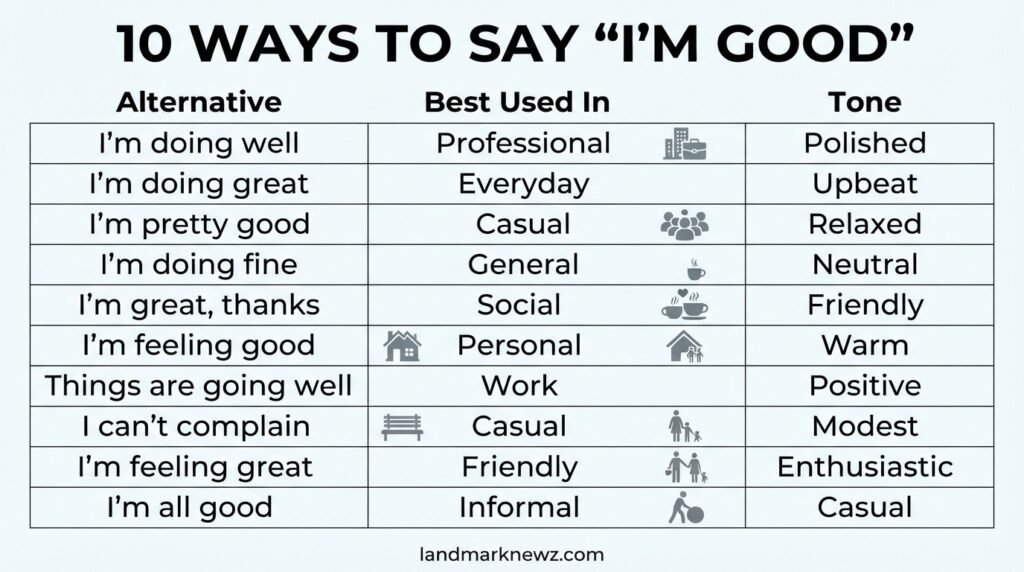
| Alternative | Best Used In | Tone |
| I’m doing well | Work, everyday conversations | Polished, positive |
| I’m doing great | Everyday conversations | Upbeat |
| I’m pretty good | Casual conversations | Relaxed |
| I’m doing fine | General conversations | Neutral, polite |
| I’m great, thanks | Social conversations | Friendly |
| I’m feeling good | Personal conversations | Warm, positive |
| Things are going well | Work and general updates | Positive, professional |
| I can’t complain | Casual conversations | Relaxed, modest |
| I’m feeling great | Friendly conversations | Enthusiastic |
| I’m all good | Informal conversations | Casual |
Common Mistakes
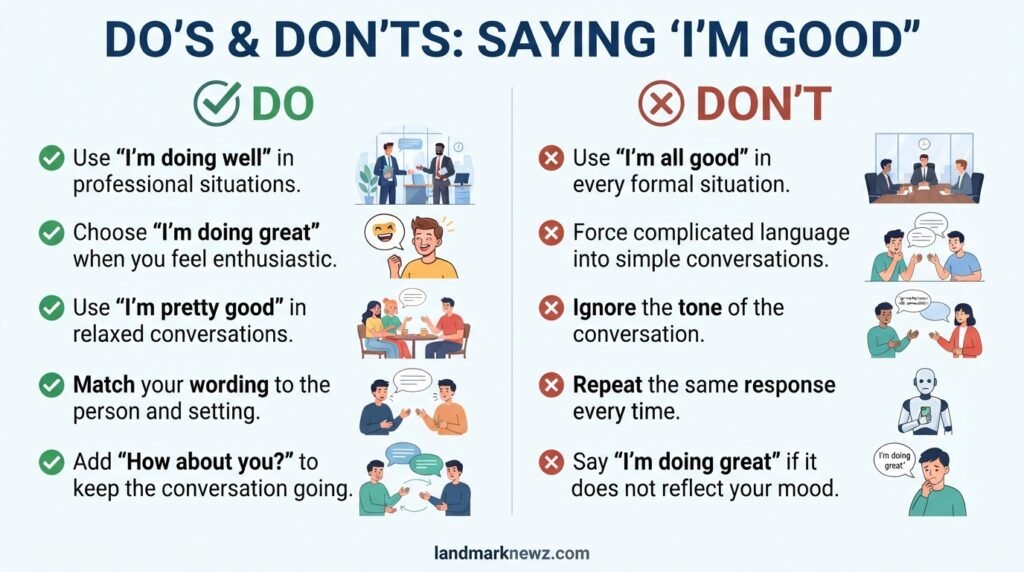
1. Using Casual Phrases in Professional Emails
Expressions such as “I’m all good” may sound too informal in a business email. “I’m doing well” is usually a safer professional choice.
2. Choosing Overly Formal Language
You do not need complicated wording when a simple expression works. In everyday conversation, “I’m doing great” can sound more natural than a stiff or overly formal response.
3. Repeating the Same Phrase
Using “I’m good” every time someone asks how you are can make your responses feel routine. Vary your wording naturally rather than forcing a new phrase into every conversation.
4. Forgetting Context
Consider who you are talking to and where the conversation is happening. A phrase that sounds perfect with a friend may not fit a job interview or formal meeting.
5. Sounding Insincere
Do not say “I’m doing great” if your tone and body language suggest otherwise. When you genuinely feel neutral, “I’m doing okay” or “I’m doing fine” may communicate your mood more honestly.
Frequently Asked Questions
What is another way to say “I’m good”?
Common alternatives include “I’m doing well,” “I’m doing great,” “I’m pretty good,” “I’m doing fine,” and “Things are going well.” The best option depends on your situation. “I’m doing well” is particularly versatile because it works in professional and everyday conversations.
What is a professional way to say “I’m good”?
“I’m doing well” is one of the best professional alternatives. You can also say “I’m doing very well” or “Things are going well.” These phrases sound courteous and polished without being unnecessarily formal.
What is a casual way to say “I’m good”?
For casual conversations, try “I’m pretty good,” “I’m doing great,” “I can’t complain,” or “I’m all good.” These expressions sound relaxed and natural with friends, family members, classmates, and coworkers you know well.
Is “I’m doing well” better than “I’m doing good”?
In standard formal English, “I’m doing well” is traditionally preferred when describing how you are doing. However, “I’m doing good” is common in everyday American speech and can mean that you are doing positive or helpful things, depending on context.
How can I say “I’m good” without sounding boring?
Add a little detail to your answer. Instead of simply saying “I’m good,” try “I’m doing great—just finished a big project” or “I’m doing well; I’ve been keeping busy.” A short follow-up gives the other person something to respond to.
What can I say instead of “I’m good, thanks”?
You could say “I’m doing well, thanks,” “I’m doing great, thanks,” “I’m pretty good, thanks,” or “Things are going well, thanks.” Adding “How about you?” makes the exchange more engaging and shows interest in the other person.
Is “I’m all good” professional?
“I’m all good” is generally informal. It works well in relaxed conversations, but it may sound too casual for a formal email, interview, business presentation, or other professional setting. In those situations, “I’m doing well” is a better choice.
What is a positive way to answer “How are you?”
If you want to sound especially positive, say “I’m doing great,” “I’m feeling great,” or “I’m doing really well.” These expressions communicate enthusiasm while still sounding natural in American English.
Conclusion
There are many natural alternatives to “I’m good,” and the best one depends on the situation and the feeling you want to express. “I’m doing well” is a versatile choice for professional and everyday conversations, while “I’m doing great” and “I’m feeling great” sound more enthusiastic. For more guidance on the usage of “I’m good” vs. “I’m doing well”, consider the context and level of formality.
For relaxed conversations, “I’m pretty good,” “I can’t complain,” and “I’m all good” can sound friendly and natural. If you want to describe your overall situation, “Things are going well” gives a little more information.
You do not need to avoid “I’m good”—it is perfectly natural. Simply choose a different expression when you want to add variety, match the setting, or communicate your mood more precisely.

Professional Writing & Workplace Communication Expert
Marcus Hale is a business communication specialist with 11 years of experience in corporate training and professional writing. He has worked with mid-sized companies and remote teams to improve clarity in emails, reports, performance reviews, and client-facing messages.
Marcus focuses on polished, professional alternatives that help readers sound confident without sounding stiff. His guides cover workplace phrases, resume language, leadership communication, and formal-to-natural transitions. He holds a background in business administration and technical writing, and has led workshops on effective professional English.
At LandmarkNewz, Marcus creates practical synonym lists and phrasing tips that professionals can apply immediately in emails, meetings, and career documents.